1. Defining the Fly Ash Block Machine: A System for Geopolymerization
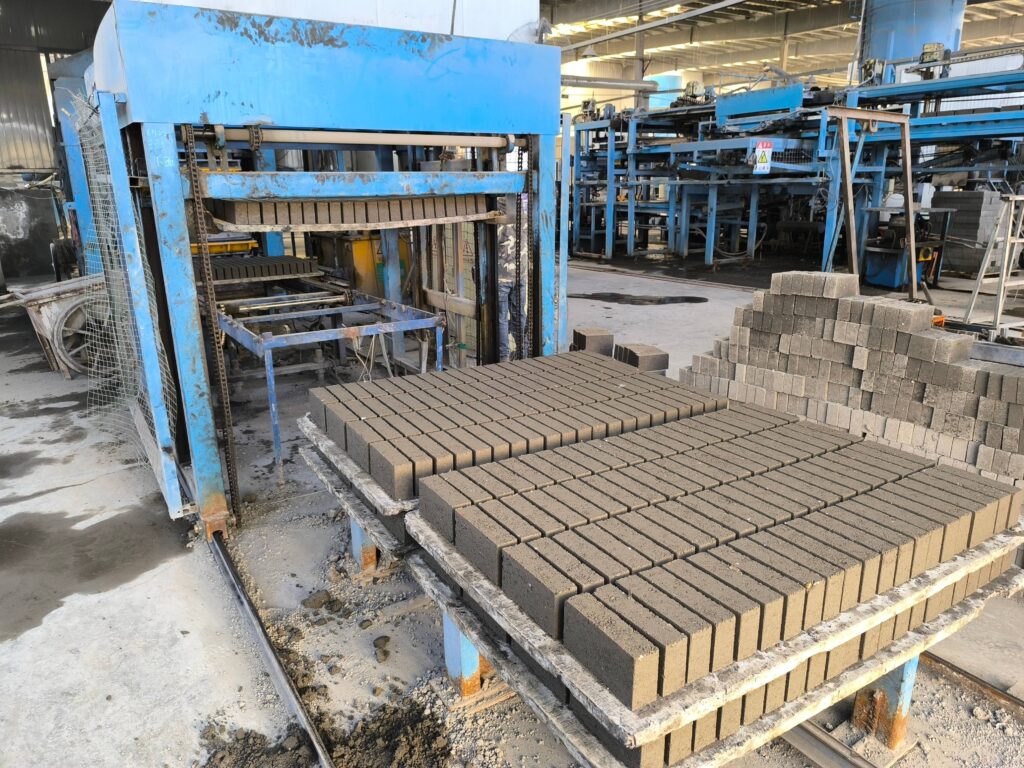
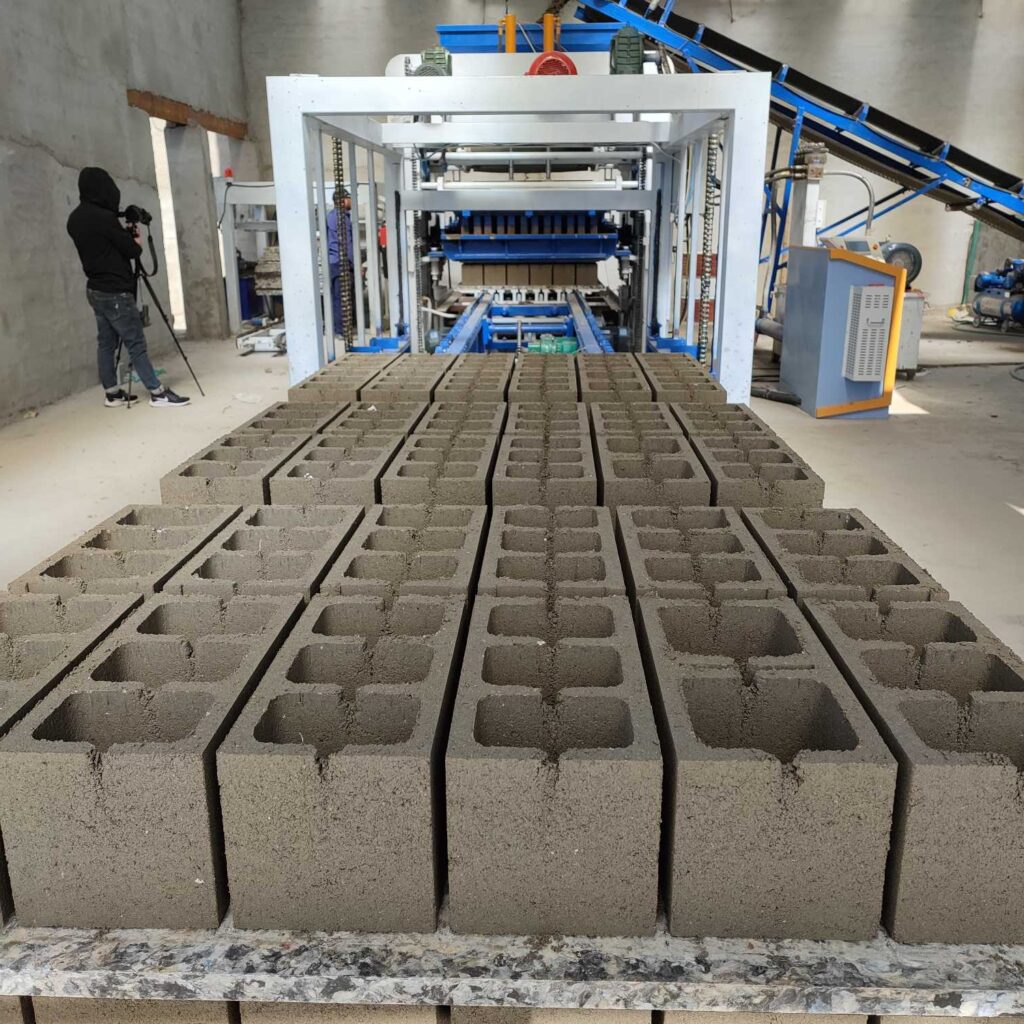
A fly ash block machine is a manufacturing system specifically engineered to produce concrete masonry units (CMUs) or bricks in which fly ash is not merely a supplementary additive but a primary binding agent. While traditional block machines can incorporate small percentages of fly ash, a dedicated fly ash block machine is designed to utilize very high volumes—often 60% to 90% of the cementitious content—through a chemical process distinct from ordinary Portland cement (OPC) hydration.
1.1. Core Distinction: Chemistry Over Combustion
The fundamental difference lies in the binding mechanism. Traditional blocks rely on the hydraulic setting of OPC, a process with a high carbon footprint. Fly ash blocks produced on specialized machines often utilize alkali-activation or geopolymerization. Here, the amorphous silica and alumina in fly ash react with an alkaline activator (e.g., a solution of sodium silicate and sodium hydroxide) to form a hardened, ceramic-like binder. This process can occur at ambient or slightly elevated temperatures, bypassing the need for high-clinker cement.
2. Composition and Operational Specifics of the System
The design of a fly ash block machine accommodates the distinct handling and processing requirements of its primary feedstock.
2.1. Specialized Material Handling and Batching
- Fly Ash Storage and Delivery: The system requires dedicated, sealed silos and pneumatic conveying equipment to handle fly ash, a fine, powdery material prone to dusting. Precise, moisture-controlled storage is critical.
- Alkaline Activator Preparation and Dosing: A core component is the system for safely storing, mixing, and precisely metering the liquid alkaline solution. This requires corrosion-resistant tanks and pumps, as the activators are caustic. The dosing must be exquisitely accurate, as the activator-to-fly-ash ratio directly controls the geopolymer reaction and final block strength.
- Aggregate Integration: While fly ash and activator form the binder, aggregates (sand, recycled glass, or fine stone) are still used as filler. The batching system must blend these dry components homogeneously before introducing the liquid.
2.2. The Mixing and Forming Process
- High-Shear Mixing: The blending stage is critical. The machine employs high-shear mixers to ensure the alkaline activator thoroughly coats every particle of fly ash and aggregate, initiating the geopolymer reaction uniformly throughout the mix. The workability window of this mix can be different from OPC concrete, requiring precise control.
- Nén và Đúc khuôn: The forming press itself may appear similar to a high-quality standard block machine, applying significant vibration and pressure. However, the process parameters (pressure, cycle time) are optimized for the rheology of the geopolymer mix, which can be more cohesive or quicker-setting than traditional mixes.
2.3. Curing Regimen: The Key to Performance
This is where the process most distinctly diverges. Instead of high-temperature kiln firing or steam curing, fly ash geopolymer blocks typically require controlled low-temperature curing.
- Ambient or Heated Chamber Curing: The molded blocks are placed in a curing chamber where temperature and humidity are controlled. Elevated temperatures (often between 60°C to 90°C) are frequently used to accelerate the geopolymer reaction over 12-48 hours, resulting in very rapid strength gain without the massive energy input of a clinker kiln.
- No Portland Cement Required: In many formulations, the process eliminates the need for OPC entirely, representing the most significant leap in reducing embodied carbon.
3. Characteristics and Advantages of the Final Product
Blocks produced on these specialized machines offer a compelling set of performance and environmental benefits.
3.1. Superior Environmental Profile
- Dramatically Lower Embodied Carbon: By displacing high-carbon Portland cement, fly ash blocks can reduce the carbon footprint of the masonry unit by 70-90%. This is a decisive advantage for projects targeting LEED, BREEAM, or Net Zero Carbon certification.
- Large-Scale Waste Utilization: Each block represents a permanent, safe repository for industrial by-product, contributing to a circular economy and reducing landfill demand.
3.2. Enhanced Durability and Performance
- High Early and Ultimate Strength: Geopolymer binders can achieve high compressive strengths rapidly, often exceeding ASTM C90 requirements for load-bearing units.
- Improved Chemical Resistance: The geopolymer matrix is typically more resistant to sulfate attack, acid corrosion, and alkali-silica reaction than OPC-based concrete, leading to longer service life in harsh environments.
- Lower Permeability: The fine particle size of fly ash and the dense gel structure of the geopolymer can result in a less porous block with lower water absorption, improving freeze-thaw durability.
3.3. Consistent Quality and Aesthetic Potential
Modern fly ash block machines, with their precise process control, produce units of excellent dimensional consistency. The blocks often have a smooth, uniform surface and a consistent light grey color, which can be ideal for architectural applications or as a substrate for coatings.
4. Strategic Implications for the Supply Chain
The rise of this technology creates distinct opportunities and considerations for distributors and buyers.
4.1. Access to a Premium, Specification-Driven Market
Fly ash blocks are not a commodity to be competed on solely. They are a performance-specified product. Distributors offering them gain entry to high-value projects where sustainability mandates or specific durability requirements (e.g., in wastewater treatment plants, coastal structures) are paramount. This allows for moving away from pure price competition.
4.2. Building a Future-Proof Portfolio
As carbon taxes and green building codes proliferate, demand for low-embodied-carbon materials will only intensify. Establishing supply lines and technical expertise in fly ash blocks now positions a distributor as a leader for the regulatory environment of tomorrow.
4.3. Technical Sales and Education Requirement
Selling these products requires a higher level of technical engagement. Sales teams must be able to explain the geopolymer chemistry in simple terms, present verified Environmental Product Declarations (EPDs), and provide data on durability benefits. This shifts the distributor’s role from logistics provider to sustainability solutions partner.
4.4. Supply Chain and Logistics Considerations
- Regional Sourcing: The economics are most favorable near sources of quality fly ash, typically from active or legacy coal power plants. This encourages regionalized production and supply chains.
- Partner Vetting: Distributors must carefully vet manufacturers on their technical expertise in geopolymer mix design and quality control, as the process is less forgiving of errors than traditional OPC block production.
5. Challenges and Market Realities
While promising, the technology operates within specific constraints.
- Fly Ash Availability and Consistency: The chemical composition of fly ash can vary by source and even batch. Consistent, high-quality (Class F or C) fly ash supply is crucial, and mix designs must be adjusted accordingly.
- Initial Capital and Expertise: Setting up a dedicated fly ash block production line requires investment in specialized equipment and, more importantly, in-depth chemical and process engineering knowledge.
- Market Education: Overcoming industry familiarity with traditional OPC-based products requires persistent demonstration and education about the long-term performance benefits.
Conclusion
The fly ash block machine is far more than an alternative piece of manufacturing equipment; it is the physical enabler of a profound materials revolution in masonry. It represents the successful fusion of industrial ecology—turning a waste liability into a construction asset—with advanced materials science. For the distribution and procurement community, this technology signals the maturation of a high-value product category where environmental performance and structural durability are intrinsically linked. By understanding, sourcing, and effectively marketing the output of these specialized systems, forward-looking businesses can differentiate themselves, capture premium market segments, and build resilient, future-oriented supply chains. In an era where the sustainability of the built environment is under intense scrutiny, the fly ash block machine stands as a testament to innovation that delivers both commercial and planetary value.
FAQ (Frequently Asked Questions)
Q1: Are fly ash blocks made on this equipment safe? Do they leach harmful materials?
A: Yes, they are safe and stable. The geopolymerization process chemically encapsulates the fly ash particles within an inert, ceramic-like matrix. High-quality blocks are subjected to standardized leachate tests (like TCLP) to ensure no harmful levels of trace elements leach out. The resulting product is as stable and safe as traditional concrete or fired clay. Reputable manufacturers will provide leachate test data and relevant environmental certifications.
Q2: How does the cost of a fly ash block compare to a conventional concrete block?
A: The raw material cost can be lower, as fly ash is typically less expensive than Portland cement. However, the specialized processing, precise batching, and quality control requirements can balance this. The price is often competitive or slightly premium. The true economic argument is life-cycle value: lower carbon costs (where regulated), potential durability/longevity benefits, and the value they contribute to achieving green building certifications, which can translate into direct project savings or marketability.
Q3: Can these machines also produce other products like pavers or retaining wall units?
A: Absolutely. The forming technology is versatile. By changing the mold, a fly ash block machine can produce any standard concrete masonry product—hollow blocks, solid bricks, pavers, and landscaping units. The geopolymer binder system is adaptable to these different forms. The key is adjusting the mix design and curing protocol to suit the product’s specific performance requirements.
Q4: What happens if the supply of fly ash diminishes as coal power is phased out?
A: This is a forward-looking concern. The technology is adaptable. The term “fly ash block machine” is specific, but the underlying alkali-activation process can utilize other pozzolanic or aluminosilicate materials. These include ground granulated blast furnace slag (GGBS), other coal combustion products, and even certain calcined clays or recycled glass. The machinery and chemistry are a platform for using a range of alternative binders, ensuring its relevance in a post-coal future.
Q5: As a distributor, what documentation should I require from a fly ash block manufacturer?
A: Due diligence is crucial. Require:
- Comprehensive EPD (Environmental Product Declaration): Quantifying the global warming potential and other impacts.
- Third-Party Strength and Durability Test Reports: Showing compliance with ASTM C90 or equivalent standards, plus data on sulfate resistance, absorption, etc.
- Leachate Test Data: Proving environmental safety.
- Consistency Data: Batch-to-batch quality control records.
- Information on Fly Ash Source and Consistency Controls.
This documentation package is your toolkit for confidently specifying and selling the product to discerning clients.