
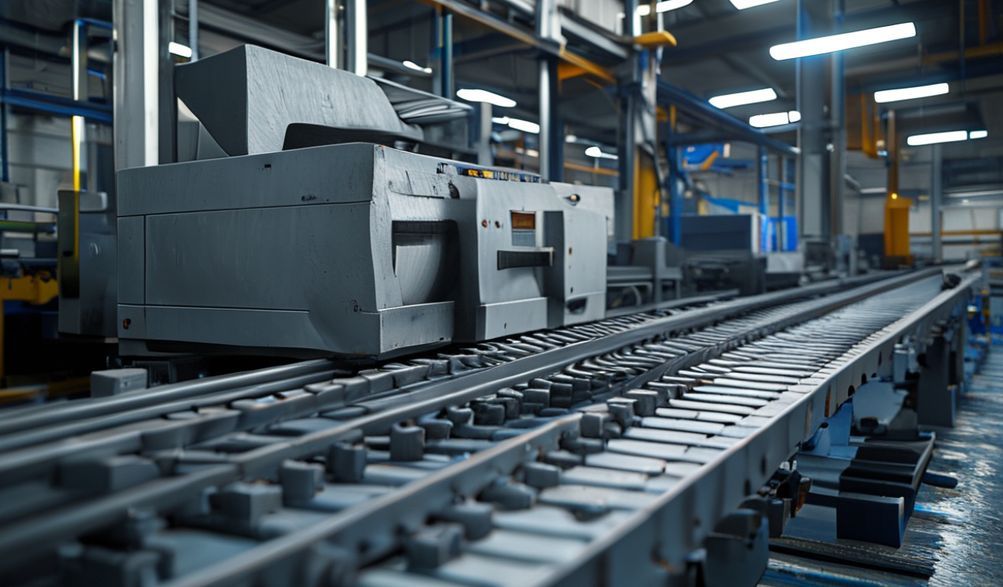
Hướng Dẫn Toàn Diện Về Nhà Cung Cấp Máy Sản Xuất Gạch Xi Măng & Cách Tìm Đối Tác Đáng Tin Cậy Như Nhà Máy Gạch FUDA
Trong lĩnh vực xây dựng và sản xuất gạch block, một quyết định duy nhất có thể tạo ra hiệu ứng lan tỏa trong doanh nghiệp của bạn suốt nhiều năm. Đó chính là việc lựa chọn nhà cung cấp máy ép gạch xi măng. Một đối tác phù hợp không chỉ mang đến cho bạn một thiết bị, mà còn cung cấp nền tảng cho năng suất, chất lượng sản phẩm và lợi nhuận bền vững lâu dài. Ngược lại, một lựa chọn sai lầm có thể dẫn đến thời gian ngừng máy kéo dài, sản lượng không ổn định và vô số vấn đề vận hành triền miên.
Hướng dẫn này đóng vai trò như bản thiết kế chuyên môn của bạn. Được tổng hợp từ những góc nhìn ngành, kiến thức kỹ thuật và hiểu biết sâu sắc về bức tranh sản xuất toàn cầu, mục tiêu của chúng tôi là trao quyền cho bạn—dù bạn là một doanh nhân khởi nghiệp hay một nhà thầu dày dạn kinh nghiệm—để đưa ra quyết định được trang bị thông tin tối ưu. Chúng ta sẽ cùng khám phá bức tranh then chốt củanhà cung cấp máy sản xuất khối bê tôngvà thảo luận về những đặc điểm nổi bật của các đối tác đã được công nhận, đáng tin cậy trong lĩnh vực, chẳng hạn nhưNhà máy sản xuất gạch FUDA.
Đây là những gì bạn sẽ học:
Các tiêu chí bắt buộc không thể thương lượng để đánh giá chuyên môn và uy tín của nhà cung cấp.
* Làm thế nào để xác định chính xác nhu cầu sản xuất của bạn để tìm được sự kết hợp máy móc hoàn hảo.
* Những dịch vụ quan trọng phân biệt đối tác đáng tin cậy với những người bán hàng đơn thuần.
* Một khung đánh giá thực tiễn cho uy tín và độ tin cậy của nhà máy.
* Những câu trả lời rõ ràng cho những câu hỏi thường gặp nhất trong ngành.
Hãy cùng xây dựng một chiến lược cho thành công của bạn.
Những Điều Cần Tìm Kiếm ở Nhà Cung Cấp Máy Sản Xuất Gạch Bê Tông (Chuyên Môn & Uy Tín)
Lựa chọn nhà cung cấp không phải là một giao dịch đơn thuần; đó là thiết lập một quan hệ đối tác chiến lược. Những phẩm chất cốt lõi của nhà cung cấp sẽ trở thành phần mở rộng cho năng lực kinh doanh của chính bạn. Dưới đây là những trụ cột cần đánh giá.
Kinh Nghiệm và Thành Tích Đã Được Chứng Minh Trong Ngành
Lịch sử của một nhà cung cấp là một tài sản hữu hình. Thời gian hoạt động trong ngành thường đồng nghĩa với những thiết kế tinh tế, các thách thức kỹ thuật đã được giải quyết, và sự am hiểu sâu sắc về nhu cầu của khách hàng.
- Tuổi Thọ Quan Trọng:Nhà cung cấp đã hoạt động được bao lâu? Một công ty đã trải qua nhiều chu kỳ thị trường thường có hệ thống vững chắc hơn và khả năng chống chịu đã được chứng minh.
- Chiều sâu Danh mục Đầu tưKiểm tra danh mục dự án của họ. Họ có phục vụ những khách hàng tương tự bạn về quy mô và địa lý không? Một danh mục đa dạng, trưng bày các dự án từ các xưởng nhỏ đến nhà máy công nghiệp lớn, cho thấy chuyên môn linh hoạt.
- Tín Hiệu E-E-A-TLuôn tìm kiếm bằng chứng đã được xác thực.Các nghiên cứu điển hình, lời chứng thực chi tiết từ khách hàng và hồ sơ lắp đặt dự án được ghi chép đầy đủ. are gold standards. An established entity, like the FUDA brick making factory, would typically showcase such evidence, demonstrating a history of real-world application and success.
Range and Technical Specifications of Machinery
A one-machine-fits-all approach doesn’t exist. A competent supplier should offer a spectrum of solutions to match different business stages and goals.
Core Machine Types:
* Thủ công/Bán tự động: Ideal for small-scale, low-volume production or startups with capital constraints. They require more labor but have a lower initial investment.
* Hoàn Toàn Tự Động: The powerhouse for commercial-scale production. These systems integrate mixing, conveying, molding, and stacking with minimal human intervention, maximizing output and consistency.
* Đứng yên so với Di động: Stationary plants are for high-volume, fixed-location production. Mobile block machines offer flexibility for on-site production, eliminating transport costs for large projects.
Key Specifications to Compare:
* Năng lực sản xuất: Measured in blocks per hour or shift. Be realistic—overestimating leads to underutilized capital; underestimating caps your growth.
* Block Versatility: What sizes and types can it produce? (Hollow blocks, solid blocks, paving slabs, interlocking blocks). Can it quickly change molds?
* Yêu cầu về nguồn điện: Does it align with your site’s available electrical or hydraulic power? This is a crucial operational cost factor.
* Mức độ Tự động hóa: This directly correlates with labor costs and output consistency.
Tín Hiệu E-E-A-T True expertise is shown by explaining Tại sao specs matter. For instance, a higher vibration frequency isn’t just a number; it’s crucial for denser, stronger blocks with a better surface finish. A supplier who explains this is demonstrating authoritative knowledge.
Manufacturing Quality and Material Standards
The machine’s build quality dictates its lifespan, uptime, and the quality of blocks it produces. Don’t just look at the paint job; inquire about what’s underneath.
- Tính Toàn Vẹn Cấu Trúc The frame should be fabricated from high-grade, reinforced steel to withstand constant vibration and pressure without warping.
- Critical Components: The heart of the machine. Ask about the brand and quality of the hydraulic system, vibrator motors, and control systems. Renowned component brands are a strong trust signal.
- Mold Precision and Durability: Molds must be machined from hardened steel for precision and longevity. Poor molds lead to blocks that don’t meet dimensional tolerances.
- International Standards: Certifications like CE, ISO, or SGS indicate that the manufacturer adheres to internationally recognized safety and quality management protocols. They are a baseline indicator of serious manufacturing practices.
Understanding Your Production Needs Before Choosing a Supplier (Experience)
The most advanced machine is a poor investment if it doesn’t align with your reality. Your choice must be guided by a clear-eyed assessment of your own operation.
Đánh giá Quy mô Dự án và Mục tiêu Đầu ra của Bạn
Begin with a business plan, not a brochure. Ask yourself:
* What is my target market? Local housing projects, municipal infrastructure, or private retail?
* What is my required daily/weekly output? Calculate based on current orders and realistic growth projections for the next 2-3 years.
* What is my available space, workforce, and budget? A massive fully automatic line is useless if you lack the space to operate it or the capital to run it efficiently.
This internal audit will directly point you to the machine type (from the previous section) that fits your business goals, preventing costly over- or under-investment.
Key Features for Efficiency and Durability
Look beyond the headline production number. Operational features determine your long-term profitability through reduced running costs and downtime.
Prioritize these efficiency-driven features:
* Energy-Efficient Design: Machines with optimized hydraulic systems and motors consume less power, significantly cutting overhead.
* Low-Maintenance Architecture: Easy access to service points, sealed bearings, and self-lubricating systems reduce daily upkeep time and costs.
* User-Friendly Control System: An intuitive interface, often with PLC (Programmable Logic Controller) and touchscreen, minimizes operator error and training time.
* Quick Mold Change System: This feature is critical for factories producing multiple block types. It can changeover production in minutes instead of hours, boosting flexibility.
Tín Hiệu E-E-A-T From an experienced perspective, these features aren’t just “nice-to-haves.” They are what separate a profitable, smooth-running plant from one plagued by high operational costs and constant interruptions. A supplier who highlights these aspects understands your total cost of ownership.
Beyond the Machine: Critical Supplier Services (Trustworthiness)
The machine’s sale is the beginning of the relationship, not the end. The supplier’s commitment to service is the ultimate test of their trustworthiness.
Comprehensive After-Sales Support and Warranty
A robust after-sales framework is your insurance policy. It must be clearly defined trước purchase.
Your checklist must include:
* Clear, Comprehensive Warranty: What is covered (parts, labor)? For how long? What are the terms? A standard 12-month warranty on the whole machine is a good baseline.
* Sẵn có Phụ tùng Thay thế: Are parts readily available from stock? What is the lead time for non-standard parts? A reliable supplier will maintain a comprehensive parts inventory.
* Hỗ trợ Kỹ thuật: Is support available via phone, email, or video call? What are the response time guarantees?
* Cài đặt & Đào tạo: Will they provide or supervise on-site installation? Do they offer thorough training for your operators and maintenance staff? This is crucial for optimal machine performance from day one.
Transparent Pricing, Logistics, and Delivery
The sticker price is just one part of the total cost. Transparency here is a direct reflection of a supplier’s professionalism.
Understand the Full Financial Picture:
* Tổng Chi Phí Sở Hữu (TCO) Include the machine price, shipping (FOB, CIF, etc.), insurance, import duties and customs clearance (for international purchases), installation fees, and initial spare parts kit.
* Detailed Quotation: A trustworthy supplier provides a breakdown of all costs in a formal, itemized quotation. Vague or all-inclusive quotes can hide surprises.
* Logistics Capability: Do they have experience shipping to your country/region? Can they handle the necessary documentation? A factory with export experience, like many established brick making factories, will navigate this process smoothly.
Why Partner with an Established Brick Making Factory? (Authoritativeness & Trustworthiness)
While dealers and traders exist, sourcing directly from a manufacturer—an integrated nhà máy sản xuất gạch—often provides distinct advantages.
The Integrated Advantage: From Manufacturing to Expertise
Choosing a factory-direct supplier like FUDA offers several strategic benefits:
* Kiểm Soát Chất Lượng Trực Tiếp The factory has direct oversight of every production stage, from steel cutting to final assembly, ensuring consistent quality standards.
* Hiệu quả Chi phí: Eliminating middlemen can lead to more competitive pricing and better value for your investment.
* Direct Technical Communication: When you have a technical question or need, you communicate directly with the engineers who design and build the machines, leading to faster, more accurate solutions.
* In-House R&D and Customization: Factories often possess the capability to modify standard designs or develop custom solutions for unique block designs or production challenges.
Tín Hiệu E-E-A-T Using “FUDA brick making factory” as an example illustrates the model of an authoritative source. Such an entity embodies in-house expertise, control over its production, and a vested interest in its long-term reputation, aligning its success with yours.
Evaluating a Factory’s Reputation and Credibility
Due diligence is your most powerful tool. Here’s a practical checklist to verify a factory’s standing:
- Professional Online Presence:
- A well-structured, informative website with detailed product catalogs, technical data sheets, and company information.
- High-quality photos and videos of the factory floor, manufacturing process, and machines in operation.
- Third-Party Validation:
- Industry Certifications: CE, ISO, etc., as discussed.
- Trade Memberships: Affiliation with national or international construction equipment associations.
- Trade Fair Participation: Regular exhibition at industry events (e.g., bauma, BAUMA CONEXPO) signals industry engagement and confidence.
- Client Proof and Verifiable References:
- Seek genuine customer reviews on independent platforms.
- Xin hỏivideo testimonials or case studies with contactable references.
- The gold standard: if feasible, arrange a visit to the factory or to an existing client’s site to see the machines running firsthand.
Frequently Asked Questions (FAQ) About Cement Block Machines and Suppliers
Q1: What is the average cost range for a cement block making machine?
Costs vary dramatically based on type and automation. Small manual machines can start from a few thousand dollars. Semi-automatic models may range from $15,000 to $50,000. Large, fully automatic production lines can cost from $80,000 to over $300,000. Always budget for shipping, installation, and initial spare parts.
Q2: What’s the difference between a hydraulic press and a vibratory compaction machine?
Both are often used in tandem in modern machines. Vibratory compaction uses high-frequency vibration to distribute and compact the concrete mix in the mold, removing air pockets. The máy ép thủy lực then applies immense, calibrated pressure to form a dense, strong block with sharp edges. The combination ensures both structural integrity and aesthetic quality.
Q3: How do I ensure I get genuine spare parts for my machine in the long term?
This underscores the importance of your supplier choice. Prioritize suppliers (especially factories) who guarantee long-term spare parts support. Request a list of recommended spare parts with part numbers. Ensure they commit to maintaining an inventory for your machine model. Getting this in writing is crucial.
Q4: Can a supplier like FUDA customize a machine for a specific block design?
Reputable brick making factories with in-house engineering teams typically offer customization services. This can include creating new mold designs for unique block shapes, sizes, or surface textures, or modifying machine parameters (like pressure or vibration) for special concrete mixes. Always discuss customization needs and associated costs upfront.
Q5: What are the most common maintenance routines for ensuring machine longevity?
Daily: Clean the machine thoroughly after each shift, especially molds and the vibrating table. Check for loose bolts/nuts.
Weekly: Lubricate all moving parts as per the manual. Inspect hydraulic hoses for leaks and electrical connections for tightness.
Monthly: Check hydraulic oil level and quality. Inspect mold wear and tear. Test safety devices.
Adhering to the manufacturer’s prescribed maintenance schedule is the single most effective way to prevent breakdowns.
Conclusion
Chọn mộtcement block machine supplier is a strategic decision that hinges on the core principles of E-E-A-T. It requires evaluating their Chuyên môn in machinery and manufacturing, their Kinh nghiệm evidenced by a solid track record, their Tính thẩm quyền in the industry, and their Đáng tin cậy in service and transparency. By aligning these factors with a clear understanding of your own production needs, you can forge a partnership that fuels growth rather than creates obstacles.
Your final step is proactive due diligence. Use this guide to create a supplier evaluation checklist. Shortlist partners who demonstrate these qualities, request detailed proposals, and don’t hesitate to ask the hard questions about support, parts, and logistics. If the opportunity arises, visiting the factory is an invaluable step.
Ready to evaluate potential partners? Create a checklist based on this guide and start requesting information from suppliers who can demonstrably meet your production, quality, and reliability standards.
<