
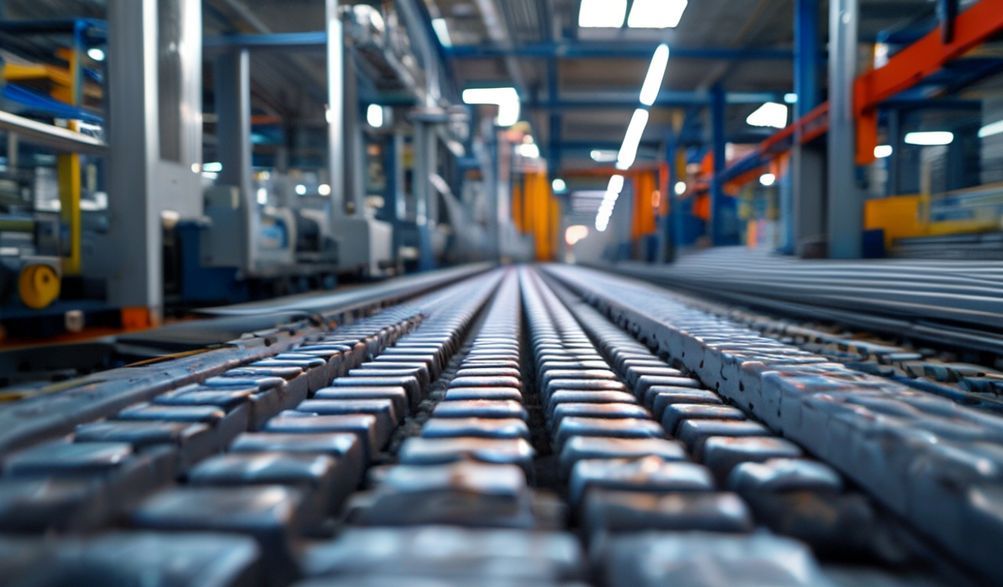
Hướng Dẫn Toàn Diện Về Nhà Cung Cấp Máy Gạch Tro Bay & Hợp Tác Với Nhà Máy FUDA
Giới thiệu
Bối cảnh xây dựng toàn cầu đang thay đổi. Khi nhu cầu về vật liệu xây dựng bền vững, chắc chắn và tiết kiệm chi phí tăng mạnh, gạch tro bay đã nổi lên như một giải pháp tiên phong. Đây không chỉ là một xu hướng; mà là một bước chuyển cơ bản hướng tới ngành xây dựng xanh hơn, kinh tế hơn. Tuy nhiên, đối với các doanh nhân và doanh nghiệp sẵn sàng tận dụng cơ hội này, một trở ngại đáng kể đang hiện ra: việc tìm hiểu thế giới phức tạp của...Nhà cung cấp máy sản xuất gạch tro bay.
Con đường này đầy rẫy thách thức. Làm thế nào để phân biệt một nhà cung cấp đáng tin cậy, chất lượng cao với một nhà cung cấp tầm thường? Còn về hỗ trợ sau bán hàng, đào tạo kỹ thuật, và đảm bảo máy móc đạt được sản lượng và chất lượng gạch như cam kết thì sao? Việc mua máy ban đầu chỉ là bước đầu tiên; tìm kiếm một đối tác đảm bảo thành công lâu dài cho bạn mới là thách thức thực sự.
Hướng dẫn này đóng vai trò là nguồn tài nguyên kép toàn diện dành cho bạn. Trước tiên, chúng tôi cung cấp một khuôn khổ chặt chẽ, được kiểm chứng bởi ngành công nghiệp để đánh giá và lựa chọn đối tác máy móc. Thứ hai, chúng tôi đi sâu vào sự xuất sắc trong vận hành của một thực thể tiêu chuẩn nhưNhà máy sản xuất gạch FUDAminh họa những thành tựu mà một quan hệ đối tác sản xuất tích hợp dọc thành công có thể đạt được. Được biên soạn từ phân tích ngành, tiêu chí đánh giá nhà cung cấp chuyên nghiệp và những hiểu biết sâu sắc về vận hành nhà máy thành công, hướng dẫn này được thiết kế để mang lại lời khuyên thiết thực, đáng tin cậy và có thể áp dụng cho dự án của bạn.
Hiểu Biết Công Nghệ Sản Xuất Gạch Tro Bay
Before investing in machinery, understanding the product and the process is crucial. This knowledge empowers you to ask the right questions and evaluate suppliers effectively.
What Are Fly Ash Bricks and Why Are They Sustainable?
Fly ash bricks are a premium building material manufactured using a core mixture of:
* Tro bay (50-60%): A fine, powdery industrial byproduct from coal-fired thermal power plants.
* Lime (20-25%): Acts as a primary binder.
* Gypsum (5%): Controls the setting time and adds strength.
* Nước: For hydration and forming.
Their key benefits drive their demand:
* Tính Bền vững Môi trường: They utilize an industrial waste product (fly ash), reducing landfill burden and the carbon footprint associated with clay brick firing.
* Sức mạnh vượt trội: They offer high compressive strength (easily achieving 7.5 MPa to 10 MPa and beyond) and better dimensional consistency than traditional clay bricks.
* Hiệu quả Chi phí: Lower raw material costs and reduced energy consumption during manufacturing translate to significant savings.
* Enhanced Properties: They provide better thermal insulation, fire resistance, and lower water permeability.
Core Machinery in the Production Line
A modern, automated plant is a symphony of interconnected machines. Here’s the essential lineup:
- Máy trộn bột: This is where it all begins. It thoroughly homogenizes the raw materials (fly ash, lime, gypsum, water) to create a consistent, semi-dry mix critical for brick quality.
- Brick Making Machine (The Heart): Typically a hydraulic or high-pressure machine. It compacts the mixed material into brick molds under immense pressure (measured in tons). This pressure is directly responsible for the brick’s final strength and density.
- Curing Chamber/System: Freshly pressed bricks are not yet strong. They are placed in a controlled curing environment (often low-pressure steam curing chambers) for 14-24 hours. This process allows the lime to react with fly ash, gaining over 70% of its ultimate strength.
- Pallet Feeder & Stacker (Automation): These systems automate the movement of bricks on pallets from the press to the curing chamber and finally to the storage yard, drastically reducing labor and handling damage.
How to Vet and Select Fly Ash Bricks Machine Suppliers
Selecting your supplier is the most critical business decision you will make. Use these actionable criteria to separate the best from the rest.
Key Evaluation Criteria for Suppliers
-
Chất Lượng & Công Nghệ Máy Móc:
- Chất Lượng Xây Dựng: Inspect the frame and components. Heavy-duty, high-grade steel (like EN-8/EN-9) ensures longevity and stability under constant high pressure.
- Mức độ Tự động hóa: Semi-automatic vs. fully automatic systems. Higher automation increases output, reduces labor, and ensures consistency.
- Pressure Capacity: Don’t just look at “bricks per hour.” The machine’s tonnage (e.g., 150-ton, 200-ton pressure) is a direct indicator of the brick strength it can produce.
- Hiệu suất Năng lượng: Ask about the hydraulic system and motor specifications. Efficient machines have lower operational costs.
-
Năng lực Sản xuất & Sản lượng:
- Match the machine’s stated output (e.g., 8,000-10,000 bricks per 8-hour shift) to your detailed business plan and market demand. Avoid over- or under-investing.
-
Supplier’s Expertise & History:
- Tenure & Reputation: How long have they been in business? Seek established players with a proven track record.
- Client Portfolio: Ask for a list of client references, preferably with contact details. Speaking to existing customers is invaluable.
- Technical Knowledge: Their engineers should understand the chemistry of fly ash brick making, not just mechanics.
The Non-Negotiables: Service and Support
The machine’s price tag is only the entry fee. Long-term success hinges on support.
- Comprehensive After-Sales Service: A clear warranty (at least 12-18 months on critical parts), guaranteed availability of spare parts, and a documented service network.
- Cài đặt & Đào tạo: The supplier must provide skilled technicians for installation, commissioning, and thorough hands-on training for your operators.
- Custom Solutions: Can they adapt the machine or mold design for special brick types (hollow, paver, interlocking) or variations in your local raw material quality?
Cost Analysis: Beyond the Initial Price Tag
Adopt a “Total Cost of Ownership” mindset.
- Calculate TCO: Include estimated costs for preventive maintenance, energy consumption per brick, and expected lifespan of wear parts.
- Decode the Quotation: Ensure it clearly itemizes costs for the machine, installation, training, initial spare parts kit, and taxes. Beware of hidden charges.
- Explore Partnerships: Some leading suppliers offer financing leases or OEM partnership models, which can ease the initial capital burden.
Spotlight on a Model Partnership: The FUDA Brick Making Factory Approach
To understand what excellence looks like, we examine a model like the Nhà máy sản xuất gạch FUDA. While specific operational details may vary, entities like FUDA represent the pinnacle of integrated, quality-focused manufacturing—precisely the end goal your machine supplier should enable you to achieve.
Who is FUDA? A Case Study in Integrated Manufacturing
FUDA can be viewed as a benchmark for a mature, successful fly ash brick manufacturing operation. Such factories typically excel due to:
- Process Integration: Seamless coordination from raw material handling to finished brick dispatch.
- Kiểm Soát Chất Lượng Nghiêm Ngặt: In-house labs for daily testing of raw materials and finished bricks for strength, dimensional accuracy, and water absorption.
- Scalable Production Models: Systems designed for high-volume output without compromising on consistency.
- Market Leadership: A reputation built on delivering a reliable, standardized product that meets or exceeds national standards (like BIS).
What Machine Suppliers Can Learn from FUDA’s Success
The operational discipline of a top-tier factory underscores what matters in machinery:
- Tính nhất quán là Vua: Machines must perform identically, brick after brick, shift after shift. Variability in pressure or feed leads to rejected batches.
- Tối ưu hóa Quy trình The best factories fine-tune their mix proportions and curing cycles. A good machine supplier provides the stable, controllable platform needed for this optimization.
- Uptime is Profit: In a high-volume plant like FUDA’s, machine breakdowns are catastrophic. Reliability and easy maintenance are non-negotiable features.
The Value of a “Factory-Verified” Supplier
This leads to a powerful selection heuristic: prioritize machine suppliers whose equipment is proven in demanding, high-volume environments.
When evaluating a supplier, ask pointed questions:
* “Can you show me case studies or videos of your machines operating in a plant with a scale and quality focus similar to FUDA’s?”
* “Do you have clients producing over [X] bricks daily who consistently meet BIS standards?”
* “How does your machine design facilitate the level of process control and low downtime required in such an operation?”
A supplier with affirmative answers is likely providing industrial-grade, battle-tested technology.
Building Your Business Plan: From Machine Purchase to Production
With the right supplier chosen, focus shifts to setting up a successful operation.
Site Requirements and Setup
- Không gian A minimum of 10,000-15,000 sq. ft. for a small-to-medium plant, covering production, curing, storage, and raw material yards.
- Quyền lực: Ensure a stable, 3-phase electrical connection with adequate load capacity for all motors.
- Nước: A reliable source for the mixing process.
- Raw Material Storage: Designated, covered areas for fly ash, lime, and gypsum to prevent moisture contamination.
Sourcing Raw Materials Consistently
- Fly Ash Supply: This is your lifeblood. Establish direct contracts or reliable agreements with nearby thermal power plants or certified fly ash distributors. Consistency in fly ash quality is critical for consistent brick quality.
Navigating Compliance and Certification
- Product Standards: Ensure your bricks are tested to comply with relevant standards like IS 12894:2002 (Fly Ash Lime Bricks) in India or equivalent regional standards.
- Factory Operations: Consider certifications like ISO 9001 (Quality Management) to streamline processes and build customer trust.
Các Câu Hỏi Thường Gặp (FAQ)
Q1: What is the average investment for a fly ash brick manufacturing plant?
A: Investment ranges widely. A small semi-automatic plant can start from $50,000 – $80,000, while a large, fully-automatic production line can require $200,000 to $500,000+. The machinery is typically the largest cost component, varying with automation and capacity.
Q2: Can I start with a single machine, or do I need a full line?
A: You can start with a single hydraulic press and manual material handling. However, for commercial viability and efficiency, an integrated line (mixer, conveyor, press, stacker) is highly recommended. It ensures higher, more consistent output with lower labor costs, providing a faster return on investment.
Q3: How do I ensure the bricks produced meet strength (e.g., 7.5 MPa, 10 MPa) and quality standards?
A: Strength is a function of three pillars: 1) Machine Pressure (adequate tonnage), 2) Accurate Mix Proportions (controlled by a good mixer and recipe), and 3) Proper Curing (regulated temperature and humidity). Your machine supplier should guide you on the settings and process for your target strength.
Q4: What should I look for in a supplier’s after-sales service agreement?
A: Key clauses include: warranty period and coverage, guaranteed spare parts availability (with a listed inventory), provision for on-site technician visits, access to remote technical support, and clear terms for service response time.
Q5: Is partnering with or learning from an existing factory like FUDA beneficial?
A: Immensely beneficial. If possible, visiting a well-run plant provides firsthand insight into workflow, quality checks, maintenance schedules, and real-world machine performance. It sets a tangible benchmark for what your operation should strive to become.
Conclusion
Choosing your fly ash bricks manufacturing machine supplier is a decision that reverberates through every aspect of your future business—impacting product quality, daily profitability, and long-term scalability. It is not merely a transaction but the foundation of a critical partnership.
We recommend using the rigorous criteria outlined in this guide to create a supplier evaluation scorecard. Look beyond glossy brochures and base prices. Seek out partners whose technology, support ethos, and proven client results demonstrate they can equip you to build an operation that embodies the robustness, efficiency, and quality-consciousness of industry benchmarks like the Nhà máy sản xuất gạch FUDA.
Your Next Steps: Begin your journey by shortlisting suppliers who meet these standards. Request detailed quotations, insist on visiting their manufacturing facility, and, most importantly, arrange to see their machines in action at a client’s plant. There is no substitute for seeing the technology—and the supplier’s support—in a real-world setting.
<