
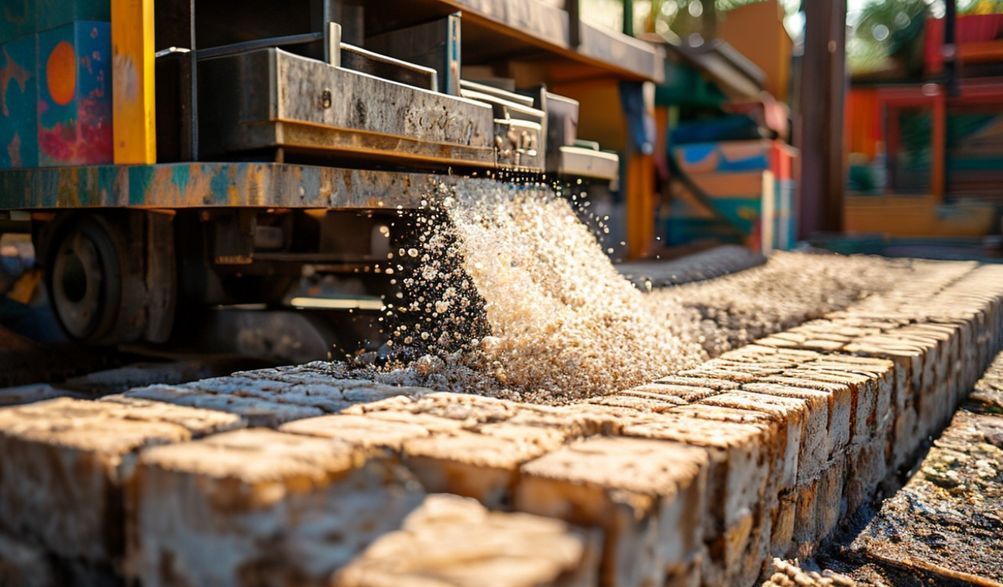
Your Complete Guide to Hollow Blocks Maker Machines in the Philippines (2026 Buyer’s Guide)
Introduction
The skyline of Manila, Cebu, and Davao is a testament to a nation building its future. Driven by flagship programs like “Build, Build, Build,” a surge in provincial developments, and a pressing need to address the housing backlog, the Philippine construction industry is experiencing unprecedented growth. For contractors, builders, and aspiring entrepreneurs, this boom isn’t just about erecting structures—it’s about securing the very building blocks of progress. Enter the hollow block, the ubiquitous, cost-effective champion of Philippine construction.
Manufacturing your own hollow blocks is more than a logistical decision; it’s a strategic move. It grants you complete quality control, slashes project costs by up to 30% compared to purchased blocks, and can transform a side operation into a profitable, standalone business. However, the cornerstone of this venture is your equipment. Navigating the market for hollow blocks maker machines in the Philippines can be daunting, with options ranging from simple manual presses to fully automated production lines.
This guide is your definitive resource. We combine years of industry observation, direct feedback from local block yard operators, and a deep analysis of market trends to cut through the noise. Our goal is to equip you with the expertise needed to make a confident, informed investment that aligns perfectly with your production targets, site conditions, and financial plan.
Understanding Hollow Blocks and Their Role in Philippine Construction
Before investing in a machine, it’s crucial to understand the product you’ll be creating and why it’s so vital to the local construction landscape.
What are Hollow Blocks?
Commonly called Concrete Hollow Blocks (CHB), these are rectangular precast construction materials made from a mixture of Portland cement, sand, gravel, and water. Their defining feature is the hollow cores, which typically make up about 50% of the block’s total area.
- Standard Dimensions: In the Philippines, the most common sizes are:
- 4-inch CHB: 40cm (L) x 20cm (H) x 10cm (W) – Used for interior partitions.
- 5-inch CHB: 40cm (L) x 20cm (H) x 15cm (W) – Common for single-story exterior walls.
- 6-inch CHB: 40cm (L) x 20cm (H) x 20cm (W) – Used for load-bearing walls in multi-story structures.
- Key Advantages:
- Cost-Effective: Less concrete is used compared to solid blocks.
- Lightweight: Easier and faster to handle and install, reducing labor time.
- Thermal & Acoustic Insulation: The air pockets provide natural insulation.
- Utility-Friendly: Conduits for electrical and plumbing lines can be run through the hollow cores.
The Market Demand in the Philippines
The demand for hollow blocks is directly tied to national development. The government’s infrastructure push requires millions of blocks for public works, schools, and roads. Simultaneously, the estimated 6.5 million housing backlog fuels continuous demand for residential construction. This demand isn’t confined to Metro Manila; it’s robust in emerging growth centers across Luzon, Visayas, and Mindanao. For the savvy investor, this means a decentralized market with opportunities nearly everywhere.
Types of Hollow Blocks Maker Machines Available
Machines are broadly categorized by their level of automation, which directly dictates output, labor requirements, and capital investment.
Manual Hollow Blocks Machines
These are the most basic and entry-level machines, relying almost entirely on human labor.
- Operation and Output: Workers manually fill the mold with concrete mix, then use a lever to compress the block. The machine is then lifted, leaving the formed block on the ground to cure. A dedicated team might produce 200-400 blocks in an 8-hour day.
- Ideal For: Individuals supplying blocks for their own small home construction, barangay-level micro-enterprises, or beginners testing the business with very limited capital (often under PHP 30,000).
- Pros and Cons:
- Pros: Very low initial investment, simple mechanics with minimal maintenance, no electricity required.
- Cons: Extremely labor-intensive, low and inconsistent output, highly dependent on operator skill, produces lower-density blocks.
Semi-Automatic Hollow Blocks Machines
This category offers the best balance for many Filipino businesses, automating the critical compaction process.
- Operation and Output: Operators still manually feed the mix into the mold, but the machine uses an electric or diesel-powered vibration motor and a hydraulic or mechanical press to densely compact the block. Output can range from 400 to 1,500 blocks per 8-hour shift, depending on model and crew size.
- Ideal For: Growing block yard businesses, medium-scale contractors supplying multiple projects, and local government unit (LGU) procurement.
- Pros and Cons:
- Pros: Significant jump in output and block quality/consistency, good cost-to-performance ratio, can be equipped with multi-mold systems for different block sizes.
- Cons: Higher initial cost (PHP 150,000 – PHP 800,000), requires a stable power source or fuel, needs basic operational training.
Fully Automatic Hollow Blocks Machines
These are complete production plants, representing the pinnacle of efficiency for large-scale commercial operations.
- Operation and Output: These PLC-controlled systems automate batching, mixing, conveying, molding, curing, and stacking. They require minimal human intervention (mainly for monitoring and maintenance). Output can easily exceed 5,000 to 20,000+ blocks per day.
- Ideal For: Large commercial block yards supplying major developers, regional distributors, and high-volume infrastructure project suppliers.
- Pros and Cons:
- Pros: Maximum output with minimal labor, exceptional product uniformity, programmable for different mix designs and block types.
- Cons: Very high capital investment (PHP 2 million+), requires significant space and stable three-phase power, complex maintenance requiring specialized technicians.
Key Features to Consider When Buying in the Philippines
Beyond the type, drill down into these critical specifications to find the right machine for your local conditions.
Production Capacity (Blocks per Hour/Day)
Don’t just buy the biggest machine you can afford. Match the output to your realistic sales projections or project needs. Overestimating leads to idle capital; underestimating means missed opportunities. Consider future growth and choose a machine that can scale, perhaps by adding shifts.
Power Source: Electric vs. Diesel
- Electric Motors: Cleaner, quieter, and cheaper to run per hour. Essential for indoor or residential areas. However, they are vulnerable to brownouts, which are still a reality in many provinces. A backup generator is a wise investment.
- Diesel Engines: Offer complete independence from the grid, crucial for remote sites. They have higher torque, which can be beneficial. The trade-offs are higher noise, fumes, ongoing fuel costs, and more frequent engine maintenance.
Mold Versatility
The ability to produce different products from one machine maximizes your market adaptability. Look for machines that allow quick mold changes to produce:
* Standard 4″, 5″, and 6″ CHB.
* Interlocking blocks (for walls without mortar).
* Solid blocks, paving stones, or curb stones.
This flexibility lets you cater to diverse customer needs without multiple machines.
Build Quality and Durability
The tropical climate—humidity, rain, and heat—is tough on machinery. Prioritize:
* Heavy-Duty Steel Frame: The chassis should be made from thick, reinforced steel to withstand constant vibration.
* Quality Vibration Motors: These are the heart of the machine. Seek out brands with proven reliability (e.g., Italian or German-made motors are often cited for longevity).
* Corrosion-Resistant Components: Look for powder-coated or galvanized parts to fight rust.
After-Sales Support
This is arguably the most critical factor for the Philippine market. A machine is a long-term investment.
* Local Technical Support: Does the supplier have Filipino technicians who can respond within 24-48 hours?
* Spare Parts Inventory: Are common wear parts (molds, springs, gaskets, motor brushes) readily available in-country?
* Warranty: A comprehensive warranty (at least 1 year on major components) is a sign of the manufacturer’s confidence.
Top Manufacturers and Suppliers in the Philippines
Local Philippine Manufacturers
Several reputable local fabricators design machines specifically for Philippine conditions and materials. Their key advantage is hyper-localized support. Companies like Bessie Machinery and Lucky Victory have established networks and understand the on-ground challenges operators face.
International Brands Available Locally
Many global brands are available through dedicated distributors.
* Chinese Brands: (e.g., QGM, Wangda) dominate the market in terms of variety and competitive pricing for semi and fully automatic machines. Due diligence on the specific local distributor’s service capability is paramount.
* Indian Brands: (e.g., Everon, Apollo) are known for robust, simple designs that handle wear well, often at a good price point.
* European Brands: (e.g., Zenith, Hess) represent the premium tier, known for unparalleled automation and durability, but with a corresponding price tag.
How to Vet a Reliable Supplier
- Factory/Showroom Visit: Never buy based on a brochure alone. See the machine operate.
- Client Referrals: Ask for a list of recent buyers and call them. Ask about machine performance and, crucially, after-sales service.
- Business Longevity: How long has the supplier been in business? A track record of 5-10+ years is a good sign.
- Service Contract: Clarify what the warranty covers and the cost of an annual service contract after the warranty expires.
Cost Analysis and Investment Guide
Price Ranges for Different Machine Types (Estimated in PHP)
- Manual Press Machines: PHP 15,000 – PHP 40,000
- Semi-Automatic Machines: PHP 150,000 – PHP 800,000
- Fully Automatic Plants: PHP 2,000,000 – PHP 10,000,000+
Beyond the Machine: Calculating Total Setup Cost
The machine is just one part of the investment. Budget for:
* Raw Materials Stockpile: Initial inventory of cement, sand, and gravel.
* Land & Shelter: A leveled, concrete-floored area with a roof for curing.
* Labor: At least 2-4 workers for semi-automatic operations.
* Utilities & Fuel: Monthly electricity or diesel costs.
* Transport: A utility vehicle or truck for deliveries.
ROI Calculation: A Simple Model
Let’s assume a semi-automatic machine costs PHP 300,000.
* Estimated Production Cost per 6″ Block: PHP 12-15 (materials + labor + overhead).
* Average Selling Price: PHP 22-25.
* Profit per Block: PHP ~10.
* Blocks to Break Even on Machine Cost: 300,000 / 10 = 30,000 blocks.
At a modest production rate of 500 blocks/day, you could recover your machine investment in about 60 operational days. This simplified model highlights the potential, but your actual numbers must be based on local material and selling prices.
Operational Guide and Best Practices
The Right Mix Design
A common mistake is using a poor mix. For durable, DPWH-standard blocks in the Philippines, a 1:2:4 ratio (1 part cement, 2 parts sand, 4 parts 3/8″ gravel) is a strong starting point. Use clean, sharp sand and potable water. The mix should be just wet enough to hold its shape when squeezed—too wet weakens the block, too dry causes poor compaction.
Daily Operation and Maintenance Checklist
- Pre-Start: Check oil levels in vibration motor and hydraulic tank. Inspect all bolts for tightness. Clean the mold faces.
- During Operation: Listen for unusual noises from the motor. Ensure the mix consistency remains uniform.
- Post-Operation: Power wash the entire machine, especially the mold, to prevent concrete buildup. Grease all moving joints as per the manual.
Troubleshooting Common Issues
- Blocks Breaking Easily: Usually caused by insufficient cement, too much water, or inadequate vibration time. Adjust your mix and ensure the machine vibrates for the full recommended cycle (typically 10-15 seconds).
- Poor Surface Finish or “Honeycombing:” The concrete mix is too dry or the vibration is insufficient, preventing the mix from filling the mold completely.
- Slow Production: Often a workflow issue. Organize your raw materials and finished blocks for efficient movement. Ensure your crew is well-practiced in the feeding and block removal process.
FAQ: Hollow Blocks Maker Machine Philippines
Q1: What is the cheapest hollow blocks machine available in the Philippines?
The most affordable option is a single-brick, manual press machine, which can cost between PHP 15,000 to PHP 25,000. Remember, its output is very low and labor-intensive.
Q2: Can I start a hollow block business in my backyard? What are the space requirements?
Yes, many start in their backyard. You’ll need a minimum of 80 to 150 square meters of leveled, solid ground. This space is for the machine, raw material storage, block molding, and a curing area. Check local barangay ordinances regarding home-based businesses.
Q3: How much profit can I make per hollow block?
Profit varies by location, material costs, and block size. For a standard 6″ block, net profit typically ranges from PHP 8 to PHP 12 after accounting for all costs (cement, sand, gravel, labor, power, and depreciation).
Q4: Is a franchise for hollow block production a good idea?
Franchises (like certain branded block systems) offer brand recognition, training, and sometimes a guaranteed market. However, they come with franchise fees and may restrict your operational freedom. Evaluate if the brand premium justifies the cost compared to starting your own independent yard.
Q5: What are the most common problems with hollow block machines and how do I fix them?
The most frequent issues are worn-out vibration motors (replace brushes or the entire motor), leaking hydraulic systems (replace seals), and deformed or stuck molds (clean regularly and check for damage). Preventive maintenance is far cheaper than repairs.
Q6: Where can I get training on operating and maintaining the machine?
Reputable suppliers should provide basic operational training upon installation. For deeper technical maintenance, some distributors offer periodic workshops. The best hands-on training often comes from hiring an experienced machine operator initially.
Conclusion
Choosing the right hollow blocks maker machine in the Philippines is a pivotal decision that bridges opportunity and execution. It’s an investment not just in metal and motor, but in the future of your construction projects or the foundation of your entrepreneurial venture. Success hinges on a clear-eyed assessment: align the machine’s capacity with your genuine needs, prioritize durable construction and unwavering after-sales support, and never underestimate the value of a perfect concrete mix.
The path forward is built on research and verification. Use this guide as your starting point, then visit suppliers, demand demonstrations, and speak frankly with current machine owners. Their firsthand experience is an invaluable final layer of due diligence. With the right equipment operated with skill and care, you’ll do more than just make blocks—you’ll be manufacturing progress, one solid, reliable unit at a time.