
Your Ultimate Guide to Block Bricks Making Machine Factories: How to Choose a Reliable Partner
The foundation of any durable structure, from a simple home to a massive infrastructure project, begins with quality bricks and blocks. For entrepreneurs and construction companies looking to enter the block manufacturing business or upgrade their production, selecting the right block bricks making machine factory is the single most critical decision. This choice determines your product quality, production efficiency, and long-term profitability.
Yet, navigating the global market of manufacturers can be overwhelming, filled with technical jargon and varying promises. With over 25 years of experience in the construction machinery industry, I’ve guided countless clients through this exact process. This comprehensive guide leverages deep industry expertise to cut through the noise. We’ll provide authoritative, trustworthy insights into what separates a top-tier factory from the rest, ensuring you invest in a partnership that builds success, not just bricks.
Understanding Block Bricks Making Machines: Core Concepts
Before you can choose a factory, you must understand the product. Knowing the machinery’s fundamentals is key to asking the right questions and evaluating a manufacturer’s competence.
What is a Block Bricks Making Machine? Types and Applications
At its core, a block bricks making machine is a device that compresses raw materials into precise, uniform shapes through a combination of vibration and high pressure. The raw materials, or “mix,” typically include concrete, cement, sand, fly ash, or even stabilized soil.
The market offers three primary types, each suited to different scales of operation:
- Fully Automatic Machines: These are high-output production lines. They automate the entire process—mixing, conveying, molding, curing, and palletizing—with minimal human intervention. Ideal for large-scale commercial block yards and major construction projects.
- Semi-Automatic Machines: A balanced choice for small to medium businesses. The core molding process is mechanized (often with hydraulic pressure and vibration), but tasks like feeding raw material or moving pallets are manual. Offers a great blend of efficiency and affordability.
- Manual / Hand-operated Machines: These are simple, mechanical presses. They require significant labor and produce lower volumes but have a very low initial cost and are highly portable. Suitable for very small-scale, on-site production.
The versatility of these machines is seen in their applications. By simply changing the mold, a single machine can produce:
* Hollow and Solid Concrete Blocks
* Paving Stones and Interlocking Bricks
* Curb Stones and Landscape Blocks
* Fly Ash Bricks and Cement Tiles
Key Components and How They Impact Durability
The longevity and performance of your machine hinge on the quality of its core components. When assessing a factory, you’re assessing their ability to source and assemble these parts to the highest standard.
- Hydraulic System: The heart of the machine. It provides the immense pressure needed for compaction. Look for systems using reputable brand pumps and valves (e.g., Bosch Rexroth, Kawasaki). Inferior hydraulics lead to leaks, pressure loss, and costly downtime.
- Mold / Frames: These define your block’s shape and precision. They must be made from high-grade, hardened steel (e.g., SS420, 45# steel) to withstand constant abrasion. A poorly made mold will wear quickly, causing dimensional inaccuracies in your blocks.
- Vibration System: Responsible for compacting the mix and releasing air bubbles. A powerful, well-isolated vibration system ensures dense, strong blocks with a smooth finish. Systems should use heavy-duty vibration motors.
- Control Panel & Electrical Systems: The machine’s brain. Panels should house branded components (e.g., Siemens, Schneider, Mitsubishi) for reliability. A well-organized, dust-protected panel is a sign of quality craftsmanship.
- Structural Frame & Conveyor Belts: The frame must be fabricated from robust steel sections to handle constant stress. Conveyors should be durable and correctly aligned to prevent block damage.
Expert Insight: Prioritize factories that manufacture their own core components—like the frame, mold, and vibration table—in-house. “Assembler” factories that buy all parts externally often have less control over quality and face longer lead times for spare parts. An integrated manufacturer has deeper expertise and ensures component compatibility.
The Hallmarks of a Reputable Block Machine Factory
Identifying a true manufacturer from a trading company or a low-quality workshop is your first filter. Here are the non-negotiable traits of a reliable partner.
Manufacturing Expertise and In-House Production Capability
A website can make any company look impressive. The truth is on the factory floor.
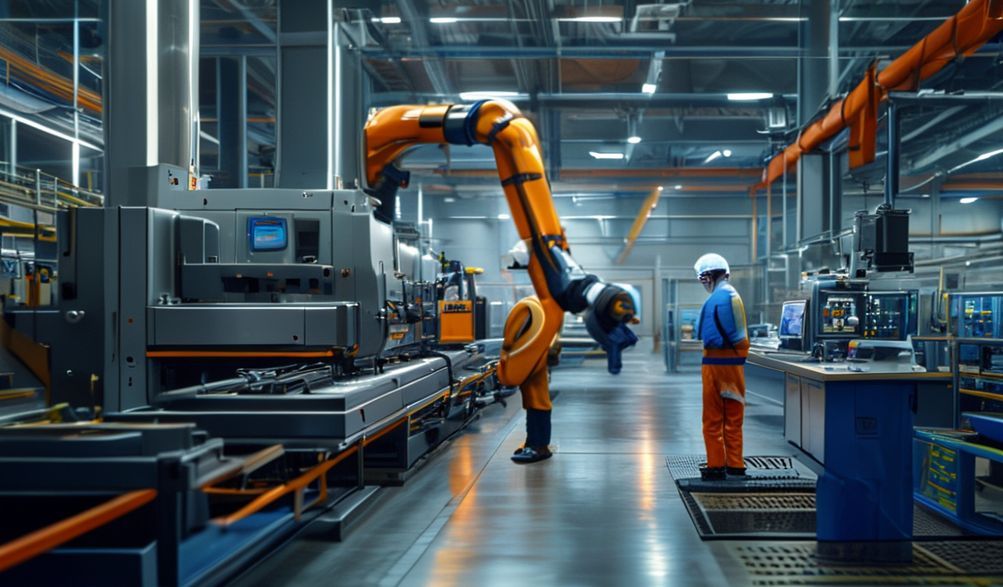
- Physical Evidence: A reputable factory will welcome a visit (physical or detailed virtual tour). Look for organized production lines, advanced machinery like CNC plasma cutters and welding robots, and dedicated quality control stations where components are measured and tested.
- R&D Investment: Innovation matters. Inquire about their engineering team. Do they have a dedicated R&D department? Do they release new models or improvements? A factory that invests in R&D is committed to efficiency and staying ahead of market needs, directly benefiting you.
- Case Study Example: The ideal factory setup features a clean, organized flow: raw steel cutting → CNC machining → sub-assembly welding → painting booth → main assembly line → final testing area. Each station has quality checkpoints. They should proudly show you their testing process, where a machine runs for hours to simulate production before shipping.
Material Quality and Sourcing Transparency
The brand of components used is a direct proxy for machine reliability.
- Steel: Ask for the specific grade and origin of steel used for the frame and molds. International standards (like ISO or JIS) are a good sign.
- Key Components: Don’t accept vague answers. Ask: “Which brand of hydraulic pumps and valves do you use?” “Who supplies your electrical PLCs and contactors?” Reputable factories use known brands and will specify them in their quotation.
- Transparency: A trustworthy partner will provide a detailed Bill of Materials (BOM) or at least be completely open about their primary component suppliers. Opacity here is a major red flag.
Compliance, Certifications, and Industry Standards
Certifications are a factory’s independent validation of its processes and commitment to safety.
- CE Marking: For the European market, this is crucial. It certifies the machine meets EU safety, health, and environmental requirements. Ensure it’s a genuine certification from a “Notified Body,” not a self-declaration.
- ISO 9001: This certification demonstrates the factory has a documented Quality Management System. It means they follow consistent processes to ensure quality, which reduces defects.
- Other Verifications: SGS inspection reports, OSHA compliance, or other local international standards add further layers of credibility. Always request to see copies of these certificates.
A Step-by-Step Guide to Vetting and Selecting Your Factory Partner
Turn the criteria above into an actionable plan. Follow this systematic process to make a confident decision.
Step 1: Defining Your Production Needs and Budget
You cannot shop effectively without a clear specification.
- Ask Yourself:
- What is my target output (blocks per hour or 8-hour shift)?
- What block types and sizes will I produce?
- What level of automation fits my labor and capital situation?
- What is my available factory space and power supply (voltage, phase)?
- Budget Realistically: The machine price is just the start. Create a comprehensive budget that includes:
- Machine Cost
- Shipping, Insurance, and Customs Duties (CIF/FOB matters)
- Installation & Foundation Costs
- Operator Training
- Initial Spare Parts Kit
Step 2: Comprehensive Factory Research and Shortlisting
Cast a wide net, then filter aggressively.
- Where to Look:
- Industry Exhibitions: bauma (Germany), CONEXPO (USA), bC India. Meeting factories face-to-face is invaluable.
- B2B Platforms: Use Alibaba, Made-in-China, but as a discovery tool, not a vetting tool. Dig deeper than the storefront.
- Professional Networks: Industry associations and referrals from existing block manufacturers are gold.
- Red Flags vs. Green Flags:
- Red Flag: Vague contact info, no physical address, stock photos only, immediate pressure to pay.
- Green Flag: Detailed “About Us” with factory history, clear contact details, photos/videos of actual production, client testimonials with contact info.
Step 3: The Due Diligence Process: Questions You Must Ask
Arm yourself with this definitive checklist when you contact your shortlist.
Technical & Commercial Questions:
* “Can you provide a list of 3-5 client references in my region or a similar climate, and may I contact them?”
* “What is your detailed warranty policy? What is covered (parts, labor, shipping)? What is excluded?”
* “What is your standard lead time from deposit to shipment? Can you provide a production schedule?”
* “Is the quoted price FOB or CIF? What exactly is included (e.g., spare parts kit, mold, pallets)?”
Step 4: Evaluating After-Sales Support and Service
This is where great factories separate themselves from the rest. The sale is just the beginning.
- Installation & Training: Do they provide detailed foundation drawings? Do they offer remote video guidance or send an engineer? What does their operator training program include?
- Spare Parts: How quickly can they ship common wear parts (like mold liners, hydraulic seals)? Do they guarantee parts availability for 10+ years?
- Technical Support: Is there a dedicated after-sales team? What are their response time commitments (e.g., 24-hour email reply, remote diagnostics availability)?
Common Pitfalls to Avoid When Dealing with Machine Factories
Learn from the mistakes of others. These are the most frequent and costly errors buyers make.
The “Too-Good-To-Be-True” Pricing Trap
A quote significantly lower than the market average is not a bargain; it’s a warning.
- Deconstructing the Low Quote: The discount usually comes from inferior Chinese-grade components, thinner steel, no pre-shipment testing, and zero investment in after-sales service.
- The Real Cost: Calculate the cost of machine downtime. If a cheap machine breaks down for a week, the lost production and repair costs will quickly eclipse the “savings” from the initial purchase. Invest in reliability.
Overlooking the Importance of Molds and Spare Parts
The machine is a platform; molds are the consumables that define your product.
- Mold-Making Capability: Ensure your factory has its own mold workshop. Ask about their mold steel hardness (HRC), expected lifespan (number of cycles), and lead time for a replacement or new design.
- Spare Parts Guarantee: Get a written commitment for the long-term availability of critical spare parts. The inability to get a simple seal or sensor in 2 years can shut down your entire operation.
Inadequate or Vague Contract Terms
A handshake deal is a recipe for disaster. Everything must be in writing.
- Crucial Contract Clauses:
- Detailed Technical Specifications: Annex the full machine spec sheet, including component brands and model numbers.
- Clear Warranty Terms: Scope, duration, and responsibilities.
- Delivery & Penalty Schedule: Agreed shipment date and penalties for delays.
- Payment Terms: Milestones linked to production progress (e.g., 30% deposit, 40% before shipment, 30% after installation).
- Expert Advice: Always start with a detailed Proforma Invoice (PI), which acts as a pre-contract. For large orders, insist on a third-party pre-shipment inspection (e.g., via SGS) to verify quality and completeness before you make the final payment.
The Future of Block Making: Trends Factories Are Adopting
Partnering with a forward-thinking factory means your machine won’t be obsolete in five years. Here’s what leading manufacturers are focusing on.
Automation and Smart Factory Integration
The move towards “Industry 4.0” is reaching block manufacturing.
- IoT-Enabled Machines: Sensors collect real-time data on production counts, hydraulic pressure, motor temperature, and vibration levels. This data can be monitored remotely via smartphone, enabling predictive maintenance before a failure occurs.
- Robotic Integration: Fully automatic lines now seamlessly integrate with robotic palletizers and autonomous guided vehicles (AGVs) for material handling, creating a truly lights-out production cell.
Sustainable Manufacturing and Eco-Friendly Machines
Environmental responsibility is becoming a competitive advantage.
- Waste Material Utilization: Modern machines are engineered to optimally use industrial by-products like fly ash (from coal plants) or slag (from steel production) at high ratios, sometimes over 80%, reducing cement use and landfill waste.
- Energy Efficiency: New designs incorporate variable frequency drives (VFDs) on motors, energy-recovery systems in hydraulics, and optimized vibration protocols to significantly reduce power consumption per block produced.
FAQ Section
Q1: What is the average lead time for a block making machine from order to delivery?
A: Lead times vary significantly. For standard semi-automatic models, expect 30-45 days after down payment. For fully customized or large automatic lines, it can take 60-90 days. A reputable factory will provide a clear, milestone-based production schedule.
Q2: How do I verify if a factory’s CE certification is genuine?
A: Request the official CE certificate and the accompanying technical construction file. You can verify the issuing “Notified Body” number via the official EU NANDO database online. Be extremely wary of “self-certification” claims without proper documentation from an accredited body.
Q3: What is the most common cause of breakdown in these machines, and how can it be prevented?
A: Hydraulic system issues (leaks, pump failure) and excessive mold wear are among the most common. Prevention is threefold: 1) The factory using high-quality, branded components from the start, 2) Proper installation and calibration by trained personnel, and 3) Strict adherence to a regular preventive maintenance schedule as outlined in the factory’s manual.
Q4: Can I visit the factory before placing an order? Is it recommended?
A: Absolutely, and it is highly recommended. A physical visit is the single best way to assess manufacturing capability, quality control, and the company’s scale and professionalism. If travel isn’t possible, insist on a live, detailed virtual video tour of the production facility—not a pre-recorded promo video.
Q5: What after-sales support should I expect from a top-tier factory?
A: Expect comprehensive support including: Detailed installation drawings and foundation plans, remote or on-site installation guidance (engineers may travel for large lines), hands-on operator training programs, a readily available catalog of spare parts with a quick-ship guarantee, and access to a 24/7 technical support hotline or chat for urgent troubleshooting.
Conclusion
Choosing a block bricks making machine factory is far more than a simple purchase; it’s forming a strategic partnership for your business’s future. By prioritizing factories that demonstrate genuine expertise through in-house manufacturing and R&D, prove their authoritativeness with verifiable certifications and client portfolios, and build trustworthiness through transparent communication and robust after-sales support, you mitigate risk and lay a solid foundation for success.
Remember, the cheapest machine often carries the highest long-term cost. Use the steps and criteria outlined in this guide—born from decades of industry experience—to conduct diligent research. Invest time in selecting a partner whose reliability is as solid as the blocks their machines will produce, ensuring your venture is built to last.
Final Call to Action: Ready to take the next step? Download our free comprehensive “Block Machine Factory Vendor Checklist” to systematically evaluate your shortlisted partners. [Link/Button] For personalized guidance based on your specific project needs, contact our team of industry specialists today.