
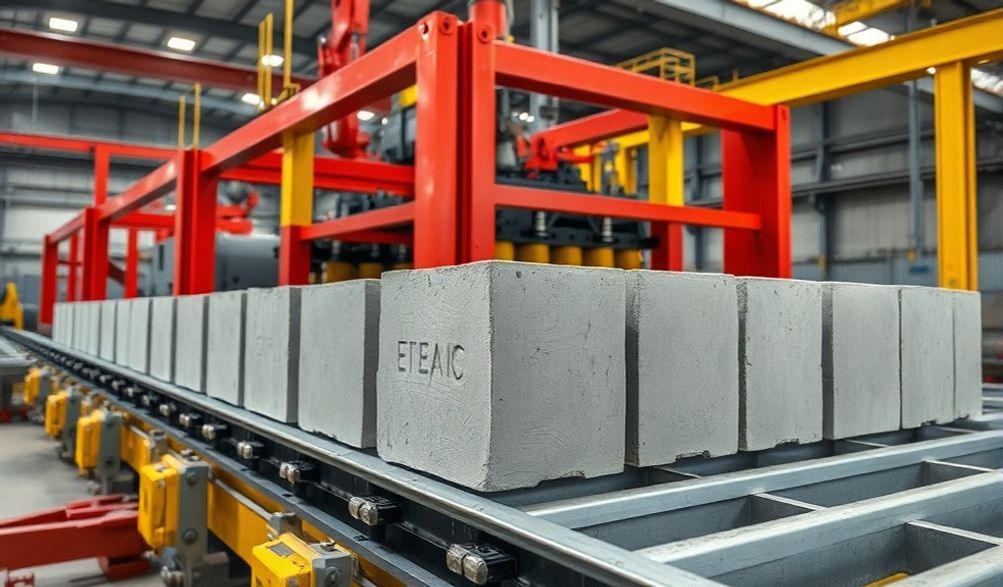
Your Ultimate Guide to Block Manufacturing Machines: Spotlight on FUDA Brick Machine Factory
Introduction
The global construction industry is in a perpetual state of growth, driven by urbanization, infrastructure development, and the ever-present need for affordable housing. At the heart of this growth lies a fundamental demand: reliable, durable, and cost-effective building materials. Concrete blocks, bricks, and pavers form the backbone of modern construction, and the shift from manual labor to automated production has revolutionized how these materials are made. Enter the block manufacturing machine—a pivotal piece of equipment that transforms raw materials into the building blocks of our world.
This guide is designed to be your comprehensive resource for understanding block manufacturing machines. We’ll delve into the different types, their applications, and the critical factors you must consider before investing. Furthermore, we will take an objective, in-depth look at one specific manufacturer that has garnered attention in the market: FUDA Brick Machine Factory.
Among the various global manufacturers, FUDA Brick Machine Factory has established a presence, offering a range of equipment for block production. This article is not an endorsement but a detailed examination. You will gain a clear, unbiased understanding of block machine technology, a framework for evaluating any supplier, and a factual overview of FUDA’s offerings to inform your procurement decision.
This guide is compiled based on industry research, technical specifications, and market analysis to provide a factual overview.
Understanding Block Manufacturing Machines: Types and Applications
Before evaluating any manufacturer, it’s crucial to understand the equipment itself. A block manufacturing machine is more than just a press; it’s a system designed for efficiency, consistency, and scale.
What is a Block Manufacturing Machine?
At its core, a block manufacturing machine automates the production of concrete masonry units (CMUs). It takes a mixture of cement, aggregates (like sand or crushed stone), and water, and through a process of molding and compaction, forms it into precise, high-density blocks.
The basic working principle involves four key stages:
1. Mixing: Raw materials are blended to a consistent, semi-dry consistency.
2. Molding: The mixture is fed into a mold cavity of a specific shape (e.g., hollow block, paver).
3. Compacting and Vibration: High-frequency vibration is applied to remove air pockets and densely compact the material, ensuring strength.
4. Curing: The freshly formed (or “green”) block is ejected and must undergo a controlled curing process to gain its full strength, often through steam curing or air drying.
Major Types of Block Making Machines
Choosing the right type of machine is the first critical decision, dictated by your production goals, budget, and labor availability.
-
Manual & Semi-Automatic Machines:
- Best for: Small-scale projects, start-ups, or regions with very low labor costs.
- Operation: Require significant manual intervention for feeding mixture, operating levers, and removing finished blocks.
- Investment: Lowest upfront cost, but higher labor dependency and lower output.
-
Fully Automatic Stationary Machines:
- Best for: Medium to large-scale commercial production plants.
- Operation: Fully integrated systems with automatic material feeding, molding, compaction, block ejection, and pallet stacking. Often controlled by Programmable Logic Controllers (PLC).
- Investment: Higher initial cost but delivers the highest output, consistency, and labor efficiency.
-
Mobile Block Machines (Egg-Laying Type):
- Best for: On-site production, reducing transport costs of finished blocks.
- Operation: The machine “lays” blocks directly onto a level concrete floor or pallet, then moves forward to produce the next batch. Excellent for large, localized projects.
-
Static Block Machines:
- Best for: Factory settings where blocks are produced on pallets and transported via conveyor to a curing area.
- Operation: The machine remains stationary while pallets cycle through it. This allows for a more streamlined, high-volume production line.
Key Products They Can Manufacture
Modern block machines are versatile. Beyond standard bricks, they can produce a variety of products to diversify your business:
* Solid and Hollow Concrete Blocks: The staple for wall construction.
* Paving Stones & Kerbstones: For landscaping, driveways, and road edging.
* Interlocking Bricks: Designed to lock together without mortar, ideal for retaining walls and pavements.
* Fly Ash Bricks: An eco-friendly alternative that utilizes a industrial by-product, reducing cement consumption and environmental impact.
Critical Factors When Choosing a Block Machine Supplier
Purchasing a block machine is a significant capital investment. The choice of supplier is as important as the choice of machine. Here is your due diligence checklist.
Assessing Machine Quality and Technology
Look beyond the sales brochure. Key technical aspects include:
* Structural Integrity: The machine frame must be made of high-quality, reinforced steel to withstand constant vibration and pressure.
* Vibration System: The heart of the machine. Look for powerful, durable vibration motors that ensure uniform compaction.
* Automation Level: PLC control systems ensure precision and repeatability. Hydraulic systems should be robust and from reputable brands.
* Production Capacity: Don’t just look at “cycles per hour.” Consider the number of blocks per cycle for a true output figure (e.g., blocks per 8-hour shift).
* Energy Efficiency: Assess power requirements (kW). An efficient machine reduces long-term operational costs.
Evaluating the Manufacturer’s Credentials (The “E-E-A-T” of Suppliers)
Apply the principles of E-E-A-T to your supplier selection:
* Experience: How long has the company been manufacturing? A long track record often indicates stability and iterative product improvement.
* Expertise: Do they have in-house R&D? Can they provide deep technical support and customization? Patents or unique technologies are a plus.
* Authoritativeness: Check for international certifications (ISO, CE) which indicate adherence to quality and safety standards. Look for verifiable client testimonials and participation in industry trade shows.
* Trustworthiness: This is paramount. Scrutinize their after-sales service policy. What is the warranty period? Do they have a network of technicians? Is communication transparent and prompt?
Cost Considerations Beyond the Sticker Price
The purchase price is just the beginning. Consider the Total Cost of Ownership:
* Maintenance & Spare Parts: What is the cost and availability of wear parts (molds, springs, liners)?
* Shipping, Insurance, and Customs: For international buyers, these can add 15-30% to the cost. Get a clear CIF (Cost, Insurance, Freight) or FOB (Free On Board) quote.
* Installation & Training: Will the supplier send engineers? Is training included?
* Return on Investment (ROI): Calculate based on your local block price, production capacity, and operational costs. A slightly more expensive, reliable machine often pays for itself faster than a problematic, cheap one.
An In-Depth Look at FUDA Brick Machine Factory
Based on publicly available information, FUDA Brick Machine Factory presents itself as a manufacturer and exporter of concrete block making machinery. Let’s examine its profile and offerings.
Company Profile and Market Position
- Location & Scale: FUDA is typically associated with manufacturing facilities in China, a global hub for industrial machinery. They position themselves as an export-oriented factory.
- Market Position: They are one of many competitors in the competitive global market for block machinery, often targeting price-sensitive buyers and emerging markets in Africa, Southeast Asia, and South America.
Product Range and Technical Specifications
FUDA’s product lineup, as seen in their marketing materials, covers the spectrum:
* Manual and Semi-Automatic Models: Such as the QCM4-30 small manual press.
* Fully Automatic Stationary Machines: Like the QFT10-15, an automatic hydraulic machine designed for high output of various block types.
* Mobile Block Machines: Such as the QMJ4-45 “egg-laying” type, which produces blocks directly on the ground.
Highlighted Model Example (for illustrative purposes):
* Model QFT10-15:
* Type: Fully Automatic, Static Pallet Type
* Potential Output: Can produce up to 10,000-15,000 standard blocks per 8-hour shift (depending on product type).
* Control: PLC system with touch screen interface.
* Product Range: Can be equipped with molds for hollow blocks, solid blocks, pavers, and interlocking bricks.
Strengths and Notable Features (Based on Common Claims)
Manufacturers like FUDA often highlight these aspects:
* Competitive Pricing: Often a primary value proposition, making automation more accessible.
* Robust Design for Key Models: Emphasis on heavy-duty steel frames and vibration systems in their automatic lines.
* Customization: Willingness to provide different mold configurations and minor machine modifications.
Important Considerations and Due Diligence
As with any major equipment purchase from an overseas supplier, prospective buyers must conduct enhanced due diligence.
* Verification is Key: Insist on direct communication with the factory sales and technical team.
* Request Client References: Ask for contact information for previous buyers in your region or a similar market. Follow up with them.
* Seek Independent Reviews: Look for user feedback on industry forums or B2B platforms, noting both positive and negative experiences.
* Clarify All Terms: Get a detailed, written breakdown of warranty (what’s covered, for how long, who pays for labor), spare parts pricing, and post-installation support.
* The Gold Standard: If feasible, visit the factory. If not, insist on a live video demonstration of the exact model you are considering, showing it in operation.
The Block Machine Purchase and Setup Process
Understanding the journey from inquiry to production will help you manage expectations and avoid pitfalls.
From Inquiry to Installation: A Step-by-Step Overview
- Initial Consultation: Share your production goals, raw material details, and budget. A good supplier will ask many questions.
- Quotation & Contract: Review the formal quote and proforma invoice meticulously. The contract should specify machine specs, payment terms (e.g., 30% deposit, 70% before shipment), delivery timeline, and all agreed-upon services.
- Production & Pre-Shipment Inspection (PSI): You or a hired third-party inspector should visit the factory to check the machine before it is crated. This verifies build quality and specifications.
- Shipping & Customs: The supplier typically handles export formalities. You or your agent will handle import customs clearance and duties in your country.
- Installation & Commissioning: Upon arrival, the supplier’s engineers (if contracted) will assemble the machine, calibrate it, and test-run it with your local materials.
- Operator Training: Comprehensive training for your team on operation, daily maintenance, and basic troubleshooting is essential.
Maximizing Your Investment: Operation and Maintenance Tips
- Preventive Maintenance: Follow the manual. Daily greasing, checking bolt tightness, and cleaning are non-negotiable.
- Quality Raw Materials: The machine can only be as good as the mix. Use consistent, well-graded aggregates and quality cement.
- Trained Staff: Ensure operators understand not just how to run the machine, but why each step is important for block quality and machine longevity.
- Spare Parts Inventory: Based on the manufacturer’s recommended list, keep critical spare parts (like vibration motors, hydraulic seals, mold liners) in stock to minimize downtime.
Frequently Asked Questions (FAQ)
Q1: What is the average starting price range for a FUDA block machine?
A: Prices vary dramatically. A basic manual machine may start from $3,000 – $7,000 USD, while a fully automatic production line can range from $25,000 to over $80,000 USD depending on configuration and automation level. Always request a formal, itemized quotation.
Q2: Does FUDA provide installation support and training?
A: This is a contract-specific point. Many Chinese manufacturers offer it as an optional, paid service where they send 1-2 engineers for a limited period. The costs for flights, accommodation, and daily fees are typically borne by the buyer. Crucially, confirm the scope and cost in writing before payment.
Q3: What is the typical lead time for delivery?
A: For standard models, production might take 4-8 weeks. Factor in an additional 4-8 weeks for sea shipping, depending on your destination port. Customized machines will take longer.
Q4: How do I ensure I get genuine spare parts?
A: Purchase an initial spare parts kit directly from the factory with your machine order. For future orders, source only through the official factory contacts you established. Using counterfeit parts can void warranties and damage equipment.
Q5: Are FUDA machines suitable for starting a block manufacturing business?
A: They offer models that fit various scales, making them a potential option for starters. However, the foundation of your business should be a solid market study and business plan. The choice of machine should flow from that analysis, not the other way around.
Conclusion
Selecting the right block manufacturing machine is a strategic decision that impacts your productivity, product quality, and profitability for years to come. It requires balancing technical specifications, supplier reliability, and total financial outlay.
FUDA Brick Machine Factory represents one of numerous options in the international marketplace. Their range of equipment, with its emphasis on competitive pricing, may align well with specific project requirements and budget constraints, particularly for buyers in developing markets. However, as we’ve emphasized, the cornerstone of a successful purchase is vigilant due diligence.
Use the factors outlined in this guide—machine quality, supplier E-E-A-T, and total cost of ownership—as your definitive checklist. We strongly recommend contacting multiple suppliers, comparing not just prices but the depth of their technical proposals and service commitments. Prioritize long-term partnership and total value. By making an informed, careful choice, you invest not just in a machine, but in the sustainable and profitable future of your construction material enterprise.