
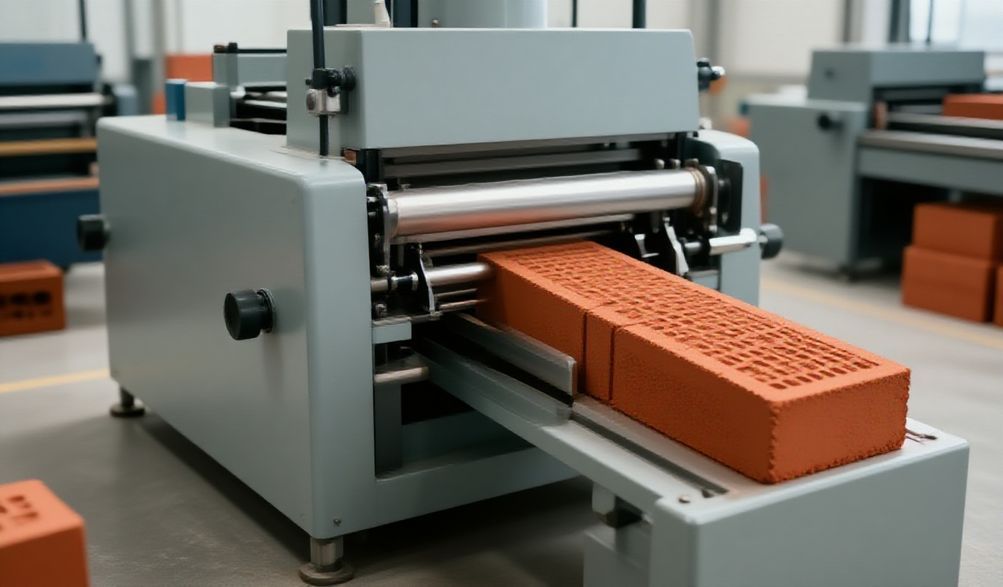
Your Ultimate Guide to Choosing a Reliable Clay Brick Making Machine Manufacturer
Introduction
The global construction industry is built on a foundation of durable, sustainable, and timeless materials. At the heart of this, clay bricks continue to be a cornerstone, prized for their strength, thermal mass, and environmental profile. However, the quality of the final product is inextricably linked to the quality of the machinery that produces it. Selecting the right clay brick making machine manufacturer isn’t just a purchase; it’s a pivotal strategic decision that will define your production capacity, product quality, and business profitability for years to come.
This guide is distilled from decades of direct industry experience in engineering, manufacturing, and consulting with brick producers worldwide. We understand the landscape from the ground up. The critical challenge for business owners and project managers is stark: partnering with the wrong manufacturer can lead to a cascade of problems—persistent mechanical failures, inconsistent brick quality, exorbitant downtime, and ultimately, significant financial loss.
Our goal is to transform that risk into confidence. This comprehensive resource will serve as your trusted roadmap, providing the unbiased, factual knowledge needed to navigate the market. We will demystify machinery types, illuminate the non-negotiable hallmarks of a reputable manufacturer, and equip you with the critical questions to ask. Let this be your first step toward a partnership that builds more than bricks—it builds a resilient and successful business.
Understanding Clay Brick Making Machinery: Types and Applications
Before you can choose a manufacturer, you must understand what you’re buying. The right machine for a large-scale infrastructure project is vastly different from the ideal setup for a community-led housing initiative. This foundational knowledge is key to communicating your needs and evaluating a manufacturer’s expertise.
Core Machine Types: From Manual to Fully Automatic
The level of automation is the primary differentiator, directly impacting output, labor requirements, and capital investment.
-
Manual & Semi-Automatic Machines: These are the entry point for many businesses.
- Manual machines require significant human effort for mixing, molding, and ejection. They are low-cost and simple to repair but have very low output.
- Semi-automatic machines incorporate a mechanical or hydraulic press for molding and compression, but material feeding and brick removal are often manual. They offer a excellent balance, providing better quality and output than manual options while remaining affordable and easier to maintain. Ideal for small to medium-scale enterprises and startups.
-
Fully Automatic Machines: This is the pinnacle of production efficiency.
- These integrated systems automate the entire process: feeding, mixing, molding, curing, and stacking. Controlled by Programmable Logic Controllers (PLCs), they deliver exceptional consistency, high volume (thousands of bricks per hour), and minimal manual labor. The investment is higher, but the return comes through scale, unmatched product uniformity, and lower per-unit costs.
-
Mobile Brick Making Machines: A versatile solution for specific needs.
- Mounted on a trailer or truck bed, these machines can be driven directly to a construction site. This eliminates the cost and logistics of transporting bricks over long distances. They are perfect for remote projects, large-scale landscaping, or producing bricks directly where the raw clay is excavated.
Key Components and Their Impact on Brick Quality
A machine is only as good as its parts. Understanding these core components reveals a manufacturer’s commitment to quality.
- The Mixing Unit: Consistency starts here. A robust mixer must homogenize clay with additives (like sand or ash) and water to a uniform plasticity. Inconsistent mix leads to bricks of varying density and strength.
- The Molding System: This defines your product’s shape and texture.
- Extrusion Molds: Force clay through a die to create a continuous column, which is then cut into bricks. Excellent for standard solid and hollow bricks.
- Compression Molds: Press clay into a mold under high pressure. Essential for producing high-density, interlocking paving bricks or bricks with complex shapes.
- The Compression System: This is the heart of brick strength. Hydraulic or mechanical systems apply immense pressure to the clay, compacting it and driving out air pockets. Higher, well-calibrated pressure results in bricks with greater compressive strength and durability.
- The Control System: The brain of the operation.
- Manual/Levers: Found on basic machines; requires skilled operators.
- PLC & Touchscreen Interfaces: Standard on automatic machines. They allow for precise control over pressure, cycle times, and sequences, ensuring repeatable quality and simplifying operation.
Matching the Machine to Your Project Scale and Output Goals
A reputable manufacturer won’t just sell you a machine; they’ll help you select the right one. Be prepared to discuss:
- Output Capacity: Move beyond “bricks per day.” Consider your annual project needs, peak demand periods, and growth plans. A good manufacturer will help you calculate a realistic output figure that accounts for maintenance and operational efficiency.
- Brick Type & Size Flexibility: Do you need to produce solid, hollow, perforated, or paving bricks? Can the machine easily switch between standard sizes? Your market demands should dictate this, and the machine must be adaptable.
- Raw Material Considerations: Not all clay is the same. The mineral composition, moisture content, and plasticity vary. A trustworthy manufacturer will ask for a sample of your local clay to test its suitability and recommend any necessary machine adjustments or additive ratios.
The Hallmarks of a Trustworthy Clay Brick Machine Manufacturer
Identifying a true partner amidst a sea of suppliers requires a focus on tangible markers of reliability. Look for these pillars of a reputable manufacturer.
Proven Industry Experience and a Robust Portfolio
Longevity and diversity are strong trust signals.
- Track Record: A company with 10, 20, or 30 years in the field has navigated technological shifts and solved real-world problems. This accumulated experience is invaluable.
- Global & Diverse Portfolio: Look for a client base spanning different continents and climates. A manufacturer who has successfully installed machines in arid, tropical, and temperate regions demonstrates adaptable engineering. A portfolio showcasing projects from small rural yards to large industrial plants indicates scalable expertise.
- Evidence of Success: Always review case studies and project galleries. Real photos, videos, and testimonials from past clients are the most credible form of social proof. They move claims from marketing to reality.
Manufacturing Excellence and Quality Control Protocols
Where and how your machine is built determines its lifespan.
- In-House Manufacturing: Prefer manufacturers that control the entire production process—from steel cutting to assembly and painting. This allows for stringent quality control at every stage, unlike a company that merely assembles outsourced, generic parts.
- Materials Matter: Inquire about the grade of steel used in the frame and molds, the brand of hydraulic pumps and seals, and the quality of electrical components. Premium wear-resistant parts may cost more upfront but prevent frequent breakdowns.
- Certifications & Processes: While not a guarantee, ISO 9001 certification indicates a commitment to standardized quality management systems. More importantly, ask about their specific internal QC checklists: Do they perform pressure tests? Run empty and loaded trials? Provide inspection reports before shipping?
Comprehensive After-Sales Support: The True Test of Commitment
The sale is the beginning of the relationship. Support is what defines it.
- Installation & Commissioning: Will they send an engineer to your site to supervise installation, ensure the foundation is correct, and commission the machine? Proper on-site training for your operators is non-negotiable.
- Spare Parts Ecosystem: A genuine manufacturer maintains a comprehensive inventory of critical spare parts. Ask for their parts catalog and lead times. A lack of parts support is a major red flag.
- Technical Support & Warranty: Scrutinize the warranty document. What is covered (parts, labor, shipping)? For how long? Is there a clear, multilingual technical support channel (phone, email, WhatsApp)? What is their target response time for urgent breakdowns?
Critical Questions to Ask Before You Invest
Arm yourself with this checklist. The answers you receive will be more revealing than any brochure.
Questions About the Machine and Its Performance
- “Can you provide a video of a machine (preferably the model we’re discussing) running at a client’s site, not in your showroom?”
- “What is the realistic, sustainable output per 8-hour shift, accounting for operator breaks and minor adjustments?”
- “What is the detailed power requirement (connected load vs. average consumption)? Do you offer any energy-saving features?”
- “Can you share a third-party test report for the compressive strength and water absorption of bricks produced by this machine model?”
Questions About the Manufacturer’s Credentials
- “Is a visit to your production facility encouraged? Can we see the welding, machining, and assembly lines?”
- “Please provide contact information for 2-3 reference clients who have operated a similar machine for at least 12 months. We would like to ask about reliability and support.”
- “What is your structured process for handling a major breakdown? Do you have a service network or flying engineers in our region?”
Questions About Logistics, Payment, and Contract
- “Under what Incoterms (e.g., FOB, CIF, DDP) are you quoting? Who is responsible for sea freight, insurance, and customs clearance in our country?”
- “Does your final, itemized quotation include costs for installation supervision, initial tool kit, and a starter set of critical spare parts?”
- “What is the standard payment schedule? What contractual protections (e.g., performance guarantees) are included to align our interests?”
Beyond the Purchase: Maximizing Your Machine’s Lifespan and ROI
Your responsibility begins once the machine is installed. Proper operation and maintenance are key to protecting your investment.
Essential Operational Best Practices
- Material Prep: Never underestimate this. Ensure clay is properly weathered, cleaned of debris, and mixed to a consistent moisture content before feeding.
- Structured Maintenance: Follow the manufacturer’s manual religiously.
- Daily: Lubricate all moving parts, check hydraulic oil levels and for leaks, clean the machine.
- Weekly: Tighten bolts and nuts, inspect wires and hoses for wear.
- Monthly: Change filters, conduct a more thorough inspection of wear parts like molds and seals.
- Trained Operators: Invest in continuous training. Operators must understand not just how to run the machine, but the why behind each step and safety protocol.
Troubleshooting Common Operational Issues
Empower your team to diagnose minor issues:
* Cracked Bricks: Often caused by clay that is too dry, excessive pressure, or uneven feeding.
* Poor Shape/Deformation: Can result from worn molds, incorrect alignment, or clay that is too wet.
* Low Density/Strength: Usually points to insufficient compression pressure or improperly prepared raw material.
Establish a clear protocol: what adjustments operators can make, and when they must immediately stop and call for technical support.
Planning for Long-Term Success
- Strategic Spares: Based on the manufacturer’s advice, maintain a small inventory of high-wear, mission-critical parts (e.g., specific seals, hydraulic hoses, mold liners) to minimize downtime.
- Future-Proofing: Discuss with your manufacturer the possibility of future upgrades—like adding an automatic feeder or a new mold set—to expand your product line.
- Leverage the Relationship: A good manufacturer is a knowledge partner. Keep them informed of your production challenges and successes; their insights can help you optimize processes over time.
Frequently Asked Questions (FAQ)
Q1: What is the average cost range for a clay brick making machine?
A: Prices vary dramatically based on automation and capacity. Manual machines can start from a few thousand dollars, semi-automatic units range from $15,000 to $50,000, while large, fully automatic production lines can reach $200,000 or more. Focus on the Total Cost of Ownership, which includes energy use, maintenance, and expected lifespan, not just the initial price tag.
Q2: How long does it take to install and commission a new machine?
A: For a semi-automatic machine with foundation ready, on-site commissioning typically takes 5-10 days. A fully automatic plant with material handling systems can require 4-8 weeks for full installation, calibration, and operator training. Timelines depend heavily on site preparedness and the manufacturer’s support.
Q3: Can one machine produce different types and sizes of bricks?
A: Yes, through interchangeable molds. Most reputable manufacturers offer a range of mold sets for solid, hollow, or paving bricks. However, frequent mold changes require downtime for adjustment and calibration. Some high-end models feature quick-change systems to minimize this.
Q4: What kind of after-sales training do reputable manufacturers provide?
A: Comprehensive training should be hands-on and cover: Safe machine operation, daily routine maintenance, troubleshooting common faults, proper mold changing procedures, and basic safety drills. This is ideally conducted on your premises by the commissioning engineer.
Q5: How do I ensure the machine is suitable for the clay in my region?
A: Always send a 10-15 kg sample of your local clay to the manufacturer before finalizing an order. A responsible manufacturer will conduct a free or low-cost analysis to test its plasticity, shrinkage, and composition, and will confirm if their machine is compatible or requires specific modifications.
Conclusion
Choosing a clay brick making machine manufacturer is one of the most significant decisions you will make for your business. It is the selection of a long-term partner whose expertise, reliability, and support will underpin your daily operations and long-term profitability. As we’ve outlined, this choice must be grounded in a thorough evaluation of their Experience (proven track record), Expertise (technical depth), Authoritativeness (industry standing), and Trustworthiness (transparent operations and unwavering support).
We urge you to conduct diligent due diligence. Use this guide as your checklist. Request factory visits, speak directly to past clients, and read the fine print on support contracts. The right partnership will not only provide you with a machine but will contribute to the foundational strength of every project you undertake.
Ready to take the next step with confidence? Contact our team of engineering specialists today for a detailed consultation, a review of your clay sample, or a tailored quotation for your project. Let’s build a more efficient and profitable future for your brick-making enterprise, one quality brick at a time.