
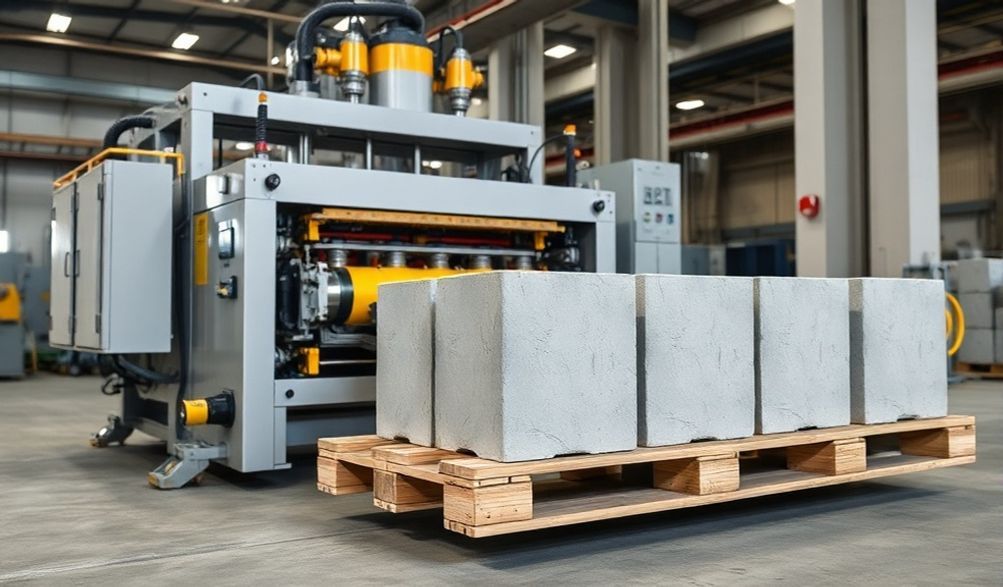
Your Ultimate Guide to Finding the Right Brick Machine for Sale | Insights from FUDA Block Making Factory
Introduction
If you’re in the construction or building materials industry, you’ve likely faced a frustrating and costly dilemma. You need to increase block production, improve consistency, or start a new venture, but the market for brick making machines is a maze of confusing specifications, dubious suppliers, and risky investments. Choosing the wrong equipment can lead to crippling downtime, subpar product quality, and a return on investment that never materializes.
At its core, the right brick making machine is the heartbeat of a profitable block yard or construction project. It transforms raw materials—concrete, clay, or fly ash—into the very building blocks of our infrastructure. Yet, selecting this pivotal piece of machinery is often more complex than it seems.
This is where perspective matters. For over two decades, FUDA Block Making Factory hasn’t just sold machines; we’ve designed, engineered, and refined them on our own production floors. We’ve seen what makes a machine run reliably for 15 years and what causes it to fail in 15 months. This guide distills that insider knowledge from the factory floor.
Our goal is not to simply list products for sale. Instead, we will provide you with a comprehensive framework for evaluation. We’ll break down the types of machines, the non-negotiable features of a quality build, and the critical questions you must ask any supplier. Consider this your playbook for making an informed, confident investment that aligns with your specific business goals, whether you’re a project manager for a large development, an entrepreneur launching a block plant, or a procurement officer sourcing reliable equipment.
Understanding Brick Making Machines: Types and Applications
Before diving into specifications and suppliers, it’s crucial to understand the landscape of brick making machinery. The “right” machine is entirely dependent on your application, scale, and operational model.
Core Types of Brick Machines for Sale
The market primarily segments machines by their level of automation and intended use.
- Fully Automatic Block Making Machines: These are the powerhouses of high-volume production. They integrate mixing, conveying, molding, curing, and stacking with minimal human intervention. Controlled by advanced PLC (Programmable Logic Controller) systems, they deliver exceptional consistency and output—often thousands of blocks per hour. They represent a significant capital investment but offer the lowest cost-per-block for large-scale, continuous operations.
- Semi-Automatic Brick Machines: This category strikes the ideal balance for many growing businesses. While the core molding process (filling, compacting, ejecting) is automated, tasks like feeding raw materials or moving pallets may be manual. They offer substantial efficiency gains over manual systems with a more accessible price point and are excellent for medium-scale factories or specialized product lines.
- Manual or Mobile Brick Machines: Often egg-layers or small stationary presses, these are ideal for small-scale projects, on-site production for a specific construction job, or startups testing the market. They require more labor but have low upfront costs and high flexibility. Their mobility is a key advantage for direct site work.
- Specialty Machines: Beyond standard solid or hollow blocks, dedicated machines exist for high-value products. This includes:
- Interlocking Paver Machines: For producing paving stones with interlocking designs.
- Curb Stone Machines: For manufacturing landscape and road edging.
- Fly Ash Brick Machines: Optimized to utilize industrial by-products like fly ash, offering an eco-friendly and cost-effective alternative.
Matching the Machine to Your Project and Business Goals
A common mistake is choosing a machine based on price or perceived prestige alone. The correct choice stems from a clear analysis of your parameters:
- Project Scale & Desired Output: Are you supplying a single housing project or aiming to become a regional block supplier? Your required Blocks Per Hour (BPH) is the starting metric.
- Budget & Financing: Consider total investment, not just machine price. Include shipping, installation, foundation work, and initial spare parts.
- Labor Availability & Skill: A fully automatic machine reduces labor but requires skilled technicians for maintenance. A semi-automatic machine may need more operators but simpler upkeep.
- Raw Materials: The type and gradation of your aggregate (sand, stone, cement, fly ash) directly influence the required mixer type, compression force, and vibration system of the machine.
Why Source from an Established Block Making Factory? The FUDA Perspective
In an era of online marketplaces and countless intermediaries, buying directly from a manufacturer like FUDA Block Making Factory isn’t just an option—it’s a strategic advantage that mitigates risk and ensures long-term value.
The Importance of Manufacturer Reputation & Direct Factory Sales
Sourcing directly from the factory floor removes layers that add cost and complexity.
- Cost Efficiency: You eliminate the markups added by middlemen, traders, and resellers. The price you negotiate is directly with the maker.
- Direct Technical Support: When you have a question about a hydraulic schematic or a control panel error, you speak with an engineer who designed it, not a third-party agent with limited knowledge.
- Customization Options: Factories can adapt standard designs. Need a special mold for a unique block design or a modified hopper for your aggregate? This is feasible with direct factory collaboration.
- Transparency: You can request manufacturing process videos, quality control checks, and factory audit reports. You know exactly where and how your machine is being built.
A key red flag is a supplier that is evasive about their manufacturing facilities, cannot provide recent production videos, or pressures you for payment before answering detailed technical questions.
Engineering Excellence and Machine Durability
The true cost of a brick machine is measured over a decade, not on the day of purchase. Engineering quality dictates this lifespan.
From our experience, the difference between a reliable workhorse and a problematic asset lies in a few core components:
- Hydraulic System: The heart of the machine. High-quality, brand-name pumps, valves, and seals operating within a robust, clean circuit prevent leaks and pressure failures—the most common source of downtime.
- Vibration System: This is what ensures block density and strength. Powerful, balanced vibration motors mounted on a reinforced table are critical. Under-powered vibration leads to weak, crumbling blocks.
- Structural Frame: The machine must withstand constant, powerful forces. It should be constructed from heavy-duty steel plates with professional, stress-relieved welding, not lightweight, bolted-together frames.
- Control System: A well-sealed, user-friendly PLC panel with clear diagnostics protects against dust and moisture and allows for easier troubleshooting.
Investing in a factory that prioritizes R&D in these areas means investing in lower maintenance costs, higher uptime, and a machine that retains its functionality and value for years.
Key Features to Evaluate When Choosing a Brick Machine for Sale
Armed with an understanding of types and the importance of the source, you can now dissect the specifics of any machine you consider. This is where due diligence pays off.
Performance and Productivity Specifications
Look beyond the headline “BPH” number. Dig into what it entails.
- Cycle Time & True Production Capacity: A cycle time of 15 seconds sounds good, but does that include pallet feeding and block removal? Ask for a verified, realistic average output over an 8-hour shift for the specific block type you need.
- Mold Versatility and Changeover Ease: Your product line may need to evolve. How difficult and time-consuming is it to change molds? Look for systems with quick-change mold frames or standardized mounting. A factory that can supply a wide range of standard mold designs is a plus.
- Automation Level: Does the machine have an automatic pallet feeder and stacker? Is the mixer feeding system automated? More automation boosts output and reduces labor but increases complexity and cost. The control interface should be intuitive, with clear fault indicators.
Build Quality and After-Sales Support
This is where reputable factories truly separate themselves. The machine’s construction and the support behind it are your insurance policy.
- Material and Construction: Inquire about the grade and thickness of steel used in the frame and mold. Examine weld quality in provided photos or videos. Are critical components from recognized brands (e.g., Siemens PLC, Schneider electrics, Rexroth hydraulics)?
- Comprehensive Warranty: A strong warranty is a sign of confidence. It should clearly cover defects in materials and workmanship for key components like the hydraulic system, frame, and vibration motors for at least 12 months. Understand what is excluded (e.g., wear parts like mold liners).
- Spare Parts and Technical Support: This is non-negotiable. Will the factory provide a detailed parts manual with item codes? How quickly can they ship common spare parts? Do they offer remote support via video call? The best factories maintain a digital inventory of parts for every machine they’ve sold for a decade or more.
Navigating the Purchase: From Inquiry to Installation
The purchasing process itself should be structured and transparent. A professional factory will guide you through it methodically.
The Smart Buyer’s Checklist
Follow these steps to stay organized and protected:
- Define Your Needs Document: Create a sheet listing required block types, dimensions, strength, daily output, raw material details, and available power supply.
- Research & Shortlist Factories: Look for established manufacturers with verifiable history. Read case studies and, if possible, seek independent reviews.
- Request a Detailed Quotation: A professional quote should include machine model, detailed specifications, key component brands, FOB/CIF price, delivery time, warranty terms, and a list of included accessories.
- Ask for Client References: Request contact information for 2-3 clients in a similar region or business who purchased a comparable model in the last few years.
- Verify Certifications: Ask for business licenses, ISO quality management certificates, and patents if relevant.
Essential Questions for the Factory:
* “Can you provide a video of a similar machine under test before shipment?”
* “What is included in the delivery? (e.g., standard molds, spare parts kit, tools)”
* “What documentation will you provide? (Electrical diagrams, hydraulic schematics, parts manual in English)”
* “What is your process for guiding installation and training our operators?”
Understanding Total Cost of Ownership (TCO)
The cheapest machine is often the most expensive in the long run. TCO analysis flips the script from price to value.
- Energy Consumption: A well-engineered hydraulic and vibration system is more energy-efficient.
- Maintenance Costs: Machines with standard, quality components have cheaper, more available spare parts.
- Expected Lifespan & Downtime: A machine that runs for 15 years with 95% availability is vastly more profitable than one that runs for 7 years with 70% availability, even at double the initial price.
- Resale Value: Equipment from a respected brand like FUDA holds its value significantly better on the secondary market.
Investing in quality from a reputable factory is an economic decision that minimizes risk and maximizes operational profit over the asset’s life.
Frequently Asked Questions (FAQ) About Brick Machines
Q1: What is the average lead time for a brick machine from order to delivery?
A: For standard models from an established factory like FUDA, lead times typically range from 30 to 60 days. This includes production scheduling, manufacturing, assembly, thorough testing, and preparation for sea shipping. Customized machines will take longer. Always get a written commitment on the timeline in your proforma invoice.
Q2: Can the machine be customized for our specific raw materials or block design?
A: Yes, reputable factories often provide customization services. Common customizations include designing special mold cavities for unique block shapes, adjusting the mixer paddle design for specific aggregate mixes (like high fly ash content), or modifying the compression force. Share your detailed requirements during the initial inquiry for a feasibility assessment.
Q3: What kind of training and installation support is provided?
A: A trustworthy supplier will provide comprehensive installation manuals, foundation drawings, and electrical/hydraulic diagrams. Many, including FUDA, offer real-time remote support via video call during the first installation and startup. Formal operator training is usually provided through detailed video guides and live online sessions covering operation, routine maintenance, and basic troubleshooting.
Q4: How do I ensure I’m getting a genuine price from a factory and not a reseller?
A: Request a virtual or recorded video tour of the factory’s active production workshop. Ask to speak directly with a sales engineer who can answer deep technical questions. Genuine factories will readily share their business license, factory location, and details of their manufacturing process. Be wary of suppliers who only have glossy catalog photos and cannot show you current production.
Q5: What are the most common maintenance requirements?
A: Daily and weekly maintenance is key to longevity. This includes:
* Cleaning the mixer and mold box after each shift to prevent concrete buildup.
* Checking hydraulic oil levels, temperature, and filter condition.
* Inspecting vibration motors for loose bolts or unusual noise.
* Lubricating all guide rails, bearings, and moving joints as per the manual.
A disciplined maintenance schedule based on the factory’s guidelines is the best way to prevent unexpected breakdowns.
Conclusion
Selecting the right brick machine for sale is a decision that forms the foundation of your block production business or project’s success. It requires aligning machinery with your precise business goals, looking beyond the initial price to evaluate true engineering quality, and placing your trust in a supplier whose reputation is built on transparency and long-term support.
From the perspective of FUDA Block Making Factory, we view every machine we build as a partnership. Your success is the ultimate measure of our engineering. Investing in robust, reliable machinery is not an expense; it is a capital investment in the growth, stability, and reputation of your construction enterprise.
Use this guide as your framework. Prepare your detailed project requirement sheet, approach shortlisted factories with the critical questions outlined here, and compare not just quotes, but the depth of technical support and the confidence behind the warranty.
Remember, in the world of heavy machinery, true value is defined by uninterrupted production, consistent product quality, and a partner who supports you long after the sale is complete. Choose wisely, and build your future on a solid foundation.