
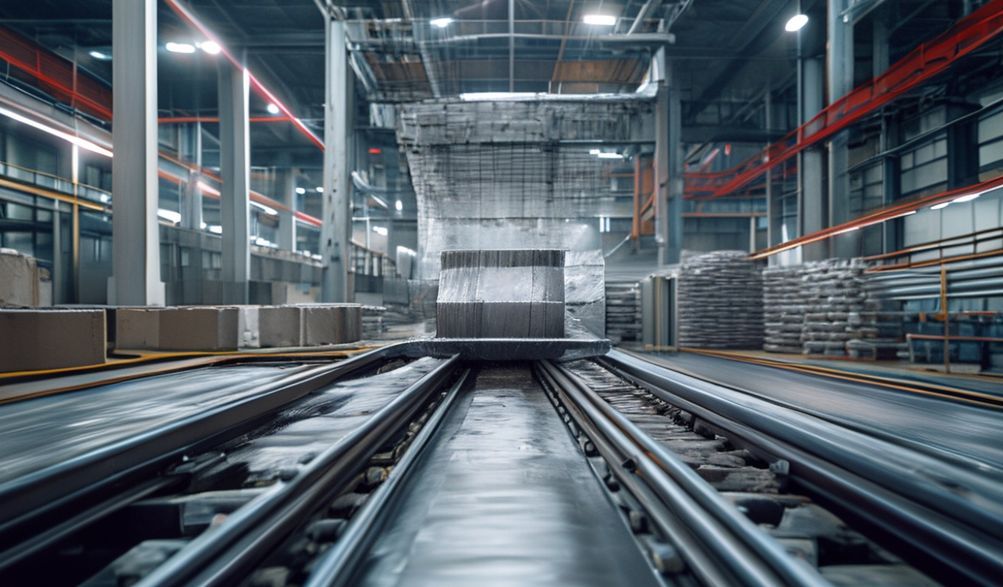
Die Ultieme Gids vir Groot Blokvervaardigingsmasjiene: Verhoog Doeltreffendheid & Skaal Produksie
Inleiding
Stel jou voor: jy het pas 'n kontrak beklink om blokke vir 'n groot nuwe behuisingsontwikkeling te verskaf. Jou span werk dag en nag, maar jou klein, handmatige masjiene kan nie tred hou nie. Die produksie is wisselvallig—sommige blokke is swak, ander is die verkeerde grootte. Arbeidskoste styg skrikwekkend, sperdatums glip verby, en jy word gedwing om nuwe besigheid af te wys. Dit is die meedoënlose werklikheid van tradisionele, kleinskaalse blokproduksie.
Vir konstruksiemaatskappye, voorafvervaardigde aanlegte en infrastruktuurontwikkelaars was opskaling nog altyd 'n formidabele uitdaging. Die oplossing? Industriële graad ingenieurswees: diegroot blokmasjienDit is nie net 'n opgradering nie; dit is 'n volledige transformasie van jou produksievermoë, ontwerp om aan die massiewe eise van moderne konstruksie te voldoen.
Hierdie ultieme gids bied 'n omvattende, kundige uiteensetting van groot blokmasjiene. Jy sal 'n duidelike begrip verkry van hoe hulle werk, hul onmiskenbare voordele, die verskillende tipes wat beskikbaar is, en die kritieke faktore om te oorweeg voordat jy belê. Ons sal ingenieursbeginsels, operasionele beste praktyke en werklike koste-analise saamvoeg om jou toe te rus met die kennis wat nodig is om 'n strategiese, winsgewende besluit vir jou besigheid te neem.
Wat is 'n Groot Blokmaakmasjien? Definiëring van Industriële-Skaal Produksie
Kern van die saak, 'ngroot blokmasjienis 'n swaardiens, hoëkapasiteit stelsel wat ontwerp is vir die aaneenlopende, grootvolume vervaardiging van betonsteen-eenhede (BSEs). Anders as eenvoudige hand- of mobiele masjiene, is dit industriële kragbronne, dikwels stilstaand of semi-stilstaand, wat die prosesse van vul, verdig, vorm en uitstoot van blokke met presisie en spoed outomatiseer.
Laat ons die belangrikste onderskeidings van kleiner toerusting verduidelik:
* Outomatisering & Skaal:Hierdie masjiene beskik oor aansienlike outomatisering, vanaf programmeerbare logika-beheerders (PLC's) wat die siklus bestuur tot geïntegreerde palletvervoerbande en stapelaars. Produksie word gemeet in duisende blokke per skof, nie honderde nie.
* Blokgrootte & Sterkte:Hulle is gebou om groter, digter blokke te vervaardig—insluitend holblokke, soliede blokke, plaveiselblokke en randstene—met konsekwente hoë druksterkte (dikwels meer as 7 MPa of meer volgens standaarde soos ASTM C90).
* Vereiste Infrastruktuur:Een bedryf is 'n sistemiese belegging. Dit vereis tipies 'n toegewyde aanlegruimte met 'n robuuste betonmengstelsel, hoëkapasiteit-vibreertafels en georganiseerde areas vir uitharding (soos stoomkamers) en berging.
Primêre toepassingsVir hierdie vlak van toerusting sluit in:
* Grootskaalse residensiële behuisingsprojekte en townshipsontwikkelings.
* Kommersiële komplekse, industriële pakhuise en institusionele geboue.
* Groot infrastruktuur: grens mure, keermure en landskapargitektuur op 'n burgerlike skaal.
* Produksie van gespesialiseerde voorafgegoten betonelemente.
Sleutel Voordele van Belê in 'n Groot Blokmaakmasjien
Om na industriële skaal masjinerie oor te skakel is 'n groot kapitaalbesluit. Die regverdiging lê in 'n oortuigende reeks operasionele en finansiële voordele wat direk die knelpunte van kleinskaalse produksie aanspreek.
Ongeëwenaarde Produksiekapasiteit & Spoed
Die mees onmiddellike impak is op jou uitset. 'n Enkele groot blokmasjien kan produseer10,000 tot 30,000+ standaard blokke in 'n 8-uur skofafhangende van die model en bloktipe. Dit word bereik deur vinnige, outomatiese siklustye—sommige masjiene voltooi 'n siklus (vul, saampers, vorm, uitstoot) in so min as 10-15 sekondes. Hierdie kapasiteit is wat jou in staat stel om massiewe projekte betroubaar te voorsien en streng, ononderhandelbare konstruksiespertye te haal, wat die skaal van kontrakte wat jy kan nastief fundamenteel verander.
Superieure Konsekwentheid en Produkkwaliteit
Handprosesse is geneig tot variasie. Industriële masjiene elimineer dit deur ingenieurs-presisie.
* Hoë-Frekwensie Vibrasie:Kragtige, gesinchroniseerde vibrasie-motors verseker dat die betonmengsel eweredig deur die vorm gekonsolideer word, wat leemtes uitskakel en eenvormige digtheid bereik.
* Beheerde Hidrouliese Druk: Machines apply several hundred tons of hydraulic pressure to compact the mix, directly determining the final block’s strength and durability.
This results in every single block having identical dimensions, finish, and structural integrity. Consistent quality means less waste on-site, fewer rejections, and builds with enhanced longevity.
Significant Labor and Long-Term Cost Savings
While the upfront investment is substantial, the long-term economics are transformative.
* Labor Reduction: Automation reduces direct manual labor by up to 70-80% compared to manual operations. One operator can often manage what previously required a large crew.
* Laeer Per-Eenheidskoste: At high volumes, the fixed cost of the machine is amortized over thousands of blocks, drastically reducing your cost per unit. Combined with reduced labor and waste, the profit margin per block improves significantly.
* Duursaamheid: Built from heavy-duty steel and premium components, these machines are designed for decades of service, providing a long-term return on investment (ROI).
Enhanced Operational Flexibility
Market demands change. A key feature of modern big block machines is quick-change mold systems. Within a short period, you can switch from producing standard hollow blocks to solid blocks, pavers, or specialty shapes like grass blocks. This agility allows your business to cater to diverse projects and customer requests without needing separate, dedicated production lines, maximizing the utility of your capital investment.
Types of Big Block Making Machines: Choosing the Right Model
Not all big block machines are the same. Selecting the right type is crucial for aligning with your production goals, budget, and operational style. Here are the three primary categories:
Volledig Outomatiese Blokvervaardigingsmasjiene
- Beskrywing: The pinnacle of automation. These are complete production lines controlled by a central PLC. They integrate automatic material feeding, mixing, block molding, pallet circulation, curing stackers, and sometimes robotic handling. Human intervention is primarily for monitoring and maintenance.
- Beste Vir: Very high-volume precast plants and large block manufacturers supplying regional markets or mega-projects, where maximizing output and minimizing labor costs are paramount.
Semi-Automatiese Blokmaakmasjiene
- Beskrywing: A powerful balance between automation and cost. The core compaction and molding process is fully automated (hydraulic pressure and vibration), but tasks like feeding empty pallets into the machine or removing finished blocks may be done manually or with simple mechanized aids.
- Beste Vir: Medium to large-scale operations looking to scale up significantly from manual methods without the capital outlay for a fully automatic line. Ideal for businesses with growing but sometimes fluctuating demand.
Stilstaande Blokmaakmasjiene
- Beskrywing: This refers to the installation type rather than the automation level (they can be semi- or fully-auto). These machines are fixed in one location within a plant, typically fed by a stationary concrete mixer and conveyor system. They are the heart of a dedicated production facility.
- Beste Vir: Established block manufacturers with a consistent, high-volume order book and the space to build a permanent, optimized production layout.
Quick Comparison Table:
| Feature | Fully Automatic | Semi-Automatic | Stationary |
| :— | :— | :— | :— |
| Automation Level | High (PLC-controlled line) | Medium (automated core) | Varies (fixed installation) |
| Uitsetkapasiteit | Highest (20,000-40,000+ blocks/day) | High (8,000-20,000 blocks/day) | High (Depends on model) |
| Aanvanklike Belegging | Highest | Moderate | Moderate-High |
| Arbeid Vereis | Low (1-2 operators) | Medium (3-5 personnel) | Medium |
Critical Features to Consider Before You Buy
Beyond the machine type, dive into these technical specifications. A common oversight is focusing only on price, not value—these features define long-term performance and reliability.
Production Capacity & Cycle Time
Don’t just look at a “blocks per day” claim. Understand the siklustyd (seconds per cycle) and the blocks per cycle (how many blocks from one mold). Calculate if this meets your peak demand. A good rule is to choose a machine with 20-30% more capacity than your current maximum need to allow for business growth.
Block Types and Mold Compatibility
Your machine is only as versatile as its mold system. Investigate:
* Does the manufacturer offer a wide catalog of standard molds?
* Can they engineer custom molds for unique designs?
* What is the mold changeover procedure and time? Quick-clamp systems can save hours of downtime.
Machine Power and Pressure System
This is the engine of your block’s strength.
* Hidrouliese Druk: Measured in tons (e.g., 150-ton, 300-ton). Higher pressure yields denser, stronger blocks suitable for load-bearing applications.
* Vibrasie Stelsel: Look for multiple high-frequency, externally mounted vibration motors. Their power (in kW) and frequency (in Hz) are critical for proper compaction, especially for hollow blocks.
Control System and Ease of Operation
A user-friendly interface is vital for efficiency and error reduction.
* PLC Control: A modern PLC system allows for precise control over every parameter (vibration time, pressure, lift speed) and stores recipes for different block types.
* Diagnostics: The system should provide clear fault alerts and diagnostics to minimize troubleshooting downtime.
Build Quality and After-Sales Support
This is where reputable manufacturers separate themselves.
* Konstruksie: Look for heavy-duty steel frames, hardened guide rails, and cylinders from known brands (e.g., Bosch Rexroth, Parker).
* Elektriese Komponente: Premium PLCs (Siemens, Schneider Electric) and motors ensure reliability.
* Support: The most critical factor. Does the supplier provide installation supervision, comprehensive operator training, a detailed maintenance manual, and a reliable spare parts supply chain? This support is non-negotiable for protecting your investment.
Optimizing Your Operation: Best Practices for Big Block Machines
Your machine’s performance depends heavily on how you operate and maintain it. Here’s practical advice from industry experience.
Raw Material Preparation (Concrete Mix Design)
The machine can’t fix a bad mix. Consistency is key.
* Aggregate: Use well-graded, clean aggregates (crushed stone or gravel). Size should be appropriate for the block type (typically 6mm-10mm for hollow blocks).
* Sand Sharp, coarse sand is preferable to round-grained sand for better interlocking.
* Sement: Use fresh, standard Portland cement.
* Water-sement-verhouding: This is critical. Too much water reduces strength; too little leads to poor compaction. Aim for a stiff, zero-slump mix. A common starting ratio is 0.4 to 0.5 by weight, but this must be optimized for your local materials.
Routine Maintenance Checklist
Neglect is the fastest way to costly breakdowns. Adhere to a strict schedule:
* Daily: Clean the machine thoroughly. Check hydraulic oil levels and for leaks. Lubricate all guide rails, bearings, and moving parts as per the manual.
* Weekly: Inspect and tighten all bolts and electrical connections. Check wear parts like mold liners and pallet surfaces.
* Monthly: Change hydraulic oil and filters as recommended. Perform a full inspection of vibration motors and the control system.
Efficient Curing and Storage Protocols
Curing is where the block gains its strength. Don’t let poor handling undo perfect production.
* Initial Curing: Keep newly produced blocks under a humidity/temperature-controlled environment (like a steam curing chamber) for 18-24 hours. This accelerates strength gain.
* Secondary Curing: After demolding, blocks should be water-sprayed or stored in a moist environment for several days to achieve their full design strength.
* Storage: Stack blocks on level, stable ground using wooden battens between layers. Organize by batch and type for easy inventory management and shipping.
FAQ Section
Q1: What is the average production output of a big block making machine per day?
A: Output varies widely based on machine type and block size. A semi-automatic machine may produce 8,000-15,000 standard hollow blocks (400x200x200mm) in an 8-hour shift. A fully automatic line can produce 20,000-40,000+. Always refer to the specific machine’s technical specifications for accurate figures based on your desired block type.
Q2: What is the typical power requirement (in kW or HP) for these machines?
A: Most industrial block machines require a significant three-phase power supply. Total connected load typically ranges from 30 kW to 75 kW (40 HP to 100 HP), covering the hydraulic power pack, vibration motors, and control system. Exact requirements must be confirmed with the machine supplier for proper electrical planning.
Q3: Can one machine produce different sizes and types of blocks?
A: Yes, absolutely. This is a major advantage. By changing the mold set, the same machine can produce different block dimensions and profiles (e.g., from hollow blocks to solid pavers). The key is to work with a supplier that offers a versatile mold system and can provide custom molds if needed.
Q4: What is the expected lifespan of a well-maintained big block machine?
A: With proper operation and adherence to maintenance schedules, a high-quality machine built with premium components can have a productive lifespan of 15 to 25 years or more. The longevity is directly tied to build quality and how well it is cared for.
Q5: How much factory space is required for installation and operation?
A: You need space for more than just the machine. A rough guideline is a minimum of 2,000 to 5,000 square feet for a semi-automatic setup. This must accommodate the machine footprint, raw material storage (aggregates, cement), a mixing area, a curing zone, and finished product storage. Fully automatic lines with integrated stackers require even more vertical and horizontal space.
Conclusion
Investing in a groot blokmasjien is a strategic decision that moves your business from artisanal production to industrial manufacturing. It is the definitive solution for scaling output, guaranteeing product quality, and achieving superior long-term profitability in the competitive construction materials market.
Success, however, hinges on two critical factors: selecting the right machine for your specific production needs and partnering with a reputable, experienced manufacturer. The right partner doesn’t just sell you equipment; they provide the engineering support, comprehensive training, and reliable after-sales service that ensures your investment pays dividends for years to come.
Ready to transform your block production capability?
[Contact our technical team today] for a free, no-obligation consultation and a detailed quote tailored to your project requirements and business goals.