
Panduan Utama Mesin Pembuat Blok Besar: Tingkatkan Efisiensi & Skala Produksi
Pengantar
Bayangkan ini: Anda baru saja mendapatkan kontrak untuk memasok balok untuk pengembangan perumahan besar baru. Tim Anda bekerja tanpa henti, tetapi mesin manual kecil Anda tidak mampu mengimbangi. Hasil produksi tidak konsisten—beberapa balok lemah, yang lain ukurannya salah. Biaya tenaga kerja melonjak drastis, tenggat waktu terus terlewat, dan Anda terpaksa menolak bisnis baru. Inilah realitas tak kenal lelah dari produksi balok skala kecil tradisional.
Bagi perusahaan konstruksi, pabrik pracetak, dan pengembang infrastruktur, meningkatkan skala operasi selalu menjadi tantangan yang berat. Solusinya? Rekayasa tingkat industri:mesin pembuat blok besarIni bukan sekadar peningkatan; ini adalah transformasi menyeluruh dari kapabilitas produksi Anda, dirancang untuk memenuhi tuntutan besar konstruksi modern.
Panduan utama ini menyajikan pembahasan komprehensif yang dipandu ahli mengenai mesin pembuat bata beton besar. Anda akan memperoleh pemahaman jelas tentang cara kerjanya, keunggulan tak terbantahkan, berbagai jenis yang tersedia, serta faktor-faktor krusial yang perlu dipertimbangkan sebelum berinvestasi. Kami akan mensintesis prinsip rekayasa, praktik terbaik operasional, dan analisis biaya dunia nyata untuk membekali Anda dengan pengetahuan yang diperlukan guna mengambil keputusan strategis dan menguntungkan bagi bisnis Anda.
Apa itu Mesin Pembuat Blok Besar? Mendefinisikan Produksi Skala Industri
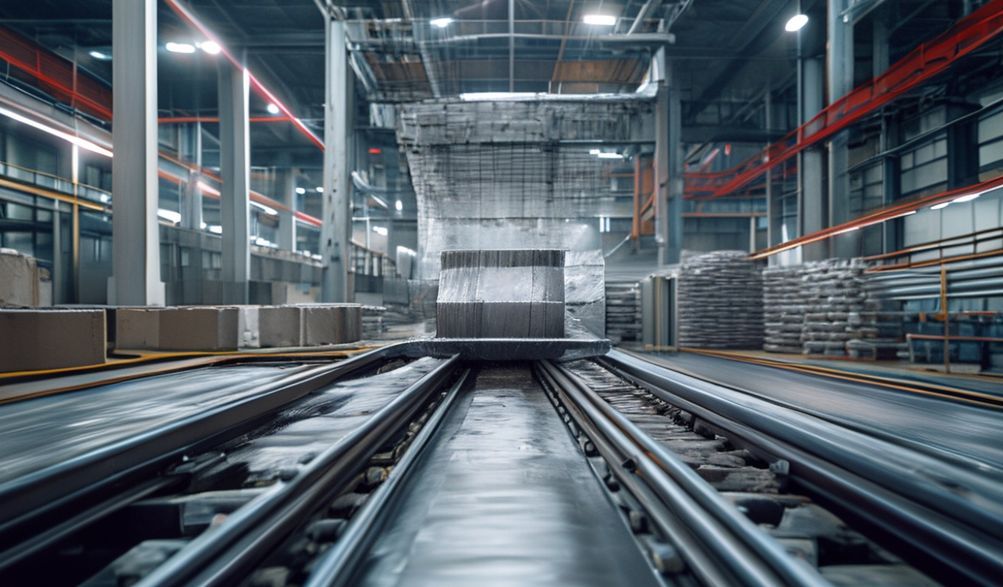
Pada intinya, sebuahmesin pembuat blok besaradalah sistem berkapasitas tinggi dan tahan banting yang dirancang untuk produksi terus-menerus unit batu beton (CMU) dalam volume besar. Berbeda dengan mesin manual atau bergerak sederhana, ini merupakan kekuatan industri, seringkali stasioner atau semi-stasioner, yang mengotomatisasi proses pengisian, pemadatan, pencetakan, dan pengeluaran balok dengan presisi dan kecepatan.
Mari kita perjelas perbedaan utama dari peralatan yang lebih kecil:
* Otomatisasi & Skala:Mesin-mesin ini menampilkan otomatisasi yang signifikan, mulai dari pengontrol logika terprogram (PLC) yang mengelola siklus hingga konveyor palet dan penumpuk terintegrasi. Produksi diukur dalam ribuan blok per shift, bukan ratusan.
* Ukuran & Kekuatan Blok:Mereka dibangun untuk menghasilkan balok yang lebih besar dan padat—termasuk balok berongga, balok padat, balok paving, dan batu tepi jalan—dengan kekuatan tekan tinggi yang konsisten (sering melebihi 7 MPa atau lebih sesuai standar seperti ASTM C90).
* Infrastruktur yang Diperlukan:Mengoperasikan satu adalah investasi sistemik. Biasanya memerlukan ruang pabrik khusus dengan sistem pencampuran beton yang kokoh, meja getar berkapasitas tinggi, dan area terorganisir untuk perawatan (seperti ruang uap) dan penyimpanan.
Aplikasi Utamauntuk tingkat peralatan ini meliputi:
* Proyek perumahan skala besar dan pengembangan kota mandiri.
* Kompleks komersial, gudang industri, dan bangunan institusional.
* Infrastruktur utama: tembok pembatas, tembok penahan, dan lansekap dalam skala sipil.
* Produksi elemen beton pracetak khusus.
Keunggulan Utama Berinvestasi dalam Mesin Pembuat Blok Besar
Beralih ke mesin skala industri adalah keputusan modal yang besar. Pembenarannya terletak pada serangkaian manfaat operasional dan finansial yang meyakinkan yang langsung mengatasi titik-titik permasalahan produksi skala kecil.
Kapasitas dan Kecepatan Produksi yang Tak Tertandingi
Dampak paling langsung adalah pada hasil produksi Anda. Sebuah mesin blok besar tunggal dapat menghasilkan10.000 hingga 30.000+ blok standar dalam satu shift 8 jamtergantung pada model dan jenis blok. Hal ini dicapai melalui siklus waktu yang cepat dan otomatis—beberapa mesin menyelesaikan satu siklus (mengisi, memadatkan, mencetak, mengeluarkan) dalam waktu sesingkat 10-15 detik. Kapasitas inilah yang memungkinkan Anda memasok proyek-proyek besar secara andal dan memenuhi tenggat waktu konstruksi yang ketat dan tidak dapat ditawar, secara fundamental mengubah skala kontrak yang dapat Anda kejar.
Konsistensi dan Kualitas Produk yang Unggul
Proses manual rentan terhadap variasi. Mesin industri menghilangkan hal ini melalui ketepatan rekayasa.
* Getaran Frekuensi Tinggi:Motor getaran yang kuat dan tersinkronisasi memastikan campuran beton terkonsolidasi secara merata di seluruh cetakan, menghilangkan rongga dan mencapai kepadatan yang seragam.
* Tekanan Hidrolik Terkendali: Machines apply several hundred tons of hydraulic pressure to compact the mix, directly determining the final block’s strength and durability.
This results in every single block having identical dimensions, finish, and structural integrity. Consistent quality means less waste on-site, fewer rejections, and builds with enhanced longevity.
Significant Labor and Long-Term Cost Savings
While the upfront investment is substantial, the long-term economics are transformative.
* Labor Reduction: Automation reduces direct manual labor by up to 70-80% compared to manual operations. One operator can often manage what previously required a large crew.
* Biaya Per Unit Lebih Rendah: At high volumes, the fixed cost of the machine is amortized over thousands of blocks, drastically reducing your cost per unit. Combined with reduced labor and waste, the profit margin per block improves significantly.
* Daya Tahan: Built from heavy-duty steel and premium components, these machines are designed for decades of service, providing a long-term return on investment (ROI).
Enhanced Operational Flexibility
Market demands change. A key feature of modern big block machines is quick-change mold systems. Within a short period, you can switch from producing standard hollow blocks to solid blocks, pavers, or specialty shapes like grass blocks. This agility allows your business to cater to diverse projects and customer requests without needing separate, dedicated production lines, maximizing the utility of your capital investment.
Types of Big Block Making Machines: Choosing the Right Model
Not all big block machines are the same. Selecting the right type is crucial for aligning with your production goals, budget, and operational style. Here are the three primary categories:
Mesin Pembuat Blok Sepenuhnya Otomatis
- Deskripsi: The pinnacle of automation. These are complete production lines controlled by a central PLC. They integrate automatic material feeding, mixing, block molding, pallet circulation, curing stackers, and sometimes robotic handling. Human intervention is primarily for monitoring and maintenance.
- Terbaik Untuk: Very high-volume precast plants and large block manufacturers supplying regional markets or mega-projects, where maximizing output and minimizing labor costs are paramount.
Mesin Pembuat Blok Semi-Otomatis
- Deskripsi: A powerful balance between automation and cost. The core compaction and molding process is fully automated (hydraulic pressure and vibration), but tasks like feeding empty pallets into the machine or removing finished blocks may be done manually or with simple mechanized aids.
- Terbaik Untuk: Medium to large-scale operations looking to scale up significantly from manual methods without the capital outlay for a fully automatic line. Ideal for businesses with growing but sometimes fluctuating demand.
Mesin Pembuat Blok Stasioner
- Deskripsi: This refers to the installation type rather than the automation level (they can be semi- or fully-auto). These machines are fixed in one location within a plant, typically fed by a stationary concrete mixer and conveyor system. They are the heart of a dedicated production facility.
- Terbaik Untuk: Established block manufacturers with a consistent, high-volume order book and the space to build a permanent, optimized production layout.
Quick Comparison Table:
| Feature | Fully Automatic | Semi-Automatic | Stationary |
| :— | :— | :— | :— |
| Tingkat Otomasi | High (PLC-controlled line) | Medium (automated core) | Varies (fixed installation) |
| Kapasitas Output | Highest (20,000-40,000+ blocks/day) | High (8,000-20,000 blocks/day) | High (Depends on model) |
| Investasi Awal | Highest | Moderate | Moderate-High |
| Tenaga Kerja yang Diperlukan | Low (1-2 operators) | Medium (3-5 personnel) | Medium |
Critical Features to Consider Before You Buy
Beyond the machine type, dive into these technical specifications. A common oversight is focusing only on price, not value—these features define long-term performance and reliability.
Production Capacity & Cycle Time
Don’t just look at a “blocks per day” claim. Understand the waktu siklus (seconds per cycle) and the blocks per cycle (how many blocks from one mold). Calculate if this meets your peak demand. A good rule is to choose a machine with 20-30% more capacity than your current maximum need to allow for business growth.
Block Types and Mold Compatibility
Your machine is only as versatile as its mold system. Investigate:
* Does the manufacturer offer a wide catalog of standard molds?
* Can they engineer custom molds for unique designs?
* What is the mold changeover procedure and time? Quick-clamp systems can save hours of downtime.
Machine Power and Pressure System
This is the engine of your block’s strength.
* Tekanan Hidrolik: Measured in tons (e.g., 150-ton, 300-ton). Higher pressure yields denser, stronger blocks suitable for load-bearing applications.
* Sistem Getaran: Look for multiple high-frequency, externally mounted vibration motors. Their power (in kW) and frequency (in Hz) are critical for proper compaction, especially for hollow blocks.
Control System and Ease of Operation
A user-friendly interface is vital for efficiency and error reduction.
* PLC Control: A modern PLC system allows for precise control over every parameter (vibration time, pressure, lift speed) and stores recipes for different block types.
* Diagnostics: The system should provide clear fault alerts and diagnostics to minimize troubleshooting downtime.
Build Quality and After-Sales Support
This is where reputable manufacturers separate themselves.
* Konstruksi: Look for heavy-duty steel frames, hardened guide rails, and cylinders from known brands (e.g., Bosch Rexroth, Parker).
* Komponen Elektrik: Premium PLCs (Siemens, Schneider Electric) and motors ensure reliability.
* Support: The most critical factor. Does the supplier provide installation supervision, comprehensive operator training, a detailed maintenance manual, and a reliable spare parts supply chain? This support is non-negotiable for protecting your investment.
Optimizing Your Operation: Best Practices for Big Block Machines
Your machine’s performance depends heavily on how you operate and maintain it. Here’s practical advice from industry experience.
Raw Material Preparation (Concrete Mix Design)
The machine can’t fix a bad mix. Consistency is key.
* Agregat: Use well-graded, clean aggregates (crushed stone or gravel). Size should be appropriate for the block type (typically 6mm-10mm for hollow blocks).
* Pasir: Sharp, coarse sand is preferable to round-grained sand for better interlocking.
* Semen: Use fresh, standard Portland cement.
* Rasio Air-Semen: This is critical. Too much water reduces strength; too little leads to poor compaction. Aim for a stiff, zero-slump mix. A common starting ratio is 0.4 to 0.5 by weight, but this must be optimized for your local materials.
Routine Maintenance Checklist
Neglect is the fastest way to costly breakdowns. Adhere to a strict schedule:
* Harian: Clean the machine thoroughly. Check hydraulic oil levels and for leaks. Lubricate all guide rails, bearings, and moving parts as per the manual.
* Mingguan: Inspect and tighten all bolts and electrical connections. Check wear parts like mold liners and pallet surfaces.
* Bulanan: Change hydraulic oil and filters as recommended. Perform a full inspection of vibration motors and the control system.
Efficient Curing and Storage Protocols
Curing is where the block gains its strength. Don’t let poor handling undo perfect production.
* Initial Curing: Keep newly produced blocks under a humidity/temperature-controlled environment (like a steam curing chamber) for 18-24 hours. This accelerates strength gain.
* Secondary Curing: After demolding, blocks should be water-sprayed or stored in a moist environment for several days to achieve their full design strength.
* Storage: Stack blocks on level, stable ground using wooden battens between layers. Organize by batch and type for easy inventory management and shipping.
Bagian FAQ
Q1: What is the average production output of a big block making machine per day?
A: Output varies widely based on machine type and block size. A semi-automatic machine may produce 8,000-15,000 standard hollow blocks (400x200x200mm) in an 8-hour shift. A fully automatic line can produce 20,000-40,000+. Always refer to the specific machine’s technical specifications for accurate figures based on your desired block type.
Q2: What is the typical power requirement (in kW or HP) for these machines?
A: Most industrial block machines require a significant three-phase power supply. Total connected load typically ranges from 30 kW to 75 kW (40 HP to 100 HP), covering the hydraulic power pack, vibration motors, and control system. Exact requirements must be confirmed with the machine supplier for proper electrical planning.
Q3: Can one machine produce different sizes and types of blocks?
A: Yes, absolutely. This is a major advantage. By changing the mold set, the same machine can produce different block dimensions and profiles (e.g., from hollow blocks to solid pavers). The key is to work with a supplier that offers a versatile mold system and can provide custom molds if needed.
Q4: What is the expected lifespan of a well-maintained big block machine?
A: With proper operation and adherence to maintenance schedules, a high-quality machine built with premium components can have a productive lifespan of 15 to 25 years or more. The longevity is directly tied to build quality and how well it is cared for.
Q5: How much factory space is required for installation and operation?
A: You need space for more than just the machine. A rough guideline is a minimum of 2,000 to 5,000 square feet for a semi-automatic setup. This must accommodate the machine footprint, raw material storage (aggregates, cement), a mixing area, a curing zone, and finished product storage. Fully automatic lines with integrated stackers require even more vertical and horizontal space.
Kesimpulan
Investing in a mesin pembuat blok besar is a strategic decision that moves your business from artisanal production to industrial manufacturing. It is the definitive solution for scaling output, guaranteeing product quality, and achieving superior long-term profitability in the competitive construction materials market.
Success, however, hinges on two critical factors: selecting the right machine for your specific production needs and partnering with a reputable, experienced manufacturer. The right partner doesn’t just sell you equipment; they provide the engineering support, comprehensive training, and reliable after-sales service that ensures your investment pays dividends for years to come.
Ready to transform your block production capability?
[Contact our technical team today] for a free, no-obligation consultation and a detailed quote tailored to your project requirements and business goals.