
Die Ultieme Gids vir Sement Sand Holblok Maak Masjiene (2026)
Inleiding
Die wêreldwye konstruksielandskap word gekenmerk deur 'n onophoudelike vraag na materiale wat beide bekostigbaar en duursaam is. Van stedelike wolkekrabbers tot landelike behuisingsprojekte, die behoefte aan doeltreffende, betroubare boukomponente is universeel. In die kern van hierdie vraag lê die nederige hol betonblok—'n hoeksteen van moderne messelwerk, geprys vir sy sterkte, termiese isolasie en koste-effektiwiteit. Die tradisionele metode van handmatige blokproduksie sukkel egter om tred te hou. Inkonsekwentheid in grootte en sterkte, verlammende arbeidsintensiteit en 'n onvermoë om doeltreffend te skaal, teister handmatige bedrywighede, wat knelpunte vir projekte en besighede skep.
Betree die sement-sand holblok maakmasjien: die ingenieursoplossing wat rou materiale omskep in presisieboublokke met merkwaardige doeltreffendheid. Vir entrepreneurs, kontrakteurs, en konstruksiemaatskappye is belegging in die regte masjien nie net 'n aankoop nie; dit is 'n strategiese besluit wat produktiwiteit, winsmarges, en mededingende voordeel bepaal.
Gebaseer op jare se waarneming van bedryfsevolusie en masjienprestasiedata, is hierdie gids saamgestel om deur die bemarkingsgeraas te sny. Ons doel is om 'n omvattende, tegniese en diep praktiese oorsig te bied. Ons sal na sleutelbedryfstandaarde verwys en fokus op opvoeding bo verkope, wat jou bemagtig met die onbevooroordeelde kennis wat nodig is om 'n selfversekerde, ingeligte beleggingsbesluit te neem. Kom ons bou daardie begrip van die grond af op.
Wat is 'n Sement Sand Holblok Maakmasjien?
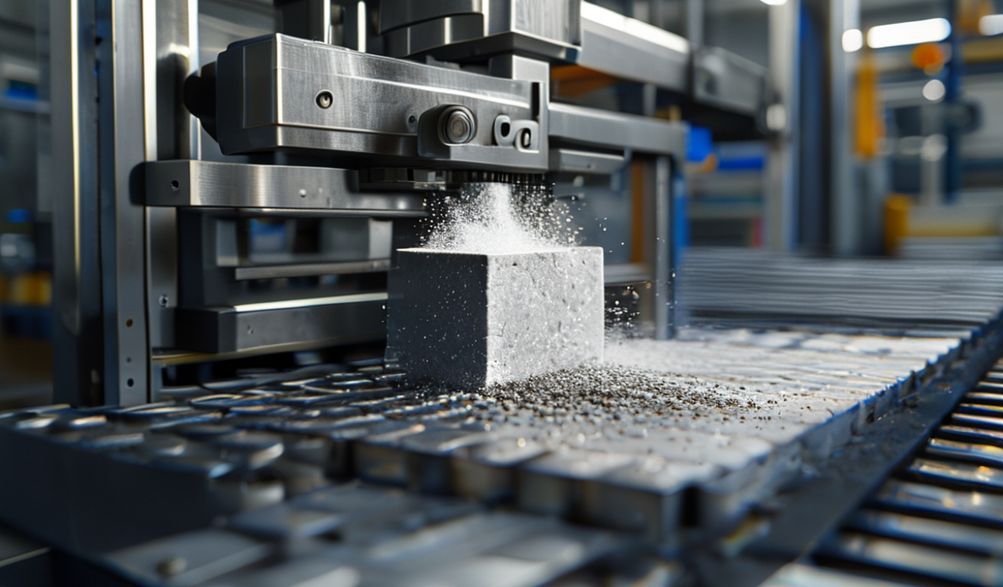
In sy kern is 'n sement sand holblok-maakmasjien 'n doelgeboude stuk industriële toerusting wat ontwerp is om die produksie van hol betonblokke te outomatiseer en te standaardiseer. Dit vervang die wisselende kwaliteit van handgestampte blokke met 'n konsekwente, hoë-opbrengs vervaardigingsproses, wat verseker dat elke blok aan presiese dimensionele en sterkte-spesifikasies voldoen.
Kernfunksie en Uitset
Die masjien se primêre funksie is om ’n noukeurig geproportioneerde mengsel van sement, sand en aggregaat in ’n vorm te kompakteer, wat ’n blok met gedefinieerde hol ruimtes vorm. Hierdie hol ruimtes verminder gewig en materiaalgebruik terwyl dit isolasie-eienskappe verbeter. Die finale produk—’n gestandaardiseerde hol blok—is die basiese eenheid vir die bou van lasdraende en nie-lasdraende mure, skeidingsmure en heinings in talle residensiële, kommersiële en industriële projekte.
Kernkomponente en Hoe Hulle Werk
Understanding the basic components demystifies the process:
- Hopper: The entry point for raw materials (cement, sand, aggregate).
- Menger: Blends the dry materials before water is added to form a homogeneous semi-dry mix.
- Vervoerstelsel: Transports the mixed material to the molding area (common in automatic machines).
- Gietkas: The heart of the machine. This hardened steel mold defines the block’s shape and size. It is filled with the raw mix.
- Vibrasie en Kompressie Stelsel: Simultaneously, high-frequency vibration settles the mix, eliminating air pockets, while a hydraulic or mechanical press applies immense pressure. This dual action is critical for achieving high block density and compressive strength.
- Palletvoerder en -stapelaar: Places empty pallets for the newly formed blocks and stacks finished blocks for curing.
- Beheerpaneel: The user interface, ranging from simple levers in semi-automatic models to programmable logic controllers (PLCs) in fully automatic systems.
In essence, the machine orchestrates a cycle: Feed -> Mix -> Transport -> Mold (Vibrate & Compress) -> Eject -> Cure.
Types of Cement Sand Hollow Block Making Machines
Choosing the right type of machine is your first critical decision. They are broadly categorized by operation, capacity, and output.
By Operation Mechanism
-
Handmatige/Semi-outomatiese Masjiene:
- Beste Vir: Startups, small-scale projects, and regions with low labor costs.
- Operasie: Require significant manual intervention for feeding materials, operating levers for compression, and removing finished blocks. They are often egg-laying or stationary types.
- Voordele: Very low initial investment, simple maintenance, and low power consumption.
- Nadele: Labor-intensive, lower output (100-500 blocks per 8-hour shift), and more dependent on operator skill for consistency.
-
Volledig Outomatiese Masjiene:
- Beste Vir: Large-scale block yards, factories supplying construction projects, and businesses focused on high-volume production.
- Operasie: Computer-controlled with automated material batching, mixing, molding, and block stacking. The entire cycle is sequential and requires minimal manual labor.
- Voordele: Very high output (thousands of blocks per hour), exceptional consistency, and optimized labor costs.
- Nadele: High capital investment, require stable power supply, and more complex maintenance.
-
Mobiele Blokmasjiene:
- Beste Vir: Large, remote project sites (e.g., dam construction, remote housing developments).
- Operasie: Mounted on a trailer or truck bed, these machines produce blocks directly on-site using locally sourced materials.
- Voordele: Eliminates transport costs for finished blocks, ideal for mega-projects.
- Nadele: Output is typically lower than stationary automatic plants, and setup logistics are more complex.
By Production Capacity (Blocks Per Hour)
- Small-scale (< 500 blocks/hr): Ideal for community-level projects or very small businesses. Often semi-automatic.
- Medium-scale (500 – 2000 blocks/hr): The sweet spot for growing block manufacturing businesses and contractors. Can be robust semi-automatic or entry-level automatic machines.
- Large-scale / Industrial (> 2000 blocks/hr): Fully automatic production lines. These are capital-intensive factories designed to supply entire regions or major cities.
By Block Type and Size
Machines are often defined by their mold compatibility. A single machine can frequently produce multiple block types by changing the mold box.
* Standaard Hol Blokke: Sizes like 4-inch, 6-inch, and 8-inch are most common.
* Inmekaar-sluitende Blokke: Designed to lock together without mortar, speeding up construction.
* Paving Slabs, Curbs, and Solid Blocks: Many machines offer accessory molds for diversified product lines.
Critical Factors to Consider Before Buying
This is where due diligence separates a successful investment from an expensive mistake. Look beyond the brochure.
Assessering van U Produksiebehoeftes en Begroting
Begin with a clear business plan:
* Projected Daily/Weekly Demand: How many blocks do you need to sell or use?
* Available Capital: Be realistic about upfront investment. Remember to budget for installation, power connection, and raw material inventory.
* ROI Timeline: Calculate based on local block prices, production costs, and your target output. A slightly more expensive, reliable machine with higher output may pay for itself faster than a cheap, problematic one.
Masjien Spesifikasies Diep Duik
- Kragbron: Electric motors are cleaner and cheaper to run in areas with stable grid power. Diesel engines offer independence from the grid, crucial for areas with frequent outages, but have higher fuel and maintenance costs. Hybrid systems offer a compromise.
- Pressure & Vibration System: This is the engine of quality. Hydraulic systems provide immense, controllable pressure for superior strength. Vibration motors should be powerful and well-mounted to ensure even compaction throughout the mold. Ask for the vibration frequency (Hz) and compressive force (tons) specifications.
- Outomatiseringsvlak: Balance your labor availability and cost against the machine’s price. An automatic machine saves on long-term wages but requires a higher initial outlay.
- Vormkwaliteit & Aanpassing: Molds made from hardened, high-chrome steel last exponentially longer than mild steel molds, saving on frequent replacement costs. Check if the supplier offers custom mold fabrication for niche products.
Supplier Evaluation (A Key E-E-A-T Section)
The machine is only as good as the company behind it. This is paramount.
- Manufacturer Reputation: Research their history. How long have they been in business? Look for customer testimonials, case studies, and industry certifications. A manufacturer that also uses its own machines is a strong positive signal.
- Na-Verkope Diens: This is non-negotiable. A cheap machine with no support is a liability. Confirm:
- Waarborgtydperk & Dekking: What is included? What voids it?
- Onderdele Beskikbaarheid: Are parts stocked locally or must they be shipped from overseas, causing weeks of downtime?
- Tegniese Ondersteuning: Is there a local service engineer? Is phone/online support available?
- Installasie & Opleiding: Will they send a technician to set up the machine and train your operators? Proper training is critical for safety and optimal production.
- Requesting References & Visiting Facilities: Ask for contact details of past customers in a similar climate or market. If geographically feasible, visit the manufacturer’s facility or a local installation to see the machine in operation.
The Operational Process: From Raw Material to Finished Block
A great machine with poor raw materials or process will produce poor blocks. Master the process.
Optimal Raw Material Mix Design
The recipe is fundamental. A typical mix for hollow blocks might be:
* Sement: 1 part (The binder. Use a reputable brand of OPC or PPC).
* Sand 6-8 parts (Should be clean, sharp, and well-graded. River sand or crushed stone sand).
* Aggregate: 2-3 parts (Stone chips or stone dust (0-6mm) to fill voids and add density).
* Water: Approximately 0.5-0.6 parts by weight of cement. The mix should be semi-dry—it holds its shape when squeezed in your hand but crumbles when dropped. Too much water weakens the block.
Pro Wenk: Always conduct small trial batches with your local materials to fine-tune the ratio for strength and workability.
Step-by-Step Production Cycle
- Voeding & Meng Raw materials are batched by weight or volume and fed into the mixer. Water is added gradually to achieve the perfect semi-dry consistency.
- Vorming/Verdigting The mix is fed into the mold box. The machine simultaneously vibrates and applies high pressure for 5-15 seconds.
- Uitskiet: The freshly formed, green block is ejected onto a wooden or steel pallet. It is now self-supporting but has very little strength.
- Kuuring: This is where the block gains its strength. Cement hydrates over time, requiring moisture.
- Steam Curing: Blocks are placed in a chamber and exposed to steam (60-80°C) for 8-12 hours. This accelerates strength gain, allowing blocks to be sold or used within 24 hours.
- Water Curing: Blocks are stacked and kept wet by sprinkling for 14-28 days.
- Natural Curing: Simply storing blocks in a shaded, humid environment for 28 days.
- Palletizing/Storage: After initial curing, blocks are stacked on pallets and stored in a dry area until needed.
Essential Maintenance for Longevity
Treat your machine like the asset it is.
* Daily: Clean all mix residue, check hydraulic oil levels, inspect mold box for wear or damage, and lubricate all moving parts as per the manual.
* Weekly: Tighten all bolts and nuts (vibration loosens them), check vibration motor mounts, and inspect electrical connections.
* Monthly: Change hydraulic oil filters, perform a thorough inspection of wear parts like mold liners, pressure heads, and conveyor belts.
Advantages of Using a Professional Block Making Machine
The benefits extend far beyond simple automation.
Quality and Consistency
Machines produce blocks with uniform dimensions, smooth faces, and consistent density. This translates to predictable druksterkte (often between 3.5 MPa to 15+ MPa), ensuring compliance with local building codes, reducing mortar usage, and resulting in straighter, stronger walls.
Economic Benefits
- Koste-doeltreffendheid: While the per-block material cost is fixed, the machine drastically reduces the production cost per block at scale, maximizing your margin.
- High Productivity & Speed: One machine can outperform dozens of manual laborers, enabling you to meet large orders and tight project deadlines.
- Arbeidsbesparing: Automating the most strenuous tasks reduces your reliance on skilled manual labor and lowers long-term wage bills.
- Afvalvermindering: Precise mixing and molding minimize material spillage and rejected blocks.
Versatility and Sustainability
You can adapt the raw material mix to utilize locally available sand and aggregates, and even incorporate industrial by-products like vliegas (which can replace a portion of the cement, reducing cost and the carbon footprint). This promotes a more sustainable, circular economy in construction.
Frequently Asked Questions (FAQ)
Q1: What is the average cost range for a cement sand hollow block making machine?
A: Prices vary dramatically. A small manual machine can start around $3 000 – $8 000. A semi-automatic stationary machine may range from $15,000 – $50,000. A fully automatic production line can cost anywhere from $70,000 to over $300,000. The price is driven by capacity, level of automation, brand reputation, and quality of components.
Q2: What is the typical compressive strength of blocks produced by these machines?
A: Strength depends heavily on your mix design (cement ratio, water-cement ratio) and the machine’s compaction force. Standard hollow blocks for general construction typically range from 3.5 MPa to 7 MPa. With optimized mixes and high-pressure machines, producing blocks with 10 MPa to 15 MPa strength for load-bearing applications is common.
Q3: Can I use other materials besides cement and sand?
A: Absolutely. Fly ash is a popular partial cement replacement. Stone dustofquarry dust is an excellent fine aggregate. Some machines can also process materials like crushed glass or certain types of slag. Always test new mix designs thoroughly.
Q4: How much space and what kind of foundation is required for setup?
A: A small semi-automatic machine might need a 50-100 sq. m covered shed with a level, reinforced concrete floor (at least 150mm thick). A large automatic plant, including raw material storage, production area, and curing yard, can require 1,000-5,000 sq. m of total space. Always follow the manufacturer’s foundation specifications.
Q5: What are the most common operational challenges and how can I avoid them?
A:
* Block Breakage: Caused by improper mix (too dry/too wet), insufficient vibration/pressure, or rough handling during green state. Fix your mix and process.
* Poor Surface Finish: Often due to worn-out mold liners or insufficient release agent. Maintain your molds.
* Machine Jams: Usually from overfilling the mold, foreign objects in the mix, or misaligned parts. Follow operating procedures and conduct preventative maintenance.
Conclusion
Investing in a cement sand hollow block making machine is a transformative decision that can propel a construction business into profitability or ensure the timely, cost-effective completion of major projects. It represents a shift from artisanal effort to industrial precision. As we’ve outlined, success hinges not just on selecting a machine with the right specifications, but on partnering with a reputable supplier who stands behind their product with robust training and support.
Remember, the cheapest machine often carries the highest long-term cost in downtime and repairs. Prioritize total cost of ownership, demand clarity on after-sales service, and use this guide as a foundational checklist. Your final call to action is this: consult with multiple suppliers, ask the hard questions about service and parts, and if possible, request a material test or witness a production run. Empower yourself with knowledge, and you’ll build a foundation for success that’s as solid as the blocks your new machine will produce.
<