
الدليل الشامل لآلات صناعة الطوب الرملي المجوف من الأسمنت (2026)
مقدمة
يتميز المشهد العالمي للبناء بطلب لا ينقطع على مواد تكون في الوقت نفسه ميسورة التكلفة ومتينة. من ناطحات السحاب الحضرية إلى مشاريع الإسكان الريفية، الحاجة إلى مكونات بناء فعالة وموثوقة هي حاجة عالمية. وفي صميم هذا الطلب يوجد الطابوق الخرساني المجوف المتواضع - حجر الزاوية في البناء الحديث، الذي يُقدر لقوته، وعزله الحراري، وفعاليته من حيث التكلفة. ومع ذلك، فإن الطريقة التقليدية للإنتاج اليدوي للطابوق تكافح لمواكبة هذا الطلب. فعدم التجانس في الحجم والقوة، وشدة العمالة المرهقة، وعدم القدرة على التوسع بكفاءة، تؤثر جميعها على العمليات اليدوية، مما يخلق اختناقات للمشاريع والشركات على حد سواء.
ادخل آلة صنع الطوب الرملي المجوف الأسمنتي: الحل الهندسي الذي يحول المواد الخام إلى كتل بناء دقيقة بكفاءة ملحوظة. بالنسبة لرواد الأعمال والمقاولين وشركات البناء، فإن الاستثمار في الآلة المناسبة ليس مجرد عملية شراء؛ بل هو قرار استراتيجي يحدد الإنتاجية وهوامش الربح والميزة التنافسية.
بناءً على سنوات من مراقبة تطور الصناعة وبيانات أداء الآلات، صُمم هذا الدليل لاختراق ضجيج التسويق. هدفنا هو تقديم نظرة شاملة وتقنية وعملية بعمق. سنستشهد بالمعايير الصناعية الرئيسية ونتجه نحو التعليم بدلاً من البيع، مما يمكنك من المعرفة المحايدة اللازمة لاتخاذ قرار استثماري واثق ومستنير. دعونا نبني هذا الفهم من الأساس.
ما هي آلة صنع البلوك الخرساني المجوف؟
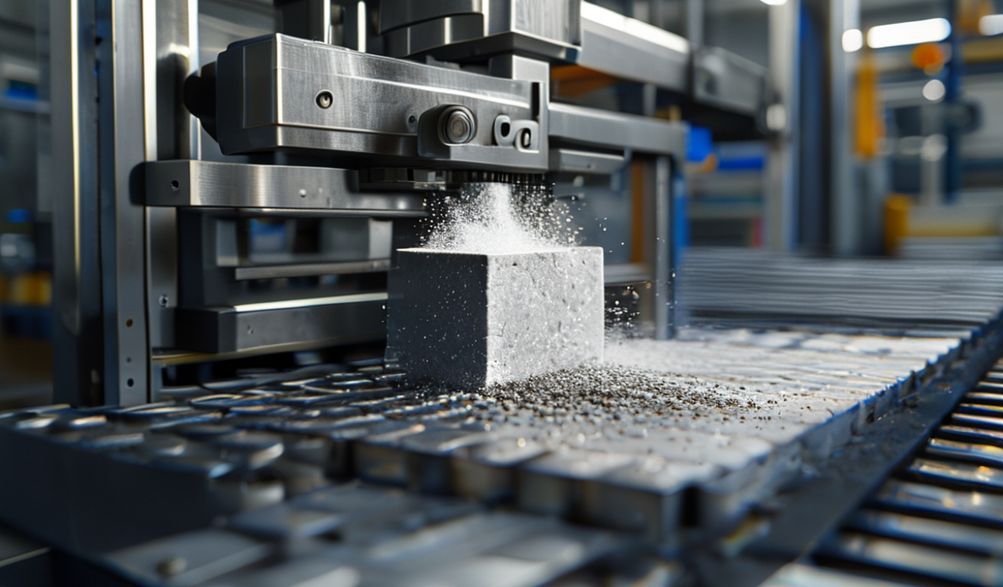
في صميمه، آلة صنع الطوب الرملي المجوف هي قطعة معدات صناعية مخصصة مصممة لأتمتة وتوحيد إنتاج البلوك الخرساني المجوف. إنها تحل محل الجودة المتغيرة للطوب المضغوط يدوياً بعملية تصنيع عالية الإنتاج ومتسقة، مما يضمن استيفاء كل قطعة طوب للمواصفات الدقيقة للأبعاد والمتانة.
الوظيفة الأساسية والمخرجات
الوظيفة الأساسية للآلة هي ضغط خليط مُقدَّر بعناية من الأسمنت والرمل والركام في قالب، لتشكيل طوبة ذات تجاويف مجوفة محددة. هذه التجاويف تقلل الوزن واستخدام المواد مع تحسين خصائص العزل. المنتج النهائي – طوبة مجوفة موحدة – هو الوحدة الأساسية لبناء الجدران الحاملة وغير الحاملة، والفُواصل، والأسوار في عدد لا يحصى من المشاريع السكنية والتجارية والصناعية.
المكونات الرئيسية وكيفية عملها
فهم المكونات الأساسية يزيل الغموض عن العملية:
- هوبر:نقطة دخول المواد الخام (الأسمنت، الرمل، الركام).
- الخلاط:يتم خلط المواد الجافة قبل إضافة الماء لتكوين مزيج شبه جاف متجانس.
- نظام الناقلينقل المواد المختلطة إلى منطقة التشكيل (شائع في الآلات الأوتوماتيكية).
- صندوق القالب:قلب الآلة. هذه القالب الفولادي المقسى يحدد شكل وحجم الطوبة. يتم ملؤه بالخليط الخام.
- نظام الاهتزاز والضغطفي الوقت نفسه، يؤدي الاهتزاز عالي التردد إلى استقرار الخليط، مما يزيل الجيوب الهوائية، بينما يطبق مكبس هيدروليكي أو ميكانيكي ضغطاً هائلاً. هذا العمل المزدوج حاسم لتحقيق كثافة عالية للكتلة وقوة انضغاطية.
- مُغذّي البليتات ومُكدّسها:يضع منصات فارغة للكتل المشكلة حديثًا ويرص الكتل النهائية للمعالجة.
- لوحة التحكم:واجهة المستخدم، والتي تتراوح من الأذرع البسيطة في النماذج شبه الآلية إلى وحدات التحكم المنطقية القابلة للبرمجة (PLCs) في الأنظمة الآلية بالكامل.
In essence, the machine orchestrates a cycle: Feed -> Mix -> Transport -> Mold (Vibrate & Compress) -> Eject -> Cure.
Types of Cement Sand Hollow Block Making Machines
Choosing the right type of machine is your first critical decision. They are broadly categorized by operation, capacity, and output.
By Operation Mechanism
-
الآلات اليدوية/شبه الآلية:
- الأفضل لـ: Startups, small-scale projects, and regions with low labor costs.
- العملية: Require significant manual intervention for feeding materials, operating levers for compression, and removing finished blocks. They are often egg-laying or stationary types.
- مزايا: Very low initial investment, simple maintenance, and low power consumption.
- سلبيات: Labor-intensive, lower output (100-500 blocks per 8-hour shift), and more dependent on operator skill for consistency.
-
آلات أوتوماتيكية بالكامل:
- الأفضل لـ: Large-scale block yards, factories supplying construction projects, and businesses focused on high-volume production.
- العملية: Computer-controlled with automated material batching, mixing, molding, and block stacking. The entire cycle is sequential and requires minimal manual labor.
- مزايا: Very high output (thousands of blocks per hour), exceptional consistency, and optimized labor costs.
- سلبيات: High capital investment, require stable power supply, and more complex maintenance.
-
آلات تصنيع الكتل المتنقلة:
- الأفضل لـ: Large, remote project sites (e.g., dam construction, remote housing developments).
- العملية: Mounted on a trailer or truck bed, these machines produce blocks directly on-site using locally sourced materials.
- مزايا: Eliminates transport costs for finished blocks, ideal for mega-projects.
- سلبيات: Output is typically lower than stationary automatic plants, and setup logistics are more complex.
By Production Capacity (Blocks Per Hour)
- Small-scale (< 500 blocks/hr): Ideal for community-level projects or very small businesses. Often semi-automatic.
- Medium-scale (500 – 2000 blocks/hr): The sweet spot for growing block manufacturing businesses and contractors. Can be robust semi-automatic or entry-level automatic machines.
- Large-scale / Industrial (> 2000 blocks/hr): Fully automatic production lines. These are capital-intensive factories designed to supply entire regions or major cities.
By Block Type and Size
Machines are often defined by their mold compatibility. A single machine can frequently produce multiple block types by changing the mold box.
* الطوب المجوف القياسي Sizes like 4-inch, 6-inch, and 8-inch are most common.
* الكتل المتشابكة: Designed to lock together without mortar, speeding up construction.
* Paving Slabs, Curbs, and Solid Blocks: Many machines offer accessory molds for diversified product lines.
Critical Factors to Consider Before Buying
This is where due diligence separates a successful investment from an expensive mistake. Look beyond the brochure.
تقييم احتياجات الإنتاج والميزانية
Begin with a clear business plan:
* Projected Daily/Weekly Demand: How many blocks do you need to sell or use?
* Available Capital: Be realistic about upfront investment. Remember to budget for installation, power connection, and raw material inventory.
* ROI Timeline: Calculate based on local block prices, production costs, and your target output. A slightly more expensive, reliable machine with higher output may pay for itself faster than a cheap, problematic one.
الغوص العميق في مواصفات الآلة
- مصدر الطاقة Electric motors are cleaner and cheaper to run in areas with stable grid power. Diesel engines offer independence from the grid, crucial for areas with frequent outages, but have higher fuel and maintenance costs. Hybrid systems offer a compromise.
- Pressure & Vibration System: This is the engine of quality. Hydraulic systems provide immense, controllable pressure for superior strength. Vibration motors should be powerful and well-mounted to ensure even compaction throughout the mold. Ask for the vibration frequency (Hz) and compressive force (tons) specifications.
- مستوى الأتمتة: Balance your labor availability and cost against the machine’s price. An automatic machine saves on long-term wages but requires a higher initial outlay.
- جودة القالب والتخصيص: Molds made from hardened, high-chrome steel last exponentially longer than mild steel molds, saving on frequent replacement costs. Check if the supplier offers custom mold fabrication for niche products.
Supplier Evaluation (A Key E-E-A-T Section)
The machine is only as good as the company behind it. This is paramount.
- Manufacturer Reputation: Research their history. How long have they been in business? Look for customer testimonials, case studies, and industry certifications. A manufacturer that also uses its own machines is a strong positive signal.
- خدمة ما بعد البيع: This is non-negotiable. A cheap machine with no support is a liability. Confirm:
- فترة الضمان والتغطية: What is included? What voids it?
- توفر قطع الغيار Are parts stocked locally or must they be shipped from overseas, causing weeks of downtime?
- الدعم الفني Is there a local service engineer? Is phone/online support available?
- التثبيت والتدريب: Will they send a technician to set up the machine and train your operators? Proper training is critical for safety and optimal production.
- Requesting References & Visiting Facilities: Ask for contact details of past customers in a similar climate or market. If geographically feasible, visit the manufacturer’s facility or a local installation to see the machine in operation.
The Operational Process: From Raw Material to Finished Block
A great machine with poor raw materials or process will produce poor blocks. Master the process.
Optimal Raw Material Mix Design
The recipe is fundamental. A typical mix for hollow blocks might be:
* أسمنت: 1 part (The binder. Use a reputable brand of OPC or PPC).
* رمل 6-8 parts (Should be clean, sharp, and well-graded. River sand or crushed stone sand).
* مجموع: 2-3 parts (Stone chips or stone dust (0-6mm) to fill voids and add density).
* ماء: Approximately 0.5-0.6 parts by weight of cement. The mix should be شبه جاف—it holds its shape when squeezed in your hand but crumbles when dropped. Too much water weakens the block.
نصيحة احترافية: Always conduct small trial batches with your local materials to fine-tune the ratio for strength and workability.
Step-by-Step Production Cycle
- التغذية والخلط: Raw materials are batched by weight or volume and fed into the mixer. Water is added gradually to achieve the perfect semi-dry consistency.
- التشكيل/الضغط: The mix is fed into the mold box. The machine simultaneously vibrates and applies high pressure for 5-15 seconds.
- طرد: The freshly formed, green block is ejected onto a wooden or steel pallet. It is now self-supporting but has very little strength.
- التداوي This is where the block gains its strength. Cement hydrates over time, requiring moisture.
- التصليب بالبخار: Blocks are placed in a chamber and exposed to steam (60-80°C) for 8-12 hours. This accelerates strength gain, allowing blocks to be sold or used within 24 hours.
- Water Curing: Blocks are stacked and kept wet by sprinkling for 14-28 days.
- التداوي الطبيعي: Simply storing blocks in a shaded, humid environment for 28 days.
- Palletizing/Storage: After initial curing, blocks are stacked on pallets and stored in a dry area until needed.
Essential Maintenance for Longevity
Treat your machine like the asset it is.
* Daily: Clean all mix residue, check hydraulic oil levels, inspect mold box for wear or damage, and lubricate all moving parts as per the manual.
* Weekly: Tighten all bolts and nuts (vibration loosens them), check vibration motor mounts, and inspect electrical connections.
* Monthly: Change hydraulic oil filters, perform a thorough inspection of wear parts like mold liners, pressure heads, and conveyor belts.
Advantages of Using a Professional Block Making Machine
The benefits extend far beyond simple automation.
Quality and Consistency
Machines produce blocks with uniform dimensions, smooth faces, and consistent density. This translates to predictable قوة الانضغاط (often between 3.5 MPa to 15+ MPa), ensuring compliance with local building codes, reducing mortar usage, and resulting in straighter, stronger walls.
Economic Benefits
- كفاءة التكلفة: While the per-block material cost is fixed, the machine drastically reduces the production cost per block at scale, maximizing your margin.
- High Productivity & Speed: One machine can outperform dozens of manual laborers, enabling you to meet large orders and tight project deadlines.
- توفير العمالة Automating the most strenuous tasks reduces your reliance on skilled manual labor and lowers long-term wage bills.
- تقليل النفايات: Precise mixing and molding minimize material spillage and rejected blocks.
Versatility and Sustainability
You can adapt the raw material mix to utilize locally available sand and aggregates, and even incorporate industrial by-products like رماد متطاير (which can replace a portion of the cement, reducing cost and the carbon footprint). This promotes a more sustainable, circular economy in construction.
الأسئلة الشائعة (FAQ)
Q1: What is the average cost range for a cement sand hollow block making machine?
أ: Prices vary dramatically. A small manual machine can start around 3,000 دولار – 8,000 دولار. A semi-automatic stationary machine may range from ١٥٬٠٠٠ – ٥٠٬٠٠٠ دولارًا. A fully automatic production line can cost anywhere from $70,000 to over $300,000. The price is driven by capacity, level of automation, brand reputation, and quality of components.
Q2: What is the typical compressive strength of blocks produced by these machines?
أ: Strength depends heavily on your mix design (cement ratio, water-cement ratio) and the machine’s compaction force. Standard hollow blocks for general construction typically range from 3.5 ميجا باسكال إلى 7 ميجا باسكال. With optimized mixes and high-pressure machines, producing blocks with 10 MPa to 15 MPa strength for load-bearing applications is common.
Q3: Can I use other materials besides cement and sand?
أ: Absolutely. Fly ash is a popular partial cement replacement. Stone dustأوquarry dust is an excellent fine aggregate. Some machines can also process materials like crushed glass or certain types of slag. Always test new mix designs thoroughly.
Q4: How much space and what kind of foundation is required for setup?
أ: A small semi-automatic machine might need a 50-100 sq. m covered shed with a level, reinforced concrete floor (at least 150mm thick). A large automatic plant, including raw material storage, production area, and curing yard, can require 1,000-5,000 sq. m of total space. Always follow the manufacturer’s foundation specifications.
Q5: What are the most common operational challenges and how can I avoid them?
أ:
* Block Breakage: Caused by improper mix (too dry/too wet), insufficient vibration/pressure, or rough handling during green state. Fix your mix and process.
* Poor Surface Finish: Often due to worn-out mold liners or insufficient release agent. Maintain your molds.
* Machine Jams: Usually from overfilling the mold, foreign objects in the mix, or misaligned parts. Follow operating procedures and conduct preventative maintenance.
خاتمة
Investing in a cement sand hollow block making machine is a transformative decision that can propel a construction business into profitability or ensure the timely, cost-effective completion of major projects. It represents a shift from artisanal effort to industrial precision. As we’ve outlined, success hinges not just on selecting a machine with the right specifications, but on partnering with a reputable supplier who stands behind their product with robust training and support.
Remember, the cheapest machine often carries the highest long-term cost in downtime and repairs. Prioritize total cost of ownership, demand clarity on after-sales service, and use this guide as a foundational checklist. Your final call to action is this: consult with multiple suppliers, ask the hard questions about service and parts, and if possible, request a material test or witness a production run. Empower yourself with knowledge, and you’ll build a foundation for success that’s as solid as the blocks your new machine will produce.
<