
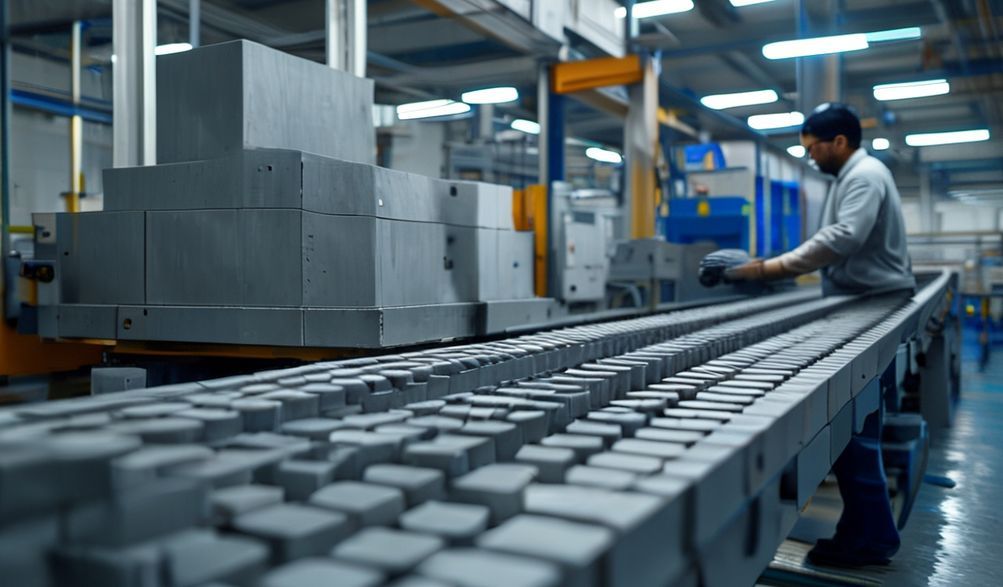
Betonblokvervaardigingsmasjienpryslys in Indië 2026: 'n Volledige Koper se Gids
Inleiding
Jy is 'n kontrakteur in Coimbatore wat jou voorgemaakte betonbesigheid wil uitbrei, of miskien 'n entrepreneur in Rajasthan wat op die plaaslike konstruksie-oplewing mik. Jy gaan sit om "betonblokmasjienprys" na te vors, en binne minute word jy oorweldig. Pryse wissel van 'n skynbaar ongelooflike ₹1.5 lakh tot 'n verstommende ₹5 kroeë. Watter syfer is eg? Wat is jyeintlikWaarvoor betaal jy? Die verwarring is nie net frustrerend nie—dit hou 'n beduidende finansiële misstap in.
Hierdie gids is gebore uit meer as 'n dekade van direkte betrokkenheid by Indië se konstruksie-toerustingsektor. Ons het fabrieksvloere van Rajkot tot Hyderabad gestap, met honderde klein besigheidseienaars oor hul operasionele probleme gepraat, en die prysstrategieë van beide toonaangewende OEM's en plaaslike vervaardigers ontleed. Ons doel hier is nie om 'n statiese, binnekort verouderde lys te verskaf nie, maar om jou toe te rus met die analitiese raamwerk om self pryse te verstaan. Ons belowe 'n deursigtige uiteensetting van die 2026-pryslandskap, die kritieke faktore wat koste beïnvloed, en uitvoerbare stappe om te verseker dat jy ware waarde vir jou belegging kry.
Let asseblief kennis: Alle pryse wat genoem word, isIndikatiewe skattingsgebaseer op huidige markneigings, materiaalkoste-projeksies en direkte vervaardigerkonsultasies vir 2026. Dit sluit BTW, vervoer en installering uit. U finale kwotasie sal verskil. Ons moedig u sterk aan om hierdie gids as 'n grondslag te gebruik vir ingeligte besprekings met verskaffers, en altyd die presiese spesifikasies en koste te verifieer.
Verstaan die Indiese Betonblokmasjienmark
Voordat jy in getalle duik, moet jy eers begrip hêwiemaak die masjiene enwaarwaar hulle vandaan kom, is noodsaaklik om prysmerke te ontleed. Indië se mark is lewendig, uiteenlopend en hoogs mededingend.
Sleutel Vervaardigingsentrums in Indië
Indië se blokmasjienvervaardiging is gekonsentreer in spesifieke industriële trosse, elk met sy eie karakter:
* Coimbatore:Dikwels die "Pompstad" genoem, het dit ontwikkel tot 'n belangrike spilpunt vir robuuste, ingenieursgerigte blokmasjiene. Verskaffers hier is bekend vir soliede meganiese ontwerp.
* Ahmedabad & Rajkot (Gujarat): The heartland of foundries and light engineering. This region produces a vast range of machines, from very affordable manual units to sophisticated automatic systems. Competition is fierce, which can drive prices down but requires careful quality vetting.
* Delhi NCR & North India: A mix of large-scale OEMs (Original Equipment Manufacturers) and traders. This hub often deals in higher-capacity stationary plants and is a key point for imported technology, especially from Europe and East Asia.
Types of Suppliers: Large OEMs vs. Local Fabricators vs. Importers
- Large OEMs: Companies like Everon Impex, Apollo Inffratech, or Qingdao Alabama have established brands, standardized models, and (ideally) structured after-sales networks. You pay a premium for the brand assurance, R&D, and service infrastructure.
- Local Fabricators: Numerous small to medium workshops manufacture machines. The advantage is potential cost savings (15-30% lower) and customization. The risk lies in inconsistent build quality, variable component sourcing, and potentially limited long-term service support.
- Importers: They bring Chinese, German, or Italian machines into India. While offering advanced technology, prices are higher due to import duties, and critical factors like spare part availability and technician training must be thoroughly evaluated.
Popular Indian Brands vs. International Brands: A Cost-Quality Perspective
- Gevestigde Indiese Handelsmerke: They have the significant advantage of designing machines for Indian conditions—voltage fluctuations, dust, and locally available spare parts. The price-to-performance ratio is often excellent, making them the go-to choice for most Indian businesses.
- International Brands (e.g., Hess, Zenith): Synonymous with high automation, precision, and durability. They command a premium, sometimes 2-3x the price of a comparable Indian automatic machine. The investment is justifiable for ultra-high-volume, export-quality production where downtime is catastrophic.
Factors Drastically Affecting Concrete Block Machine Prices in India
The price disparity isn’t arbitrary. It’s directly tied to specifications that impact your production capability and bottom line.
Production Capacity (Blocks Per Hour): The Primary Cost Driver
This is the most straightforward factor. A machine rated for 1,000 blocks per 8-hour shift (a “shift” is the standard metric) is fundamentally different—and cheaper—than one rated for 10,000 blocks. Capacity scales with the size of the vibration table, motor power, hydraulic system, and structural frame.
Level of Automation: Manual, Semi-Automatic, Fully Automatic, and PLC Systems
- Handleiding: Lowest upfront cost, highest ongoing labor cost and variability in block quality. Price is for the core machine.
- Semi-outomaties: Involves some automation (e.g., hydraulic compression) but requires manual feeding and block removal. Offers a balance.
- Heeltemal Outomaties: Includes automatic material feeding, mixing, molding, curing, and stacking. Requires minimal labor but has a high initial investment.
- PLC-Based Systems: The pinnacle. Programmable Logic Controllers allow for precise control over every parameter (pressure, vibration time). This adds significantly to the cost but ensures unmatched consistency and data tracking.
Machine Type & Function: Static vs. Mobile vs. Paver Block Machine
- Static Block Machine: The standard for fixed-plant production. Higher capacity, more stable.
- Mobile Block Machine: Mounted on a trailer, it produces blocks directly at the construction site, eliminating transport costs for blocks. Prices are influenced by the added mobility components.
- Paver Block/Interlocking Tile Machine: These are specialized for thinner, high-precision products. They often require more sophisticated vibration systems and molds, affecting the price.
Raw Material Input: Fly Ash (AAC) vs. Cement-Concrete vs. Hollow Block Focus
The machine design changes based on input.
* A standard vibratory compression machine for solid/hollow concrete blocks is the most common.
* An AAC (Autoclaved Aerated Concrete) Block plant is a completely different, chemical-process-based system involving slurry mixing, pouring, cutting, and autoclaving. It’s not just a “machine” but an entire plant, hence the price jump to crores.
Build Quality & After-Sales Service: Why Cheaper Isn’t Always Better
A machine with a frame made from mild steel (MS) will be cheaper than one made from reinforced steel plates. The quality of the vibration motor (Indian vs. imported), hydraulic seals, and electrical panels directly impacts longevity. A ₹2 lakhs machine that breaks down in 6 months and has no service support is infinitely more expensive than a ₹4 lakhs machine that runs for years with available spare parts.
Concrete Block Making Machine Price List Breakdown (2026 Estimates)
Belangrike Vrystelling: Prices are exclusive of GST (typically 18%), transportation, and installation. They are approximate and vary based on location, negotiation, and specific configuration (e.g., mold type, motor brand). The prices below are projected for 2026 based on current inflation and material cost trends. Always, always request a detailed, itemized quotation.
Manual & Semi-Automatic Block Machines Price Range
Ideal for startups, rural projects, or low-volume specialty blocks.
* Small-scale (500-1000 blocks/day): ₹1.5 Lakhs – ₹4 Lakhs
* Basic manual single block machines.
* Entry-level semi-automatic with one or two molds.
* Often from local fabricators; verify weld quality and motor specifications.
* Medium-scale (2000-4000 blocks/day): ₹4 Lakhs – ₹10 Lakhs
* Robust semi-automatic machines with hydraulic systems.
* Can include simple conveyor feeders.
* Brands like Shri EngineeringofGujarat-based manufacturers operate in this range.
Fully Automatic Stationary Block Machines Price Range
For serious commercial production aiming for profitability and scale.
* Standard Models (4000-8000 blocks/shift): ₹10 Lakhs – ₹25 Lakhs
* The workhorse for many small-to-medium block manufacturers.
* Includes automatic material handling and pallet return systems.
* Brands: Everon Impex, Force Engineering, Apollo have popular models here.
* High-Capacity Models (10,000+ blocks/shift): ₹25 Lakhs – ₹50 Lakhs+
* Feature advanced hydraulic systems, larger vibration decks, and often PLC controls.
* Approach small plant-level automation. Prices can extend beyond ₹50 lakhs for customized, high-output systems.
Mobile Block Machines & Specialized Equipment
- Mobile Block Machines: ₹8 Lakhs – ₹20 Lakhs
- Price includes the mobile trailer and a semi or fully automatic block-making unit. Capacity is key here.
- Paver Block Machines: ₹5 Lakhs – ₹30 Lakhs
- Range is vast. A simple hydraulic press starts at the lower end, while a fully automatic, multi-layer paver plant with color feeder attachments reaches the upper limit.
- AAC Block Plant: ₹50 Lakhs – ₹5 Crores+
- This is a complete factory setup. A minimal, low-capacity “mini plant” might start around ₹50 lakhs, while a fully automated, high-capacity turnkey plant from a major supplier can cost several crores.
Beyond the Sticker Price: The True Cost of Ownership
Smart buyers budget for what comes na the purchase order.
- Installation & Foundation: A medium automatic machine may require a reinforced concrete foundation, costing ₹50,000 – ₹2 lakhs. Factor in crane or rigger costs for placement.
- Kragverbruik: A 20 HP motor running 8 hours daily has a tangible electricity cost. Calculate your local commercial tariff. Hydraulic systems also consume power.
- Maintenance & Spares: Regular wear parts include mould liners, hydraulic seals, and vibration motor bearings. Ask the supplier for a spare parts price list voor buying. Availability is as important as cost.
- Warranty & Support: A one-year warranty on the entire machine is standard. Scrutinize what’s covered (labour? travel?). The presence of a service engineer within your state or region is a huge trust signal.
How to Get the Best Value for Your Investment
Step-by-Step Guide to Evaluating Suppliers
- Shortlist by Capacity: Ignore all machines that don’t meet your minimum output needs.
- Check Credentials: Visit websites, but don’t stop there. Look for a physical factory address.
- Ask for Customer References: A confident supplier will provide 2-3 contacts of existing customers in a similar business scale as yours. Call them.
Must-Ask Questions Before Purchasing
- “Can you provide a detailed breakdown of the quotation?”
- “What is the lead time for critical spare parts like the vibration motor or hydraulic pump?”
- “Do you provide on-site installation and operator training? Is it included?”
- “What is the recommended preventive maintenance schedule?”
The Importance of a Factory Visit
If the investment is significant (over ₹10 lakhs), a visit is non-negotiable. You can assess:
* Build quality and material storage.
* Testing procedures.
* The scale of their operation.
Financing and Subsidies
- Financing: Most OEMs have tie-ups with NBFCs or banks for equipment loans.
- Government Subsidies: MSME schemes (like CLCSS) may offer capital subsidy or interest subvention. Check with your local District Industries Centre (DIC) for current, applicable schemes.
Frequently Asked Questions (FAQ)
Q1: What is the cheapest concrete block making machine available in India?
A: You can find basic, single-block manual presses for as low as ₹1-1.5 lakhs. However, “cheapest” must be evaluated with output and labor in mind. This machine might produce 300-500 blocks/day with 2-3 operators. The long-term cost of labor and low output often makes a slightly more expensive semi-automatic machine more viable for a business.
Q2: Is it better to buy an Indian machine or an imported one?
A: For over 90% of Indian buyers, a quality machine from an established Indian brand is the optimal choice. The reasons are compelling: competitive pricing, machines built for local conditions, readily available spare parts, and accessible service. Imported machines excel in specific high-tech niches but come with challenges in after-sales support and cost.
Q3: Can I get a concrete block machine under ₹2 lakhs?
A: Yes, but with clear expectations. In this range, you are looking at manual or very small semi-automatic machines, typically producing 500-800 blocks per day. They are suitable for on-site production for a specific project or a very small-scale startup with readily available manual labor.
Q4: How much profit can I make with a block making machine?
A: Profitability isn’t guaranteed by the machine alone. It’s a function of:
* Local Demand & Competition: Your selling price.
* Raw Material Cost: Proximity to sand, aggregate, and cement suppliers.
* Operasionele Doeltreffendheid: Reject rate, power & labor cost, machine uptime.
* Skaal: Higher output spreads fixed costs thinner. A well-run, medium-scale plant can see healthy margins, but you must run the numbers for your specific location and scale.
Q5: Where can I find genuine customer reviews of these machines?
A: Avoid relying solely on testimonials on a manufacturer’s website. Instead:
* Ask the supplier for direct customer references and actually call them.
* Visit industry-specific online forums (though fewer are active in India).
* The best method: if possible, visit an existing installation of the shortlisted machine. See it running, speak to the operators.
Conclusion
Navigating the concrete block making machine market in India ultimately boils down to this: price is a direct reflection of capacity, automation, and inherent quality. The “right” machine isn’t the cheapest or the most expensive—it’s the one that aligns precisely with your business plan, output goals, and local operating environment.
Our final, experienced recommendation is to reverse the process. Don’t start with the price list. Start by clearly defining:
1. Your target daily/monthly production volume.
2. The types of blocks (solid, hollow, paver) you need to produce.
3. Your available budget, including a 15-20% buffer for installation, foundation, and initial spares.
4. Your local infrastructure (power availability, space, labor skill).
With this clarity, the price ranges in this guide become a powerful filter, not a source of confusion. For investments above ₹20-25 lakhs, consider consulting with an independent plant & machinery consultant. Use this guide as your due diligence checklist when speaking to suppliers. Your goal is not just to buy a machine, but to make a strategic investment that builds the foundation of your business for years to come.
<