
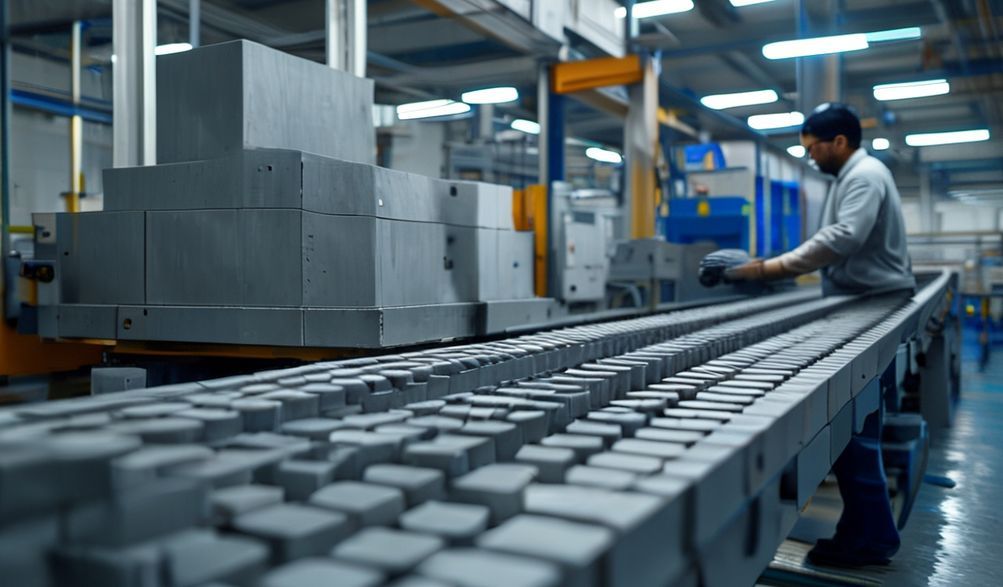
인도 콘크리트 블록 제조 기계 가격 목록 2026: 완벽한 구매자 가이드
소개
코임바토르에서 프리캐스트 사업을 확장하려는 계약자이거나, 라자스탄의 건설 호황에 발맞추려는 기업가일 수 있습니다. "콘크리트 블록 제조 기계 가격"을 조사하려고 앉아 몇 분 만에 압도당합니다. 견적은 믿기 어려울 정도로 15만 루피에서 어마어마한 5코어 루피까지 다양합니다. 어느 숫자가 진실일까요? 당신은 무엇을...실제로무엇을 지불하는 것인가요? 이 혼란은 단순히 짜증나는 것을 넘어서 상당한 재정적 실수로 이어질 위험이 있습니다.
이 가이드는 인도 건설 장비 분야에서 10년 이상 직접 경험한 노하우에서 탄생했습니다. 라지코트에서 하이데라바드까지 현장을 누비며 수백 명의 소규모 사업주들과 운영상의 어려움에 대해 이야기를 나누었고, 주요 OEM부터 지역 제조업체들의 가격 전략까지 분석했습니다. 여기서 우리의 목표는 금방 낡아버릴 정적인 가격 목록을 제공하는 것이 아니라, 여러분 스스로 가격을 분석할 수 있는 틀을 제공하는 것입니다. 2026년의 가격 현황, 비용을 좌우하는 핵심 요소들, 그리고 투자 대비 진정한 가치를 얻을 수 있는 실질적인 단계들을 투명하게 제시하겠습니다.
참고: 언급된 모든 가격은지표성 추정치2026년 현재 시장 동향, 원자재 비용 전망 및 직접 제조업체 협의를 기반으로 합니다. 이는 GST, 운송 및 설치 비용을 제외한 것입니다. 최종 견적은 달라질 수 있습니다. 이 가이드를 공급업체와 정보에 기반한 논의의 기초로 활용하고, 항상 정확한 사양과 비용을 확인하시기를 강력히 권장합니다.
인도 콘크리트 블록 기계 시장 이해하기
Before diving into numbers, understanding 누구 makes the machines and 어디 they come from is crucial to decoding price tags. India’s market is vibrant, diverse, and highly competitive.
인도의 주요 제조업 허브
India’s block machine manufacturing is concentrated in specific industrial clusters, each with its own character:
* Coimbatore: Often called the “Pump City,” it has evolved into a major hub for robust, engineering-focused block making machines. Suppliers here are known for solid mechanical design.
* Ahmedabad & Rajkot (Gujarat): The heartland of foundries and light engineering. This region produces a vast range of machines, from very affordable manual units to sophisticated automatic systems. Competition is fierce, which can drive prices down but requires careful quality vetting.
* Delhi NCR & North India: A mix of large-scale OEMs (Original Equipment Manufacturers) and traders. This hub often deals in higher-capacity stationary plants and is a key point for imported technology, especially from Europe and East Asia.
Types of Suppliers: Large OEMs vs. Local Fabricators vs. Importers
- Large OEMs:회사들 같은Everon Impex, Apollo Inffratech, or Qingdao Alabama have established brands, standardized models, and (ideally) structured after-sales networks. You pay a premium for the brand assurance, R&D, and service infrastructure.
- 현지 제작사: Numerous small to medium workshops manufacture machines. The advantage is potential cost savings (15-30% lower) and customization. The risk lies in inconsistent build quality, variable component sourcing, and potentially limited long-term service support.
- Importers: They bring Chinese, German, or Italian machines into India. While offering advanced technology, prices are higher due to import duties, and critical factors like spare part availability and technician training must be thoroughly evaluated.
Popular Indian Brands vs. International Brands: A Cost-Quality Perspective
- 확고한 인도 브랜드: They have the significant advantage of designing machines for Indian conditions—voltage fluctuations, dust, and locally available spare parts. The price-to-performance ratio is often excellent, making them the go-to choice for most Indian businesses.
- International Brands (e.g., Hess, Zenith): Synonymous with high automation, precision, and durability. They command a premium, sometimes 2-3x the price of a comparable Indian automatic machine. The investment is justifiable for ultra-high-volume, export-quality production where downtime is catastrophic.
Factors Drastically Affecting Concrete Block Machine Prices in India
The price disparity isn’t arbitrary. It’s directly tied to specifications that impact your production capability and bottom line.
Production Capacity (Blocks Per Hour): The Primary Cost Driver
This is the most straightforward factor. A machine rated for 1,000 blocks per 8-hour shift (a “shift” is the standard metric) is fundamentally different—and cheaper—than one rated for 10,000 blocks. Capacity scales with the size of the vibration table, motor power, hydraulic system, and structural frame.
Level of Automation: Manual, Semi-Automatic, Fully Automatic, and PLC Systems
- 매뉴얼: Lowest upfront cost, highest ongoing labor cost and variability in block quality. Price is for the core machine.
- 반자동 Involves some automation (e.g., hydraulic compression) but requires manual feeding and block removal. Offers a balance.
- 완전 자동 Includes automatic material feeding, mixing, molding, curing, and stacking. Requires minimal labor but has a high initial investment.
- PLC-Based Systems: The pinnacle. Programmable Logic Controllers allow for precise control over every parameter (pressure, vibration time). This adds significantly to the cost but ensures unmatched consistency and data tracking.
Machine Type & Function: Static vs. Mobile vs. Paver Block Machine
- Static Block Machine: The standard for fixed-plant production. Higher capacity, more stable.
- Mobile Block Machine: Mounted on a trailer, it produces blocks directly at the construction site, eliminating transport costs for blocks. Prices are influenced by the added mobility components.
- Paver Block/Interlocking Tile Machine: These are specialized for thinner, high-precision products. They often require more sophisticated vibration systems and molds, affecting the price.
Raw Material Input: Fly Ash (AAC) vs. Cement-Concrete vs. Hollow Block Focus
The machine design changes based on input.
* A standard vibratory compression machine for solid/hollow concrete blocks is the most common.
* An AAC (Autoclaved Aerated Concrete) Block plant is a completely different, chemical-process-based system involving slurry mixing, pouring, cutting, and autoclaving. It’s not just a “machine” but an entire plant, hence the price jump to crores.
Build Quality & After-Sales Service: Why Cheaper Isn’t Always Better
A machine with a frame made from mild steel (MS) will be cheaper than one made from reinforced steel plates. The quality of the vibration motor (Indian vs. imported), hydraulic seals, and electrical panels directly impacts longevity. A ₹2 lakhs machine that breaks down in 6 months and has no service support is infinitely more expensive than a ₹4 lakhs machine that runs for years with available spare parts.
Concrete Block Making Machine Price List Breakdown (2026 Estimates)
중요한 면책 조항: Prices are exclusive of GST (typically 18%), transportation, and installation. They are approximate and vary based on location, negotiation, and specific configuration (e.g., mold type, motor brand). The prices below are projected for 2026 based on current inflation and material cost trends. Always, always request a detailed, itemized quotation.
Manual & Semi-Automatic Block Machines Price Range
Ideal for startups, rural projects, or low-volume specialty blocks.
* Small-scale (500-1000 blocks/day): ₹1.5 Lakhs – ₹4 Lakhs
* Basic manual single block machines.
* Entry-level semi-automatic with one or two molds.
* Often from local fabricators; verify weld quality and motor specifications.
* Medium-scale (2000-4000 blocks/day): ₹4 Lakhs – ₹10 Lakhs
* Robust semi-automatic machines with hydraulic systems.
* Can include simple conveyor feeders.
* Brands like Shri Engineering또는Gujarat-based manufacturers operate in this range.
Fully Automatic Stationary Block Machines Price Range
For serious commercial production aiming for profitability and scale.
* Standard Models (4000-8000 blocks/shift): ₹10 Lakhs – ₹25 Lakhs
* The workhorse for many small-to-medium block manufacturers.
* Includes automatic material handling and pallet return systems.
* Brands: Everon Impex, Force Engineering, Apollo have popular models here.
* High-Capacity Models (10,000+ blocks/shift): ₹25 Lakhs – ₹50 Lakhs+
* Feature advanced hydraulic systems, larger vibration decks, and often PLC controls.
* Approach small plant-level automation. Prices can extend beyond ₹50 lakhs for customized, high-output systems.
Mobile Block Machines & Specialized Equipment
- Mobile Block Machines: ₹8 Lakhs – ₹20 Lakhs
- Price includes the mobile trailer and a semi or fully automatic block-making unit. Capacity is key here.
- Paver Block Machines: ₹5 Lakhs – ₹30 Lakhs
- Range is vast. A simple hydraulic press starts at the lower end, while a fully automatic, multi-layer paver plant with color feeder attachments reaches the upper limit.
- AAC Block Plant: ₹50 Lakhs – ₹5 Crores+
- This is a complete factory setup. A minimal, low-capacity “mini plant” might start around ₹50 lakhs, while a fully automated, high-capacity turnkey plant from a major supplier can cost several crores.
스티커 가격 너머: 실제 소유 비용
Smart buyers budget for what comes 이후 the purchase order.
- Installation & Foundation: A medium automatic machine may require a reinforced concrete foundation, costing ₹50,000 – ₹2 lakhs. Factor in crane or rigger costs for placement.
- 전력 소비량: A 20 HP motor running 8 hours daily has a tangible electricity cost. Calculate your local commercial tariff. Hydraulic systems also consume power.
- 유지보수 및 예비 부품: Regular wear parts include mould liners, hydraulic seals, and vibration motor bearings. Ask the supplier for a spare parts price list 이전 buying. Availability is as important as cost.
- Warranty & Support: A one-year warranty on the entire machine is standard. Scrutinize what’s covered (labour? travel?). The presence of a service engineer within your state or region is a huge trust signal.
How to Get the Best Value for Your Investment
Step-by-Step Guide to Evaluating Suppliers
- Shortlist by Capacity: Ignore all machines that don’t meet your minimum output needs.
- Check Credentials: Visit websites, but don’t stop there. Look for a physical factory address.
- Ask for Customer References: A confident supplier will provide 2-3 contacts of existing customers in a similar business scale as yours. Call them.
Must-Ask Questions Before Purchasing
- “Can you provide a detailed breakdown of the quotation?”
- “What is the lead time for critical spare parts like the vibration motor or hydraulic pump?”
- “Do you provide on-site installation and operator training? Is it included?”
- “What is the recommended preventive maintenance schedule?”
The Importance of a Factory Visit
If the investment is significant (over ₹10 lakhs), a visit is non-negotiable. You can assess:
* Build quality and material storage.
* Testing procedures.
* The scale of their operation.
Financing and Subsidies
- Financing: Most OEMs have tie-ups with NBFCs or banks for equipment loans.
- Government Subsidies: MSME schemes (like CLCSS) may offer capital subsidy or interest subvention. Check with your local District Industries Centre (DIC) for current, applicable schemes.
자주 묻는 질문 (FAQ)
Q1: What is the cheapest concrete block making machine available in India?
A: You can find basic, single-block manual presses for as low as ₹1-1.5 lakhs. However, “cheapest” must be evaluated with output and labor in mind. This machine might produce 300-500 blocks/day with 2-3 operators. The long-term cost of labor and low output often makes a slightly more expensive semi-automatic machine more viable for a business.
Q2: Is it better to buy an Indian machine or an imported one?
A: For over 90% of Indian buyers, a quality machine from an established Indian brand is the optimal choice. The reasons are compelling: competitive pricing, machines built for local conditions, readily available spare parts, and accessible service. Imported machines excel in specific high-tech niches but come with challenges in after-sales support and cost.
Q3: Can I get a concrete block machine under ₹2 lakhs?
A: Yes, but with clear expectations. In this range, you are looking at manual or very small semi-automatic machines, typically producing 500-800 blocks per day. They are suitable for on-site production for a specific project or a very small-scale startup with readily available manual labor.
Q4: How much profit can I make with a block making machine?
A: Profitability isn’t guaranteed by the machine alone. It’s a function of:
* Local Demand & Competition: Your selling price.
* Raw Material Cost: Proximity to sand, aggregate, and cement suppliers.
* 운영 효율성: Reject rate, power & labor cost, machine uptime.
* 규모 Higher output spreads fixed costs thinner. A well-run, medium-scale plant can see healthy margins, but you must run the numbers for your specific location and scale.
Q5: Where can I find genuine customer reviews of these machines?
A: Avoid relying solely on testimonials on a manufacturer’s website. Instead:
* Ask the supplier for direct customer references and actually call them.
* Visit industry-specific online forums (though fewer are active in India).
* The best method: if possible, visit an existing installation of the shortlisted machine. See it running, speak to the operators.
결론
Navigating the concrete block making machine market in India ultimately boils down to this: price is a direct reflection of capacity, automation, and inherent quality. The “right” machine isn’t the cheapest or the most expensive—it’s the one that aligns precisely with your business plan, output goals, and local operating environment.
Our final, experienced recommendation is to reverse the process. Don’t start with the price list. Start by clearly defining:
1. Your target daily/monthly production volume.
2. The types of blocks (solid, hollow, paver) you need to produce.
3. Your available budget, including a 15-20% buffer for installation, foundation, and initial spares.
4. Your local infrastructure (power availability, space, labor skill).
With this clarity, the price ranges in this guide become a powerful filter, not a source of confusion. For investments above ₹20-25 lakhs, consider consulting with an independent plant & machinery consultant. Use this guide as your due diligence checklist when speaking to suppliers. Your goal is not just to buy a machine, but to make a strategic investment that builds the foundation of your business for years to come.
<