
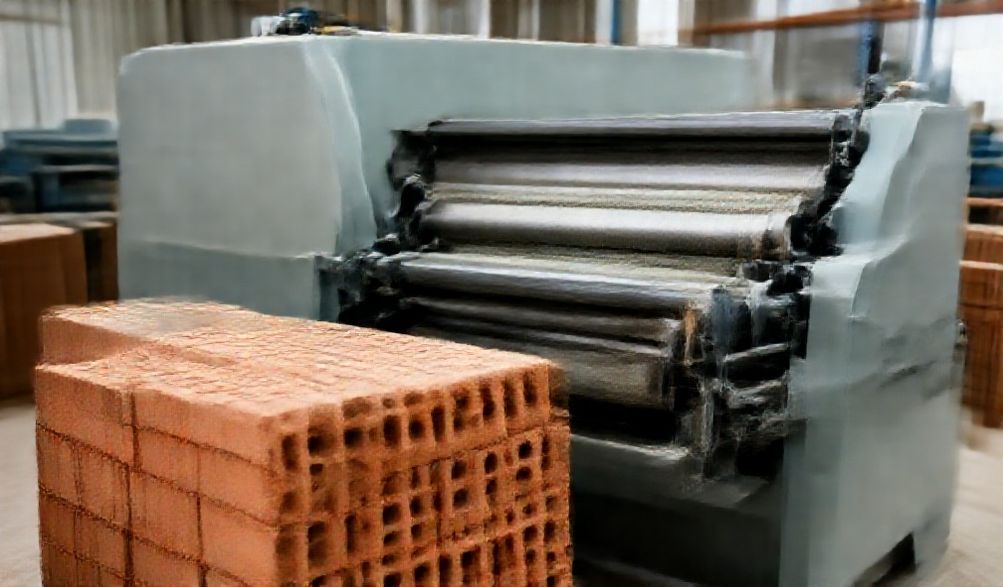
Sementsteenvervaardigingsmasjienprys in Delhi 2026: 'n Volledige Koper se Gids
Inleiding
Stel jou voor jy is 'n kontrakteur in Rohini of 'n entrepreneur in Faridabad. Jy het 'n paar projekte beveilig, en die konstante skommeling in baksteenpryse vreet aan jou winssyfer. Die idee om jou eie sementstene te vervaardig is aantreklik—dit belowe beheer, kwaliteitsversekering en beter winsgewendheid. Maar soos jy begin soek na 'n "sementsteenvervaardigingsmasjien prys in Delhi," word jy gekonfronteer met 'n duiselingwekkende verskeidenheid opsies. Kwotasies wissel van 'n paar lakhs tot verskeie crores, en elke verskaffer beweer dat hulle die "beste aanbod" bied. Die gevoel van oorweldiging is werklik.
Hierdie gids is ontwerp om deur daardie geraas te sny. Ons doel is om u deursigtige, gedetailleerde en uitvoerbare inligting te verskaf oor sementsteenmaakmasjienpryse, spesifiek vir die Delhi/NCR-mark. Hierdie analise is nie op spekulasie gebaseer nie; dit is gebou op huidige markneigings, direkte vervaardigerspesifikasies en 'n diep begrip van die streek se unieke konstruksiebehoeftes, klimaatuitdagings en operasionele realiteite.
Aan die einde van hierdie gids sal jy 'n duidelike begrip hê van die pryslandskap, die sleutelfaktore wat koste dryf, en die operasionele ekonomie. Meer belangrik, jy sal presies weet watter vrae om aan verskaffers te stel om te verseker dat jou belegging jou besigheid bou, en nie net 'n hoop stene nie.
Verstaan die Sementbaksteenmaakmasjienmark in Delhi
Delhi is nie net 'n mark vir konstruksiemasjinerie nie; dit is 'n lewendige, veeleisende spilpunt. Om hierdie konteks te verstaan, is deurslaggewend om 'n slim aankoop te maak.
Hoekom Delhi/NCR 'n Middelpunt vir Konstruksiemasjinerie is
Die Delhi Nasionale Hoofstadstreek is voortdurend onder konstruksie. Van grootskaalse infrastruktuurprojekte soos die Delhi-Mumbai-snelwegkorridors tot die onophoudelike vraag na bekostigbare behuising en kommersiële ruimtes in ontluikende gebiede soos Noida en Gurugram, die behoefte aan konstruksiemateriaal is onversadigbaar. Hierdie konstante vraag skep 'n florerende mark vir masjinerie wat hierdie materiaal plaaslik en doeltreffend kan produseer.
Verder is Delhi se geografiese posisie strategies. Dit lê aan die drumpel van groot vervaardigingsgroepe in naburige state—die industriële gordels van Faridabad en Ghaziabad in onderskeidelik Haryana en Uttar Pradesh. Hierdie nabyheid beteken makliker toegang tot verskaffers, potensieel laer logistieke koste vir masjienvervoer, en dikwels vinniger diensresponsye.
Tipes Masjiene Beskikbaar: Van Handmatig tot Volledig Outomaties
Die vlak van outomatisering is die enkele mees beduidende faktor wat jou belegging vorm. Hier is 'n vinnige oorsig:
- Handmatige Masjiene:Hooftsaaklik met handhefbome en menslike arbeid bedryf vir meng, voer en baksteenuitwerping. Hulle is die mees basiese toegangspunt.
- Halfoutomatiese Masjiene:Hierdie insluit meganiese of hidrouliese stelsels om die baksteen saam te pers. Operateurs voer die mengsel in en verwyder voltooide bakstene, maar die kernverdigtingsproses word aangedryf. Hulle bied 'n noodsaaklike balans.
- Volledig Outomatiese Masjiene:Dit is produksielyne. Met outomatiese materiaaltoevoer, vermenging, verdigting, stapeling, en soms selfs pallettisering, benodig hulle minimale menslike ingryping, dikwels net vir toesig en instandhouding.
Soos jy van handmatig na ten volle outomaties beweeg, styg die prys aansienlik, maar so ook uitset, konsekwentheid en bedryfsdoeltreffendheid.
Sleutelfaktore wat Sementsteenvervaardigingsmasjienpryse bepaal
Die prysplaatjie op 'n masjien is 'n som van sy onderdele, vermoëns en ondersteuning. Kom ons breek af waarvoor jy werklik betaal.
1. Vlak van Outomatisering & Produksiekapasiteit
Dit is die primêre prysbepaler. Produksiekapasiteit, gemeet in stene per uur (SPU) of blokke per skof, korreleer direk met koste.
- Handmatige Masjiene (Laagste Prys Kategorie):Ideal vir baie kleinskaalse of nisproduksie. Uitset word beperk deur arbeid.
- Semi-Automatiese Masjiene (Middelprysgroep):Die werkperd vir die meeste klein tot medium ondernemings (KMO's). Kapasiteite kan wissel van 800 tot 2 500 BPH, met pryse wat dienooreenkomstig skaal.
- Volledig Outomatiese Masjiene (Premieprysbracket):Ontwerp vir grootskaalse kommersiële produksie, met uitsette wat vanaf 4 000 BPH begin en ver daarbuite strek. Die belegging is aansienlik maar geregverdig deur volume.
Masjientipe & Baksteenuitsetvariëteit
Watter soort stene wil jy maak? Die masjientipe is hiervoor gespesialiseerd.
- Soliede Blokmasjiene:Vir standaard konstruksie bakstene.
- Holblokmasjiene:Vir ligter, isolerende bakstene wat gebruik word in skeidings en draende mure.
- Paver Block & Interlocking Block Machines: For landscaping, pavements, and modern construction techniques.
- Veeldoelige Masjiene: These can produce different types by changing molds. They offer flexibility but may command a higher price than a single-purpose unit of similar capacity.
3. Brand, Build Quality & After-Sales Service
In Delhi’s demanding environment—with its dust, summer heat, and expectation of continuous operation—build quality is non-negotiable.
- Bougehalte: Look for robust frames, high-quality vibration motors, and durable hydraulic systems. A cheaper machine with thin metal plates will vibrate excessively and break down frequently, costing you more in downtime and repairs.
- Brand & Service: A reputable brand with a strong, responsive after-sales service network in Delhi NCR is invaluable. When a machine halts, your production and income stop. A local service team that can be on-site within hours is a critical part of the value proposition.
4. Additional Costs Beyond the Sticker Price
The machine’s invoice is rarely the final cost. Factor in these often-overlooked expenses:
- Installasie & Inbedryfstelling: Some suppliers include this, others charge extra.
- Skimmels: The mold defines the brick’s shape and size. A standard mold may come with the machine, but additional designs (for different brick types or patterns) are an added cost.
- Opleiding: Proper training for your operators is essential for safety, efficiency, and brick quality.
- Logistics: Transportation from the supplier’s yard to your site in Delhi. This can be significant for larger machines.
- Spare Parts Kit: Purchasing a basic kit of commonly needed spares (like springs, seals, bolts) upfront can prevent future downtime.
Detailed Price Breakdown for Delhi Buyers (2026)
Disclaimer: The following price ranges are estimates for 2026 based on current trends, inflation, and market analysis. They are intended to provide a realistic budgetary framework. Always get detailed quotations from multiple suppliers.
Price Range of Manual Cement Brick Machines
- Estimated Range: ₹1.5 Lakhs – ₹4 Lakhs
- Ideaal Vir: Micro-enterprises, startups with very low capital, NGOs, or for producing bricks for personal use on a farmhouse project.
- Voordele:
- Lae voorafbelegging.
- Simple to operate with minimal technical knowledge.
- Low power consumption.
- Nadele:
- Very low output (200-500 BPH).
- Labor-intensive and physically demanding.
- Inconsistent brick quality due to human effort variance.
- Operational Cost: Primarily labor (2-3 persons) and raw materials. Electricity cost is negligible.
Price Range of Semi-Automatic Cement Brick Machines
- Estimated Range: ₹4 Lakhs – ₹15 Lakhs
- Ideaal Vir: The “sweet spot” for most small and medium brick-making businesses, contractors looking to supply their own sites, and entrepreneurs targeting local housing projects.
- Voordele:
- Excellent balance of automation and cost.
- Good production capacity (800 – 2,500+ BPH).
- Consistent brick quality due to mechanical/hydraulic pressure.
- Can be operated with 2-4 personnel.
- Nadele:
- Hoër aanvanklike belegging as handmasjiene.
- Requires reliable 3-phase power connection.
- Needs basic maintenance understanding.
- Operational Cost: Includes power for the motor (typically 5-15 HP), labor for feeding and stacking, and routine maintenance.
Price Range of Fully Automatic Cement Brick Machines
- Estimated Range: ₹15 Lakhs – ₹75+ Lakhs
- Ideaal Vir: Large-scale commercial plants, B2B suppliers to major construction companies, and businesses aiming for high-volume production with minimal manual labor.
- Voordele:
- Very high, consistent output (4,000 – 10,000+ BPH).
- Minimal manual labor required (mostly supervision).
- Superior brick density and uniformity.
- Often include features like auto mixing, conveyor systems, and stackers.
- Nadele:
- Very high capital investment.
- Significant space requirement.
- Complex maintenance requiring trained technicians.
- High power consumption.
- Operational Cost: Significant electricity costs, skilled supervisor salary, and planned maintenance schedules are key components.
How to Get the Best Value for Your Investment in Delhi
Getting the right machine is a process, not an impulse buy. Follow this actionable advice.
Evaluating Suppliers & Manufacturers in Delhi NCR
Don’t just buy from a brochure. Your due diligence should include:
- Factory Visit: Insist on visiting the manufacturing unit, preferably in the NCR industrial belt. Assess their workshop quality and processes.
- Live Demonstration: See the machine running. Test it with a raw material mix similar to what you’ll use (ask if you can bring your own sand/aggregate).
- Kliëntverwysings: Ask for a list of 3-4 customers in or around Delhi. Call them. Ask about machine performance, brick quality, and most importantly, the responsiveness of the after-sales service.
- Service Team Verification: Ask where their service engineers are based and what their typical response time is for a call in South Delhi or West Delhi.
Must-Ask Questions Before Purchasing
Arm yourself with this checklist when talking to suppliers:
- “What is the exact warranty period, and what components does it cover (e.g., motor, frame, hydraulics, electrical panel)?”
- “Where is your spare parts warehouse located for Delhi/NCR? What is the availability guarantee for critical spares?”
- “Can you provide guidance on the raw material mix ratio optimized for the locally available sand and aggregates in my area?”
- “Do you provide on-site installation and training? Is it included in the price?”
- “What is the power requirement (in KW/HP) for this model, and how will Delhi’s voltage fluctuations affect it?”
Calculating Your Return on Investment (ROI)
A simple ROI analysis brings clarity. Here’s a basic framework for a semi-automatic machine:
- Machine Cost: ₹8,00,000
- Daily Production (1 shift): 2,000 bricks
- Selling Price per Brick (Delhi Market): ₹8 (estimate)
- Daily Revenue: 2,000 x ₹8 = ₹16,000
- Daily Operational Cost (Power, Labor, Raw Materials): ~ ₹9,000 (estimate)
- Daily Profit: ₹16,000 – ₹9,000 = ₹7,000
- Monthly Profit (26 days): ₹1,82,000
- Simple Payback Period: ₹8,00,000 / ₹1,82,000 ≈ 4.4 months.
Note: This is a simplified example. Your actual raw material cost, selling price, and operational efficiency will vary. It also excludes fixed costs like land rent.
Common Pitfalls to Avoid When Buying in Delhi
Learning from others’ mistakes is cheaper than making your own.
Choosing Price Over Quality and Service
The cheapest machine often becomes the most expensive. Frequent breakdowns lead to:
* Lost production days.
* Costly emergency repairs.
* Missed project deadlines and loss of customer trust.
Invest in reliability from a supplier known for service.
Overestimating or Underestimating Production Needs
- Overestimating: You tie up excessive capital in a machine that sits underutilized.
- Underestimating: You buy a small machine and quickly outgrow it, facing the hassle of selling and upgrading.
Analyze your current orders and realistic 2-3 year growth projection. Choose a machine that can grow with you, perhaps by opting for a semi-automatic model with a higher capacity buffer.
Neglecting Operational Costs (Power, Labor, Maintenance)
The machine’s price is a one-time cost. Running it is continuous. Create a realistic monthly budget for:
* Krag: Delhi’s industrial electricity rates apply. A 10 HP motor running 8 hours daily consumes significant units.
* Arbeid: Even semi-automatic machines need skilled, reliable operators.
* Voorkomende Instandhouding: Regular greasing, part inspections, and minor repairs are essential to avoid major breakdowns. Budget for this.
Frequently Asked Questions (FAQ)
Q1: What is the cheapest cement brick making machine available in Delhi?
A: Manual machines are the entry point, with prices starting around ₹1.5 lakhs. However, be cautious. Their low output and high labor intensity make them unsuitable for any commercial-scale operation. They are best for very limited, personal-use projects.
Q2: Can I get a subsidy or financing for a brick machine in Delhi?
A: Yes, there are possibilities. Explore MSME (Micro, Small & Medium Enterprises) schemes offered by the Delhi government or central ministries. Many nationalized and private banks offer machinery loans under the CGTMSE scheme. It’s advisable to check with the Delhi State Industrial and Infrastructure Development Corporation (DSIIDC) or a local industry association for the most current information.
Q3: How much space is required to install and operate a semi-automatic machine in Delhi?
A: For a smooth operation, you should plan for approximately 2,000 to 3,000 square feet. This covers the machine’s footprint, raw material storage (sand, aggregate, cement), a mixing area, space for fresh bricks to be stacked for initial setting, and a dedicated curing area. Space constraints in urban Delhi make this a critical planning factor.
Q4: Which areas in Delhi/NCR have the highest concentration of machinery suppliers?
A: Key industrial hubs include Mayapuri, Lawrence Road, and Kirti Nagar in Delhi. For a wider variety and often better pricing, visit the major manufacturing clusters in Faridabad (Haryana)enGhaziabad/Meerut Road (Uttar Pradesh). Always prefer a personal visit over phone negotiations.
Q5: What is the typical payback period for a mid-range machine?
A: For a well-utilized semi-automatic machine with good market demand for its bricks, a typical payback period ranges from 12 to 24 months. This depends heavily on your operational efficiency, local brick selling prices, and your ability to manage raw material costs effectively.
Conclusion
Navigating the “cement brick making machine price in Delhi” landscape reveals a core truth: the right price isn’t the lowest price; it’s the one that aligns with your specific production needs, business scale, and long-term growth goals. A machine is a productivity engine, and its value is measured in the quality and quantity of bricks it reliably produces over its lifetime.
For most entrepreneurs and contractors in the Delhi NCR region, a robust semi-automatic machine from a reputable supplier with proven after-sales support offers the optimal balance. It provides the automation needed for quality and efficiency without the daunting capital outlay of a fully automatic plant.
Use this guide as your checklist. Shortlist 3-4 suppliers from the Delhi NCR industrial belt. Schedule live demonstrations. Calculate your ROI based on your numbers. And remember the most powerful due diligence tool: always ask for customer references in Delhi and speak to them directly about their real-world experience. Your informed decision today will lay a solid foundation for your business for years to come.
<