
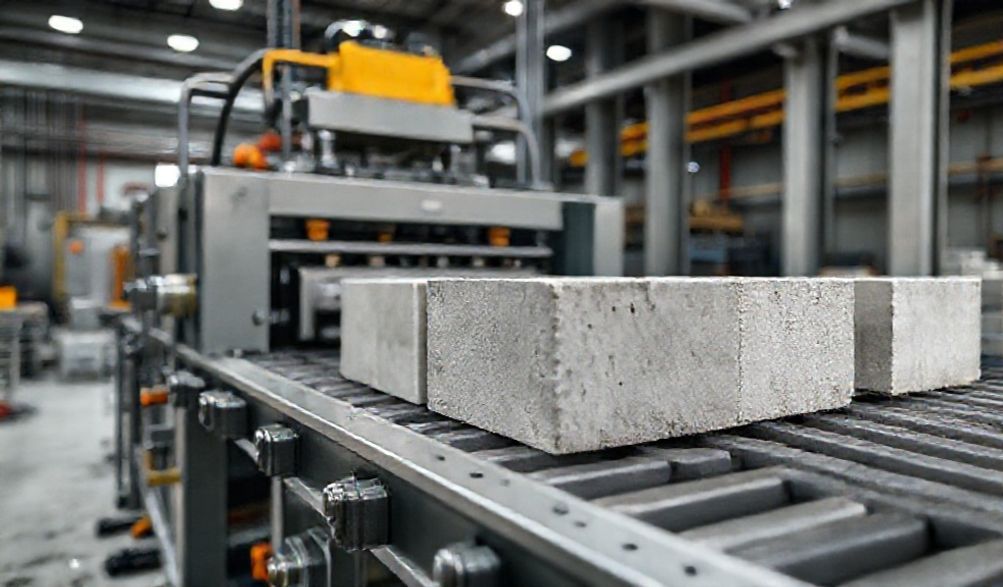
Blokvervaardigingsmasjien Pryslys 2024: 'n Omvattende Koper se Gids
Om die mark vir 'n blokmasjien te navigeer, kan voel soos om 'n geheime kode te ontcijfer. Jy sien 'n wye reeks pryse aanlyn—van skokkend laag tot oogwaterend hoog—met min verduideliking vir die verskil. Hierdie teenstrydigheid laat baie kontrakteurs en entrepreneurs onseker voel, bekommerd oor oorbeetaling of, erger nog, om in 'n masjien te belê wat nie presteer nie. As jy probeer om 'n betroubareblokmasjien pryslysjy het waarskynlik hierdie selfde frustrasie al ervaar.
Hierdie gids is ontwerp om deur die verwarring te sny. Ons doel is om 'n deursigtige, kundige gedrewe raamwerk te bied wat verder gaan as eenvoudige prys-etikette. Ons sal die kernfaktore wat koste bepaal, ontleed – van masjientipe en outomatisering tot verborge bedryfsuitgawes – deur gebruik te maak van bedryfstandaarde en praktiese aankoopoorwegings. U sal nie net leer wat masjiene kos nie, maarhoekomhulle kos wat hulle kos, wat jou bemagtig om ware waarde te evalueer en effektief te begroot vir jou spesifieke projek.
Of jy nou 'n klein kontrakteur, 'n opkomende blokvervaardiger of 'n konstruksiemaatskappy is wat produksie in huis wil bring, hierdie omvattende hulpbron sal jou toerus met die kennis om 'n selfversekerde, ingeligte belegging te maak.
Verstaan Blokmasjien Tipes & Hul Prysreekse
Die eerste stap om prys te verstaan, is om die masjiene self te kategoriseer. Die vlak van outomatisering en die beoogde produksieskaal is die primêre onderskeidingsfaktore, wat afsonderlike marksegmente met ooreenstemmende prysbrackets skep.
Handmatige & Semi-Automatiese Blokmasjiene (Toetreevlakbelegging)
Hierdie masjiene verteenwoordig die mees toeganklike toegangspunt tot blokproduksie. Bediening behels aansienlike handearbeid: die toediening van die betonmengsel, die aktivering van die masjien (dikwels via 'n hefboom of knoppie), en die handmatige verwydering van die uitgeharde blokke.
- Ideale Gebruiksgeval:Perfek vir baie kleinskaalse projekte, landelike konstruksie, beginondernemings met beperkte kapitaal, of die vervaardiging van blokke vir persoonlike gebruik. Hul uitset word gemeet in honderde blokke per skof, nie per uur nie.
- Prysreeks: $1 000 – $15 000
- Wat Dryf die Variansie?Die prysomvang hier is wyd. 'n Basiese, enkelblok handpers kan minder as $2 000 wees. Soos jy na semi-outomatiese modelle beweeg met 'n groter vormkapasiteit (bv. 4-6 blokke per siklus), meganiese vibrasiestelsels en effens meer vaartbelynde bedryf, styg pryse na die $10 000-$15 000-kerf.
Volledig Outomatiese Stasionele Blokvervaardigingsmasjiene (Middelgrootte Werksperde)
Hierdie kategorie is die ruggraat van klein tot medium-skaalse kommersiële blokwerwe. Hierdie masjiene is elektries aangedrewe, integreer vervoerbande vir outomatiese produkontlading, en beskik dikwels oor programmeerbare logiese beheerder (PLC) stelsels vir konsekwente bedryf.
- Ideale Gebruiksgeval:Ontwerp vir gevestigde besighede wat plaaslike konstruksiemarkte voorsien. Hulle bied 'n goeie balans tussen produksie (tipies 1 000 tot 5 000 blokke per 8-uur-skof) en outomatisering, met minimale handmatige ingryping benewens monitering en grondstofvoeding.
- Prysreeks: R25,000 – R100,000
- Wat Dryf die Variansie?Belangrike faktore sluit in uurlikse produksiekapasiteit, die gesofistikeerdheid van die PLC- en hidrouliese stelsels, die aantal vormstasies, en die handelsmerk se reputasie. 'n Masjien wat 1,500 blokke per uur produseer, sal aan die onderkant wees, terwyl 'n hoëkapasiteitsmodel met gevorderde vibrasietegnologie en premium komponente 'n prys naby die top van hierdie reeks sal vra.
Ten volle outomatiese mobiele blokvervaardigingsmasjiene (Premie Hoë-Opbrengs Oplossings)
Ook bekend as blokvervaardigingsaanlegte, is dit die premium oplossings vir grootskaalse of ter plaatse produksie. Gemonteer op 'n sleepwa, kan dit direk na 'n konstruksieterrein vervoer word, wat vervoerkoste vir voltooide blokke uitskakel. Hulle is hoogs outomaties, met dikwels robotpalethantering, deurlopende mengstelsels en gesofistikeerde beheerpanele.
- Ideale Gebruiksgeval:Groot infrastruktuurprojekte, baie hoë-volume kommersiële blokvervaardigers, en staatskontrakte waar aanlegproduksie 'n strategiese voordeel is. Uitset kan meer as 10 000 blokke per dag oorskry.
- Prysreeks: $80,000 – $300,000+
- Wat Dryf die Variansie?Die boonste limiet is in wese "die lug is die limiet." Prys skaal dramaties met uitsetkapasiteit, die insluiting van 'n geïntegreerde menger, die vlak van robotiese outomatisering, en die kwaliteit van die onderstel en komponente. Pasgemaakte konfigurasies vir spesifieke bloktipe voeg ook koste by.
Specialized Machines: Hollow Block, Paver, Interlocking Block Makers
The end product directly influences machine design. While many machines are versatile with interchangeable molds, some are engineered for optimal production of a specific product.
- Holblokmasjiene: Require precise mold and vibration design to form consistent cavities. Standard machines can often produce them, but dedicated high-output hollow block machines exist.
- Paver & Interlocking Block Makers: These demand higher compaction pressure and more intricate mold designs to create the detailed, locking faces and textured surfaces. This specialization often carries a 10-25% price premium over a standard block machine of similar capacity due to the more complex engineering and hardened steel molds required.
Key Factors That Determine Block Machine Pricing
Two machines with similar “blocks per hour” claims can have wildly different prices. Here’s a breakdown of the core engineering and commercial factors that explain why.
Produksiekapasiteit (Blokke Per Uur)
This is the single most significant cost driver. Industry practice shows that price does not scale linearly with output; doubling the capacity often more than doubles the price. This is due to the need for a more powerful motor, a larger and more robust frame, higher-capacity hydraulic systems, and more sophisticated vibration tables.
| Approximate Capacity (Blocks/Hour)* | Typical Machine Type | General Price Implication |
| :— | :— | :— |
| 200 – 800 | Manual / Semi-Auto | Entry-Level ($1K – $15K) |
| 1,000 – 2,500 | Stationary Automatic | Mid-Range ($25K – $60K) |
| 3,000 – 6,000 | Stationary Automatic | High Mid-Range ($60K – $100K) |
| 8,000+ | Mobile Plant | Premium ($80K+) |
*Based on standard 8″ hollow block. Output varies by block type.
Level of Automation & Technology
The journey from manual operation to full automation involves layers of technology, each adding cost but also efficiency and consistency.
* Manual Feed vs. Automatic Feed: An automated conveyor feeding the hopper reduces labor and improves mix consistency.
* Beheerstelsels: A basic relay system is cheaper than a PLC (Programmable Logic Controller), but a PLC allows for precise control over vibration time, pressure, and cycle sequence, leading to higher quality blocks and easier troubleshooting.
* Vibrasietegnologie: The heart of compaction. Machines with multiple high-frequency vibrators (often mounted on the mold head en the table) ensure denser, stronger blocks but are more expensive to manufacture.
Machine Build Quality & Component Branding
The adage “you get what you pay for” is profoundly true here. The quality of materials and components dictates longevity and reliability.
* Staalfaam & Struktuur: Heavy-duty, reinforced steel withstands the constant stress of vibration and pressure far better than lighter-gauge materials.
* Hidrouliese Stelsels: A machine using imported pumps and valves from brands like Bosch Rexroth or Kawasaki will be more expensive than one using generic or local hydraulic parts. The premium buys smoother operation, precise pressure control, and much greater durability.
* Motors & Electricals: Reputable brands (e.g., Siemens, ABB) for motors and electrical components reduce the risk of failure and are often more energy-efficient.
Handelsmerk Reputasie & Na-verkope Ondersteuning
An established brand with a global or strong regional presence commands a higher price. This premium is not just for the name; it’s for risk mitigation. It covers:
* Proven Engineering: A track record of reliable machines.
* Waarborg: A meaningful, enforceable warranty.
* Onderdele Beskikbaarheid: Quick access to genuine parts, minimizing downtime.
* Tegniese Ondersteuning: Access to engineers who can help with setup, maintenance, and troubleshooting.
Investing in a reputable brand is essentially buying insurance for your business’s productivity.
Beyond the Sticker Price: Calculating Your Total Investment
The invoice from the manufacturer is just the beginning. A realistic budget accounts for the total cost of ownership (TCO). Based on buyer reports and industry experience, failing to plan for these expenses is a common pitfall.
Hidden Costs to Budget For
These are one-time or initial costs that can add 15-40% to your base machine price.
* Shipping, Customs, and Insurance: For international purchases, freight (FOB vs. CIF), import duties, taxes, and insurance can be substantial. Always get a clear “landed cost” quote.
* Foundation & Installation: Most stationary machines require a solid, level concrete foundation. Mobile plants need a prepared, stable site. Factor in civil work costs.
* Power Setup: Most automatic machines require a robust, three-phase electrical supply. Upgrading your facility’s electrical panel or running new lines is a significant cost.
* Initial Raw Material Stock: You’ll need to purchase cement, aggregates, and pigments to begin production.
Operational Costs & ROI Considerations
Your ongoing expenses directly impact profitability.
* Arbeid: Even automatic machines require operators, maintenance personnel, and material handlers.
* Maintenance & Spare Parts: Regular servicing and a budget for wear items (mold liners, hydraulic seals, vibrator motors) are essential.
* Mold Changes: Additional molds for different block types are a capital expense.
* ROI-berekening: A simple framework: Estimate your monthly production volume. Subtract your total monthly costs (raw materials, labor, power, machine depreciation, maintenance). Compare the net profit to your total initial investment. A quality machine for a stable market should typically aim for an ROI period of 1.5 to 3 years.
Die Ware Koste van 'n "Goedkoop" Masjien
The allure of a low upfront price is strong, but the long-term economics are often poor. The true cost of a cheap machine may include:
* Gereelde Breekkragte: Low-quality components fail, leading to costly production halts.
* Swak Na-Verkope Diens: Getting support or spare parts becomes a nightmare.
* Low-Quality Blocks: Inconsistent vibration or pressure produces weak or misshapen blocks you cannot sell.
* Veiligheid Gevare: Compromised build quality can pose risks to operators.
* Higher Long-Term Cost: When you factor in lost production, repair bills, and early replacement, the “cheap” machine often becomes the most expensive option.
How to Get an Accurate Quote & Negotiate Effectively
Approaching suppliers with clarity puts you in a position of strength and ensures you get comparable, meaningful quotes.
Preparing Your Requirements for Suppliers
Create a brief specification sheet to send to potential suppliers:
* Desired block type(s) and dimensions.
* Target daily or monthly output (in blocks).
* Available factory space and ceiling height.
* Available power supply (Voltage, Phase).
* Preferred level of automation.
* Your overall budget range (be realistic).
Evaluating Quotes: A Comparison Checklist
Don’t just compare the bottom-line price. Create a spreadsheet to compare:
* Technical Specifications: Capacity (verify block type), motor power, vibration frequency.
* Inclusions: How many molds are included? Is the control panel in your language? Are spare parts kits offered?
* Waarborg: Duration and what it covers (parts, labor, travel?).
* Delivery & Payment Terms: FOB Port? CIF Your Port? Payment schedule?
* Na-Verkope Ondersteuning: Is installation supervision or operator training included?
Smart Questions to Ask Before You Buy
- “Can you provide contact information for 2-3 customers in my region who have purchased a similar model in the last 2 years?”
- “What is the guaranteed lead time for critical spare parts (like a hydraulic pump or main vibrator motor)?”
- “Do you have a service technician who can travel to my country if needed, and what are those terms?”
- “Can the machine be easily upgraded in the future (e.g., adding an automatic feeder)?”
FAQ: Block Making Machine Price List
Q1: What is the cheapest block making machine available?
A: Small, manual block presses can be found for as low as $1,000 to $3,000. However, it’s critical to understand their severe limitations in output and labor requirement. They are only “cheap” if your production needs are extremely minimal. Always prioritize a machine that is “fit for purpose” over the absolute lowest price.
Q2: How much does a fully automatic block making machine cost?
A: As detailed in the guide, “fully automatic” covers a broad spectrum. A stationary model for a small business can start around $25,000, while high-output mobile plants begin around $80,000 and can exceed $300,000. The final price is entirely dependent on your required production capacity and feature set.
Q3: Are used block making machines a good option to save money?
A: They can be, but caution is paramount. A used machine is only a good deal if it comes from a known brand, has a verifiable service history, and you can confirm the ongoing availability of spare parts. Factor in the cost of a thorough inspection by a mechanic and potential refurbishment. The risk of buying someone else’s problem is high.
Q4: Does the price include molds and installation?
A: This varies drastically by supplier. Some quotes are for the base machine only; others include a set of standard molds. Installation is rarely included for international sales but may be offered as a paid service. Always, always clarify what is included in the quoted price (FOB, EXW, CIF) and request a detailed breakdown in writing.
Q5: Which brand offers the best value for money?
A: Rather than naming one brand, we advise a strategic approach. The best value comes from a supplier that demonstrates transparency, has verifiable customer testimonials for your region, and offers a strong balance of three things: 1) Machine specifications that meet (not vastly exceed) your needs, 2) A fair price for those specs, and 3) Reliable after-sales support accessible to you. Focus on finding that balance.
Conclusion
Navigating the blokmasjien pryslys requires looking beyond the initial number. As we’ve explored, the final price is a direct reflection of machine type, production capacity, level of automation, and the quality of its components and support network. Remember, you are not just purchasing a piece of equipment; you are making a capital investment in the productivity and future of your business.
Therefore, the most trustworthy advice we can offer is this: shift your focus from seeking the lowest price to understanding the lowest total cost of ownership. A slightly higher initial investment in a reliable machine from a reputable supplier will almost always yield greater profitability and less stress over its lifespan.
Use this guide as your framework. Prepare your project specifications, consult with multiple suppliers using the checklist provided, and ask the hard questions about support and service. By doing so, you’ll move forward with the confidence needed to make an informed decision that fuels your business growth for years to come.
<