
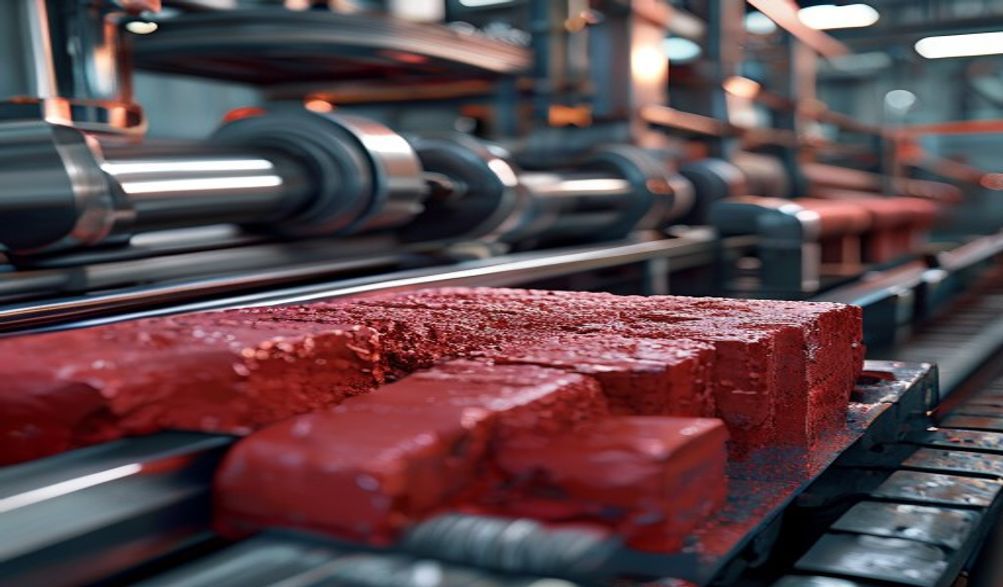
Hoe om 'n Hidrouliese Kleibaksteenmaakmasjien te Kies: 'n 2026 Deskundigegids
Inleiding
Die fondasie van 'n winsgewende en volhoubare baksteenvervaardigingsbesigheid is nie net klei en arbeid nie—dit is die masjien in die hart van jou bedryf. Die keuse van die regte hidrouliese klei-baksteenmakermasjien is 'n deurslaggewende besluit wat jou produkgehalte, produksiedoeltreffendheid en langtermyn-winsgewendheid direk beïnvloed. 'n Verkeerde keuse kan lei tot verlammende stilstand, wisselvallige uitset en stygende instandhoudingskoste.
Met meer as 15 jaar se ervaring in baksteen-aanlegingenieurswese en masjinerieverskaffing, het ons span die kritiese lesse uit honderde suksesvolle installasies wêreldwyd saamgevat. Hierdie gids is gebou op daardie praktiese ervaring, direkte terugvoer van vervaardigers, en diep ingenieurswese-kennis. Ons doel is nie net om spesifikasies te lys nie, maar om die hele keuringsproses te ontmystifiseer, met fokus op die praktiese faktore wat sukses op jou fabrieksvloer bepaal.
Ons belower dat hierdie gids jou sal toerus met die raamwerk om 'n selfversekerde, ingeligte belegging te maak. Ons advies is onpartydig en ontwerp om jou te help om die regte vrae te vra, of jy uiteindelik van ons maatskappy of enige ander betroubare verskaffer koop. Kom ons beweeg verby die basiese verkoopsbrosjures en bou 'n fondament vir jou sukses.
Verstaan Jou Kernproduksiebehoeftes
Voordat jy na 'n enkele masjienbrosjure kyk, moet jy na binne kyk. Die mees algemene fout is om 'n masjien te koop op grond van 'n aantreklike prys of 'n hoë "teoretiese" uitset, sonder om dit met jou werklike operasionele realiteit te belyn. Hierdie afdeling fokus op die praktiese vrae wat jou ware vereistes definieer.
Evaluering van Jou Daaglikse & Jaarlikse Uitset Doelwitte
Kapasiteitsbeplanning gaan oor die balansering van ambisie met volhoubaarheid.
- Bereken Realistiese BehoeftesMoenie net dink in "stene per dag" nie. Begin met jou markaanvraag en verkoopkontrakte. Hoeveel stene moet jy per 8-uur skof produseer? Per maand? Neem seisoensaanvraagskommelings in ag.
- Teoreties vs. Praktiese Uitset'n Verskaffer mag beweer dat 'n masjien 4,000 stene per uur produseer. In werklikheid word hierdie syfer onder ideale laboratoriumtoestande met perfekte klei en geen stilstand bereik nie.Praktiese, volhoubare uitset is dikwels 70-80% van die teoretiese maksimum.Maak voorsiening vir vormveranderings, instandhoudingspouses, grondstoftoevoertyd en operateurspoed.
Definieer Jou Baksteenprodukportefeulje
Jou produk definieer jou masjien. Wees spesifiek oor wat jy beplan om te vervaardig.
- Brick Tipe: Are you making solid bricks for structural walls? Hollow or perforated bricks for lighter weight and better insulation? Interlocking paving bricks for landscaping? Each type requires different mold designs and sometimes different pressure profiles.
- Grootte & Vorm: Will you stick to standard sizes (e.g., 230x110x75 mm) or offer custom shapes for architectural projects? Custom molds are an additional investment and changeover takes time.
- Quality Parameters: What is the required compressive strength (e.g., 10 MPa, 15 MPa) and density for your market? This is crucial and directly tied to the machine’s hydraulic pressure.
Raw Material Analysis: It Starts with Your Clay
The machine is a tool that shapes your clay. If you don’t understand your raw material, you cannot choose the right tool.
- Toets Jou Klei: A professional lab analysis is non-negotiable. You need to know its:
- Plasticity Index: Determines how well it forms and holds shape.
- Shrinkage Rate: Affects final brick dimensions and cracking risk.
- Voginhoud: Ideal moisture for hydraulic pressing is typically between 8-12%.
- Abrasive Content: High sand or grit content accelerates mold and component wear.
- Clay Dictates Machine Choice: Stiff, low-plasticity clay requires a machine with higher tonnage to achieve proper density. Highly plastic clay may need less pressure but more careful de-airing. Always provide your clay sample to potential suppliers for testing.
Key Technical Specifications to Scrutinize
Now, with your needs defined, you can decode the technical specifications with a critical eye. This is where expertise separates a good investment from a costly mistake.
Hydraulic System: The Heart of the Machine
The hydraulic system is what defines a “hydraulic” brick machine. Its quality is paramount.
- Druk (Tonnasie): This is the force applied to the clay. Higher tonnage (e.g., 150 tons, 300 tons) compacts the clay more, resulting in denser, stronger bricks with lower water absorption. Match the tonnage to your clay type and strength requirements.
- Komponentkwaliteit: Ask about:
- Pump Type: A reliable, brand-name axial piston pump is preferable for constant, high-pressure operation.
- Valves: Precision solenoid valves ensure accurate and repeatable pressure cycles.
- Silinders: Hard-chromed piston rods and quality seals prevent leaks and ensure longevity.
- Pressure Holding: The system must maintain stable pressure during the compaction cycle for uniform brick quality. Inconsistent pressure leads to soft spots and weak bricks.
Automation Level: Manual, Semi-Automatic, or Fully Automatic?
This choice is a fundamental trade-off between initial investment and long-term labor costs.
- Handmatige Masjiene: Operator loads clay and removes each brick. Lowest cost, highest labor intensity, lowest output. Suitable for very small-scale or start-up operations.
- Halfoutomatiese Masjiene: The machine automates the pressing and ejection cycle. Operators feed raw material and remove finished bricks. Offers a excellent balance of productivity and cost for small to medium-scale plants.
- Volledig Outomatiese Lyne: Include automated feeders, conveyor belts, pallet return systems, and brick stackers. Require minimal human intervention for the highest output. Justify the high upfront cost through significant labor savings and consistency in large-scale production.
- ROI Analysis: Calculate your local labor costs. How many workers does a semi-auto machine replace vs. a full-auto line? The payback period often makes automation the smarter long-term choice.
Mold and Die Considerations
Molds are the interface between your machine and your product. They are a recurring cost.
- Material: Opt for molds made from high-chromium alloy hardened steel (e.g., D2, D3 steel). They cost 2-3x more than mild steel molds but last 10-20x longer, especially with abrasive clay.
- Changeover: How long does it take to change molds for a different product? Look for designs with quick-release clamping systems to minimize downtime.
- Onderdele: Inquire about the cost and lead time for additional mold sets. A reputable supplier should have the drawings and capability to produce new molds years down the line.
Power Requirements & Energy Efficiency
Don’t get surprised by electrical incompatibility or high running costs.
- Motor Krag: Ensure the machine’s motor voltage (e.g., 380V/50Hz, 440V/60Hz) matches your plant’s power supply. Incorrect voltage can damage the system.
- Doeltreffendheid: Modern machines with variable frequency drives (VFDs) on hydraulic pumps can significantly reduce energy consumption by matching power output to the cycle demand, unlike constant-speed systems.
Beyond the Spec Sheet: Critical Evaluation Factors
The best spec sheet can hide a poorly built machine or an unreliable supplier. This is where due diligence makes all the difference.
Build Quality and Structural Integrity
A brick machine endures tremendous forces and constant vibration.
- Raamkonstruksie: The main frame should be made from heavy-duty steel plate (not light-gauge steel), with robust, continuous welding (not spotty, intermittent welds). Tap the frame—it should feel solid, not hollow.
- Stabiliteit: The machine must not “walk” or vibrate excessively during operation. Look for a wide, solid base plate. Vibration damages the machine’s own components and the factory floor.
Supplier Reputation and After-Sales Support
You are not just buying a machine; you are entering a long-term partnership for support.
- Vetting the Manufacturer:
- How many years have they been in business?
- Can they provide a list of client references, preferably in your region?
- Are they willing to conduct a live video tour of their factory floor?
- The Crucial After-Sales Package:
- Onderdele: Is there a readily available parts catalog? What is the guaranteed supply period (e.g., 10 years)?
- Tegniese Ondersteuning: Is there 24/7 remote support? Are there trained service engineers available for dispatch?
- Documentation: You must receive detailed electrical and hydraulic diagrams, parts manuals, and maintenance schedules in your language.
- Waarborg: Read it carefully. Does it cover only parts, or also labor? What are the exclusions?
Total Cost of Ownership (TCO) Analysis
The purchase price is just the entry ticket.
- Aanvangs Koste: Machine price, shipping, import duties, installation.
- Running Costs: Energy consumption, routine maintenance (oil, filters, grease), labor.
- Lifetime Costs: Replacement parts (molds, seals, hydraulic hoses), potential upgrades, downtime costs.
A machine that is 20% cheaper upfront but uses 30% more energy and has expensive, hard-to-find parts will be far more costly over a 5-year period.
The Decision-Making Process: A Step-by-Step Checklist
Follow this actionable sequence to structure your procurement process.
Step 1: Internal Requirement Gathering
Document your answers from Section 1: output targets, brick types, clay analysis data. This is your “Request for Quotation” (RFQ) foundation.
Step 2: Shortlist Reputable Suppliers
Based on research, recommendations, and factory audits/virtual tours, narrow the field to 3-5 serious contenders with proven track records.
Step 3: Request Detailed Proposals & Conduct Factory Visits
Send your formal RFQ. Scrutinize the proposals. If possible, visit the shortlisted factories to see build quality and test a machine with your clay sample.
Step 4: Compare Offers on TCO, Not Just Price
Create a spreadsheet. Input all costs from Section 3.3 over a 5-year horizon. The cheapest offer rarely wins the TCO comparison.
Step 5: Final Verification: Ask for Customer References
Contact the supplier’s existing customers, especially those with similar clay and operations. Ask about machine performance, reliability, and quality of after-sales support.
Frequently Asked Questions (FAQ)
Q1: What is the average price range for a good hydraulic clay brick machine?
A: Prices vary dramatically. A manual/small semi-automatic machine can start from $15,000 – $40,000. A robust semi-automatic system typically ranges from $50,000 – $120,000. A fully automatic production line can cost $150,000 to $500,000+, depending on capacity and complexity. Focus on value and Total Cost of Ownership, not just the initial price tag.
Q2: Can one machine produce multiple types and sizes of bricks?
A: Yes, absolutely. This is a key advantage of hydraulic presses. By changing the mold set (the die and punches), you can produce different brick types and sizes. However, consider the cost of additional mold sets ($2,000 – $10,000 each) and the time required for changeover (30 minutes to a few hours), which affects production planning.
Q3: How important is after-sales service, and what should it include?
A: It is critical—often more important than a slight price difference. A comprehensive service package should include: installation supervision and commissioning, thorough operator and maintenance training, a complete set of technical manuals, a clear spare parts catalog with pricing, and access to responsive technical support (via phone, email, remote desktop). Ensure there is a defined process for ordering and shipping spare parts.
Q4: What are the most common maintenance issues with these machines?
A: The most frequent issues are:
* Hydraulic Seal Wear: Leading to oil leaks. Prevented by using quality oil and keeping it clean.
* Mold Wear and Cleaning: Abrasive clay wears down mold surfaces. Regular cleaning and polishing are essential.
* Electrical Component Issues: Sensors and relays can fail. A clean, dry electrical cabinet is vital.
* Neglected Lubrication: All moving parts (guide rods, bearings) require strict adherence to the lubrication schedule.
Q5: How do I know if a supplier’s claimed production capacity is accurate?
A: Be skeptical of unverified claims. Ask for:
1. Video Evidence: Request a video of the machine running a full cycle, showing a clock and producing bricks continuously for at least 10 minutes.
2. Site Visit: Ask to visit an existing client’s plant to see the machine in operation.
3. Performance Guarantee: Insist on a clause in the sales contract that guarantees a minimum practical output (based on your provided clay sample) once installed at your site, with remedies if it is not met.
Conclusion
Choosing the right hydraulic clay brick making machine is a strategic investment that hinges on a clear understanding of your own production needs, a meticulous evaluation of technical and support factors, and a disciplined analysis of the total cost of ownership. It is not a purchase to be rushed.
By following the framework in this guide, you shift the odds decisively in your favor. You move from being a passive buyer to an informed partner in the process. The right machine becomes a reliable asset that drives the quality, efficiency, and profitability of your business for years to come.
Ready to discuss your specific project with an expert? Contact our engineering team today for a personalized consultation and a quote based on your actual clay sample and production goals. We’re here to help you build your success, brick by brick.
About the Author: This guide was compiled by the engineering and advisory team at [Your Company Name], with over 15 years of specialization in clay brick manufacturing technology. Our experts have commissioned hundreds of plants across six continents, providing unbiased, experience-driven counsel to builders and entrepreneurs worldwide.
<