
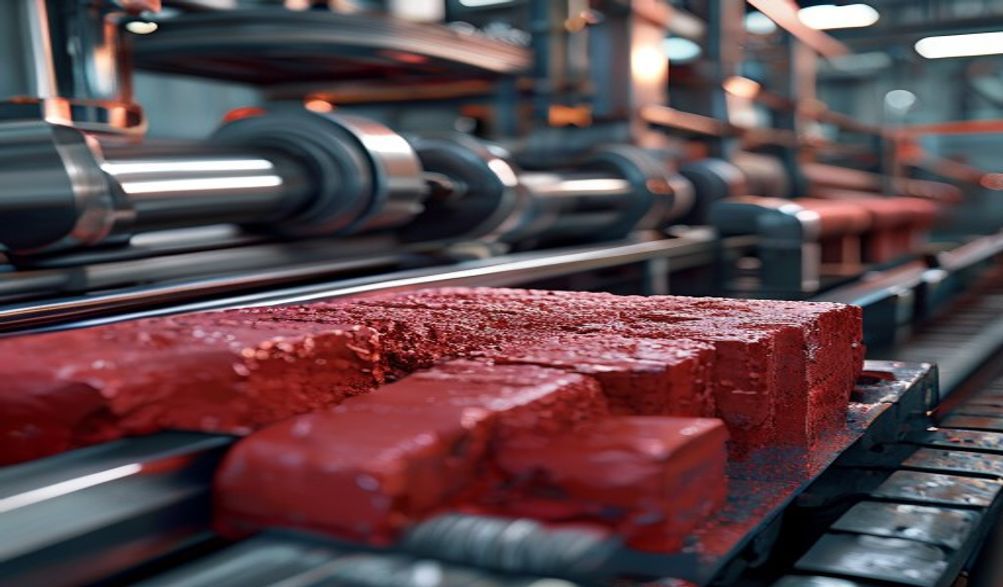
2026년 전문가 가이드: 유압식 점토 벽돌 제조 기계 선택 방법
소개
수익성 있고 지속 가능한 벽돌 제조 사업의 기반은 단순히 점토와 노동력이 아니라, 작업의 핵심에 있는 기계입니다. 적합한 유압식 점토 벽돌 제조 기계를 선택하는 것은 제품 품질, 생산 효율성, 장기적 수익성에 직접적인 영향을 미치는 결정적인 선택입니다. 잘못된 선택은 치명적인 가동 중단, 불균일한 생산량, 그리고 급증하는 유지보수 비용으로 이어질 수 있습니다.
15년 이상의 벽돌 공장 엔지니어링 및 기계 공급 경험을 바탕으로, 저희 팀은 전 세계 수백 건의 성공적인 설치 사례에서 얻은 핵심 교훈을 정리했습니다. 이 가이드는 실무 경험, 제조업체의 직접 피드백, 그리고 깊은 엔지니어링 지식을 기반으로 만들어졌습니다. 저희의 목표는 단순히 사양을 나열하는 것이 아니라, 공장 현장에서 성공을 결정짓는 실질적 요소에 초점을 맞춰 전체 선택 과정을 명확히 하는 것입니다.
저희는 이 가이드가 자신감 있고 정보에 기반한 투자를 할 수 있는 프레임워크를 제공할 것을 약속드립니다. 당사의 조언은 편향되지 않았으며, 궁극적으로 저희 회사나 다른 신뢰할 수 있는 공급업체로부터 구매하시든 올바른 질문을 하실 수 있도록 설계되었습니다. 기본적인 판매 브로셔를 넘어 성공을 위한 기반을 마련해 봅시다.
핵심 생산 요구 사항 이해하기
단 하나의 기계 브로셔를 보기 전에, 당신은 먼저 내면을 살펴봐야 합니다. 가장 흔한 실수는 매력적인 가격이나 높은 '이론적' 출력에 기반하여 기계를 구매하면서, 실제 운영 현실과 맞추지 않는 것입니다. 이 섹션에서는 진정한 요구 사항을 정의하는 실용적인 질문에 초점을 맞춥니다.
일일 및 연간 생산 목표 평가
Capacity planning is about balancing ambition with sustainability.
- Calculate Realistic Needs: Don’t just think in “bricks per day.” Start with your market demand and sales contracts. How many bricks do you need to produce per 8-hour shift? Per month? Factor in seasonal demand fluctuations.
- 이론 출력과 실용 출력 A supplier may claim a machine produces 4,000 bricks per hour. In reality, this figure is achieved under ideal lab conditions with perfect clay and no stoppages. Practical, sustainable output is often 70-80% of the theoretical maximum. Account for mold changes, maintenance breaks, raw material feeding time, and operator pace.
벽돌 제품 포트폴리오 정의하기
Your product defines your machine. Be specific about what you intend to manufacture.
- 벽돌 종류: Are you making solid bricks for structural walls? Hollow or perforated bricks for lighter weight and better insulation? Interlocking paving bricks for landscaping? Each type requires different mold designs and sometimes different pressure profiles.
- 크기와 형태 Will you stick to standard sizes (e.g., 230x110x75 mm) or offer custom shapes for architectural projects? Custom molds are an additional investment and changeover takes time.
- Quality Parameters: What is the required compressive strength (e.g., 10 MPa, 15 MPa) and density for your market? This is crucial and directly tied to the machine’s hydraulic pressure.
Raw Material Analysis: It Starts with Your Clay
The machine is a tool that shapes your clay. If you don’t understand your raw material, you cannot choose the right tool.
- 점토를 테스트하세요: A professional lab analysis is non-negotiable. You need to know its:
- Plasticity Index: Determines how well it forms and holds shape.
- Shrinkage Rate: Affects final brick dimensions and cracking risk.
- 수분 함량 Ideal moisture for hydraulic pressing is typically between 8-12%.
- Abrasive Content: High sand or grit content accelerates mold and component wear.
- Clay Dictates Machine Choice: Stiff, low-plasticity clay requires a machine with higher tonnage to achieve proper density. Highly plastic clay may need less pressure but more careful de-airing. Always provide your clay sample to potential suppliers for testing.
Key Technical Specifications to Scrutinize
Now, with your needs defined, you can decode the technical specifications with a critical eye. This is where expertise separates a good investment from a costly mistake.
Hydraulic System: The Heart of the Machine
The hydraulic system is what defines a “hydraulic” brick machine. Its quality is paramount.
- 압력 (톤수): This is the force applied to the clay. Higher tonnage (e.g., 150 tons, 300 tons) compacts the clay more, resulting in denser, stronger bricks with lower water absorption. Match the tonnage to your clay type and strength requirements.
- 부품 품질 Ask about:
- Pump Type: A reliable, brand-name axial piston pump is preferable for constant, high-pressure operation.
- Valves: Precision solenoid valves ensure accurate and repeatable pressure cycles.
- 실린더 Hard-chromed piston rods and quality seals prevent leaks and ensure longevity.
- Pressure Holding: The system must maintain stable pressure during the compaction cycle for uniform brick quality. Inconsistent pressure leads to soft spots and weak bricks.
Automation Level: Manual, Semi-Automatic, or Fully Automatic?
This choice is a fundamental trade-off between initial investment and long-term labor costs.
- 수동 기계: Operator loads clay and removes each brick. Lowest cost, highest labor intensity, lowest output. Suitable for very small-scale or start-up operations.
- 반자동 기계: The machine automates the pressing and ejection cycle. Operators feed raw material and remove finished bricks. Offers a excellent balance of productivity and cost for small to medium-scale plants.
- 완전 자동화 라인: Include automated feeders, conveyor belts, pallet return systems, and brick stackers. Require minimal human intervention for the highest output. Justify the high upfront cost through significant labor savings and consistency in large-scale production.
- ROI 분석: Calculate your local labor costs. How many workers does a semi-auto machine replace vs. a full-auto line? The payback period often makes automation the smarter long-term choice.
Mold and Die Considerations
Molds are the interface between your machine and your product. They are a recurring cost.
- 재료: Opt for molds made from high-chromium alloy hardened steel (e.g., D2, D3 steel). They cost 2-3x more than mild steel molds but last 10-20x longer, especially with abrasive clay.
- Changeover: How long does it take to change molds for a different product? Look for designs with quick-release clamping systems to minimize downtime.
- 예비 부품: Inquire about the cost and lead time for additional mold sets. A reputable supplier should have the drawings and capability to produce new molds years down the line.
Power Requirements & Energy Efficiency
Don’t get surprised by electrical incompatibility or high running costs.
- 모터 파워: Ensure the machine’s motor voltage (e.g., 380V/50Hz, 440V/60Hz) matches your plant’s power supply. Incorrect voltage can damage the system.
- 효율성 Modern machines with variable frequency drives (VFDs) on hydraulic pumps can significantly reduce energy consumption by matching power output to the cycle demand, unlike constant-speed systems.
Beyond the Spec Sheet: Critical Evaluation Factors
The best spec sheet can hide a poorly built machine or an unreliable supplier. This is where due diligence makes all the difference.
Build Quality and Structural Integrity
A brick machine endures tremendous forces and constant vibration.
- 프레임 구성 The main frame should be made from heavy-duty steel plate (not light-gauge steel), with robust, continuous welding (not spotty, intermittent welds). Tap the frame—it should feel solid, not hollow.
- 안정성: The machine must not “walk” or vibrate excessively during operation. Look for a wide, solid base plate. Vibration damages the machine’s own components and the factory floor.
Supplier Reputation and After-Sales Support
You are not just buying a machine; you are entering a long-term partnership for support.
- Vetting the Manufacturer:
- How many years have they been in business?
- Can they provide a list of client references, preferably in your region?
- Are they willing to conduct a live video tour of their factory floor?
- The Crucial After-Sales Package:
- 예비 부품: Is there a readily available parts catalog? What is the guaranteed supply period (e.g., 10 years)?
- 기술 지원 Is there 24/7 remote support? Are there trained service engineers available for dispatch?
- Documentation: You must receive detailed electrical and hydraulic diagrams, parts manuals, and maintenance schedules in your language.
- 보증: Read it carefully. Does it cover only parts, or also labor? What are the exclusions?
Total Cost of Ownership (TCO) Analysis
The purchase price is just the entry ticket.
- 초기 비용: Machine price, shipping, import duties, installation.
- Running Costs: Energy consumption, routine maintenance (oil, filters, grease), labor.
- Lifetime Costs: Replacement parts (molds, seals, hydraulic hoses), potential upgrades, downtime costs.
A machine that is 20% cheaper upfront but uses 30% more energy and has expensive, hard-to-find parts will be far more costly over a 5-year period.
The Decision-Making Process: A Step-by-Step Checklist
Follow this actionable sequence to structure your procurement process.
Step 1: Internal Requirement Gathering
Document your answers from Section 1: output targets, brick types, clay analysis data. This is your “Request for Quotation” (RFQ) foundation.
Step 2: Shortlist Reputable Suppliers
Based on research, recommendations, and factory audits/virtual tours, narrow the field to 3-5 serious contenders with proven track records.
Step 3: Request Detailed Proposals & Conduct Factory Visits
Send your formal RFQ. Scrutinize the proposals. If possible, visit the shortlisted factories to see build quality and test a machine with your clay sample.
Step 4: Compare Offers on TCO, Not Just Price
Create a spreadsheet. Input all costs from Section 3.3 over a 5-year horizon. The cheapest offer rarely wins the TCO comparison.
Step 5: Final Verification: Ask for Customer References
Contact the supplier’s existing customers, especially those with similar clay and operations. Ask about machine performance, reliability, and quality of after-sales support.
자주 묻는 질문 (FAQ)
Q1: What is the average price range for a good hydraulic clay brick machine?
A: Prices vary dramatically. A manual/small semi-automatic machine can start from 1만 5천 달러 – 4만 달러. A robust semi-automatic system typically ranges from $50,000 – $120,000. A fully automatic production line can cost $150,000 to $500,000+, depending on capacity and complexity. Focus on value and Total Cost of Ownership, not just the initial price tag.
Q2: Can one machine produce multiple types and sizes of bricks?
A: Yes, absolutely. This is a key advantage of hydraulic presses. By changing the mold set (the die and punches), you can produce different brick types and sizes. However, consider the cost of additional mold sets ($2,000 – $10,000 each) and the time required for changeover (30 minutes to a few hours), which affects production planning.
Q3: How important is after-sales service, and what should it include?
A: It is critical—often more important than a slight price difference. A comprehensive service package should include: installation supervision and commissioning, thorough operator and maintenance training, a complete set of technical manuals, a clear spare parts catalog with pricing, and access to responsive technical support (via phone, email, remote desktop). Ensure there is a defined process for ordering and shipping spare parts.
Q4: What are the most common maintenance issues with these machines?
A: The most frequent issues are:
* Hydraulic Seal Wear: Leading to oil leaks. Prevented by using quality oil and keeping it clean.
* Mold Wear and Cleaning: Abrasive clay wears down mold surfaces. Regular cleaning and polishing are essential.
* Electrical Component Issues: Sensors and relays can fail. A clean, dry electrical cabinet is vital.
* Neglected Lubrication: All moving parts (guide rods, bearings) require strict adherence to the lubrication schedule.
Q5: How do I know if a supplier’s claimed production capacity is accurate?
A: Be skeptical of unverified claims. Ask for:
1. Video Evidence: Request a video of the machine running a full cycle, showing a clock and producing bricks continuously for at least 10 minutes.
2. Site Visit: Ask to visit an existing client’s plant to see the machine in operation.
3. Performance Guarantee: Insist on a clause in the sales contract that guarantees a minimum practical output (based on your provided clay sample) once installed at your site, with remedies if it is not met.
결론
Choosing the right hydraulic clay brick making machine is a strategic investment that hinges on a clear understanding of your own production needs, a meticulous evaluation of technical and support factors, and a disciplined analysis of the total cost of ownership. It is not a purchase to be rushed.
By following the framework in this guide, you shift the odds decisively in your favor. You move from being a passive buyer to an informed partner in the process. The right machine becomes a reliable asset that drives the quality, efficiency, and profitability of your business for years to come.
Ready to discuss your specific project with an expert? Contact our engineering team today for a personalized consultation and a quote based on your actual clay sample and production goals. We’re here to help you build your success, brick by brick.
About the Author: This guide was compiled by the engineering and advisory team at [Your Company Name], with over 15 years of specialization in clay brick manufacturing technology. Our experts have commissioned hundreds of plants across six continents, providing unbiased, experience-driven counsel to builders and entrepreneurs worldwide.
<