
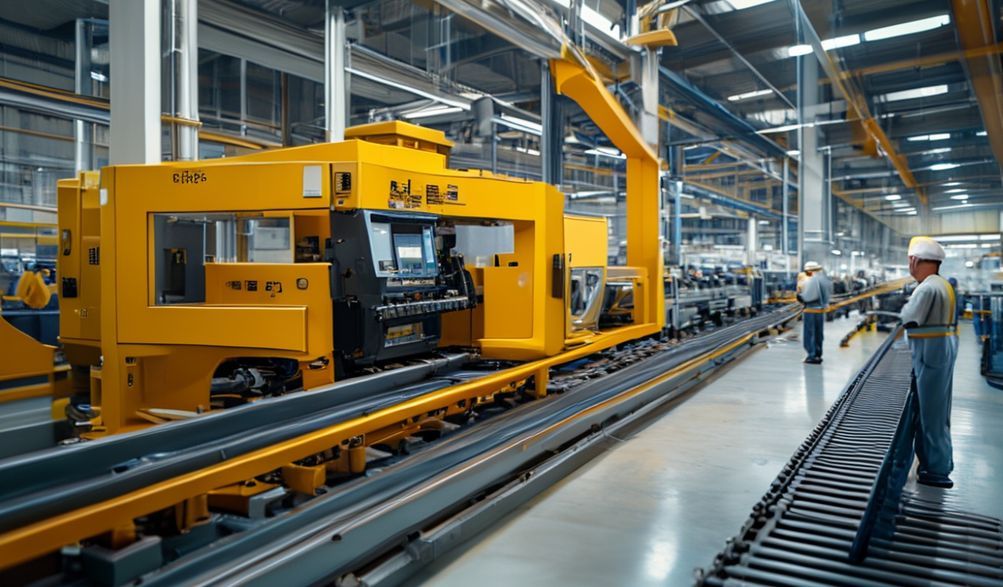
Jou Uiteindelike Gids tot die China Blokvervaardigingsmasjienfabriek: Binne FUDA Baksteenvervaardigingsfabriek
Navigating the vast landscape of Chinese manufacturing to find a reliable, high-quality block making machine supplier can be a daunting task. The market is filled with options, and the stakes are high—your investment directly impacts your construction project’s timeline, budget, and quality. This guide is designed to cut through the noise. We will use the 5W1H method (What, Why, Who, When, Where, and How) to provide a structured approach to your supplier selection process.FUDA baksteenvervaardigingsfabriekas 'n gedetailleerde gevallestudie, nie bloot om een handelsmerk te bevorder nie, maar om vir jou 'n deursigtige, insider-raamwerk te verskaf vir die evaluering vanenigeChina blokvervaardigingsmasjien fabriek. Gebaseer op jare se bedryfsondervinding, tegniese ontleding en werklike verskaffersoudits, sal hierdie plasing jou toerus met die kennis om 'n ingeligte, selfversekerde verkrygingsbesluit te neem, wat verseker dat jou vennoot 'n oplossingsverskaffer is, nie net 'n verkoper nie.
Verstaan die Landskap: Blokmasjienfabrieke in China
Voordat jy op 'n spesifieke fabriek fokus, is dit deurslaggewend om die breër ekosisteem te verstaan. China se oorheersing in konstruksiemasjinerie is nie toevallig nie; dit is die resultaat van dekades se strategiese ontwikkeling.
Hoekom China 'n Globale Spilpunt vir Konstruksiemasjinerievervaardiging Is
China se posisie as die wêreld se werkswinkel vir masjinerie soos blokmasjiene rus op drie pilare:
- Ongeëwenaarde Skaal & Groepering:Die konsentrasie van vervaardigers skep hewige mededinging en spesialisasie, wat innovasie en koste-doeltreffendheid dryf wat jy nêrens anders sal vind nie.
- Geïntegreerde Voorsieningskettings:Hele industriële ekosisteme bestaan waar elke komponent—van hoëgraadse staal en hidrouliese silinders tot PLC-beheerstelsels—binne 'n kort radius vervaardig word, wat koste en deurlooptye verminder.
- Vinnige Tegnologiese Aanneming:Chinese fabrieke het aggressief outomatisering en slim tegnologieë geïntegreer, en het ver beweeg van basiese handmatige masjiene af na gesofistikeerde, rekenaarbeheerde produksielyne wat met Europese eweknieë meeding teen 'n fraksie van die prys.
Sleutel Industriële Klusters vir Baksteen- en Blokmaakmasjiene
Nie alle streke in China is gelyk vir masjinerie-bekoming. Om die groepe te ken, help met verskafferverifikasie en logistieke beplanning.
- 福建省:'n Groot middelpunt vir boumateriaalmasjinerie, bekend vir 'n hoë konsentrasie van blokmasjienvervaardigers. Fabrieke hier spesialiseer dikwels in medium-tot-hoëreeks outomatiese en semi-outomatiese masjiene.
- Shandong Provinsie:Veral bekend vir swaar nywerheid en masjinerie, verskaf verskaffers hier gereeld robuuste, hoë-kapasiteit masjiene wat geskik is vir grootskaalse produksie.
- Guangdong Provinsie:'n Leier in tegnologiese innovasie en uitvoer, met fabrieke wat dikwels meer gevorderde elektronika en outomatisering insluit.
FUDA, for instance, is based in Fujian, placing it in the heart of one of the most competitive and specialized clusters for this equipment.
Common Challenges When Sourcing from China (And How to Overcome Them)
Trust is built on honesty. Being aware of potential pitfalls is your first line of defense.
- Quality Variance: The “China price” spectrum is wide. A low quote can sometimes mean inferior components.
- Solution: Insist on detailed component lists (e.g., brand of hydraulic pumps, Siemens/ Mitsubishi PLCs) and implement strict Pre-Shipment Inspection (PSI).
- Communication & Technical Nuance: Misunderstandings over specifications can lead to costly errors.
- Solution: Use clear, visual technical data sheets (TDS). Communicate via video calls and request confirmations in writing.
- Intellectual Property (IP) Concerns: Custom mold designs need protection.
- Solution: Use a well-drafted NNN Agreement (Non-use, Non-disclosure, Non-circumvention) before sharing proprietary designs.
- Logistics & Import Complexity: Shipping heavy machinery is not like ordering a package.
- Solution: Work with a experienced freight forwarder and understand Incoterms (like FOB or CIF) clearly from the start.
A Deep Dive into FUDA Brick Making Factory
Let’s apply a critical lens to a specific factory. The following assessment is based on verifiable information typically available from such manufacturers, providing a template for your own evaluations.
Company Profile: History, Scale, and Certifications
A legitimate factory should be transparent about its foundations. Based on its public profile, FUDA presents itself as an established player.
- Geskiedenis & Omvang: Typically, such factories highlight a founding date (e.g., over 15-20 years ago), a significant factory floor area (e.g., 50,000+ sqm), and a sizable workforce encompassing production, R&D, and sales teams.
- Sertifisering: Look for international standards. ISO 9001 certification for quality management systems is a fundamental green flag. Compliance with CE standards (for the European market) or other regional safety certifications indicates an understanding of global export requirements. Always ask for certificate numbers and verify them if possible.
Core Product Range and Technical Capabilities
A diverse yet focused product range often indicates good manufacturing depth. Factories like FUDA commonly offer:
- Masjientipes: Concrete Hollow Block Machines, Paver/Interlocking Brick Machines, Curbstone Machines, and sometimes complete AAC (Autoclaved Aerated Concrete) panel production lines.
- Automation Spectrum: From simple manual egg-laying machines to fully automatic stationary machines with robotic pallet stackers.
- Key Technical Specs: Output capacities (e.g., from 5,000 to 30,000+ blocks per 8-hour shift), robust hydraulic systems for consistent pressure, and programmable PLC control panels for ease of operation and repeatability.
Manufacturing Process and Quality Control Protocols
This is where true quality is forged. A reliable factory will have a documented, multi-stage process.
- Rou Materiaal Inspeksie: Incoming steel plates and components should be checked for grade and specification.
- Precision Fabrication: Using CNC laser cutting, bending, and machining centers to ensure part accuracy.
- Sub-Assembly & Welding: Critical frames should be welded by certified welders to prevent stress fractures.
- Assembly & Wiring: Neat, labeled wiring harnesses and organized hydraulic lines are signs of good workmanship.
- Comprehensive Testing: The most critical phase. Every machine should undergo a no-load test (checking all movements) and a full-load production test with actual materials for a sustained period (e.g., 24-72 hours) to verify output and block quality.
R&D and Innovation Focus
Does the factory just assemble parts, or does it engineer solutions? Indicators of an innovation focus include:
- An in-house R&D department with engineers.
- Development of energy-saving features, like variable frequency drives on motors.
- Integration of IoT capabilities for remote monitoring and diagnostics.
Critical Evaluation: Assessing FUDA Against Your Needs
This is the core of your due diligence. Let’s move from generic facts to a tailored assessment.
Strengths of Choosing a Factory like FUDA
Based on the model of an established Fujian manufacturer, potential strengths include:
- Koste-effektiwiteit: Direct factory pricing, avoiding middleman markups.
- Geïntegreerde Vervaardiging: Control over the entire production process, from cutting steel to final testing.
- Customization Flexibility: Ability to modify machine dimensions, pressure, or control systems to suit specific local materials (e.g., unique aggregate types or fly ash content).
Questions to Ask FUDA (or Any Supplier) Before Ordering
Your supplier’s responses to these questions will be more telling than any brochure.
- “Can you provide a live video of a 2-hour load test for a machine similar to my specification, showing the final block product being measured for dimensional accuracy and strength?”
- “What is the exact warranty policy? What parts and labor are covered, for how long, and what is the process for a warranty claim?”
- “Can you share contact information for 2-3 overseas clients in a region similar to mine who have purchased a machine in the last 18 months?”
- “What is your standard delivery of spare parts after the machine is installed? What is the recommended initial spare parts kit?”
- “What is the detailed breakdown of your quotation? Please separate machine cost, mold cost, shipping, and any agent fees.”
Red Flags and Green Flags in Supplier Communication
Green Flags:
* Proactively invites you for a video factory tour.
* Provides detailed, technical answers without constant sales pressure.
* Offers a clear, fair contract with defined responsibilities.
* Has a documented after-sales service plan.
Red Flags:
* Pressures for a large deposit (e.g., >30%) before any technical clarification.
* Is vague or evasive about client references or factory visit requests.
* Cannot or will not provide a video of a working machine.
* Quotes a price significantly lower than all other serious bidders without clear justification.
The Buyer’s Journey: From Inquiry to Installation
Understanding this end-to-end process removes uncertainty and sets clear expectations.
Step-by-Step: How to Procure a Machine from China
- Define Specifications: Determine block type, size, required output, level of automation, and local power supply.
- Supplier Shortlisting & RFQ: Identify 3-5 potential factories. Send them all the same detailed Request for Quotation (RFQ).
- Technical Negotiation & Due Diligence: This is the most critical phase. Use the questions listed above. Conduct video meetings and reference checks.
- Payment Terms & Contract: Never pay 100% upfront. Standard terms are often 30% deposit, 60% against copy of Bill of Lading, 10% after successful installation. Ensure the contract includes all specs, warranty, and Incoterms.
- Production & Pre-shipment Inspection: Request regular photo/video updates. Hire a third-party inspection company to conduct a PSI before payment is finalized.
- Shipping & Logistics: Your supplier or freight forwarder will handle export customs. You or your agent will handle import customs at destination.
- Installasie & Inbedryfstelling: Clarify if the price includes an engineer sent for installation and training, or if it’s remote guidance only.
The Vital Role of Pre-Shipment Inspection (PSI)
Consider PSI non-negotiable insurance. A professional inspector will:
* Verify the machine matches the purchase order.
* Witness and document the full-load test.
* Check workmanship, welding, painting, and electrical safety.
* Provide a report with photos/videos, giving you leverage to request fixes before shipment.
Navigating After-Sales Support and Spare Parts
The relationship begins after the machine arrives.
* Tegniese Ondersteuning: Expect remote support via WhatsApp/WeChat/Email. For serious issues, clarify the timeline and cost for sending a technician.
* Onderdele: Initial stock should include common wear items: seal kits for hydraulic cylinders, vibration motor bearings, conveyor belts, and a set of filters. Ensure the factory commits to a reasonable lead time (e.g., 7-15 days) for shipping critical spares.
Frequently Asked Questions (FAQ)
Q1: What is the typical price range for a block making machine from a Chinese factory like FUDA?
A: Prices vary dramatically based on automation and output. A small manual machine may start around $15,000, while a large, fully automatic production line can exceed $150,000. The only way to get an accurate price is to provide detailed specifications and request a formal quote.
Q2: How do I verify the legitimacy and reputation of a Chinese machinery factory?
A: 1) Check their Besigheidslisensie via Chinese official platforms. 2) Search for company reviews on third-party B2B sites, but be wary of fake testimonials. 3) The gold standard: request and actually contact client references. 4) Insist on a real-time video factory tour, not a pre-recorded promo video.
Q3: What are the shipping and import duty costs for importing a machine to Africa or Southeast Asia?
A: These costs are highly variable based on port, weight, and volume. Shipping for a containerized machine can range from $3,000 to $8,000. Import duties depend entirely on your country’s tariff codes. You moet consult with a local customs broker and a freight forwarder for a precise estimate. Understand terms like FOB (you handle main shipping) and CIF (supplier handles to your port).
Q4: Can factories like FUDA provide training for our operators?
A: Yes, this is standard. Training typically covers machine operation, daily maintenance, troubleshooting, and safety procedures. It can be conducted by their sent engineers on-site or via detailed manuals and video calls. Always confirm what training is included in your contract.
Q5: What is the lead time for manufacturing a standard block making machine?
A: For a standard model, expect 30 to 60 days after receipt of deposit. This can be extended by customizations, holiday periods (like Chinese New Year), or global raw material supply chain delays. Always get a written production schedule.
Conclusion
Sourcing a block making machine from China presents a significant opportunity for value and capability, but it demands a disciplined, informed approach. This guide has used the FUDA baksteenvervaardigingsfabriek as a lens to focus on the universal principles of supplier evaluation: scrutinize verifiable credentials, understand the technical capabilities, demand transparency in communication, and never underestimate the importance of after-sales support.
Whether you engage with FUDA or another manufacturer, let the questions and steps outlined here be your checklist. Your goal is to move beyond a transactional purchase and establish a partnership with a factory that is invested in the long-term success of your block production. Do your due diligence, trust the process over promises, and you will find a reliable partner to help build your business, block by solid block.
<