
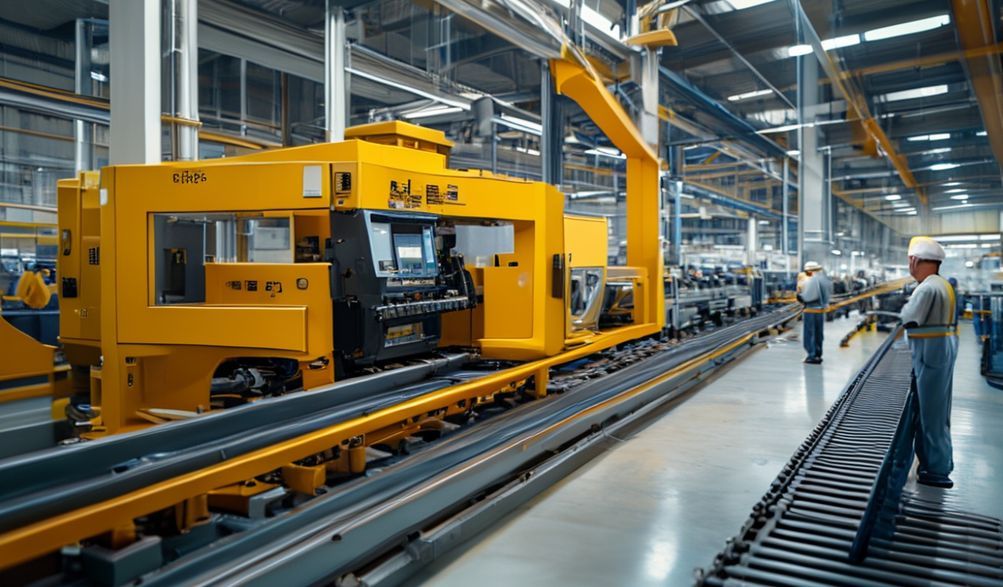
Hướng Dẫn Toàn Diện Về Nhà Máy Sản Xuất Máy Làm Gạch Trung Quốc: Khám Phá Bên Trong Nhà Máy Sản Xuất Gạch FUDA
Trong thị trường sản xuất Trung Quốc rộng lớn, việc tìm kiếm một nhà cung cấp máy đúc khối uy tín và chất lượng cao có thể là một thách thức không nhỏ. Thị trường tràn ngập các lựa chọn, và áp lực rất lớn - khoản đầu tư của bạn ảnh hưởng trực tiếp đến tiến độ, ngân sách và chất lượng của dự án xây dựng. Hướng dẫn này được thiết kế để giúp bạn vượt qua những thông tin nhiễu loạn. Chúng tôi sẽ sử dụngNhà máy sản xuất gạch FUDAnhư một nghiên cứu tình huống chi tiết, không chỉ để quảng bá một thương hiệu, mà để cung cấp cho bạn một khuôn khổ minh bạch, từ góc nhìn nội bộ để đánh giábất kỳNhà máy sản xuất máy làm gạch Trung Quốc. Dựa trên nhiều năm kinh nghiệm trong ngành, phân tích kỹ thuật và đánh giá thực tế các nhà cung cấp, bài viết này sẽ trang bị cho bạn kiến thức để đưa ra quyết định mua hàng sáng suốt và tự tin, đảm bảo đối tác của bạn là nhà cung cấp giải pháp, không chỉ là người bán hàng.
Tìm Hiểu Bức Tranh Tổng Quan: Các Nhà Máy Sản Xuất Máy Làm Gạch tại Trung Quốc
Trước khi tập trung vào một nhà máy cụ thể, việc hiểu rõ hệ sinh thái rộng lớn hơn là vô cùng quan trọng. Sự thống trị của Trung Quốc trong lĩnh vực máy móc xây dựng không phải là ngẫu nhiên; đó là kết quả của nhiều thập kỷ phát triển chiến lược.
中国为何成为全球工程机械制造中心
Trung Quốc vững vàng giữ vị thế công xưởng thế giới cho các loại máy móc như máy sản xuất khối xây dựng dựa trên ba trụ cột chính:
- Quy mô và Khả năng Phân cụm Vô song:Sự tập trung của các nhà sản xuất tạo ra cạnh tranh khốc liệt và chuyên môn hóa, thúc đẩy đổi mới và hiệu quả chi phí mà bạn không thể tìm thấy ở nơi nào khác.
- Chuỗi Cung Ứng Tích HợpCác hệ sinh thái công nghiệp toàn diện tồn tại, nơi mọi thành phần - từ thép cao cấp và xi lanh thủy lực đến hệ thống điều khiển PLC - đều được sản xuất trong bán kính ngắn, giúp giảm chi phí và thời gian giao hàng.
- Áp Dụng Công Nghệ Nhanh Chóng:Các nhà máy Trung Quốc đã tự động hóa mạnh mẽ và tích hợp công nghệ thông minh, vượt xa các máy móc thủ công cơ bản để cung cấp các dây chuyền sản xuất tinh vi được điều khiển bằng máy tính, sánh ngang với các đối tác châu Âu nhưng chỉ với một phần nhỏ chi phí.
Các Cụm Công nghiệp Trọng điểm cho Máy Sản xuất Gạch và Khối Xây
Không phải tất cả các khu vực ở Trung Quốc đều như nhau trong việc tìm nguồn cung máy móc. Hiểu rõ các cụm công nghiệp sẽ hỗ trợ đắc lực cho việc xác minh nhà cung cấp và lập kế hoạch hậu cần.
- 福建省:Một trung tâm lớn về máy móc vật liệu xây dựng, nổi tiếng với sự tập trung cao của các nhà sản xuất máy sản xuất gạch. Các nhà máy ở đây thường chuyên về máy tự động và bán tự động tầm trung đến cao cấp.
- 山东省:Nổi tiếng với ngành công nghiệp nặng và máy móc, các nhà cung cấp ở đây thường sản xuất những cỗ máy bền bỉ, công suất cao phù hợp cho sản xuất quy mô lớn.
- 广东省:Một nhà lãnh đạo trong đổi mới công nghệ và xuất khẩu, với các nhà máy thường tích hợp nhiều thiết bị điện tử và tự động hóa tiên tiến hơn.
Phúc Đạtchẳng hạn, có trụ sở tại福建đặt nó vào trung tâm của một trong những cụm cạnh tranh và chuyên biệt nhất cho thiết bị này.
Những Thách Thức Thường Gặp Khi Tìm Nguồn Hàng Từ Trung Quốc (Và Cách Khắc Phục)
Niềm tin được xây dựng trên sự trung thực. Nhận thức được những cạm bẫy tiềm ẩn là tuyến phòng thủ đầu tiên của bạn.
- Chất lượng không đồng nhất:Phổ giá "Trung Quốc" rất rộng. Một mức giá thấp đôi khi có thể đồng nghĩa với linh kiện kém chất lượng.
- Giải pháp:Kiên quyết yêu cầu danh sách chi tiết các thành phần (ví dụ: thương hiệu bơm thủy lực, PLC Siemens/Mitsubishi) và thực hiện Kiểm tra Nghiêm ngặt Trước Khi Giao Hàng (PSI).
- Communication & Technical Nuance: Misunderstandings over specifications can lead to costly errors.
- Giải pháp: Use clear, visual technical data sheets (TDS). Communicate via video calls and request confirmations in writing.
- Intellectual Property (IP) Concerns: Custom mold designs need protection.
- Giải pháp: Use a well-drafted NNN Agreement (Non-use, Non-disclosure, Non-circumvention) before sharing proprietary designs.
- Logistics & Import Complexity: Shipping heavy machinery is not like ordering a package.
- Giải pháp: Work with a experienced freight forwarder and understand Incoterms (like FOB or CIF) clearly from the start.
A Deep Dive into FUDA Brick Making Factory
Let’s apply a critical lens to a specific factory. The following assessment is based on verifiable information typically available from such manufacturers, providing a template for your own evaluations.
Company Profile: History, Scale, and Certifications
A legitimate factory should be transparent about its foundations. Based on its public profile, FUDA presents itself as an established player.
- Lịch sử & Quy mô: Typically, such factories highlight a founding date (e.g., over 15-20 years ago), a significant factory floor area (e.g., 50,000+ sqm), and a sizable workforce encompassing production, R&D, and sales teams.
- Chứng chỉ: Look for international standards. ISO 9001 certification for quality management systems is a fundamental green flag. Compliance with CE standards (for the European market) or other regional safety certifications indicates an understanding of global export requirements. Always ask for certificate numbers and verify them if possible.
Core Product Range and Technical Capabilities
A diverse yet focused product range often indicates good manufacturing depth. Factories like FUDA commonly offer:
- Các Loại Máy Móc: Concrete Hollow Block Machines, Paver/Interlocking Brick Machines, Curbstone Machines, and sometimes complete AAC (Autoclaved Aerated Concrete) panel production lines.
- Automation Spectrum: From simple manual egg-laying machines to fully automatic stationary machines with robotic pallet stackers.
- Key Technical Specs: Output capacities (e.g., from 5,000 to 30,000+ blocks per 8-hour shift), robust hydraulic systems for consistent pressure, and programmable PLC control panels for ease of operation and repeatability.
Manufacturing Process and Quality Control Protocols
This is where true quality is forged. A reliable factory will have a documented, multi-stage process.
- Kiểm tra nguyên liệu thô: Incoming steel plates and components should be checked for grade and specification.
- Precision Fabrication: Using CNC laser cutting, bending, and machining centers to ensure part accuracy.
- Sub-Assembly & Welding: Critical frames should be welded by certified welders to prevent stress fractures.
- Assembly & Wiring: Neat, labeled wiring harnesses and organized hydraulic lines are signs of good workmanship.
- Comprehensive Testing: The most critical phase. Every machine should undergo a no-load test (checking all movements) and a full-load production test with actual materials for a sustained period (e.g., 24-72 hours) to verify output and block quality.
R&D and Innovation Focus
Does the factory just assemble parts, or does it engineer solutions? Indicators of an innovation focus include:
- An in-house R&D department with engineers.
- Development of energy-saving features, like variable frequency drives on motors.
- Integration of IoT capabilities for remote monitoring and diagnostics.
Critical Evaluation: Assessing FUDA Against Your Needs
This is the core of your due diligence. Let’s move from generic facts to a tailored assessment.
Strengths of Choosing a Factory like FUDA
Based on the model of an established Fujian manufacturer, potential strengths include:
- Hiệu quả Chi phí: Direct factory pricing, avoiding middleman markups.
- Sản Xuất Tích Hợp Control over the entire production process, from cutting steel to final testing.
- Tính linh hoạt tùy chỉnh: Ability to modify machine dimensions, pressure, or control systems to suit specific local materials (e.g., unique aggregate types or fly ash content).
Questions to Ask FUDA (or Any Supplier) Before Ordering
Your supplier’s responses to these questions will be more telling than any brochure.
- “Can you provide a live video of a 2-hour load test for a machine similar to my specification, showing the final block product being measured for dimensional accuracy and strength?”
- “What is the exact warranty policy? What parts and labor are covered, for how long, and what is the process for a warranty claim?”
- “Can you share contact information for 2-3 overseas clients in a region similar to mine who have purchased a machine in the last 18 months?”
- “What is your standard delivery of spare parts after the machine is installed? What is the recommended initial spare parts kit?”
- “Cái gì là”detailed breakdown of your quotation? Please separate machine cost, mold cost, shipping, and any agent fees.”
Red Flags and Green Flags in Supplier Communication
Green Flags:
* Proactively invites you for a video factory tour.
* Provides detailed, technical answers without constant sales pressure.
* Offers a clear, fair contract with defined responsibilities.
* Has a documented after-sales service plan.
Red Flags:
* Pressures for a large deposit (e.g., >30%) before any technical clarification.
* Is vague or evasive about client references or factory visit requests.
* Cannot or will not provide a video of a working machine.
* Quotes a price significantly lower than all other serious bidders without clear justification.
The Buyer’s Journey: From Inquiry to Installation
Understanding this end-to-end process removes uncertainty and sets clear expectations.
Step-by-Step: How to Procure a Machine from China
- Define Specifications: Determine block type, size, required output, level of automation, and local power supply.
- Supplier Shortlisting & RFQ: Identify 3-5 potential factories. Send them all the same detailed Request for Quotation (RFQ).
- Technical Negotiation & Due Diligence: This is the most critical phase. Use the questions listed above. Conduct video meetings and reference checks.
- Payment Terms & Contract: Never pay 100% upfront. Standard terms are often 30% deposit, 60% against copy of Bill of Lading, 10% after successful installation. Ensure the contract includes all specs, warranty, and Incoterms.
- Production & Pre-shipment Inspection: Request regular photo/video updates. Hire a third-party inspection company to conduct a PSI before payment is finalized.
- Vận chuyển & Hậu cần: Your supplier or freight forwarder will handle export customs. You or your agent will handle import customs at destination.
- Lắp đặt & Vận hành: Clarify if the price includes an engineer sent for installation and training, or if it’s remote guidance only.
The Vital Role of Pre-Shipment Inspection (PSI)
Consider PSI non-negotiable insurance. A professional inspector will:
* Verify the machine matches the purchase order.
* Witness and document the full-load test.
* Check workmanship, welding, painting, and electrical safety.
* Provide a report with photos/videos, giving you leverage to request fixes before shipment.
Navigating After-Sales Support and Spare Parts
The relationship begins after the machine arrives.
* Hỗ trợ Kỹ thuật: Expect remote support via WhatsApp/WeChat/Email. For serious issues, clarify the timeline and cost for sending a technician.
* Phụ Tùng Thay Thế: Initial stock should include common wear items: seal kits for hydraulic cylinders, vibration motor bearings, conveyor belts, and a set of filters. Ensure the factory commits to a reasonable lead time (e.g., 7-15 days) for shipping critical spares.
Các Câu Hỏi Thường Gặp (FAQ)
Q1: What is the typical price range for a block making machine from a Chinese factory like FUDA?
A: Prices vary dramatically based on automation and output. A small manual machine may start around $15,000, while a large, fully automatic production line can exceed $150,000. The only way to get an accurate price is to provide detailed specifications and request a formal quote.
Q2: How do I verify the legitimacy and reputation of a Chinese machinery factory?
A: 1) Check their Giấy phép kinh doanh via Chinese official platforms. 2) Search for company reviews on third-party B2B sites, but be wary of fake testimonials. 3) The gold standard: request and actually contact client references. 4) Insist on a real-time video factory tour, not a pre-recorded promo video.
Q3: What are the shipping and import duty costs for importing a machine to Africa or Southeast Asia?
A: These costs are highly variable based on port, weight, and volume. Shipping for a containerized machine can range from $3,000 to $8,000. Import duties depend entirely on your country’s tariff codes. You must consult with a local customs broker and a freight forwarder for a precise estimate. Understand terms like FOB (you handle main shipping) and CIF (supplier handles to your port).
Q4: Can factories like FUDA provide training for our operators?
A: Yes, this is standard. Training typically covers machine operation, daily maintenance, troubleshooting, and safety procedures. It can be conducted by their sent engineers on-site or via detailed manuals and video calls. Always confirm what training is included in your contract.
Q5: What is the lead time for manufacturing a standard block making machine?
A: For a standard model, expect 30 to 60 days after receipt of deposit. This can be extended by customizations, holiday periods (like Chinese New Year), or global raw material supply chain delays. Always get a written production schedule.
Conclusion
Sourcing a block making machine from China presents a significant opportunity for value and capability, but it demands a disciplined, informed approach. This guide has used the Nhà máy sản xuất gạch FUDA as a lens to focus on the universal principles of supplier evaluation: scrutinize verifiable credentials, understand the technical capabilities, demand transparency in communication, and never underestimate the importance of after-sales support.
Whether you engage with FUDA or another manufacturer, let the questions and steps outlined here be your checklist. Your goal is to move beyond a transactional purchase and establish a partnership with a factory that is invested in the long-term success of your block production. Do your due diligence, trust the process over promises, and you will find a reliable partner to help build your business, block by solid block.
<