
Die Uiteindelike Gids: Hoe om 'n Konstruksieafval Baksteenmaakmasjien Vervaardiger te Kies
Inleiding
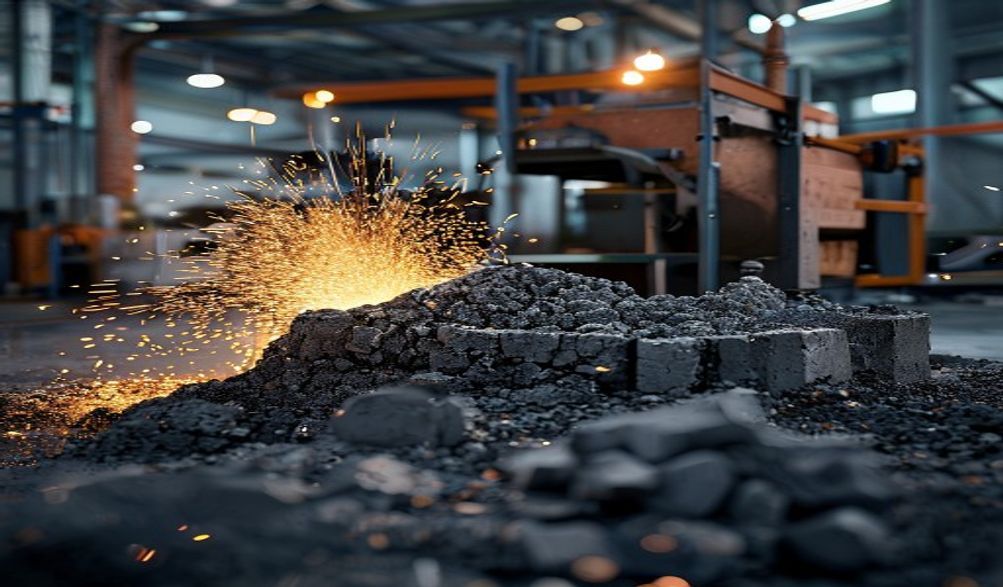
Hopies van bourommel, hope gebreekte beton en stapels weggedoekte keramiek - dit is die wêreldwye werklikheid van Bou- en Sloopafval (BSA), een van die swaarste en grootste afvalstrome op aarde. Tog lê 'n diepgeleë geleentheid binne hierdie uitdaging: om hierdie rommel in waardevolle, hoë-sterkte boupakkate te omskep. Bou-Afval-steenmaakmasjiene is die enjins van hierdie sirkulêre ekonomie, wat 'n omgewingslas in 'n winsgewende bate verander.
Die reis van afval na rykdom is egter nie sonder sy kritieke keerpunt nie. Die enkele grootste bepaler van jou sukses sal nie net die masjien wees wat jy koop nie, maar die vervaardiger wat jy kies. Om met die verkeerde maatskappy saam te werk, kan lei tot 'n waterval van mislukkings—'n masjien wat nie jou spesifieke afvalmengsel kan hanteer nie, wat substandaard stene produseer, gereeld breek en jou sonder ondersteuning los. Dit verander 'n belowende belegging in 'n duur, roestende monument van 'n slegte besluit.
Die oplossing is strategiese, ingeligte keuring. Jou doel is nie om die goedkoopste verskaffer te vind nie, maar om 'n ware langtermynvennoot te identifiseer—'n vervaardiger met die kundigheid, tegnologie en integriteit om jou projek se lewensvatbaarheid vir jare te verseker. Hierdie gids bied 'n stap-vir-stap, deskundige-ondersteunde raamwerk vir die maak van daardie kritieke keuse. Saamgestel uit industrie-ingenieurstandaarde, operasionele beste praktyke en insigte van suksesvolle herwinningsbesighede, is dit ontwerp om jou toe te rus met die kennis om die mark met vertroue te navigeer.
Verstaan U Projekbehoeftes en Spesifikasies
Voordat jy ’n vervaardiger doeltreffend kan beoordeel, moet jy eers ’n kenner van jou eie projek word. ’n Vervaardiger se vermoë om aan jou spesifieke behoeftes te voldoen, is die eerste en belangrikste filter. Hierdie interne oudit toon ’n logiese, professionele benadering en verseker dat jy duidelike vereistes kommunikeer.
Evalueer Jou Grondstofbron en -volume
The nature of your feedstock is the foundation of everything. A machine perfect for pure concrete rubble may struggle with a mixed waste stream.
- Types of Construction Waste: Identify your primary and secondary waste streams. Common types include:
- Concrete & Rubble: The most common and ideal feedstock for high-strength bricks.
- Ceramics & Bricks: Adds durability but may require specific crushing.
- Masonry & Asphalt: Often manageable in certain mixes.
- Light Contaminants: (e.g., wood, plastic, paper). These must typically be removed pre-processing.
- Required Production Capacity: Calculate your needed output based on your business model.
- Determine your required daily or weekly brick production (e.g., 5,000 bricks/day).
- Factor in your waste intake volume to ensure a consistent supply.
- Desired Brick Types & Sizes: Your market dictates your product.
- Soliede Stene:Vir standaard konstruksie.
- Holblokke:Ligter, met beter isolasie-eienskappe.
- Paving Blocks & Interlockers:Vir landskap- en hardskapontwerp.
- Custom sizes and shapes will influence mold requirements and machine capabilities.
Define Your Technical & Operational Requirements
These parameters will narrow down the type of machine and the scale of investment.
- Vlak van Outomatisering: This is a major cost and efficiency driver.
- Handleiding: Labor-intensive, low output, lowest capital cost.
- Semi-outomaties: A balance of human operation and mechanical automation for feeding/pressing.
- Heeltemal Outomaties: Computer-controlled, high-volume production with minimal labor. Requires higher investment and stable power.
- Available Space & Power: Audit your facility.
- Factory Layout: Include space for the machine, raw material storage, curing area, and finished product storage.
- Kragtoevoer: Fully automatic lines may require robust three-phase power. Know your voltage and amperage limits.
- Target Brick Specifications: Define your quality benchmarks.
- Druksterkte: What is the minimum strength required for your target market (e.g., 7 MPa, 15 MPa)? This is non-negotiable.
- Kwaliteit Sertifisering: Are there local or regional building codes you must meet (e.g., ASTM, EN, IS standards)? The manufacturer should understand these.
Core Manufacturer Evaluation Criteria
With your specifications in hand, you can now dissect potential manufacturers. This is where you separate marketing claims from demonstrable capability.
Proven Expertise and Industry Experience
In this heavy-industry sector, experience is the most valuable currency. You want a partner who has navigated the complexities of construction waste before.
- Track Record & Longevity: How long has the company been specializing in construction waste recycling equipment? A decade of focused experience is more valuable than fifty years making clay brick machines.
- Case Studies & Portfolio: A trustworthy manufacturer will readily provide detailed case studies.
- Look for projects with similar waste streams and desired outputs to yours.
- Ask for photos, videos, and production data from these installations.
- Spesialisering: Prefer a specialist over a generalist. A manufacturer whose core business is C&D waste solutions will have deeper R&D and problem-solving expertise for your specific challenges.
Machine Quality, Technology, and R&D
This is where engineering excellence comes to the fore. The core technology defines the machine’s capability, durability, and output quality.
- Core Pressing Technology: Understand the heart of the machine.
- Hidrouliese Stelsels: Offer high, consistent pressure, leading to denser, stronger bricks. They are often better for mixed or variable waste streams.
- Vibrasie Stelsels: Can be effective for uniform mixes but may struggle with certain waste types.
- Bougehalte & Materiale: Inspect the “bones” of the machine.
- Steel Grade: The frame and key components should be made from high-grade, wear-resistant steel.
- Welding & Assembly: Look for clean, robust welding and precision assembly. This directly impacts longevity and maintenance needs.
- Mold Quality & Availability: Molds are critical wear parts. The manufacturer should use hardened, precision-machined steel and have the capability to produce or supply replacement molds efficiently.
- In-Huis Navorsing en Ontwikkeling: A manufacturer with active R&D can adapt to new waste materials, improve efficiency, and offer technical support that understands the machine at a fundamental level.
Comprehensive Service and Support
The machine’s purchase price is just the entry ticket. The true cost—and value—is revealed over years of operation. Unreliable support can shutter your business.
- Pre-Sale Engineering Support: A good partner will consult on your project plan, asking detailed questions about your waste and goals.
- Installasie, Inbedryfstelling & Opleiding:
- Does the price include supervised installation and commissioning by a factory engineer?
- Is comprehensive on-site training for your operators and maintenance staff provided?
- Onderdele Ekosisteem:
- Is there a clearly catalogued spare parts inventory?
- What is the typical lead time for critical parts? Local or regional parts depots are a major advantage.
- Warranty & After-Sales Guarantees:
- Scrutinize the warranty. What is covered (parts, labor)? For how long?
- What are the guaranteed response times for technical queries (e.g., 24-hour remote support)?
- Is there a provision for emergency technician dispatch?
Due Diligence and Verification Steps
Now, move from evaluating promises to verifying reality. This proactive due diligence is your primary risk mitigation strategy.
Factory Visit and Machine Inspection
If the investment is significant, a visit is non-negotiable. It is the single most revealing step.
- Observe the Production Facility: Look for organized production lines, quality control checkpoints, and modern welding/fabrication equipment.
- Witness a Live Material Test: This is crucial. Send a representative sample of your actual construction waste to the manufacturer. Insist on watching a test run to see the quality of bricks produced from your specific feedstock.
- Ask for a Running Machine Demo: If possible, ask to see a machine under power in their testing facility.
Client References and Reputation Check
Hear the story from those who have already walked the path.
- Request Direct References: Ask for 3-5 contacts of past clients who have projects similar to yours. Actually call them. Ask about machine performance, brick quality, reliability, and the quality of after-sales support.
- Conduct Independent Online Research:
- Search for the company name alongside keywords like “reviews,” “complaint,” or “lawsuit.”
- Check industry-specific forums and B2B platforms for unbiased user discussions.
Analyzing Quotations and Contract Clarity
Never compare on price alone. Compare on value and clarity.
- Calculate Total Cost of Ownership (TCO): A detailed quote should break down:
- Machine FOB/CIF price.
- Versending, versekering en doeaneheffings.
- Installation and commissioning fees.
- Cost of initial spare parts package.
- Training costs.
- Scrutinize the Contract: A professional contract protects both parties. Ensure it clearly specifies:
- Delivery Timeline: With clear milestones.
- Payment Terms: Linked to deliverables (e.g., 30% down, 60% before shipment, 10% after commissioning).
- Warranty Details: Exact scope, duration, and exclusions.
- Liability Clauses: For delays, non-performance, or quality defects.
- Technical Specifications Annex: The machine’s detailed specs should be a binding part of the contract.
Red Flags and Key Decision Factors
Expertise is often shown by knowing what to avoid. Be vigilant for these warning signs.
Common Red Flags to Avoid
- Lack of Transparency: Unwillingness to provide client references, allow a factory visit, or let you conduct a material test.
- Overly Vague Documentation: Technical manuals that are poorly translated, lack detail, or omit critical specifications.
- “Too Good to Be True” Pricing: Prices significantly below reputable competitors often indicate inferior materials, copied designs, or hidden costs that will appear later.
- High-Pressure Sales Tactics: Urgency created by “limited-time offers” is a classic tactic to bypass your due diligence process.
- No Specialization: A company that sells everything from kitchen blenders to brick machines likely lacks the depth of expertise you need.
The Final Decision: Beyond the Price Tag
When weighing your final options, shift your mindset.
- Choose a Partner, Not a Vendor: You are entering a 5-10+ year relationship. Professional communication, responsiveness, and a collaborative attitude during the sales process are strong indicators of future support.
- Value Over Cost: The cheapest machine that fails in 18 months is infinitely more expensive than a reliable machine with a 10% higher upfront cost. Prioritize reliability, support capability, and proven performance.
- Trust Your Due Diligence: The confidence gained from thorough checks—the factory visit, the client calls, the material test—should be the ultimate guide. Let the data and verified evidence drive your decision.
Frequently Asked Questions (FAQ)
What is the typical price range for a construction waste brick making machine?
Prices vary dramatically based on automation and capacity. A small, semi-automatic machine may start around $20,000 – $50,000. A medium-capacity, fully automatic production line can range from $80,000 – $150,000. Large, high-volume turnkey plants can exceed $200,000+. Always request a detailed quotation based on your specific needs for an accurate comparison.
Can one machine process all types of construction waste?
Not directly. Most construction waste requires pre-processing. It must first be crushed and screened to a consistent aggregate size (typically under 5mm) before being fed into the brick machine. A good machine can handle a varied mix of processed aggregates, but the consistency and composition of your feedstock will directly impact the final brick’s strength and appearance.
How important is after-sales service, and what should it include?
It is critical—often as important as the machine itself. Comprehensive service should include: detailed operation & maintenance manuals, video support libraries, phone/email/remote diagnostic support, a readily available inventory of wear parts (like molds and seals), and a clear protocol for dispatching service technicians when on-site intervention is needed.
What certifications should I look for in the manufacturer and the machine?
For the vervaardiger, ISO 9001 quality management certification is a strong indicator of systematic production and quality control. For the bricks produced, you need to align with local building material standards. Discuss relevant certifications with the manufacturer, such as ASTM (USA), EN (Europe), or IS (India) standards for compressive strength, water absorption, and durability.
Is a local dealer as good as dealing directly with the manufacturer?
It depends. A well-authorized, technically competent local dealer offers advantages: local language support, faster parts logistics, and potentially quicker on-site service. However, verify their authorization directly with the factory, confirm their technical training, and understand their markup. Sometimes, dealing directly with the manufacturer provides better pricing and more direct access to core engineering expertise.
Conclusion
Choosing the right construction waste brick making machine manufacturer is a meticulous process that blends technical understanding with strategic partnership evaluation. It begins with a clear definition of your own project needs, followed by a rigorous assessment of manufacturers based on their proven expertise, machine technology, and—most importantly—their commitment to comprehensive, long-term support. Thorough due diligence, through factory visits and client verification, transforms claims into trusted evidence.
Remember, this investment is more than a capital expenditure; it’s a commitment to a sustainable, circular economy. The right manufacturer becomes a partner in that mission, ensuring your venture is not only profitable but also resilient and long-lasting. Use this guide as your framework. Start your assessment, ask the hard questions, and take the time to verify. Your future success in transforming waste into valuable building blocks depends on the partner you choose today.
<