
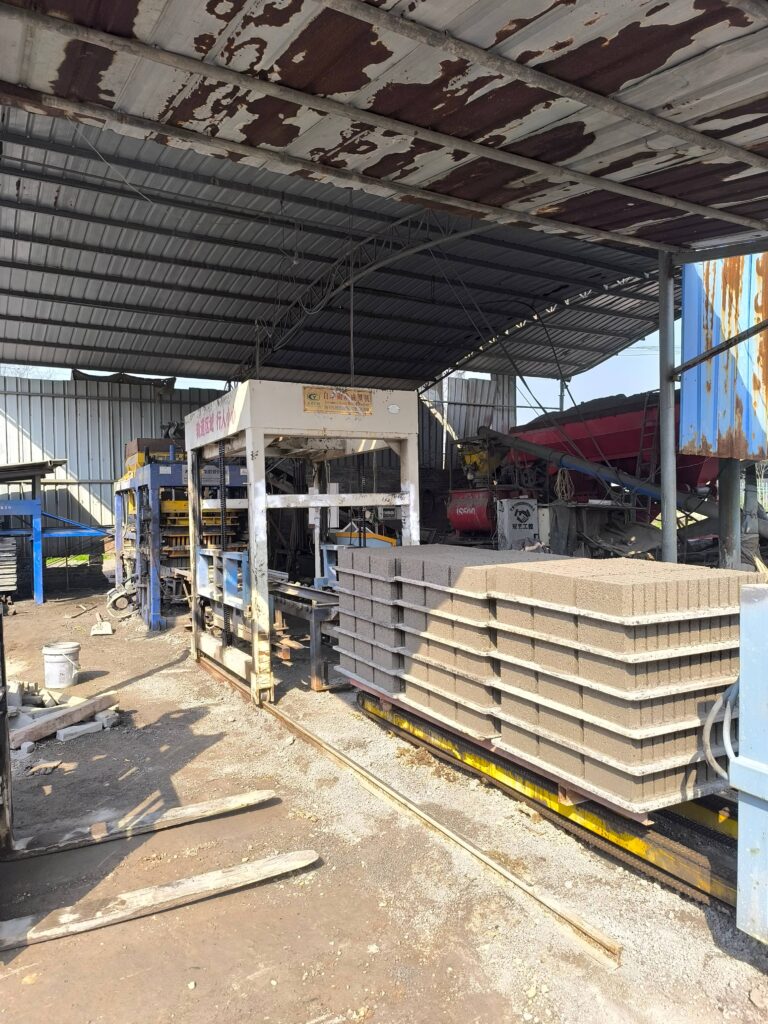
Soliede Blokvervaardigingsmasjinerie
Inleiding
Binne die diverse ekosisteem van baksteen- en blokproduksie-toerusting, beklee die soliede blokmasjien 'n kritieke posisie, ontwerp vir die grootskaalse vervaardiging van 'n fundamentele konstruksiekomponent: die soliede betonblok. Vir verspreiders, handelaars en verkrygingsspesialiste is 'n diep begrip van hierdie spesifieke masjinerie-segment noodsaaklik om 'n konstante en hoë-aanvraag-mark aan te spreek. Soliede blokke dien as die ruggraat vir fondamente, lasdraende mure, sypaadjies en infrastruktuurprojekte waar maksimum druksterkte en duursaamheid nie-onderhandelbaar is.
Kern Definisie en Funksionele Spesialisering
'n Soliede blokmasjien is 'n gespesialiseerde tipe hidrouliese of vibrasie-kompaksiepers wat uitsluitlik of hoofsaaklik ontwerp is vir die vervaardiging van soliede, nie-holte betonsteen-eenhede (BSE). Sy bepalende kenmerk is die afwesigheid van kernvormende meganismes binne die vorm, wat alle toegepaste energie fokus op die eenvormige verdigting van 'n volle materiaalmassa. In teenstelling met universele masjiene wat aanpasbaar is vir verskeie hol produkte, is hierdie toerusting dikwels ontwerp vir topprestasie in die skep van 'n enkele, hoë-waarde produk tipe.
- Die Imperatief van Maksimum Verdigtingsbeleid
- Die primêre ingenieursdoel is om die hoogste moontlike bulkdigtheid in die voltooide blok te bereik. Soliede blokke verkry hul strukturele waarde uit massa en die innige binding van aggregaatdeeltjies. Die masjien is dus ontwerp om uiters hoë verdigingsdruk te lewer en te handhaaf—dikwels hoër as dié wat vir standaard holblokproduksie gebruik word—om leemtes uit te skakel, porositeit te verminder en die sementbindmiddel regdeur die hele eenheid te aktiveer. Dit lei tot voortreflike druksterkte, laer waterdeurlaatbaarheid en verbeterde weerstand teen impak en verwering.
- Materiaalstelsel Optimering
- Hierdie masjiene word tipies gepaard met 'n spesifieke reeks betonmengselontwerpe. Die optimale mengsel vir soliede blokproduksie bevat dikwels 'n goed-gegradeerde aggregaatmengsel met 'n beheerde sand-tot-sementverhouding, geoptimaliseer vir maksimum digtheid onder druk eerder as vir vloei om kerne. Die masjinerie se voer- en kompaksiestelsels is gekalibreer om hierdie stywer, dikwels nul-sakmengsel doeltreffend te hanteer, wat konsekwente vulling en eenvormige drukkerspreiding oor die hele vormholte verseker.
- Onderskeid tussen Holblok- en Plaveiselmasjinerie
- Terwyl dit in basiese tegnologie oorvleuel, bestaan daar sleutelonderskeidingsfaktore:
- Vs. Holblokmasjiene:Die afwesigheid van komplekse kernstawe en verwante uitwerpingsmeganismes vereenvoudig die vormontwerp en -onderhoud. Die masjien se volle perskrag word op ’n soliede materiaalkolom gerig, wat verskillende raam- en hidrouliese stelseloptimaliserings moontlik maak.
- Vs. Plaveermasjiene:Plaveisels benodig hoë druk, maar is tipies dunner. Soliede blokmasjiene word gebou om 'n baie dieper massa materiaal te kompakteer, wat langer slaglengtes, groter plaatstabiliteit en soms aangepaste vibrasieprotokolle vereis om te verseker dat digtheid konsekwent van bo na onder van die blok is.
- Terwyl dit in basiese tegnologie oorvleuel, bestaan daar sleutelonderskeidingsfaktore:
Tegniese Argitektuur en Operasionele Dinamika
The efficiency of a solid block machine is a product of its integrated subsystems, each contributing to the goal of producing a flawless, high-density unit.
- The Press Frame and Stability System
- Given the extreme forces involved, the structural integrity of the machine’s frame is paramount. It is constructed from heavy-duty steel plate or reinforced box sections to resist deflection under full load. This rigidity ensures that the compaction force is applied perfectly vertically and evenly, preventing minute distortions that could lead to variations in block height or density. A stable, massive frame is the non-negotiable foundation for precision.
- High-Pressure Hydraulic and Compression System
- The heart of the machine is a high-tonnage hydraulic system. It features a powerful pump, large-diameter cylinders, and a robust valve block capable of generating and holding pressures significantly higher than those used for lighter units. The compression cycle often includes a pre-compaction phase to settle material, followed by a sustained main pressure phase with a “dwell time” to allow stress relaxation within the compacted matrix, resulting in a more stable green block.
- Mold Design for Solid Block Production
- The mold assembly is simplified yet must be exceptionally robust. It consists of a solid-walled mold box and a single, flat, or slightly profiled compression head. The internal surfaces are hardened and often chrome-plated to reduce friction with the sticky concrete mix and facilitate smooth ejection. Without cores, the focus is on achieving perfect internal corners and consistent block dimensions across the entire production run. Quick-release mechanisms allow for efficient mold changes between different solid block sizes (e.g., 4-inch, 6-inch, 8-inch thicknesses).
- Feeding and Material Metering Mechanism
- Consistency begins with the feed. The machine employs a volumetric feeder—a feed drawer or box—that travels over the empty mold, depositing an exact amount of the dry or semi-dry concrete mix. The accuracy of this metering is critical; too little material results in an under-filled, weak block, while too much can cause over-pressurization, mold damage, or inconsistent block height. Advanced systems may include a pre-compaction or leveling device within the feeder to ensure an even initial distribution of material in the mold.
Product Output and Application Spectrum
The specialization of this machinery yields a product with distinct advantages for targeted construction applications.
- Foundation and Sub-Structural Work
- Solid blocks are the material of choice for footing courses, basement walls, and retaining structures due to their high load-bearing capacity and resistance to moisture penetration from soil. The machine’s output is engineered to meet the stringent strength requirements (often ASTM C90 Grade N or S) for these critical, below-grade applications.
- High-Strength Load-Bearing Walls
- In multi-story construction or industrial buildings, solid blocks provide the necessary compressive strength for load-bearing walls. The uniformity and dimensional accuracy from a dedicated machine ensure level courses and predictable structural performance.
- Paving, Flooring, and Heavy-Duty Surfaces
- Solid blocks produced on these machines, when formulated with wear-resistant aggregates, are used as heavy-duty paving blocks, factory flooring units, and in port or logistics yard surfacing. Their monolithic structure withstands point loads and abrasion far better than hollow units.
- Specialized Infrastructural Components
- The machinery can be adapted to produce solid blocks for specific infrastructural uses, such as sound barrier walls, security barriers, or large-format landscaping units, where mass and durability are key functional requirements.
Strategic Commercial and Operational Considerations
For the distributor, positioning a solid block machine requires highlighting its specialized value proposition.
- Economic Rationale for Specialization
- A client whose primary market is foundational work or heavy construction may find a dedicated solid block machine more efficient and cost-effective than a versatile machine that compromises on peak solid block performance. The higher output rate, lower maintenance (no core systems), and optimized wear parts for a single product type can lead to a lower cost per unit and faster return on investment for this specific niche.
- Operational Simplicity and Reliability
- The relative mechanical simplicity compared to hollow block machines—with fewer moving parts in the mold area—often translates to higher uptime, easier operator training, and reduced maintenance complexity. This reliability is a powerful selling point for production environments where consistent output is critical to fulfilling large contracts.
- Quality Assurance and Market Reputation
- A machine dedicated to solid blocks is perceived as a tool for producing a premium, high-specification product. This enhances the manufacturer’s reputation for quality and reliability in the market, allowing them to command better prices for a superior structural component. Distributors can leverage this to help clients build a strong brand in the construction sector.
Conclusion
The solid block machine exemplifies the principle of optimization through specialization in construction equipment. It is not a generic press but a precision instrument engineered to solve a specific problem: the efficient, high-volume production of maximally dense and strong concrete masonry units. Its value lies in its focused design—from its massively stable frame and high-pressure hydraulics to its simplified yet robust mold system—all converging to deliver a product of uncompromising structural integrity.
For the astute distributor, success lies in identifying clients whose business strategy aligns with this specialization. This includes foundation contractors, suppliers to large-scale infrastructural projects, and manufacturers aiming to dominate the market for high-strength building components. By articulating the technical advantages, operational efficiencies, and superior product economics of a dedicated solid block machine, distributors provide more than just equipment; they offer a strategic pathway to capturing a loyal and profitable segment of the construction materials market. In an industry where strength and reliability are paramount, this machinery stands as a foundational technology for building the physical world.
Frequently Asked Questions (FAQ)
Q1: Can a solid block machine also produce hollow blocks with a simple mold change?
A: Generally, no. A true solid block machine lacks the mechanical and control systems necessary for hollow block production. These include:
- Core Rods and their attachment points within the mold.
- The synchronized ejection system to retract cores before lifting the mold box.
- Specific vibration settings to ensure material flows around cores.
Converting a solid block machine to produce hollow blocks would require extensive, costly redesign, essentially building a new machine. It is purpose-built for solid products.
Q2: What is a typical compressive strength range for blocks produced on a dedicated solid block machine?
A: With a proper mix design (adequate cement content and well-graded aggregates) and sufficient machine pressure, dedicated solid block machines can consistently produce blocks with compressive strengths ranging from 7 MPa (1000 psi) to over 20 MPa (2900 psi). For comparison, this often meets or exceeds the strength of standard hollow blocks and is suitable for the most demanding structural applications.
Q3: Does the lack of cavities affect the curing process of solid blocks?
A: Yes, it requires careful management. Solid blocks have a much larger mass-to-surface-area ratio than hollow blocks. This means moisture trapped in the center takes longer to equilibrate with the environment. Proper curing—keeping the blocks moist under cover for a sufficient period (often 7-14 days)—is even more critical to prevent surface cracking from rapid drying and to ensure full strength development throughout the entire depth of the block.
Q4: Is the energy consumption per block higher for a solid block machine compared to a hollow block press?
A: Typically, yes, on a per-unit basis. Compacting a solid mass of material to very high density requires more mechanical energy than compacting a hollow block of the same face dimensions. However, this is offset by the higher product value and the fact that the machine may have a faster cycle time for a solid block (no complex core movements), potentially leading to higher overall energy efficiency in terms of production output per kilowatt-hour.
Q5: What are the key maintenance focus areas for this type of machine?
A: Maintenance priorities center on the systems承受ing extreme stress:
- Hidrouliese Stelsel: Regular monitoring of fluid quality, filter changes, and inspection of hoses and seals for high-pressure leaks.
- Mold and Compression Head: Inspection for wear on the hardened surfaces and ensuring all clamping mechanisms are secure to prevent flash.
- Voerstelsel: Ensuring the volumetric feeder delivers consistent amounts and does not wear unevenly.
- Guide Columns and Bushings: Regular lubrication and inspection for alignment, as any play here directly affects block dimensional accuracy.
