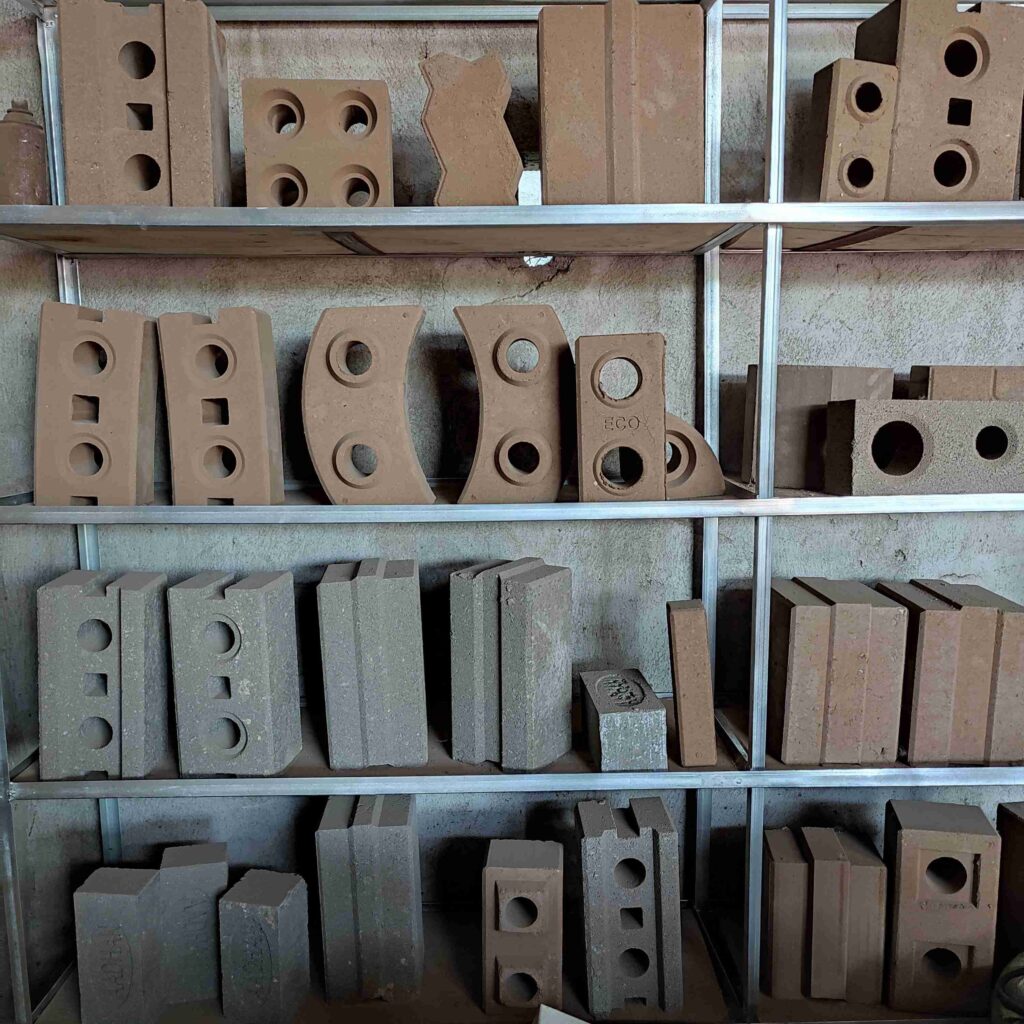
أولاً: تعريف التكنولوجيا: المبادئ الأساسية وتدفق العملياتآلة صنع الطوب الطيني
آلة صنع الطوب الطيني هي نظام صناعي مصمم لتشكيل الطين البلاستيكي في أشكال دقيقة (طوب، بلاط، كتل) يتم تجفيفها بعد ذلك وحرقها في فرن لتحقيق خصائصها السيراميكية النهائية. تختلف هذه العملية اختلافًا جوهريًا عن المعالجة الطبيعية للخرسانة أو تثبيت التربة.
أ. عملية البثق الأساسية
التكنولوجيا السائدة لإنتاج الطوب الطيني الحديث هي البثق، وهي عملية تشكيل مستمرة.
- غرفة التفريغ والمسمار اللولبيفي القلب يقع غرفة بثق لإزالة الهواء. يُغذى الطين المُعد في هذه الغرفة حيث ينقله برغي دوار قوي إلى الأمام. تقوم مضخة تفريغ حرجة بإزالة الهواء المحبوس داخل كتلة الطين. هذه العملية لإزالة الهواء غير قابلة للتفاوض، لأنها تمنع التصفيح، وتقلل من التشقق أثناء التجفيف/الحرق، وتزيد بشكل كبير من كثافة وقوة المنتج النهائي.
- القالب والبثق:يتم دفع الطين المضغوط والخالي من الهواء تحت ضغط عالٍ عبر قالب فولاذي مصمم بدقة. يشكل المقطع الداخلي للقالب الطين إلى عمود صلب مستمر بأبعاد خارجية دقيقة، وإذا كان ذلك مناسباً، بنمط التثقيب الداخلي للطوبة النهائية.
- قطع الأسلاك:يخرج عمود الطين الأملس المستمر (أو "السبيكة") من القالب. يقوم نظام قطع، يستخدم عادةً أسلاكًا مشدودة على إطار متحرك تردديًا، بتقطيع العمود إلى وحدات طوب فردية على فترات دقيقة. هذه الخطوة تحدد طول الطوبة.
ب. المراحل الأساسية بعد التشكيل: التجفيف والحرق
آلة التشكيل هي فقط الفصل الأول في مسرحية صناعية من ثلاثة أجزاء. ناتجها هو الطوب "الأخضر"، الهش والمشبع بالماء.
- تجفيفالطوب الأخضر يحتوي على نسبة ماء ميكانيكي كبيرة (عادة 15-25٪). يجب تجفيفه ببطء وبشكل موحد في غرف مجهزة أو مباني مجففة لتقليل محتوى الرطوبة إلى أقل من 3٪. التجفيف السريع أو غير المتسبب في تشققات وتشوهات. تستخدم المصانع الحديثة مجففات نفقية آلية للتجفيف المستمر والفعال.
- التقوية (عملية التزجيج):هذه هي الخطوة التحويلية. تُحرق الطوب الجاف في أفران بدرجات حرارة تتراوح بين 900°م و1200°م. يُطلق الحرارة تفاعلات فيزيوكيميائية معقدة:
- Sintering: Clay particles begin to fuse at their boundaries.
- Vitrification: Fluxing materials melt, forming a glassy phase that fills pores and bonds particles.
- This process creates the permanent hardness, strength, weather resistance, and fixed color of the ceramic product. Common kiln types include energy-efficient tunnel kilns (continuous) and periodic kilns like Hoffman kilns.
II. Key Machine Types and Configurations
Clay brick machinery varies in scale, automation, and specific forming methods beyond standard extrusion.
A. Stiff-Mud Extruders (The Industry Standard)
This is the most common type, using clay with a moisture content of 12-18%, giving it a “stiff” but plastic consistency.
- Characteristics: Produces dense, sharp-edged bricks with high dimensional accuracy. Excellent for producing perforated and hollow bricks due to the stability of the extruded column. Essential for high-volume, modern brick plants.
- Commercial Application: The core equipment for suppliers targeting large-scale construction projects, architectural brick supply, and industrial markets requiring consistent, high-specification products.
B. Soft-Mud Machines (For Traditional or Specialized Textures)
These handle clay with higher moisture content (up to 30%), making it “soft.”
- Forming Process: The clay is often molded rather than extruded under high pressure. In some systems, the soft clay is pressed into individual sand-coated molds to produce bricks with a characteristic “sand-struck” or “water-struck” textured surface.
- Characteristics: Can produce bricks with a more irregular, hand-made aesthetic prized in restoration and high-end architectural projects. Generally has a lower production rate than stiff-mud extrusion.
- Commercial Application: Serves a niche but high-value market. Important for distributors in regions with demand for historic or artisanal-style brick facades.
C. Complete Plant vs. Standalone Extruder
A critical distinction for investment planning.
- Standalone Extrusion Machine: Includes the extruder, cutter, and perhaps a simple conveyor. Assumes the client already has or will separately procure drying and firing infrastructure (kilns). This is a modular approach for upgrading existing facilities.
- Turnkey Plant Project: A comprehensive supply that includes the entire production line: clay preparation equipment (crushers, screens, mixers), the extruder and cutter, automated setting systems for dryers and kilns, the dryer(s) themselves, the kiln(s), and cooling/handling/packaging systems. This is a major capital project.
III. Strategic Commercial Considerations for B2B Stakeholders
Dealing in clay brick machinery requires a distinct set of commercial and technical evaluations compared to other brick-making technologies.
A. Market Analysis and Client Profiling
Success depends on accurate market alignment.
- Raw Material Dependency: The business is geographically tethered to viable clay deposits. A feasibility study including clay testing (composition, plasticity, firing characteristics) is often a prerequisite. Distributors must be aware of local geology.
- Energy-Intensive Process: The firing process requires significant and reliable energy input (natural gas, coal, biomass, electricity). The cost and availability of energy are primary determinants of a client’s long-term operational viability.
- End-Product Market: Is the demand for common engineering bricks, facing bricks in various colors and textures, or specialized refractory bricks? Each has implications for the required machine precision and kiln temperature capabilities.
B. Investment Scale and Complexity
Clay brick production is a heavy industrial undertaking.
- High Capital Expenditure (CAPEX): A complete plant represents one of the largest investments in the construction materials machinery sector, often orders of magnitude greater than an equivalent-output concrete block plant.
- Technical Complexity and Support: The integration of mechanical extrusion with thermal process engineering (drying and firing) demands sophisticated technical knowledge. After-sales support must cover not just the extruder, but also kiln atmosphere control, combustion systems, and thermodynamics.
- Longer Return on Investment (ROI) Horizon: Due to the high CAPEX and significant operating energy costs, the ROI period is typically longer. Business models must be based on high-volume output, premium product pricing, or both.
C. Value Proposition and Competitive Advantages
Understanding the unique selling points of clay brick is crucial.
- Product Superiority: Clay bricks offer exceptional durability, fire resistance, thermal mass, and low maintenance. They do not fade, spall easily, or degrade in UV light. This provides a powerful technical narrative.
- التنوع الجمالي: Through the use of different clays, surface treatments (sanding, glazing), and firing techniques, an immense variety of colors and textures can be achieved, meeting specific architectural design needs.
- Sustainability Narratives: Modern clay brick plants can utilize methane from landfills as fuel and are increasingly energy-efficient. The product itself is 100% natural, recyclable, and has a long lifespan, contributing to sustainable building credentials.
خاتمة
The clay brick making machine is the engine of a sophisticated, capital-intensive, and highly specialized industrial sector. For the B2B professional, it represents a high-value, high-complexity product line that demands deep technical understanding and strategic market positioning. Success in this arena requires moving beyond equipment sales to becoming a consultant on the entire ceramic production ecosystem—from clay pit analysis to kiln thermodynamics.
Distributors and dealers who cultivate expertise in this field position themselves to serve a premium market segment where product quality, consistency, and performance are paramount. The client profile is typically an established industrialist or a significant investor, making the sales cycle consultative and relationship-based. By comprehensively understanding the extrusion process, the critical importance of drying and firing, and the substantial commercial dynamics at play, you can provide indispensable guidance. This enables your clients to make informed investments in a technology that produces one of humanity’s oldest, yet most enduringly reliable, building materials: the fired clay brick.
الأسئلة الشائعة (FAQ)
Q1: What are the main advantages of clay bricks produced by this machinery over concrete blocks?
أ: The advantages are rooted in material science. Clay bricks offer superior long-term durability and weathering resistance, excellent fire rating (non-combustible), high قوة الانضغاط, and natural thermal mass for energy efficiency. They also provide unparalleled aesthetic variety in color and texture that is permanent, as the color is fired in, not painted on. Concrete blocks can be more susceptible to efflorescence and moisture penetration over time in certain environments.
Q2: Is the clay extrusion process suitable for making interlocking bricks?
أ: Yes, but with important caveats. Extrusion can produce interlocking clay bricks, but the die design for the interlocking profile is complex and the green (unfired) interlocking brick is very fragile. Handling, drying, and firing these delicate shapes require extreme care to prevent breakage. The process is more challenging and has a higher potential waste rate than producing standard rectangular bricks.
Q3: What is the single most critical factor for a client’s success with a clay brick plant?
أ: Consistent access to suitable clay and affordable energy. Without a reliable, homogeneous clay supply that fires to the desired color and strength, the business cannot produce a consistent product. Without cost-effective energy for the high-temperature kiln, the operational costs will be unsustainable. These two factors must be secured before any machinery investment is considered.
Q4: How does the level of automation differ in a clay brick plant compared to a concrete block plant?
أ: Automation is highly advanced but focused on different stages. In a modern clay plant, automation is critical in material handling and setting. Robots or automated setting machines precisely place fragile green bricks onto kiln cars or dryer cars. The firing process itself in a tunnel kiln is fully automated with computerized temperature and atmosphere control. The extrusion process is also automated, but the complexity lies in integrating these mechanical and thermal automation systems seamlessly.
Q5: Can a small or medium enterprise (SME) realistically enter the clay brick manufacturing business?
أ: It is challenging but possible in specific contexts. A full-scale tunnel kiln plant is often prohibitive. However, SMEs can focus on niche markets using smaller, periodic kilns (like shuttle kilns) and simpler extrusion equipment to produce specialty or artisanal bricks. The business model would be based on lower volume but higher value-per-unit, targeting architectural restoration, custom home builds, or local heritage projects. The investment and technical knowledge required are still significant but on a different scale than an industrial plant.