
الدليل الشامل لآلات صناعة الطوب: الأنواع، المزايا، وكيفية الاختيار
بواسطة فريق هندسة حلول البناء العالمي | مع أكثر من 25 عامًا في ابتكار معدات البناء وتصميم المصانع.
يتم إعادة تشكيل مشهد البناء العالمي من خلال الأتمتة، مما يؤدي إلى تحسين الكفاءة والاستدامة والنطاق. وفي صميم هذا التحول - الذي يدفع المشاريع من مجمعات الإسكان الميسور التكلفة إلى البنية التحتية الحيوية - تقع قطعة تكنولوجية محورية: آلة تصنيع الطوب. إنها ليست مجرد أداة، بل هي محرك البناء الحديث، حيث تحول المواد الخام المحلية إلى اللبنات الأساسية لعالمنا.
يخدم هذا الدليل كمرجع شامل وحيادي. سواء كنت مقاولاً تقيّم الإنتاج في الموقع، أو بناءً تبحث عن جودة متسقة، أو رائد أعمال تطلق مشروعاً لصناعة الطوب، أو مدير مشترياتٍ يحصل على المعدات، فإن هدفنا هو تقديم الوضوح. مبني على معايير الصناعة، ومبادئ الهندسة الأساسية، وعقود من المعرفة العملية التشغيلية، سيزودك هذا المقال بالرؤى اللازمة لاتخاذ قرار مستنير. ستكتسب فهماً واضحاً لأنواع الآلات المختلفة، وفوائدها الملموسة، ومعايير الاختيار الحاسمة، وأفضل الممارسات التشغيلية الأساسية، ونظرة واقعية للتكاليف وعائد الاستثمار. دعونا نبني معرفتك من الأساس.
ما هي آلة صناعة الطوب؟ شرح التكنولوجيا الأساسية
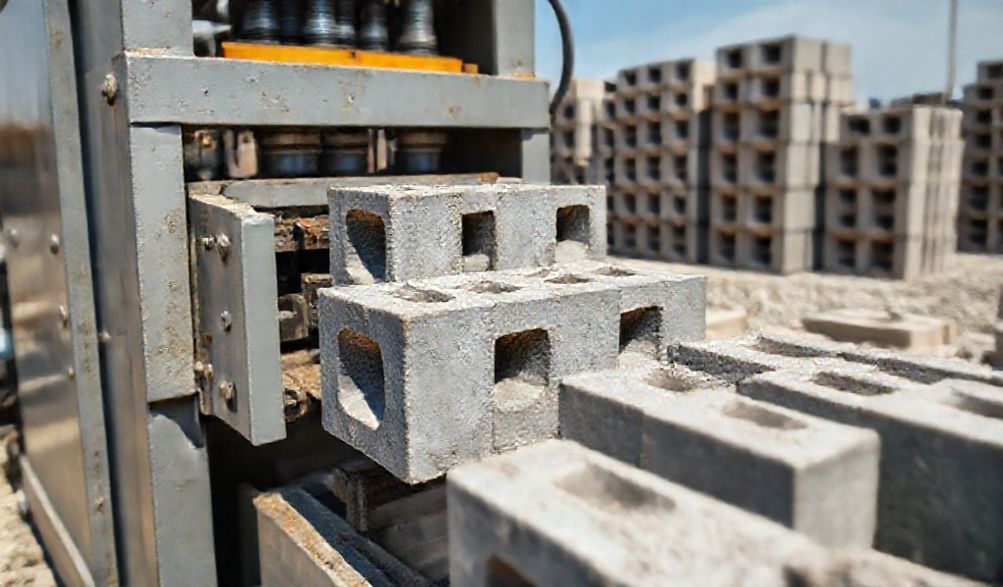
آلة صناعة الكتل الإنشائية، التي تُعرف عادةً باسم آلة صنع الطوب أو آلة صنع البلاط، هي جهاز يُؤتمت عملية تصنيع الكتل الخرسانية والأرصفة وغيرها من وحدات البناء. فهي تحل محل الأساليب اليدوية كثيفة العمالة وغير المتسقة بنظام ميكانيكي يضمن الدقة والسرعة والقابلية للتكرار.
المبدأ الأساسي: من المادة الخام إلى البلوك النهائي
العملية الأساسية، رغم اختلافها حسب نوع الآلة، تتبع تسلسلاً ثابتاً:
- التغذية والخلط:يتم تغذية المواد الخام – عادةً الأسمنت والرمل والركام (مثل الحصى أو الحجر المكسر) والماء – في الخلاط. غالبًا ما تدمج المصانع الحديثة أنظمة خلط آلية للتحكم الدقيق في النسب.
- الضغط والتشكيل:يتم نقل الخرسانة المخلوطة إلى قالب (أو "صندوق القالب") على الماكينة. وهنا تحدث عملية حاسمة:
- الضغط:يتم تطبيق القوة إما عن طريق الضغط الهيدروليكي، أو الاهتزاز، أو مزيج من الاثنين معًا. وهذا يزيل جيوب الهواء ويضغط الخرسانة بشكل كثيف، وهو أمر أساسي لقوة البلوك النهائية.
- صبالقالب يعطي الكتلة شكلها (مجوفة، صلبة، بلاطة، إلخ).
- الطرد (التجريد):يتم دفع الكتلة الطازجة، التي لا تزال رطبة، خارج القالب على منصة نقالة، أو حزام ناقل، أو مباشرة على رف المعالجة.
- التداوييتم نقل الكتل إلى منطقة معالجة حيث تكتسب قوة مع مرور الوقت من خلال الترطيب المتحكم فيه. يمكن القيام بذلك عن طريق غرف المعالجة بالبخار لاكتساب القوة بسرعة أو عن طريق المعالجة الهوائية البسيطة.
المكونات الرئيسية للآلة:
* الخلاط:يخلط المواد الخام بشكل متجانس.
* هوبر:يُمسك ويُغذي الخرسانة المختلطة لنظام التشكيل.
* قالب/قالب الصب:التجويف القابل للتبديل الذي يحدد شكل وحجم الكتلة.
* نظام الضغطالآلية الأساسية — المكابس الهيدروليكية أو الهزازات.
* نظام التحكمتتراوح من الروافع البسيطة إلى ألواح متحكمات المنطق القابلة للبرمجة (PLC) المتقدمة لأتمتة الدورة بأكملها.
أنواع الكتل المنتجة
المرونة هي ميزة رئيسية. يمكن لآلة واحدة غالبًا إنتاج منتجات متعددة بمجرد تغيير القالب.
* الطوب المجوف: The most common, used for walls. Their hollow cores reduce weight and improve insulation.
* كتل صلبة: Used for foundations, load-bearing walls, and paving.
* البلاطات الحجرية (البلاطات المتداخلة): For driveways, walkways, and patios. Often produced with color pigments.
* الكتل المتشابكة: Designed to lock together without mortar, ideal for retaining walls and rapid construction.
* Curbstones & Landscape Blocks: For edging, drainage channels, and decorative purposes.
Standard sizes vary by region, but common hollow block dimensions include 4-inch, 6-inch, and 8-inch thicknesses.
Types of Construction Block Making Machines
Choosing the right type is your first major decision. Machines are categorized by their level of automation, mobility, and production method.
حسب التشغيل: آلات يدوية، وشبه آلية، وآلية بالكامل
-
آلات صناعة الطوب اليدوية
- حالة الاستخدام:المشاريع متناهية الصغر، المواقع النائية بدون كهرباء، أو الشركات الناشئة ذات الميزانية المنخفضة جداً.
- كيف يعمل: Operators manually fill the mold, engage a lever for compaction, and remove the block. All material handling is manual.
- مزايا: Lowest capital cost, no power required, simple maintenance.
- سلبيات: Very low output (e.g., 200-500 blocks per day), high labor intensity, inconsistent quality, and physical strain on operators.
-
آلات صناعة الكتل شبه الأوتوماتيكية:
- حالة الاستخدام: The ideal balance for small to mid-scale businesses and contractors. Perfect for producing 1,000 to 5,000 blocks per day.
- كيف يعمل: The core compaction and molding cycle is mechanized (often via a hydraulic press or vibrating table). However, tasks like feeding raw material into the hopper, moving blocks onto curing racks, and pallet handling may require some manual intervention.
- مزايا: Excellent balance of output, quality, and cost. Lower skill requirement than manual, better consistency, and a strong return on investment for growing operations.
-
آلات صناعة البلوك الآلية بالكامل:
- حالة الاستخدام: High-volume commercial block plants and large infrastructure projects requiring output of 10,000+ blocks per shift.
- كيف يعمل: The entire process is automated via PLC controls. This includes automatic batching, mixing, conveying, molding, block ejection, pallet handling, and stacker/loader systems. Operators primarily monitor the system.
- مزايا: Maximum output with minimal labor, unparalleled consistency, integrated curing systems (like stacker-cranes), and high efficiency.
- سلبيات: High initial investment, significant space and utility requirements, and need for skilled technicians for maintenance.
By Mobility: Stationary vs. Mobile Block Making Machines
- النباتات الثابتة: These are fixed installations, typically the semi-automatic and fully automatic models. They are set up on a concrete foundation at a production yard. All raw materials are transported to the plant, and finished blocks are shipped to construction sites.
- Mobile Block Making Machines (Egg-Laying Type): These revolutionary machines are designed to produce blocks directly on the construction site. After compacting and molding a block, the machine moves forward, “laying” the cured block on the ground like an egg. The key benefit is the drastic elimination of block transportation costs, which can be a major project expense. They are ideal for large, on-site projects like housing developments.
By Production Method: Hydraulic Press vs. Vibrator Press Machines
-
مكابس الهيدروليك: These use high-pressure hydraulic cylinders to compact the concrete mix in the mold.
- مزايا: Produces blocks with very high compressive strength and density. The surface finish is smooth and precise. The process is quieter and generally more consistent, especially with stiff concrete mixes. It’s the preferred method for high-quality pavers and solid blocks.
- اعتبارات: Often has a higher initial cost and may have a slightly slower cycle time than some vibrator models.
-
Vibrator Press Machines: These use high-frequency vibration to settle and compact the concrete, often combined with a pressing head.
- مزايا: Fast cycle times, effective for standard hollow blocks, and can be more cost-effective upfront. Well-suited for mixes with a higher slump (wetter consistency).
- اعتبارات: The vibration can be noisy. Achieving the very highest densities and strengths can be more dependent on mix design. Wear on molds can be different compared to hydraulic systems.
In practice, many modern semi- and fully-automatic machines use a hybrid approach—vibration with hydraulic pressure—to optimize both speed and block quality.
Key Benefits of Using a Modern Blocks Machine
Investing in a modern block making machine is a strategic decision that delivers measurable advantages across your project or business.
كفاءة لا مثيل لها وإنتاجية عالية
A single semi-automatic machine operated by 3-4 workers can easily produce over 3,000 standard blocks in an 8-hour shift. In contrast, a team of skilled manual laborers might produce 500-800. This scalability allows you to meet tight project deadlines or scale your manufacturing business to fulfill larger contracts.
Superior Consistency and Quality Control
Manual production is susceptible to human error, leading to variations in water-cement ratio, compaction, and dimensions. A machine enforces uniformity. Every block has identical dimensions, density, and weight. This leads to:
* Faster, easier construction for masons.
* Less mortar usage.
* Consistent structural performance, reliably meeting relevant standards like المواصفة القياسية الأمريكية C90 (Standard Specification for Loadbearing Concrete Masonry Units) or IS 2185 (Indian Standard).
تخفيض كبير في التكاليف على المدى الطويل
While there’s an upfront investment, the long-term savings are substantial:
* Labor Cost: Drastically reduces the number of workers needed per block produced.
* هدر المواد: Precise batching and mixing minimize spillage and rejected blocks.
* Transportation: For mobile on-site machines, this cost can be nearly eliminated.
* تحليل العائد على الاستثمار: Many small to medium enterprises report a full return on investment within 12-24 months based on production savings and increased sales capacity.
Versatility and Design Flexibility
With a library of interchangeable molds, one machine becomes a multi-product factory. You can switch from producing standard hollow blocks to decorative pavers or interlocking landscape blocks in a matter of hours, allowing you to respond to market demand and diversify your product line. Adding color pigments further expands your offerings.
Sustainability Advantages
Modern block machines align with green construction principles:
* Use of Local Materials: They can utilize on-site soil (for stabilized earth blocks) or industrial by-products like fly ash, reducing the carbon footprint associated with material transport.
* تقليل النفايات: Precise production means less concrete waste sent to landfills.
* كفاءة الطاقة: Newer models are designed for optimal power consumption, and some can even be adapted to run on alternative energy sources.
How to Choose the Right Machine: A Buyer’s Checklist
اختيار الآلة ليس عن العثور على "الأفضل"، بل عنright one for your specific context. Use this checklist to guide your evaluation.
Assess Your Project Requirements
- Daily/Weekly Output Needed: Be realistic about your current and near-future needs. Overbuying can strain finances; underbuying can cost you contracts.
- أنواع الكتل وأحجامها: List all the products you intend to make now and in the next few years.
- المساحة المتاحة: Do you have a large yard for a stationary plant, or do you need a compact, mobile solution?
- Project Duration: For a single, long-term project, a mobile machine might be ideal. For an ongoing business, a stationary plant is better.
Evaluate Raw Material Availability
The machine must be compatible with your local materials. Provide your supplier with samples of your sand, aggregate, and any potential additives (fly ash, soil). The mix design and machine settings (vibration frequency, pressure) will need to be calibrated accordingly.
Analyze Power Source and Utility Needs
- كهربائي Clean, quiet, and efficient, but requires a reliable grid connection or large generator.
- ديزل Offers complete independence from the grid, crucial for remote sites. Consider fuel costs and emissions.
- هجين: Some models offer flexibility, a significant advantage in regions with unstable power.
Consider After-Sales Support and Service
This is arguably the most critical factor for long-term success and a direct test of a supplier’s الثقة.
* الضمان: What is covered and for how long?
* قطع الغيار: Is there a local warehouse or guaranteed supply chain for critical wear parts like molds, hydraulic seals, and vibrator motors?
* الدعم الفني Does the supplier offer installation supervision, operator training, and remote or on-call troubleshooting? A reputable company will have a dedicated service team.
Budgeting: Initial Investment vs. Total Cost of Ownership
Look beyond the sticker price. The Total Cost of Ownership (TCO) includes:
* Machine purchase price.
* Shipping, installation, and foundation costs.
* Cost of auxiliary equipment (mixer, conveyor, pallets).
* Estimated costs for power, labor, and routine maintenance.
* Training costs for operators.
A slightly more expensive machine from a reputable supplier with low maintenance costs often has a lower TCO than a cheap machine with no support.
Operational Best Practices and Maintenance
A machine is a long-term asset. Proper care maximizes its lifespan and ensures consistent output.
Safe Setup and Operation Procedures
- Foundation: Stationary machines require a level, reinforced concrete foundation as per the manufacturer’s specifications to absorb vibrations.
- سلامة المشغل Ensure all guards are in place. Operators must wear PPE (safety glasses, gloves, hearing protection near vibrators). Lock-out/tag-out procedures must be followed during maintenance.
Routine Maintenance Schedule for Longevity
- Daily: Clean the mixer, hopper, and mold cavities thoroughly after each shift. Check hydraulic oil levels and for leaks. Inspect bolts for tightness.
- Weekly: Lubricate all moving parts (pivots, guide rods) as per the manual. Check wear parts like mold liners and pressing heads.
- Monthly: Change hydraulic oil and filters as recommended. Inspect electrical connections and vibration motors. Perform a full system check.
Troubleshooting Common Issues
- Blocks Sticking in Mold: Usually caused by a worn or dirty mold, insufficient release agent, or an overly wet mix.
- Poor Compaction/Weak Blocks: Check vibration efficiency or hydraulic pressure. The most common cause is an incorrect mix design (too dry or too wet).
- Surface Cracks: Often due to improper curing (too fast drying), excessive vibration, or a high clay content in the sand.
FAQ: Your Questions About Construction Blocks Machines, Answered
Q1: What is the average production capacity of a standard block making machine?
Capacity varies wildly. A small manual machine may produce 400-600 blocks per day. A semi-automatic machine can produce 2,000-5,000 blocks in an 8-hour shift. Large fully automatic plants can exceed 10,000 blocks per shift. Always request capacity data based on a standard block (e.g., 4″ hollow block) for a fair comparison.
Q2: Can I use a blocks machine to start a business? What is the investment needed?
Absolutely. Block manufacturing is a viable business worldwide. The investment ranges from a few thousand dollars for a basic manual setup to $50,000+ for a semi-automatic plant with a mixer and conveyor. A solid business plan should account for machine cost, raw material inventory, land/space, utilities, labor, and market analysis.
Q3: What is the difference between concrete blocks and CLC/AAC blocks, and can the same machine produce both?
No, they require completely different machinery. Concrete blocks are dense, weight-bearing units made from a standard concrete mix. CLC (Cellular Lightweight Concrete) and AAC (Autoclaved Aerated Concrete) blocks are lightweight, insulating blocks made by introducing air bubbles into a cement-fly ash slurry, which then cures in a specialized autoclave. The production processes are not interchangeable.
Q4: How important is the curing process after block production?
It is critical. Curing is when concrete gains its strength. Improper curing (allowing blocks to dry out too quickly) can reduce final strength by 50% or more, leading to brittle, poor-quality blocks. Proper curing involves keeping the blocks moist and at a stable temperature for a minimum of 7 days, often using water sprinklers or steam chambers.
Q5: What are the most reputable brands or what should I look for in a manufacturer?
Rather than focusing on a single brand, evaluate manufacturers on these criteria:
* History & Reputation: Look for companies with at least 10-15 years of proven experience.
* Client Testimonials & References: Ask for contact details of previous clients in a similar region or business.
* الشهادات: Do they have ISO quality management certifications? Do their machines comply with relevant safety standards?
* Factory Visit: If possible, visit the manufacturing facility to assess their production quality and technical capability firsthand.
خاتمة
Choosing the right construction blocks machine is a foundational decision that directly impacts your productivity, project quality, and long-term profitability. From understanding the core technology of hydraulic versus vibration compaction to meticulously evaluating your output needs and a supplier’s after-sales support, each factor plays a vital role in your success.
In the world of construction and manufacturing, reliability is currency. Investing in robust technology from a trustworthy, experienced partner is not an expense—it is the cornerstone of a sustainable and profitable operation. The right machine doesn’t just make blocks; it builds your business and shapes the infrastructure of tomorrow.
Ready to find the perfect machine for your needs? Contact our expert engineers today for a free, no-obligation project assessment and a detailed quote tailored to your specific requirements.
<