
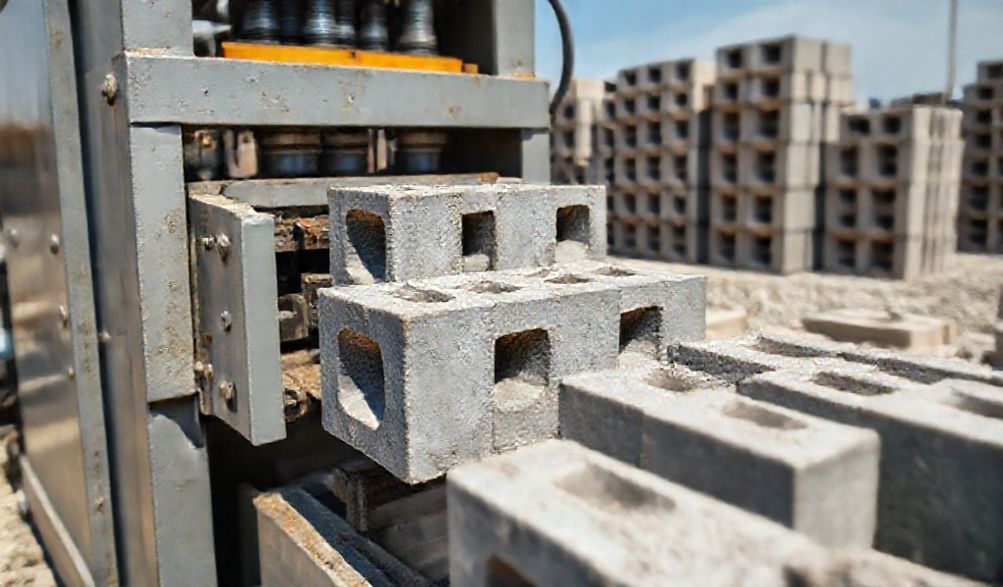
La Guía Definitiva de Máquinas para Bloques de Construcción: Tipos, Beneficios y Cómo Elegir
Por el Equipo de Ingeniería de Soluciones de Construcción Global | Con más de 25 años en innovación de maquinaria de construcción y diseño de plantas.
El panorama de la construcción global está siendo transformado por la automatización, impulsando la eficiencia, la sostenibilidad y la escala. En el centro de esta transformación, impulsando proyectos desde complejos de viviendas asequibles hasta infraestructuras críticas, se encuentra una pieza tecnológica fundamental: la máquina de bloques de construcción. Más que una simple herramienta, es el motor de la albañilería moderna, transformando materias primas locales en los bloques fundamentales de nuestro mundo.
Esta guía sirve como su recurso integral e imparcial. Ya sea que sea un contratista evaluando la producción en obra, un constructor buscando calidad consistente, un emprendedor lanzando un negocio de fabricación de bloques o un gerente de adquisiciones buscando equipos, nuestro objetivo es ofrecer claridad. Basado en estándares de la industria, principios fundamentales de ingeniería y décadas de conocimiento operativo práctico, este artículo le proporcionará las perspectivas necesarias para tomar una decisión informada. Obtendrá una comprensión clara de los diferentes tipos de máquinas, sus beneficios tangibles, criterios críticos de selección, prácticas operativas esenciales recomendadas y una visión realista de costos y ROI. Construyamos su conocimiento desde los cimientos.
¿Qué es una Máquina de Bloques de Construcción? Explicación de la Tecnología Central
Una máquina de bloques de construcción, comúnmente llamada máquina para hacer bloques o máquina para hacer ladrillos, es un dispositivo que automatiza el proceso de fabricación de bloques de concreto, adoquines y otras unidades de mampostería. Reemplaza métodos manuales, intensivos en mano de obra e inconsistentes con un sistema mecanizado que garantiza precisión, velocidad y repetibilidad.
El Principio Básico: De Materia Prima a Bloque Terminado
La operación central, aunque varía según el tipo de máquina, sigue una secuencia consistente:
- Alimentación y Mezcla:Las materias primas—generalmente cemento, arena, agregados (como grava o piedra triturada) y agua—se introducen en una mezcladora. Las plantas modernas suelen integrar sistemas de dosificación automatizados para un control preciso de las proporciones.
- Compactación y Moldeo:La mezcla de concreto se transfiere a un molde (o "caja de molde") en la máquina. Aquí ocurre un proceso crítico:
- Compactación:Se aplica fuerza, ya sea a través de presión hidráulica, vibración o una combinación de ambas. Esto elimina las bolsas de aire y compacta densamente el concreto, lo cual es esencial para la resistencia final del bloque.
- Moldeo:El molde le da al bloque su forma (hueco, sólido, adoquín, etc.).
- Expulsión (Despojo):El bloque recién formado, pero aún húmedo, es expulsado del molde sobre una paleta, una cinta transportadora o directamente sobre un estante de curado.
- Curado:Los bloques se trasladan a una zona de curado donde ganan resistencia con el tiempo mediante una hidratación controlada. Esto puede realizarse mediante cámaras de curado al vapor para obtener resistencia rápidamente o mediante un simple curado al aire.
Componentes Clave de la Máquina:
* Mezcladora:Combina las materias primas de manera uniforme.
* Hopper:Sostiene y alimenta el hormigón mezclado al sistema de moldeo.
* Molde/Matriz:La cavidad intercambiable que define la forma y el tamaño del bloque.
* Sistema de Compactación:El mecanismo central: gatos hidráulicos o vibradores.
* Sistema de Control:Va desde simples palancas hasta avanzados paneles de Controlador Lógico Programable (PLC) para automatizar todo el ciclo.
Tipos de Bloques Producidos
La versatilidad es una ventaja clave. Una sola máquina puede producir múltiples productos simplemente cambiando el molde.
* Bloques Huecos: The most common, used for walls. Their hollow cores reduce weight and improve insulation.
* Bloques Sólidos: Used for foundations, load-bearing walls, and paving.
* Adoquines (Pavimentos): For driveways, walkways, and patios. Often produced with color pigments.
* Bloques de Interconexión: Designed to lock together without mortar, ideal for retaining walls and rapid construction.
* Curbstones & Landscape Blocks: For edging, drainage channels, and decorative purposes.
Standard sizes vary by region, but common hollow block dimensions include 4-inch, 6-inch, and 8-inch thicknesses.
Types of Construction Block Making Machines
Choosing the right type is your first major decision. Machines are categorized by their level of automation, mobility, and production method.
By Operation: Manual, Semi-Automatic, and Fully Automatic Machines
-
Máquinas Manuales para Fabricar Bloques:
- Caso de Uso: Extremely small-scale projects, remote locations with no power, or very low-budget startups.
- Cómo funciona: Operators manually fill the mold, engage a lever for compaction, and remove the block. All material handling is manual.
- Pros: Lowest capital cost, no power required, simple maintenance.
- Contras: Very low output (e.g., 200-500 blocks per day), high labor intensity, inconsistent quality, and physical strain on operators.
-
Máquinas Semiautomáticas para Fabricar Bloques:
- Caso de Uso: The ideal balance for small to mid-scale businesses and contractors. Perfect for producing 1,000 to 5,000 blocks per day.
- Cómo funciona: The core compaction and molding cycle is mechanized (often via a hydraulic press or vibrating table). However, tasks like feeding raw material into the hopper, moving blocks onto curing racks, and pallet handling may require some manual intervention.
- Pros: Excellent balance of output, quality, and cost. Lower skill requirement than manual, better consistency, and a strong return on investment for growing operations.
-
Máquinas de Fabricación de Bloques Completamente Automáticas:
- Caso de Uso: High-volume commercial block plants and large infrastructure projects requiring output of 10,000+ blocks per shift.
- Cómo funciona: The entire process is automated via PLC controls. This includes automatic batching, mixing, conveying, molding, block ejection, pallet handling, and stacker/loader systems. Operators primarily monitor the system.
- Pros: Maximum output with minimal labor, unparalleled consistency, integrated curing systems (like stacker-cranes), and high efficiency.
- Contras: High initial investment, significant space and utility requirements, and need for skilled technicians for maintenance.
By Mobility: Stationary vs. Mobile Block Making Machines
- Plantas Estacionarias: These are fixed installations, typically the semi-automatic and fully automatic models. They are set up on a concrete foundation at a production yard. All raw materials are transported to the plant, and finished blocks are shipped to construction sites.
- Mobile Block Making Machines (Egg-Laying Type): These revolutionary machines are designed to produce blocks directly on the construction site. After compacting and molding a block, the machine moves forward, “laying” the cured block on the ground like an egg. The key benefit is the drastic elimination of block transportation costs, which can be a major project expense. They are ideal for large, on-site projects like housing developments.
By Production Method: Hydraulic Press vs. Vibrator Press Machines
-
Máquinas Prensas Hidráulicas: These use high-pressure hydraulic cylinders to compact the concrete mix in the mold.
- Ventajas: Produces blocks with very high compressive strength and density. The surface finish is smooth and precise. The process is quieter and generally more consistent, especially with stiff concrete mixes. It’s the preferred method for high-quality pavers and solid blocks.
- Consideraciones: Often has a higher initial cost and may have a slightly slower cycle time than some vibrator models.
-
Vibrator Press Machines: These use high-frequency vibration to settle and compact the concrete, often combined with a pressing head.
- Ventajas: Fast cycle times, effective for standard hollow blocks, and can be more cost-effective upfront. Well-suited for mixes with a higher slump (wetter consistency).
- Consideraciones: The vibration can be noisy. Achieving the very highest densities and strengths can be more dependent on mix design. Wear on molds can be different compared to hydraulic systems.
In practice, many modern semi- and fully-automatic machines use a hybrid approach—vibration with hydraulic pressure—to optimize both speed and block quality.
Key Benefits of Using a Modern Blocks Machine
Investing in a modern block making machine is a strategic decision that delivers measurable advantages across your project or business.
Eficiencia Inigualable y Alto Rendimiento
A single semi-automatic machine operated by 3-4 workers can easily produce over 3,000 standard blocks in an 8-hour shift. In contrast, a team of skilled manual laborers might produce 500-800. This scalability allows you to meet tight project deadlines or scale your manufacturing business to fulfill larger contracts.
Superior Consistency and Quality Control
Manual production is susceptible to human error, leading to variations in water-cement ratio, compaction, and dimensions. A machine enforces uniformity. Every block has identical dimensions, density, and weight. This leads to:
* Faster, easier construction for masons.
* Less mortar usage.
* Consistent structural performance, reliably meeting relevant standards like ASTM C90 (Standard Specification for Loadbearing Concrete Masonry Units) or IS 2185 (Indian Standard).
Reducción Significativa de Costos a Largo Plazo
While there’s an upfront investment, the long-term savings are substantial:
* Labor Cost: Drastically reduces the number of workers needed per block produced.
* Desperdicio de Materiales: Precise batching and mixing minimize spillage and rejected blocks.
* Transportation: For mobile on-site machines, this cost can be nearly eliminated.
* Análisis del ROI: Many small to medium enterprises report a full return on investment within 12-24 months based on production savings and increased sales capacity.
Versatility and Design Flexibility
With a library of interchangeable molds, one machine becomes a multi-product factory. You can switch from producing standard hollow blocks to decorative pavers or interlocking landscape blocks in a matter of hours, allowing you to respond to market demand and diversify your product line. Adding color pigments further expands your offerings.
Sustainability Advantages
Modern block machines align with green construction principles:
* Use of Local Materials: They can utilize on-site soil (for stabilized earth blocks) or industrial by-products like fly ash, reducing the carbon footprint associated with material transport.
* Reducción de Residuos: Precise production means less concrete waste sent to landfills.
* Eficiencia Energética: Newer models are designed for optimal power consumption, and some can even be adapted to run on alternative energy sources.
How to Choose the Right Machine: A Buyer’s Checklist
Seleccionar una máquina no se trata de encontrar la "mejor", sino laright one for your specific context. Use this checklist to guide your evaluation.
Assess Your Project Requirements
- Daily/Weekly Output Needed: Be realistic about your current and near-future needs. Overbuying can strain finances; underbuying can cost you contracts.
- Tipos y Tamaños de Bloques: List all the products you intend to make now and in the next few years.
- Espacio Disponible: Do you have a large yard for a stationary plant, or do you need a compact, mobile solution?
- Project Duration: For a single, long-term project, a mobile machine might be ideal. For an ongoing business, a stationary plant is better.
Evaluate Raw Material Availability
The machine must be compatible with your local materials. Provide your supplier with samples of your sand, aggregate, and any potential additives (fly ash, soil). The mix design and machine settings (vibration frequency, pressure) will need to be calibrated accordingly.
Analyze Power Source and Utility Needs
- Eléctrico: Clean, quiet, and efficient, but requires a reliable grid connection or large generator.
- Diésel: Offers complete independence from the grid, crucial for remote sites. Consider fuel costs and emissions.
- Híbrido: Some models offer flexibility, a significant advantage in regions with unstable power.
Consider After-Sales Support and Service
This is arguably the most critical factor for long-term success and a direct test of a supplier’s confiabilidad.
* Garantía: What is covered and for how long?
* Repuestos: Is there a local warehouse or guaranteed supply chain for critical wear parts like molds, hydraulic seals, and vibrator motors?
* Soporte Técnico: Does the supplier offer installation supervision, operator training, and remote or on-call troubleshooting? A reputable company will have a dedicated service team.
Budgeting: Initial Investment vs. Total Cost of Ownership
Look beyond the sticker price. The Total Cost of Ownership (TCO) includes:
* Machine purchase price.
* Shipping, installation, and foundation costs.
* Cost of auxiliary equipment (mixer, conveyor, pallets).
* Estimated costs for power, labor, and routine maintenance.
* Training costs for operators.
A slightly more expensive machine from a reputable supplier with low maintenance costs often has a lower TCO than a cheap machine with no support.
Operational Best Practices and Maintenance
A machine is a long-term asset. Proper care maximizes its lifespan and ensures consistent output.
Safe Setup and Operation Procedures
- Foundation: Stationary machines require a level, reinforced concrete foundation as per the manufacturer’s specifications to absorb vibrations.
- Seguridad del Operador: Ensure all guards are in place. Operators must wear PPE (safety glasses, gloves, hearing protection near vibrators). Lock-out/tag-out procedures must be followed during maintenance.
Routine Maintenance Schedule for Longevity
- Daily: Clean the mixer, hopper, and mold cavities thoroughly after each shift. Check hydraulic oil levels and for leaks. Inspect bolts for tightness.
- Weekly: Lubricate all moving parts (pivots, guide rods) as per the manual. Check wear parts like mold liners and pressing heads.
- Monthly: Change hydraulic oil and filters as recommended. Inspect electrical connections and vibration motors. Perform a full system check.
Troubleshooting Common Issues
- Blocks Sticking in Mold: Usually caused by a worn or dirty mold, insufficient release agent, or an overly wet mix.
- Poor Compaction/Weak Blocks: Check vibration efficiency or hydraulic pressure. The most common cause is an incorrect mix design (too dry or too wet).
- Surface Cracks: Often due to improper curing (too fast drying), excessive vibration, or a high clay content in the sand.
FAQ: Your Questions About Construction Blocks Machines, Answered
Q1: What is the average production capacity of a standard block making machine?
Capacity varies wildly. A small manual machine may produce 400-600 blocks per day. A semi-automatic machine can produce 2,000-5,000 blocks in an 8-hour shift. Large fully automatic plants can exceed 10,000 blocks per shift. Always request capacity data based on a standard block (e.g., 4″ hollow block) for a fair comparison.
Q2: Can I use a blocks machine to start a business? What is the investment needed?
Absolutely. Block manufacturing is a viable business worldwide. The investment ranges from a few thousand dollars for a basic manual setup to $50,000+ for a semi-automatic plant with a mixer and conveyor. A solid business plan should account for machine cost, raw material inventory, land/space, utilities, labor, and market analysis.
Q3: What is the difference between concrete blocks and CLC/AAC blocks, and can the same machine produce both?
No, they require completely different machinery. Concrete blocks are dense, weight-bearing units made from a standard concrete mix. CLC (Cellular Lightweight Concrete) and AAC (Autoclaved Aerated Concrete) blocks are lightweight, insulating blocks made by introducing air bubbles into a cement-fly ash slurry, which then cures in a specialized autoclave. The production processes are not interchangeable.
Q4: How important is the curing process after block production?
It is critical. Curing is when concrete gains its strength. Improper curing (allowing blocks to dry out too quickly) can reduce final strength by 50% or more, leading to brittle, poor-quality blocks. Proper curing involves keeping the blocks moist and at a stable temperature for a minimum of 7 days, often using water sprinklers or steam chambers.
Q5: What are the most reputable brands or what should I look for in a manufacturer?
Rather than focusing on a single brand, evaluate manufacturers on these criteria:
* History & Reputation: Look for companies with at least 10-15 years of proven experience.
* Client Testimonials & References: Ask for contact details of previous clients in a similar region or business.
* Certificaciones: Do they have ISO quality management certifications? Do their machines comply with relevant safety standards?
* Factory Visit: If possible, visit the manufacturing facility to assess their production quality and technical capability firsthand.
Conclusión
Choosing the right construction blocks machine is a foundational decision that directly impacts your productivity, project quality, and long-term profitability. From understanding the core technology of hydraulic versus vibration compaction to meticulously evaluating your output needs and a supplier’s after-sales support, each factor plays a vital role in your success.
In the world of construction and manufacturing, reliability is currency. Investing in robust technology from a trustworthy, experienced partner is not an expense—it is the cornerstone of a sustainable and profitable operation. The right machine doesn’t just make blocks; it builds your business and shapes the infrastructure of tomorrow.
Ready to find the perfect machine for your needs? Contact our expert engineers today for a free, no-obligation project assessment and a detailed quote tailored to your specific requirements.
<