يُحرك قطاع البناء العالمي باستمرار الطلب على مواد بناء موثوقة وفعالة ومنخفضة التكلفة. وفي صميم هذه الصناعة تقوم الطوبة المتواضعة، وهي مكون أساسي شهدت طريقة إنتاجه ثورة بفضل الآلات المتطورة. بالنسبة للموزعين والتجار ومتخصصي المشتريات، فإن فهم تعقيدات هذه المعدات ليس مجرد تمرين تقني، بل هو ضرورة تجارية حاسمة.
دراسة مفصلة لأنظمة تصنيع الطوب
1.1 العملية التصنيعية الأساسية: من المادة الخام إلى المنتج النهائي
تشبه عملية نظام تصنيع الطوب سيمفونية من الهندسة الدقيقة وعلوم المواد، حيث يحول المواد الخام الأساسية إلى وحدات بناء موحدة وعالية القوة عبر عملية منظمة بدقة.
- إعداد المواد بدقة وتجانسها:تبدأ الرحلة بالاختيار الدقيق وتناسب المواد الخام. تتكون الخلطة الأساسية عادة من الأسمنت ومختلف المواد المالئة (مثل الرمل أو غبار الحجر أو الرماد المتطاير) والماء. تعتبر نسبة هذه المكونات في غاية الأهمية، فهي تحدد قوة المنتج النهائي وقوامه ومتانته. في الأنظمة المتقدمة، تضمن مغذيات الوزن الآلية اتساق الدُفعات. لا تقتصر عملية الخلط على مجرد مزج المكونات بل تتعلق بتحقيق قوام متجانس وشبه جاف حيث تُطلى كل جسيمة أسمنت بشكل موحد بالملاط، ويتوزع الرطوبة بالتساوي. يمثل هذا التجانس الخطوة الأولى والأكثر حسمًا نحو إنتاج طوبة ذات خصائص هيكلية متناسقة.
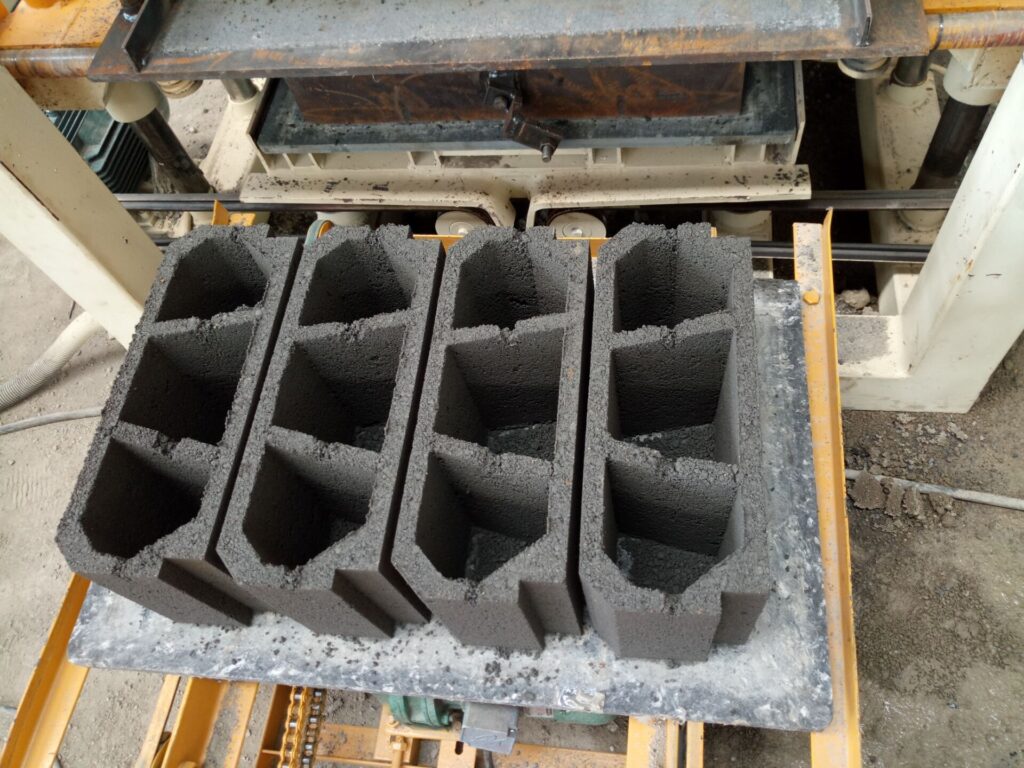
- المرحلة الحرجة من ملء القالب والدمك:ثم يتم نقل الخليط المحضر إلى تجويف القالب. تصميم ودقة هذا القالب هما ما يحددان الشكل النهائي للطوبة، سواء كانت كتلة مستطيلة قياسية، أو تصميم مجوف للعزل، أو حجر رصف مزخرف بأنماط معقدة. في الأجهزة المتطورة، يضمن آلية الملء توزيعًا متساويًا للمادة في جميع أنحاء القالب، مما يمنع عدم التجانس في الكثافة. بعد الملء، يطبق النظام ضغطًا ميكانيكيًا أو هيدروليكيًا هائلاً. هذا الإجراء ليس مجرد ضغط؛ بل هو عملية تكثيف تطرد الهواء المحبوس قسرًا، وتصطف المادة الجسيمية، وتبدأ عملية الربط الأولية، مما يؤدي إلى طوبة "خضراء" ذات سلامة كافية ليتم التعامل معها.
- التدبير لتحقيق أقصى قوة نهائية والمعالجة النهائية:بعد إخراجها من القالب، تمتلك الطوبة الخضراء شكلها ولكن ليس قوتها الكاملة. عملية المعالجة هي حيث تكتسب قوتها الهيكلية. يمكن تحقيق ذلك من خلال طريقتين رئيسيتين. الأولى هي المعالجة الساكنة، حيث يتم تكديس الطوب وتغطيته بأغطية المعالجة أو وضعه في غرفة يتم فيها الحفاظ على درجة حرارة ورطوبة مُتحكَّم بهما لمدة محددة، مما يسمح بتفاعل الإسمنت بالكامل. الثانية، المستخدمة في بعض الأنظمة عالية الإنتاج، هي المعالجة بالبخار في الأوتوكلاف، مما يسرع بشكل كبير من اكتساب القوة. بعد المعالجة، يتم فرز الوحدات المتصلبة تلقائياً، وعدها، وتكديسها على منصات بواسطة أذرع آلية أو أنظمة تعمل بالسير الناقل، لتكون جاهزة للتغليف والتخزين والشحن.
1.2 تصنيف نظم الإنتاج: مطابقة التكنولوجيا مع احتياجات السوق
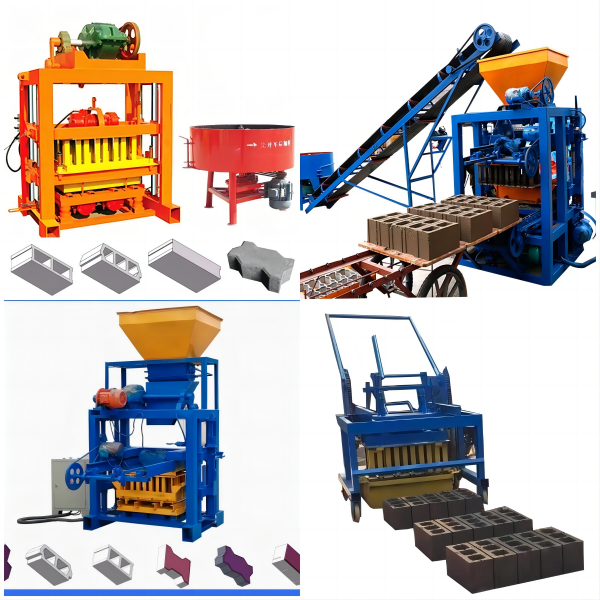
يتم تصنيف أنظمة إنتاج الطوب بناءً على منهجيتها التشغيلية ودرجة أتمتتها، حيث يخدم كل منها قطاعاً مميزاً في السوق.
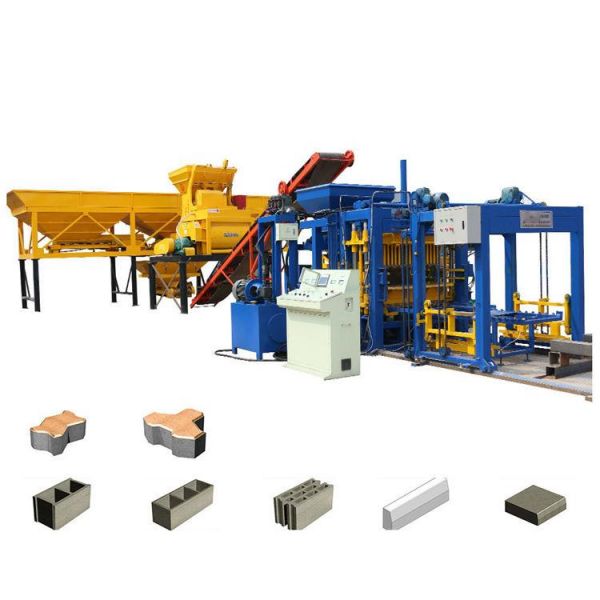
- خطوط الإنتاج المتكاملة بالكامل:هذه هي المفترسات القصوى في تصنيع الطوب، المصممة لإنتاج ضخم دون انقطاع. تتميز بعملية سلسة وحلقة مغلقة حيث تكون مدخلات المواد الخام والخلط والقولبة والمعالجة والتكديس على المنصات جميعها مترابطة وتدار بواسطة نظام تحكم حاسوبي مركزي. يقتصر التدخل البشري في الغالب على المراقبة والصيانة والبرمجة. تشكل هذه الخطوط الخيار الأمثل لتزويد مشاريع البنية التحتية واسعة النطاق والموزعين الوطنيين والأسواق التي لا تقبل المساومة في الحجم والجودة المتسقة.
- Cycle-Oriented Production Units: This category represents a robust middle ground, offering high automation in the core compaction process while requiring manual assistance for peripheral tasks. The machine itself performs the pressing and molding cycles automatically, but operators may be needed to feed raw material into the hopper or transfer the freshly molded bricks to the curing area. This configuration delivers an excellent balance, providing high production capacity and remarkable quality consistency at a capital investment significantly lower than a fully integrated line, making it ideal for growing businesses and regional suppliers.
- Manual Compression Systems: These are the most accessible and versatile units, often characterized by their portability and simplicity. Operation is fundamentally manual: an operator fills the mold box, engages a lever or a small hydraulic pump to apply pressure, and then releases the formed brick directly onto the ground or a pallet. While their output per hour is the lowest and they are labor-dependent, their low cost, minimal maintenance, and ability to be deployed on-site with minimal infrastructure make them a powerful tool for small entrepreneurs, community-based projects, and specialized, low-volume production runs.
1.3 Beyond Output: Evaluating Key Performance and Product Parameters
For a commercial buyer, the assessment of a machine goes beyond its brochure specifications. It involves a holistic view of its performance and the quality of the product it yields.
- Output Capacity and Operational Rhythm: The bricks-per-hour figure must be understood in the context of the entire production cycle, including curing time. A machine’s true capacity is its sustained output over an 8-hour or 24-hour shift, not just a peak theoretical number.
- Dimensional Accuracy and Surface Finish: The precision of the mold and the consistency of the pressure application directly impact the brick’s dimensional tolerances and surface quality. High-quality apparatuses produce bricks with sharp edges, smooth surfaces, and uniform dimensions, which simplifies bricklaying and reduces mortar usage.
- Versatility in Raw Material Formulation: A significant advantage of modern systems is their ability to function effectively with a wide range of raw material mixes. This includes the ability to incorporate industrial by-products like slag or fly ash, which can reduce material costs and enhance the product’s environmental profile.
- Durability and Serviceability of the Apparatus: The machine’s construction quality, the grade of steel used in the frame and mold, and the reliability of its hydraulic and control systems determine its operational lifespan and total cost of ownership. Easy access for maintenance and the widespread availability of common spare parts are critical logistical considerations.
1.4 The Strategic Business Case for Advanced Manufacturing Technology
Investing in a modern brick production system is a strategic decision that confers multiple layers of competitive advantage.
- Unmatched Economic Efficiency and Scalability: Automation slashes the per-unit cost of production by maximizing output and minimizing direct labor. This creates a scalable business model where increasing volume does not necessitate a linear increase in operational costs, leading to higher profit margins.
- Guaranteed Product Consistency and Adherence to Standards: Machine-made bricks are uniform. This consistency is vital for builders, as it ensures predictable performance, simplifies construction processes, and guarantees compliance with national and international building codes, a key selling point for discerning clients.
- Empowerment through Product Diversification: With a library of interchangeable molds, a single investment can yield a diverse product catalog. A supplier can quickly switch from producing standard construction bricks to decorative pavers, retaining wall blocks, or specialized landscaping products, allowing them to capture multiple market segments and respond agilely to trends.
- Enhancement of Sustainability Credentials: The controlled production process significantly reduces material waste compared to traditional methods. Furthermore, the ability to use recycled aggregates and supplementary cementitious materials allows businesses to market a “greener” product, appealing to a growing segment of environmentally conscious contractors and developers.
1.5 A Procurement Framework for Commercial Stakeholders
Navigating the procurement process requires a disciplined, strategic approach focused on long-term value.
- Conducting a Comprehensive Market and Feasibility Analysis: Before selecting a machine, one must have a deep understanding of the local demand—preferred brick types, quality expectations, and price sensitivity. The chosen technology must be a precise fit for this market reality.
- Performing a Rigorous Total Cost of Ownership (TCO) Analysis: The purchase price is just the initial outlay. A prudent buyer will model all ongoing costs: energy consumption, labor, preventive maintenance, spare parts, and the cost of capital. This TCO model provides a true picture of the investment’s profitability.
- Vetting the Equipment Provider’s Support Ecosystem: The machine’s value is heavily dependent on the supplier’s support. Key questions must be asked: What is their lead time for critical spare parts? Do they offer comprehensive operator training? Is technical support readily accessible? A machine without reliable support is a liability.
- Validating Machine Performance and Compliance: Insist on seeing the machine in operation, preferably under conditions similar to your own. Request certification of compliance with relevant international safety and performance standards. This due diligence mitigates risk and ensures the equipment is fit for its intended purpose.
خاتمة
The technology behind brick manufacturing represents a mature yet continuously evolving field. For distributors and procurement experts, the selection of appropriate machinery is a cornerstone decision that directly impacts market relevance, operational efficiency, and long-term profitability. The spectrum of available systems—from highly automated production lines to versatile manual presses—ensures that there is a technological solution for every business model and market tier. Success in this arena is not merely about purchasing a machine; it is about strategically investing in a production capability that delivers consistent quality, enables product diversification, and builds a formidable reputation for reliability. In the competitive global construction supply chain, mastery over this technology is synonymous with a sustainable competitive edge.
الأسئلة الشائعة (FAQ)
Q1: How does the final product from an automated system differ from one produced by a manual machine?
A: While both can produce structurally sound bricks, the key differences lie in consistency and finish. Automated systems produce bricks with exceptional dimensional uniformity, consistent density, and superior surface finish across thousands of units. Manual machines, while capable, may exhibit slight variations in size, density, and texture from one brick to the next due to the inherent variability in human-operated processes.
Q2: What is the typical lead time from procurement to full operational deployment for a semi-automatic system?
A: Lead times can vary significantly based on the complexity of the system and the manufacturer’s schedule. Generally, for a semi-automatic unit, expect a period of 4 to 8 weeks for manufacturing and shipping. On-site installation, foundation preparation, and operator training can add an additional 1 to 3 weeks before the system is fully operational and producing saleable bricks.
Q3: Can these systems be customized to produce unique or proprietary brick designs?
A: Absolutely. The primary method for defining a brick’s shape is the mold. Reputable equipment providers often offer custom mold design and fabrication services. This allows clients to produce unique, patented brick designs, specialty shapes for architectural projects, or products tailored to specific regional preferences.
Q4: What are the most common maintenance requirements, and what is their typical frequency?
A: Regular maintenance is crucial for longevity. Common tasks include:
- Daily: Cleaning of the mold and hopper, visual inspection for leaks or wear.
- Weekly: Checking and tightening of bolts and nuts, inspecting hydraulic hoses.
- Monthly: Changing hydraulic oil filters, checking and calibrating pressure sensors.
- Annually: A comprehensive inspection of the hydraulic system, electrical components, and structural frame.
Q5: How critical is the quality of raw materials to the machine’s performance and output quality?
A: It is fundamentally critical. The machine is designed to process specific types and sizes of aggregates. Using poorly graded sand, contaminated materials, or an incorrect water-cement ratio can lead to production issues like mold sticking, poor compaction, and low-strength bricks. Consistent, high-quality raw materials are a prerequisite for achieving the machine’s advertised performance and product quality.
Q6: What are the primary power requirements for operating a medium-capacity automated unit?
A: Most medium-to-large industrial units require a three-phase electrical power supply, typically at 380V-440V, with a significant power draw (e.g., 20-50 kW depending on the model). It is essential to have a stable power source and the necessary electrical infrastructure in place. Some systems can also be configured with optional diesel power units for locations with unreliable grid electricity.