
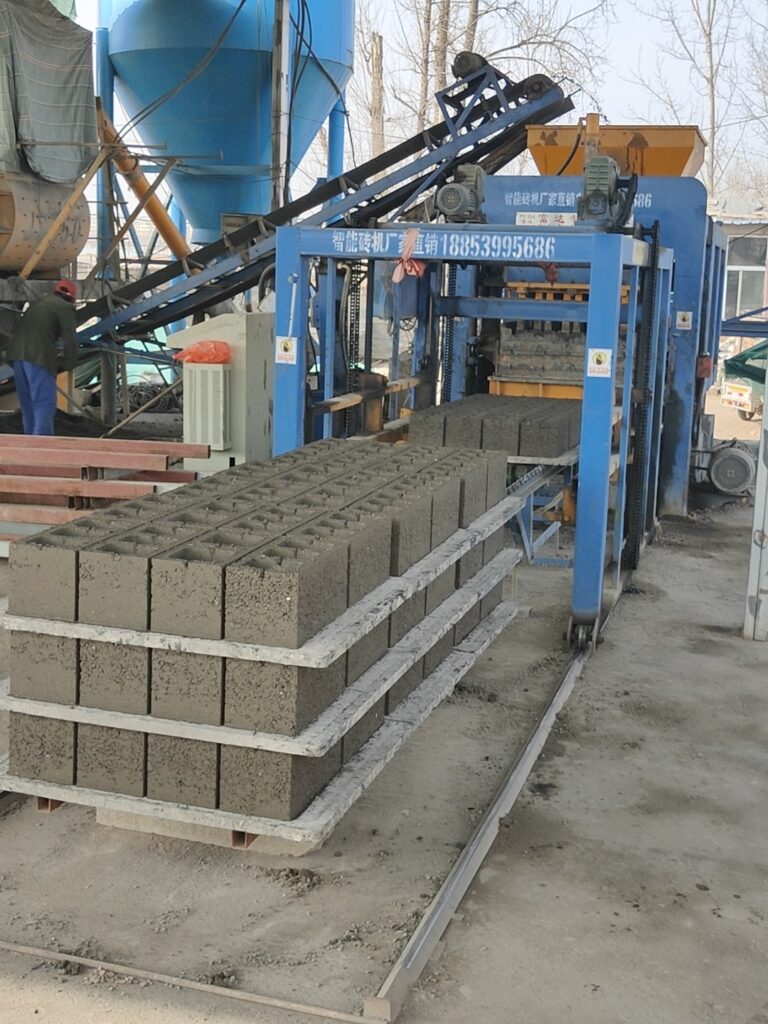
فهم وإدارة الجدول الزمني للمعالجة
وقت المعالجة ليس حدثًا واحدًا بل هو تقدم في اكتساب القوة، مع أطر زمنية مختلفة ذات صلة بالمناولة والشحن والأداء الإنشائي النهائي. يتحكم فيه توازن بين الكيمياء والفيزياء والتكنولوجيا التطبيقية.
1. تحديد معالم المعالجة الرئيسية
يجب تحديد مصطلح "وقت المعالجة" بناءً على الإجراء المطلوب.
1.1. وقت الإعداد الأولي وإخراج القالب
بعد الاهتزاز والضغط مباشرةً، يجب أن تكتسب الكتلة "الخضراء" قوة أولية كافية لإخراجها من القالب ونقلها إلى منطقة المعالجة دون تشوه. بالنسبة لآلات الكتل الحديثة التي تستخدم خليطًا خرسانيًا جافًا وصلبًا، يكون ذلك سريعًا بشكل ملحوظ. مع الاهتزاز الفعال،غالبًا ما يحدث إزالة القالب خلال 15 إلى 30 ثانيةعلى الآلة نفسها. هذه المجموعة الأولية ناتجة عن التداخل الفوري للجزيئات، وليس عن التصلب الكيميائي.
1.2. معالجة القوة (المعالجة المبكرة للعمر)
هذه هي المرحلة الحرجة الأولى للخدمات اللوجستية داخل المصنع. يجب أن تكون الكتل قوية بما يكفي لترتيبها على أرفف المعالجة أو المنصات دون إتلاف زواياها أو حوافها. ويتطلب ذلك عادةً24 إلى 48 ساعةتحت الظروف المناسبة، يُعتبر الوصول إلى قوة المناولة البوابة التي تسمح باستمرار دورة الإنتاج وتحرير القوالب والمنصات لإعادة الاستخدام.
1.3. قوة الشحن والمعالجة النهائية
هذه هي النقطة التي تكتسب فيها الكتل قوة كافية (عادةً ما لا تقل عن 70-80% من قوتها المحددة لمدة 28 يومًا) لتحمل إجهادات النقل، والمناولة في موقع العمل، والاستخدام الفوري في البناء. الوقت اللازم للوصول إلى هذه المرحلة هو الأكثر تأثرًا بطرق المعالجة، ويُعد المحور الأساسي للتخطيط التشغيلي.
٢. العوامل التي تحدد الجدول الزمني للمعالجة
The rate of strength gain is influenced by a combination of mix design, environmental conditions, and applied technology.
2.1. The Role of Mix Design and Materials
The concrete recipe is the foundational driver.
- Cement Type & Content: Blocks made with high early-strength cement (Type III) will cure faster than those with general-purpose cement (Type I). A higher cement content generally accelerates early strength gain.
- Water-Cement Ratio: A lower water-cement ratio (characteristic of dry-cast concrete) leads to higher ultimate strength but requires effective curing to ensure complete hydration. Inadequate moisture during curing can drastically slow strength development.
- Admixtures: The use of accelerators can significantly reduce the time to handling and shipping strength, while other admixtures may alter the rate.
2.2. Curing Methods: From Passive to Accelerated
The chosen curing method is the primary operational lever for controlling time.
- Moist Ambient Curing (Traditional): Blocks are stored in a humid, protected environment (e.g., a covered shed with periodic water spraying). This is a low-cost method but the slowest, often requiring 7 to 14 days or more to reach shipping strength, depending on climate.
- Controlled Steam Curing (Accelerated): This is the industry standard for efficient production. Blocks are exposed to controlled heat and humidity in a curing chamber or kiln. A typical low-pressure steam curing cycle involves:
- A pre-rest period (2-4 hours).
- A gradual temperature rise.
- A sustained high-temperature period (e.g., 12-18 hours at 140-180°F / 60-80°C).
- A controlled cooling period.
Total cycle time is typically 18 to 24 hours. After this, blocks can achieve over 70% of their design strength and are ready for shipping. This method dramatically accelerates inventory turnover.
3. Strategic Implications for the Block Producer
Understanding curing times is not an academic exercise; it directly impacts business viability.
3.1. Production Planning and Inventory Management
The curing timeline determines the وقت دورة الإنتاج. With a 24-hour steam curing system, a block produced on Monday can be sold and shipped on Tuesday. With ambient curing, the same block might tie up capital and space for two weeks. Faster curing enables a just-in-time production model, reducing inventory costs and storage footprint.
3.2. Quality Assurance and Market Reputation
Proper curing is inseparable from final quality. Inadequate or improper curing leads to weak, permeable blocks prone to cracking and weathering failure. A producer who masters and documents a controlled curing process can guarantee consistent minimum strengths, providing test reports that build trust with engineers, contractors, and regulatory bodies, justifying premium pricing.
Conclusion: Mastering Time to Master the Market
In conclusion, the curing time for blocks is a variable of strategic importance, directly linking the technical process to commercial outcomes. For the B2B advisor, the goal is to shift the client’s perspective from seeing curing as a passive waiting period to recognizing it as an active, value-adding phase of production that can be optimized. Recommending the appropriate curing technology—whether efficient ambient systems for certain markets or accelerated steam chambers for high-turnover operations—becomes a key part of the business consultation. By educating clients on how mix design, environmental control, and technology investment interact to determine this critical timeline, you empower them to make informed decisions that enhance their productivity, ensure superior product quality, and improve their competitive position. In the business of block manufacturing, controlling the curing process is synonymous with controlling profitability and market reputation.
الأسئلة الشائعة (FAQ)
Q1: What is the minimum curing time before blocks can be used in construction?
A1: For load-bearing construction, building codes and engineering specifications typically reference the 28-day compressive strength. Blocks should not be subjected to full design load until they near this strength. However, they can be laid in a wall much sooner if handled carefully. With accelerated curing, blocks often reach sufficient strength for masonry work within 24-48 hours after production, but the mortar and wall must still be given time to gain strength before loading.
Q2: Can blocks be “over-cured” or damaged by steam curing?
A2: Yes, improper steam curing can be detrimental. If the temperature rise is too rapid, it can cause internal stresses and microcracking. Excessive temperature (above 185°F / 85°C) or prolonged heat can lead to reduced ultimate strength and durability. A controlled, gradual cycle following established protocols is essential to gain the benefits without the risks.
Q3: How does weather affect ambient curing times?
A3: Weather has a profound impact. Cold weather drastically slows the chemical reactions of hydration, potentially doubling or tripling the time to reach handling and shipping strength, and risking frost damage. Hot, dry, and windy conditions can cause rapid moisture loss from the block surface (plastic shrinkage), leading to cracking and incomplete hydration, even if the interior is still moist. Climate-controlled curing spaces are highly recommended.
Q4: Is accelerated curing more expensive?
A4: It requires a higher capital investment in chambers, boilers, and insulation, and has ongoing energy costs for generating steam. However, this cost must be weighed against the significant economic benefits: drastically reduced inventory capital, a smaller required curing yard, faster customer delivery, and reduced risk of weather-related quality issues. For most commercial operations, the ROI on accelerated curing is strongly positive.
Q5: How can a producer verify that blocks have cured properly?
A5: Through a combination of process control and testing.
- Process Control: Meticulously log time, temperature, and humidity data for each curing cycle.
- Non-Destructive Testing: Use a Schmidt hammer (rebound hammer) for on-site estimates of surface hardness correlated to strength.
- Destructive Testing: Regularly perform standardized compressive strength tests (e.g., ASTM C140) on sample blocks cured for 7 and 28 days in a quality control lab. This provides definitive data for quality certification.

- آلة صناعة الطوب الأوتوماتيكية7 products
- آلة صنع الطوب الطيني4 products
- آلة صنع الكتل المتحركة4 products
- معدات البناء الأخرى5 products
- آلة صنع الكتل شبه الأوتوماتيكية4 products