
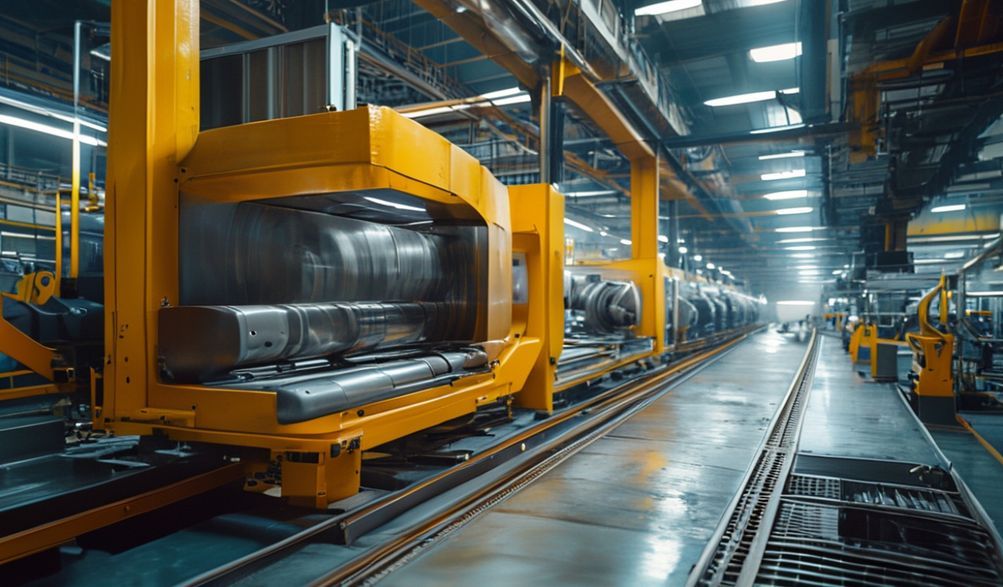
Su Guía a la Principal Fábrica de Máquinas para Hacer Bloques Huecos en China: Dentro de la Fábrica de Ladrillos FUDA
Introducción
El panorama global de la construcción se sustenta sobre una base de eficiencia, durabilidad y rentabilidad. En el corazón de esta industria se encuentra el humilde pero revolucionario bloque de concreto hueco, un material que ha transformado los muros de masas sólidas y pesadas en componentes ligeros, aislantes y estructuralmente sólidos. Satisfacer la creciente demanda de estos bloques requiere más que solo mano de obra manual; exige maquinaria diseñada con precisión que pueda producir a gran escala con una consistencia inquebrantable. Para emprendedores, empresas constructoras e inversionistas en todo el mundo, la búsqueda de esta maquinaria a menudo conduce a un mercado dominante: China.
Este artículo sirve como una guía autorizada para navegar ese mercado. Iremos más allá de listados superficiales y argumentos de venta genéricos para proporcionar un examen detallado y confiable de un actor clave: elFábrica de ladrillos FUDANuestra meta no es ofrecer una simple aprobación, sino dotarle de un marco profesional de evaluación. Analizaremos la tecnología central, delinearemos criterios críticos para la selección de fábricas y aplicaremos ese marco en un análisis neutral de FUDA. Estas perspectivas se basan en la comprensión de los principios de manufactura, los estándares de la industria y las realidades prácticas de la procuración internacional. Le animamos a utilizar esta información como piedra angular para su propia diligencia debida rigurosa.
¿Qué es una Máquina para Hacer Bloques Huecos? Explicación de la Tecnología Central
Para apreciar lo que ofrece una fábrica como FUDA, primero debes entender la maquinaria en el corazón de su negocio. Una máquina para hacer bloques huecos es una pieza sofisticada de equipo industrial diseñada para automatizar la producción de bloques de concreto con cavidades huecas.
El Papel de los Bloques Huecos en la Construcción Moderna
¿Por qué los bloques huecos se han convertido en un estándar global? Sus ventajas son multifacéticas:
* Ligero:El peso reducido disminuye la carga muerta en la estructura de un edificio, permitiendo cimentaciones más ligeras y menores costos de transporte.
* Aislamiento Térmico y Acústico:Las bolsas de aire dentro de los bloques crean barreras naturales contra el calor y el ruido.
* Eficiencia de Materiales:Usar menos concreto para cubrir la misma superficie se traduce en ahorros significativos de material.
* Relación Costo-Beneficio:La combinación de menor uso de materiales, manejo más fácil y tiempos de construcción más rápidos reduce los costos generales del proyecto.
Cómo Funciona una Máquina Automática para Hacer Bloques
Aunque los diseños varían, el proceso fundamental de una máquina automática sigue estas etapas:
1. Mezcla:Las materias primas (cemento, arena, agregado, ceniza volante, agua) se combinan con precisión en una mezcladora.
2. Alimentación:El concreto mezclado se transporta a la tolva de la máquina.
3. Moldeo:El concreto se vierte en una caja de molde. Una combinación de vibración de alta frecuencia y presión hidráulica compacta el material, eliminando las burbujas de aire y asegurando un bloque denso y resistente.
4. Desmoldeo y Curado:El bloque recién formado se expulsa sobre un palé o transportador. Luego, entra a una cámara de curado (a menudo con vapor a baja presión) para adquirir resistencia inicial antes del almacenamiento y el curado final al aire.
Los componentes clave que definen la calidad de una máquina incluyen la...mohoprecisión y dureza del acerosistema hidráulico(confiabilidad y presión), lapanel de control (automation level and user interface), and the conveyor/pallet system.
Tipos de Máquinas: Desde Plantas Semiautomáticas hasta Completamente Automáticas
- Semiautomático: Require more manual intervention for feeding and block removal. Lower initial investment, suitable for small-scale startups or specific, low-volume products.
- Completamente Automático: Integrated systems with automated material handling, pressing, and stacking. High output with minimal labor, ideal for medium to large-scale commercial production.
- Máquinas de Bloques Móviles: Smaller, often manual or semi-automatic machines that can be moved around a site. Output is low, but flexibility is high.
Key Factors When Choosing a China-Based Machinery Factory
Selecting a supplier is about more than just the price on a quote. It’s about partnering with a manufacturer that can ensure your long-term productivity. Here are the non-negotiable factors to evaluate.
Experiencia en Manufactura y Capacidad Técnica
A factory’s true value lies in its engineering depth. Look for:
* A dedicated R&D team that iterates on designs.
* In-house mold manufacturing capability, which allows for customization and faster mold replacements.
* The ability to customize machine parameters (pressure, vibration) for your specific local raw materials.
Quality Control Processes and Material Standards
The durability of your machine hinges on the quality of its parts and assembly. Scrutinize:
* Grado de Acero: The frame and mold should use high-grade, wear-resistant steel.
* Componentes Principales: Reputable brands for hydraulic pumps, valves, and PLC (Programmable Logic Controller) systems (e.g., Siemens, Schneider, Yuken) are a strong indicator of reliability.
* Assembly Precision: Welding should be clean and uniform; parts should align perfectly with minimal play.
Production Capacity and Supply Chain Stability
A factory’s scale impacts your project timeline.
* Can they handle your order volume without causing massive delays?
* Do they have stable relationships with component suppliers to avoid production halts?
* A well-established factory will have a smoother, more predictable production flow.
After-Sales Service: Installation, Training, and Technical Support
This is where many buyers face challenges. Essential service elements include:
* Clear, English-language documentation (manuals, electrical diagrams).
* Remote Support: Availability via WhatsApp, email, or video call for troubleshooting.
* Política de Piezas de Repuesto: A clear catalog and commitment to supplying wear-and-tear parts for years.
* Warranty Terms: Typically 12 months for core components, clearly stated in the contract.
Spotlight on FUDA Brick Making Factory: A Detailed Analysis
Let’s apply the framework above to a specific manufacturer commonly encountered by global buyers: the FUDA brick making factory. (Note: This analysis is based on typical profiles and industry positioning of such manufacturers for educational purposes.)
Company Overview and Market Position
FUDA is typically presented as an established manufacturer located within China’s major industrial machinery hubs, such as Shandong, Fujian, or Guangdong provinces. Such factories often have over a decade of operation and have built a reputation focused on the export market, particularly targeting Southeast Asia, Africa, the Middle East, and South America. They position themselves as offering a balance between robust performance and competitive pricing.
Product Range and Technical Specifications
A factory like FUDA would typically offer a range to cater to different market segments:
* Flagship Models: Fully automatic stationary machines with outputs ranging from 5,000 to 20,000+ blocks per 8-hour shift.
* Especificaciones Clave: Machines are often compatible with various raw material mixes, including cement, sand, crushed stone, and industrial waste like fly ash. They feature hydraulic systems with pressures from 21 MPa upwards and programmable PLC control panels.
* Personalización: They usually offer a variety of standard mold sizes (e.g., 4″, 5″, 6″ hollow blocks) and the service to produce custom molds for unique block designs.
Strengths and Notable Features
Based on general industry profiles, their commonly promoted strengths include:
* Construcción Robusta: Emphasis on heavy-duty frames and durable components for long service life in demanding environments.
* Eficiencia Energética: Designs that aim to reduce power consumption during the vibration and pressing cycles.
* Operación Amigable para el Usuario: Control systems designed to be operable with moderate technical training.
Considerations for International Buyers
- Communication: Ensure there is a dedicated, technically proficient English-speaking contact.
- Incoterms: Negotiate clearly. FOB (Franco a Bordo) is common, meaning you own the goods and are responsible for cost and risk once they’re loaded on the ship. CIF (Costo, Seguro y Flete) simplifies the process but gives you less control over shipping.
- Factory Inspection: A virtual live video tour is a minimum requirement. It verifies the factory’s existence, scale, and ongoing production activity.
The Procurement Process: From Inquiry to Delivery
Navigating the purchase process methodically is key to a successful outcome.
Step 1: Initial Inquiry and Technical Clarification
Provide a detailed project specification:
* Desired block type, size, and compressive strength.
* Target daily/weekly output.
* Details of your local raw materials (provide samples if possible).
* Available power supply (voltage, phase).
* Factory floor space and ceiling height.
Step 2: Quotation Analysis and Negotiation
Compare quotes line-by-line:
* Does the price include all components (e.g., mold, pallets, conveyor, control panel)?
* What services are included (installation guidance, training)?
* Clarify términos de pagoywarranty details upfront.
Step 3: Factory Audit and Machine Inspection (Virtual or On-Site)
Your inspection checklist should include:
* View the workshop floor and assembly lines.
* See a machine of your model type under power (running if possible).
* Inspect the quality of welding, painting, and component brands.
* Ask to see their quality control and testing procedures.
Step 4: Shipping, Customs, and Installation Planning
- The factory should provide professional packing for ocean freight.
- They must supply all necessary export documents (Commercial Invoice, Packing List, Bill of Lading, Certificate of Origin).
- Plan for installation early. Identify a local technician or engineer who can oversee assembly, using the factory’s remote support.
Ensuring Value and Avoiding Common Pitfalls
A transparent approach helps mitigate the inherent risks of international trade.
Red Flags in Machinery Sourcing from China
- Unrealistically low prices compared to the market average.
- Vague or incomplete contracts that lack detailed specs and warranty terms.
- Pressure to make 100% payment upfront before production.
- Reluctance to provide a live video call from the factory floor.
- No technical documentation or only very basic manuals.
The Importance of a Prototype or Sample Batch
If your order is large enough, consider:
* Requesting a sample production run of your specific block design before full machine shipment.
* Having the factory send you block samples made from their machine using a simulative mix. Test these samples for strength and dimensions in your local lab.
Building a Successful Long-Term Partnership
View your supplier as a partner. Clear, respectful communication and a professional business relationship will pay dividends when you need technical support or wish to expand your production line in the future.
Frequently Asked Questions (FAQ)
Q1: What is the typical price range for a FUDA hollow block making machine?
A: There is no single “typical price.” Cost varies drastically based on automation level (semi vs. fully automatic), configuration (with or without mixer, conveyor, stacker), and output capacity. A basic semi-automatic machine may start around $15,000, while a large, fully automatic production line can exceed $100,000. Always request a detailed quote based on your specific technical requirements.
Q2: Does FUDA factory provide installation guidance overseas?
A: Reputable manufacturers typically provide comprehensive installation manuals (with diagrams and photos), video guides, and ongoing remote support via video call. For an additional fee, most factories will also send their engineers to your site for installation and training. This service and its cost should be explicitly detailed in your purchase contract.
Q3: How do I verify the credibility of a factory like FUDA?
A: Use this checklist:
1. Request their official business license.
2. Visit their owned official website (not just an Alibaba storefront).
3. Ask for 2-3 customer references in a region similar to yours and contact them.
4. Insist on a live, unscripted video tour of their production facility and a running machine.
5. Check for industry certifications or participation in international trade fairs.
Q4: What are the payment terms usually expected?
A: A common and balanced structure is 30% T/T deposit to start production, 40% T/T payment before shipment after seeing photos/video of the finished machine, and 30% balance against a copy of the Bill of Lading. For larger orders, using a Letter of Credit (L/C) provides security for both buyer and seller.
Q5: Can the machine produce different block sizes and styles?
A: Yes, this is a standard feature. Machines use interchangeable mold boxes. You can order multiple molds for different block types (hollow, solid, paving, interlocking). Discuss the cost and production lead time for additional molds during your initial inquiry.
Conclusión
Choosing the right hollow block making machine factory is a strategic decision that balances technical expertise, proven quality, reliable after-sales support, and transparent communication. As we’ve explored, a manufacturer like FUDA represents one of many options in China’s vast industrial landscape, each with its own profile and strengths.
The most critical step you can take is to apply a structured evaluation framework—exactly like the one outlined here—to every potential supplier. Let technical specifications, verifiable factory audits, and clear contractual terms guide your decision, not just the bottom-line price. Arm yourself with detailed project specs, reach out to multiple factories for comparison, and prioritize scheduling that crucial virtual or on-site factory inspection. Your due diligence today is the foundation of your production success tomorrow.
<