
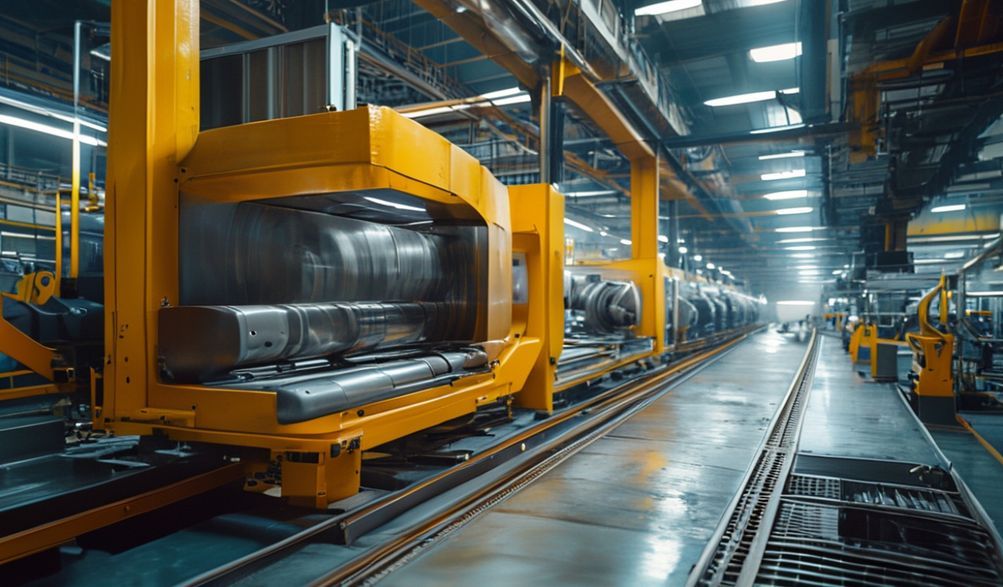
Gid Ou Pou Faktori Ki Dirije nan Fabrikasyon Machin Blòk Kavo Chinwa: Anndan Faktori Fabrikasyon Brik FUDA
Entwodiksyon
Peyizaj konstriksyon mondyal la bati sou yon fondasyon efikasite, dirabilite, ak efikasite pri. Nan kè endistri sa a, gen blòk an beton kre ki senp men revolisyonè—yon materyèl ki te transfòme mi yo soti nan mas solid ak lou, nan eleman ki lejè, izolan, ak estriktirèlman solid. Pou satisfè gwo demann pou blòk sa yo, li mande plis pase travay manyèl; li mande machin ki fèt ak presizyon ki ka pwodwi an gwo echèl ak yon konsistans san chanjman. Pou antreprenè yo, konpayi konstriksyon yo, ak envestisè atravè lemond, jwenn machin sa yo souvan mennen nan yon mache dominan: Lachin.
Atik sa a sèvi kòm yon gid otorite pou navige nan mache sa a. Nou pral ale pi lwen pase lis sifas ak diskou jenerik pou vann pou ofri yon egzamen detaye ak fyab sou yon jwè kle:Faktori pou fè brik FUDAObjektif nou se pa bay yon senp apwobasyon, men pou nou ba ou yon kad pwofesyonèl pou evalye. Nou pral diseke teknoloji debaz la, dekri kritè esansyèl pou chwazi faktori a, epi aplike kad sa a nan yon analiz net sou FUDA. Apèsi yo baze sou yon konpreyansyon prensip fabrikasyon yo, estanda endistri yo, ak reyalite pratik apwovizyònman entènasyonal la. Nou ankouraje w pou w sèvi ak enfòmasyon sa a kòm yon baz solid pou pwòp analiz serye w.
Kisa yon Machin pou Fè Blòk Vid? Teknoloji Debaz yo Eksplike
Pou ou ka apresye sa yon faktori tankou FUDA ofri, ou dwe konprann premye machin ki se nwayo biznis li. Yon machin pou fè blok vid se yon ekipman endistriyèl sofistike ki fèt pou otomatize pwodiksyon blok beton ki gen kavite vid ladan yo.
Wòl Blòk Vid nan Konstriksyon Modèn
Poukisa blòk kre devlope yon estanda mondyal? Avantaj yo se anpil fason:
* Lejè:Pèz redwi diminye chaj mò sou estrikti yon bilding, sa ki pèmèt fondasyon pi lejè ak depans transpò pi ba.
* Izolasyon Tèmik ak Akoustik:Pòch lè yo andedan blòk yo kreye baryè natirèl kont chalè ak son.
* Efikasite Materyèl:Itilize mwens siman pou menm sifas la vle di ekonomi materyèl enpòtan.
* Efikasite Pri:Kombinasyon an nan pi ba itilizasyon materyèl, pi fasil manyen, ak pi rapid tan konstriksyon diminye depans jeneral pwojè yo.
Kijan yon Machin Otomatik pou Fè Blòk Fonksyone
Pandan konsepsyon yo varye, pwosesis fondamantal pou yon machin otomatik swiv etap sa yo:
1. Melanj:Materyo prensipal yo (siman, sab, agrega, sann volan, dlo) yo melanje presizyon nan yon melanjè.
2. Manje:Konkrè melanje a transpòte nan tremyè machin nan.
3. Moulaj:Konkrè a mete nan yon bwat mòl. Yon konbinezon de vibrasyon frekans segondè ak presyon idwolik konpakte materyèl la, li fòse pòch lè yo soti epi asire yon blòk dans ak fò.
4. Demoulaj ak Kire:Blòk ki fèk fòme a voye sou yon palèt oswa yon konvèye. Apre sa, li antre nan yon chanm trempaj (souvan nan vapè ba presyon) pou li jwenn premye fòs anvan li estoke epi fini ak trempaj nan lè.
Eleman kle ki defini bon jan kalite machin yo enkli:mwaypresizyon ak dite asye a,sistèm idwolikfiability ak presyonpanèl kontwòl (automation level and user interface), and the conveyor/pallet system.
Types of Machines: From Semi-Automatic to Fully Automatic Plants
- Semi-Otomatik: Require more manual intervention for feeding and block removal. Lower initial investment, suitable for small-scale startups or specific, low-volume products.
- Otomatik Konplè: Integrated systems with automated material handling, pressing, and stacking. High output with minimal labor, ideal for medium to large-scale commercial production.
- Machin Blòk Mobil: Smaller, often manual or semi-automatic machines that can be moved around a site. Output is low, but flexibility is high.
Key Factors When Choosing a China-Based Machinery Factory
Selecting a supplier is about more than just the price on a quote. It’s about partnering with a manufacturer that can ensure your long-term productivity. Here are the non-negotiable factors to evaluate.
Ekspètiz nan Fabrikasyon ak Kapasite Teknik
A factory’s true value lies in its engineering depth. Look for:
* A dedicated R&D team that iterates on designs.
* In-house mold manufacturing capability, which allows for customization and faster mold replacements.
* The ability to customize machine parameters (pressure, vibration) for your specific local raw materials.
Quality Control Processes and Material Standards
The durability of your machine hinges on the quality of its parts and assembly. Scrutinize:
* Kalite Asye: The frame and mold should use high-grade, wear-resistant steel.
* Eleman Debaz: Reputable brands for hydraulic pumps, valves, and PLC (Programmable Logic Controller) systems (e.g., Siemens, Schneider, Yuken) are a strong indicator of reliability.
* Assembly Precision: Welding should be clean and uniform; parts should align perfectly with minimal play.
Production Capacity and Supply Chain Stability
A factory’s scale impacts your project timeline.
* Can they handle your order volume without causing massive delays?
* Do they have stable relationships with component suppliers to avoid production halts?
* A well-established factory will have a smoother, more predictable production flow.
After-Sales Service: Installation, Training, and Technical Support
This is where many buyers face challenges. Essential service elements include:
* Clear, English-language documentation (manuals, electrical diagrams).
* Remote Support: Availability via WhatsApp, email, or video call for troubleshooting.
* Spare Parts Policy: A clear catalog and commitment to supplying wear-and-tear parts for years.
* Warranty Terms: Typically 12 months for core components, clearly stated in the contract.
Spotlight on FUDA Brick Making Factory: A Detailed Analysis
Let’s apply the framework above to a specific manufacturer commonly encountered by global buyers: the FUDA brick making factory. (Note: This analysis is based on typical profiles and industry positioning of such manufacturers for educational purposes.)
Company Overview and Market Position
FUDA is typically presented as an established manufacturer located within China’s major industrial machinery hubs, such as Shandong, Fujian, or Guangdong provinces. Such factories often have over a decade of operation and have built a reputation focused on the export market, particularly targeting Southeast Asia, Africa, the Middle East, and South America. They position themselves as offering a balance between robust performance and competitive pricing.
Product Range and Technical Specifications
A factory like FUDA would typically offer a range to cater to different market segments:
* Flagship Models: Fully automatic stationary machines with outputs ranging from 5,000 to 20,000+ blocks per 8-hour shift.
* Key Specs: Machines are often compatible with various raw material mixes, including cement, sand, crushed stone, and industrial waste like fly ash. They feature hydraulic systems with pressures from 21 MPa upwards and programmable PLC control panels.
* Pèsonalizasyon: They usually offer a variety of standard mold sizes (e.g., 4″, 5″, 6″ hollow blocks) and the service to produce custom molds for unique block designs.
Strengths and Notable Features
Based on general industry profiles, their commonly promoted strengths include:
* Konstriksyon Solid: Emphasis on heavy-duty frames and durable components for long service life in demanding environments.
* Efikasite enèji: Designs that aim to reduce power consumption during the vibration and pressing cycles.
* Operasyon ki Fasil Pou Itilize: Control systems designed to be operable with moderate technical training.
Considerations for International Buyers
- Communication: Ensure there is a dedicated, technically proficient English-speaking contact.
- Incoterms: Negotiate clearly. FOB (Lib sou Bato) is common, meaning you own the goods and are responsible for cost and risk once they’re loaded on the ship. CIF (Pri, Asirans, ak Fret) simplifies the process but gives you less control over shipping.
- Factory Inspection: A virtual live video tour is a minimum requirement. It verifies the factory’s existence, scale, and ongoing production activity.
The Procurement Process: From Inquiry to Delivery
Navigating the purchase process methodically is key to a successful outcome.
Step 1: Initial Inquiry and Technical Clarification
Provide a detailed project specification:
* Desired block type, size, and compressive strength.
* Target daily/weekly output.
* Details of your local raw materials (provide samples if possible).
* Available power supply (voltage, phase).
* Factory floor space and ceiling height.
Step 2: Quotation Analysis and Negotiation
Compare quotes line-by-line:
* Does the price include all components (e.g., mold, pallets, conveyor, control panel)?
* What services are included (installation guidance, training)?
* Clarify tèm pemanakwarranty details upfront.
Step 3: Factory Audit and Machine Inspection (Virtual or On-Site)
Your inspection checklist should include:
* View the workshop floor and assembly lines.
* See a machine of your model type under power (running if possible).
* Inspect the quality of welding, painting, and component brands.
* Ask to see their quality control and testing procedures.
Step 4: Shipping, Customs, and Installation Planning
- The factory should provide professional packing for ocean freight.
- They must supply all necessary export documents (Commercial Invoice, Packing List, Bill of Lading, Certificate of Origin).
- Plan for installation early. Identify a local technician or engineer who can oversee assembly, using the factory’s remote support.
Ensuring Value and Avoiding Common Pitfalls
A transparent approach helps mitigate the inherent risks of international trade.
Red Flags in Machinery Sourcing from China
- Unrealistically low prices compared to the market average.
- Vague or incomplete contracts that lack detailed specs and warranty terms.
- Pressure to make 100% payment upfront before production.
- Reluctance to provide a live video call from the factory floor.
- No technical documentation or only very basic manuals.
The Importance of a Prototype or Sample Batch
If your order is large enough, consider:
* Requesting a sample production run of your specific block design before full machine shipment.
* Having the factory send you block samples made from their machine using a simulative mix. Test these samples for strength and dimensions in your local lab.
Building a Successful Long-Term Partnership
View your supplier as a partner. Clear, respectful communication and a professional business relationship will pay dividends when you need technical support or wish to expand your production line in the future.
Kesyon yo poze souvan (FAQ)
Q1: What is the typical price range for a FUDA hollow block making machine?
A: There is no single “typical price.” Cost varies drastically based on automation level (semi vs. fully automatic), configuration (with or without mixer, conveyor, stacker), and output capacity. A basic semi-automatic machine may start around $15,000, while a large, fully automatic production line can exceed $100,000. Always request a detailed quote based on your specific technical requirements.
Q2: Does FUDA factory provide installation guidance overseas?
A: Reputable manufacturers typically provide comprehensive installation manuals (with diagrams and photos), video guides, and ongoing remote support via video call. For an additional fee, most factories will also send their engineers to your site for installation and training. This service and its cost should be explicitly detailed in your purchase contract.
Q3: How do I verify the credibility of a factory like FUDA?
A: Use this checklist:
1. Request their official business license.
2. Visit their owned official website (not just an Alibaba storefront).
3. Ask for 2-3 customer references in a region similar to yours and contact them.
4. Insist on a live, unscripted video tour of their production facility and a running machine.
5. Check for industry certifications or participation in international trade fairs.
Q4: What are the payment terms usually expected?
A: A common and balanced structure is 30% T/T deposit to start production, 40% T/T payment before shipment after seeing photos/video of the finished machine, and 30% balance against a copy of the Bill of Lading. For larger orders, using a Lèt Kredi (L/C) provides security for both buyer and seller.
Q5: Can the machine produce different block sizes and styles?
A: Yes, this is a standard feature. Machines use interchangeable mold boxes. You can order multiple molds for different block types (hollow, solid, paving, interlocking). Discuss the cost and production lead time for additional molds during your initial inquiry.
Konklizyon
Choosing the right hollow block making machine factory is a strategic decision that balances technical expertise, proven quality, reliable after-sales support, and transparent communication. As we’ve explored, a manufacturer like FUDA represents one of many options in China’s vast industrial landscape, each with its own profile and strengths.
The most critical step you can take is to apply a structured evaluation framework—exactly like the one outlined here—to every potential supplier. Let technical specifications, verifiable factory audits, and clear contractual terms guide your decision, not just the bottom-line price. Arm yourself with detailed project specs, reach out to multiple factories for comparison, and prioritize scheduling that crucial virtual or on-site factory inspection. Your due diligence today is the foundation of your production success tomorrow.
<