
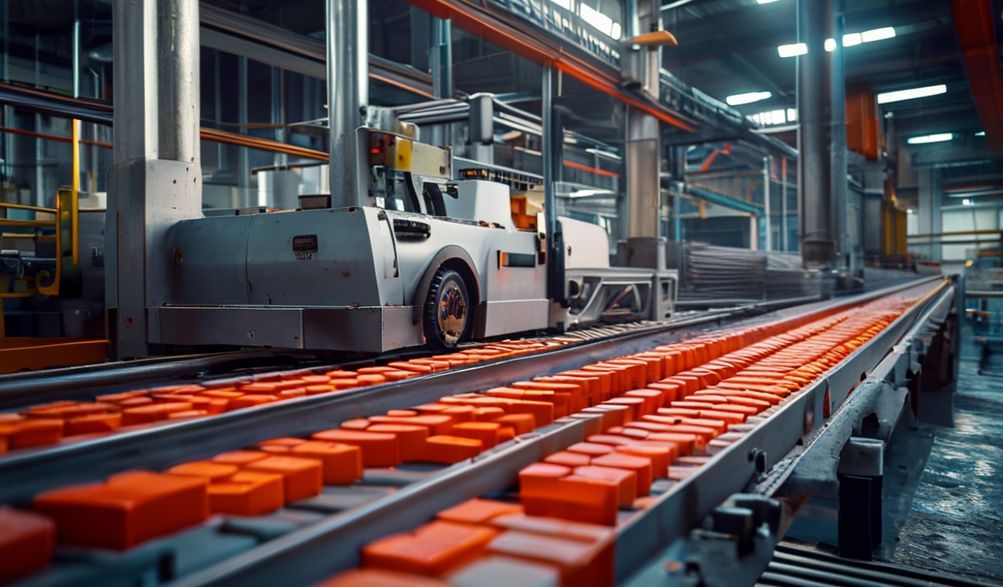
Comprendiendo los Precios de las Máquinas para Hacer Bloques de Ladrillo: Una Guía Integral por FUDA Factory
Si estás buscando el "precio de una máquina para hacer bloques de ladrillo", probablemente te encuentres con una desconcertante variedad de cifras, desde precios sorprendentemente bajos hasta otros exorbitantemente altos. La pregunta central que todo comprador serio enfrenta es:¿Qué es larealprecio, ¿y por qué estoy pagando realmente?
La verdad es que la etiqueta del precio es solo el comienzo. El costo real—y el valor—de una máquina para fabricar bloques de ladrillo es un espectro definido por una compleja interacción de ingeniería, capacidad y viabilidad comercial a largo plazo. Elegir basándose únicamente en el precio más bajo es la ruta más rápida hacia costosos tiempos de inactividad, calidad inconsistente y objetivos de producción no cumplidos.
Con más de dos décadas de excelencia en ingeniería y fabricación en la Fábrica de Bloques FUDA, hemos guiado a innumerables clientes desde la consulta inicial hasta una operación rentable. Esta guía tiene como objetivo desmitificar completamente los precios de las máquinas. Iremos más allá de simples cotizaciones para explicar losvalordetrás del costo, empoderándote para hacer una inversión informada que impulse tu crecimiento durante los años venideros.
Desglosaremos los factores clave que determinan el precio, desde el tipo de máquina y la automatización hasta los costos ocultos de propiedad. Al final, comprenderás no solo cuánto cuesta una máquina, sino cuál es el valor de la máquina adecuada para tu proyecto específico.
Factores Clave que Determinan el Precio de tu Máquina para Hacer Bloques de Ladrillo
La cotización final que recibes es un reflejo directo de tus necesidades de producción y las capacidades de la máquina. Comprender estos componentes es el primer paso para realizar una compra inteligente.
1. Tipo de Máquina y Método de Producción por Bloques
El diseño fundamental de la máquina establece la base para su costo y aplicación. Existen tres tipos principales:
-
Máquinas de Fabricación de Bloques Fijos:Estas son plantas estacionarias de alta producción. Requieren una base sólida y están diseñadas para producción continua a gran escala en un entorno fabril.
- Implicación del Precio:Mayor inversión inicial debido a su estructura compleja y alta capacidad.
- Ideal Para:Proyectos de infraestructura a gran escala, patios de bloques dedicados y suministro comercial de alto volumen.
-
Máquinas Móviles para Fabricar Bloques:Montados sobre un remolque o ruedas, estos ofrecen producción "in situ", eliminando los costos de transporte de los bloques terminados.
- Implicación del Precio:De gama media a alta. Pagas por la portabilidad y el funcionamiento autónomo.
- Ideal Para:Empresas constructoras que desarrollan proyectos remotos, o negocios que atienden múltiples sitios locales.
-
Máquinas Estacionarias Individuales:Estos son los tipos más comunes para pequeñas y medianas empresas. Se instalan en un solo lugar pero no son tan complejos como las plantas fijas completas.
- Implicación del Precio:Ofrece la gama de precios más amplia, desde modelos manuales básicos hasta sistemas automáticos sofisticados.
- Ideal Para:Empresas emergentes, fabricantes de bloques de pequeño a mediano tamaño, y líneas de productos diversificadas.
La tecnología de producción—ya sea que utilice vibración de alta frecuencia, presión hidráulica o una combinación—también afecta el costo. Los sistemas más avanzados garantizan una mejor densidad y resistencia de los bloques, lo que justifica un desembolso inicial más alto.
2. Nivel de Automatización: Manual, Semiautomático, Totalmente Automático
La automatización es el mayor impulsor tanto del precio como de la eficiencia operativa a largo plazo.
- Máquinas Manuales:Requiere mano de obra significativa para la alimentación, el moldeado y la remoción de bloques.
- Perfil de Costos: Costo inicial más bajo, costo laboral a largo plazo más alto.La producción es inconsistente y está limitada por la resistencia humana.
- Máquinas Semiautomáticas:Automatice procesos clave como la vibración y compactación, pero puede requerir alimentación manual o manejo de pallets.
- Perfil de Costos: Inversión moderada.Logra un equilibrio, ofreciendo una mejor producción que la manual con un precio inicial manejable. Los costos operativos son más bajos que los de la manual.
- Máquinas Completamente Automáticas:Integrados con alimentadores automáticos, transportadores y apiladores de tarimas. Requieren una intervención humana mínima.
- Perfil de Costos: Inversión inicial más alta, costo operativo más bajo.Produce consistentemente un alto volumen de trabajo las 24 horas del día, los 7 días de la semana, con un equipo reducido.
La Perspectiva Experta de FUDA:Nuestros ingenieros siempre aconsejan a los clientes que calculen elRetorno de la Inversión (ROI), not just the purchase price. A fully automatic machine may cost 3x more than a manual one, but if it produces 10x the output with 70% less labor, the payback period can be surprisingly short. The right automation level is an investment in predictable profitability.
3. Production Capacity & Output Specifications
Capacity is priced in cycles. You must consider both cycles per houryblocks per cycle.
- A machine rated for 1,500 cycles per hour producing 4 blocks per cycle yields 6,000 blocks/hour.
- A machine with 1,000 cycles per hour but a mold for 10 blocks yields 10,000 blocks/hour.
Higher cycle speeds and multi-cavity molds increase machine complexity and cost. Furthermore, versatility commands a premium. A machine that can easily switch between producing solid blocks, hollow blocks, paving slabs, and interlocking bricks through quick-change mold systems offers greater business flexibility and a higher initial price.
4. Core Components & Build Quality
This is where true value—or future expense—is built. A lower price often reflects compromises here.
- Marco y Estructura: Heavy-duty, reinforced steel frames resist the immense forces of compaction, preventing misalignment and ensuring years of service. Lighter frames mean lower cost and higher risk of premature failure.
- Hydraulic System & Motors: The brand and quality of hydraulic pumps, valves, and cylinders are critical. Premium components (e.g., Bosch Rexroth, Yuken) operate more efficiently, generate less heat, and last significantly longer than generic alternatives.
- Sistema de Control: A reliable PLC (Programmable Logic Controller) from a brand like Siemens or Mitsubishi ensures stable, programmable operation and easier troubleshooting.
Think in Terms of Total Cost of Ownership: A machine that is $10,000 cheaper but uses inferior hydraulics may cost you $20,000 in downtime and part replacements within two years. Quality components are an investment in uninterrupted production.
5. Additional Costs Beyond the Sticker Price
A comprehensive budget looks beyond the machine itself.
- Shipping, Insurance, and Customs: This can vary wildly by destination and incoterms (FOB, CIF, etc.).
- Instalación y Puesta en Marcha: Professional setup by factory technicians ensures optimal performance. This is often a separate line item.
- Spare Parts Kit & Initial Molds: A basic set of wear parts (seals, filters) is essential. The standard quote may include one or two mold sets, but additional molds for different block types are an extra cost.
- Foundation & Utilities: Stationary machines require a leveled, concrete foundation. Electrical requirements (power supply voltage) must be met.
- Capacitación de Operadores: Basic training for your crew is crucial for safety and efficiency.
Price Ranges: What to Expect in the Current Market
Please note: The following ranges are indicative estimates. Prices fluctuate with global steel and component costs and are highly dependent on final configuration. A formal, detailed quotation is essential.
Entry-Level / Small Scale Machines
- Descripción: Typically manual or basic semi-automatic stationary machines. Lower output (up to 2,000-4,000 blocks per 8-hour shift).
- General Price Range: $5,000 – $25,000
- Ideal Para: Entrepreneurs testing the market, very small projects, or specialized artisan production.
Mid-Range / Standard Production Machines
- Descripción: Robust semi-automatic and standard fully automatic machines. Medium to high output (5,000 – 15,000 blocks per 8-hour shift). Good versatility.
- General Price Range: $25,000 – $80,000
- Ideal Para: Growing block manufacturing businesses, fulfilling steady commercial contracts, and local government supply projects.
High-Capacity / Fully Automatic Production Lines
- Descripción: Complete fixed or mobile plants with automatic material feeders, mixers, conveyors, and pallet stackers. Designed for 24/7 operation with minimal labor.
- General Price Range: $80,000 and above (can extend to several hundred thousand for turn-key lines).
- Ideal Para: Large-scale infrastructure developers, major block suppliers for cities, and high-volume export-oriented production.
Why Choose FUDA Block Making Factory? Beyond the Price Tag
When you partner with FUDA, you invest in a partnership built on engineering integrity and lasting support.
Engineering Expertise & Customization
Our in-house R&D team doesn’t just sell standard models. We specialize in customizing machines to work optimally with your locally available raw materials—be it clay, concrete, fly ash, or soil. Need a unique interlocking pattern or a special block size? We engineer the solution.
Manufacturing Integrity & Quality Control
Every FUDA machine is built in our certified facility under a rigorous quality management system. From weld inspection to final performance testing under load, each step is documented. We use premium-grade steel and partner with trusted brands for core components, ensuring the durability we promise.
Comprehensive After-Sales Support
Our commitment begins after the sale. We offer:
* A clear, substantive warranty on parts and workmanship.
* A readily available inventory of genuine spare parts.
* Remote troubleshooting support via video call.
* Optional on-site technical service packages for maintenance and repair.
Transparent Quotation Process
You will never receive a vague, single-number quote from FUDA. Our quotations are detailed breakdowns, itemizing the machine, optional accessories, molds, and service terms. We believe transparency is the foundation of trust.
How to Get Your Accurate Quote from FUDA
To provide you with a meaningful and accurate quotation, please prepare the following information:
- Especificaciones del Bloque: Desired type (solid, hollow, paving, interlocking), standard size(s), and target compressive strength.
- Production Goals: Target daily or weekly production volume in blocks/shift.
- Materias Primas: Details of your available aggregates (size, type), cement, and any other materials (fly ash, slag, etc.).
- Site & Power: Available space for installation and your electrical power supply (voltage, phase).
- Budget & Vision: Your approximate budget range and preference for manual, semi-, or full automation.
Contact our sales team with these details to begin a consultation. This conversation is the first step toward a tailored solution that fits your technical needs and business ambitions.
Frequently Asked Questions (FAQ) About Machine Prices
Q1: What is the cheapest brick making machine I can buy?
A: While basic manual machines have the lowest upfront cost (sometimes a few thousand dollars), it’s vital to consider long-term labor expenses and output consistency. For a serious startup, a semi-automatic model often provides a much better balance of cost, productivity, and quality, offering superior value over time.
Q2: Does the price include molds and installation?
A: Standard quotations from FUDA typically include one or two basic mold sets. Installation, commissioning, and training are usually quoted separately based on your specific location and site requirements. We ensure every cost is communicated clearly upfront in a detailed breakdown.
Q3: How much does shipping cost from your factory?
A: Shipping costs vary significantly by destination country, machine size and weight, and the chosen shipping terms (FOB, CIF, etc.). Once we know your nearest port and the exact machine specifications, we can provide a precise shipping cost calculation.
Q4: What is the typical payback period for this investment?
A: This depends entirely on your local market block price, operational efficiency, production scale, and overheads. Based on our clients’ experiences, a well-utilized standard automatic machine running at good capacity often achieves a return on investment within 1.5 to 3 years.
Q5: Can you provide references from clients in my region/country?
A: Yes, absolutely. For serious inquiries, we can often connect you with existing customers in similar markets (subject to their privacy preferences). We also maintain a portfolio of case studies, project photos, and videos that showcase our machines in operation worldwide.
Conclusión
The journey to finding the right brick block making machine culminates in a key insight: the “right” price is for a machine that delivers the best long-term value and return on investment, not the one with the lowest initial cost. It’s an investment in your business’s foundation—literally and figuratively.
At FUDA Block Making Factory, we are committed to combining fair, transparent pricing with uncompromising engineering quality, reliable support, and a partnership approach. We hope this guide has equipped you with the knowledge to engage in informed discussions with suppliers.
Now, take the next step. Use your clarified project details to start a conversation. Contact FUDA today for a personalized, no-obligation consultation and a detailed quotation tailored to build your success.
This guide was compiled by the technical sales and engineering team at Fábrica de Bloques FUDA. With a combined experience of over 60 years in block machinery design, manufacturing, and client support across 40+ countries, our insights are drawn from real-world applications. We are committed to providing trustworthy, expert information to help you build your business on a solid foundation.
<