
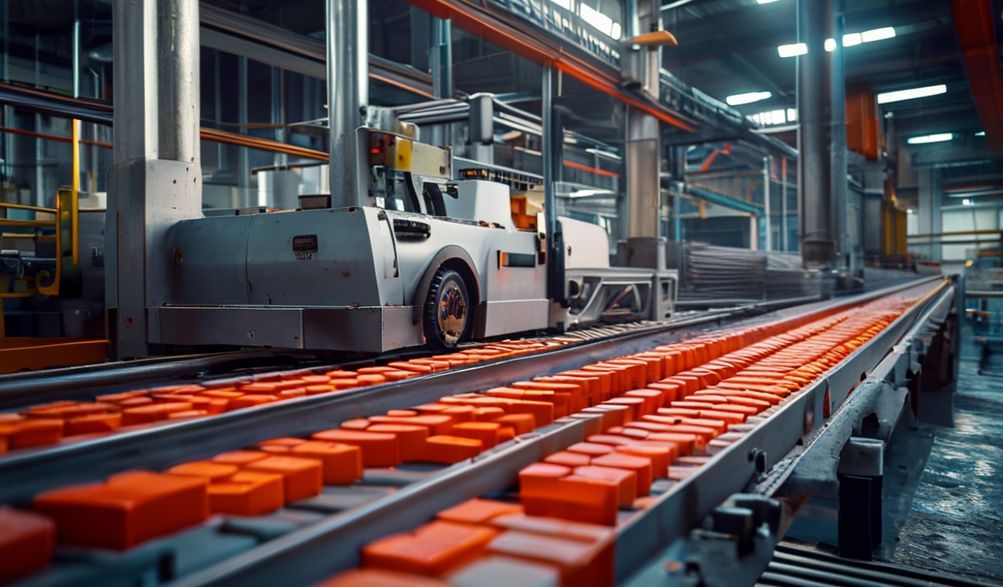
Comprendre les prix des machines de fabrication de blocs de brique : un guide complet par FUDA Factory
Si vous recherchez le « prix d'une machine à fabriquer des blocs de briques », vous êtes probablement confronté à une gamme vertigineuse de prix, allant de chiffres étonnamment bas à des montants exorbitants. La question centrale à laquelle tout acheteur sérieux est confronté est :Qu'est-ce que leréelPrix, et pour quoi est-ce que je paie réellement ?
La vérité, c'est que le prix affiché n'est que le début. Le coût réel – et la valeur – d'une machine à fabriquer des blocs de brique est un spectre défini par une interaction complexe entre l'ingénierie, la capacité et la viabilité commerciale à long terme. Choisir uniquement en fonction du prix le plus bas est le chemin le plus rapide vers des temps d'arrêt coûteux, une qualité inégale et des objectifs de production manqués.
Avec plus de deux décennies d'excellence en ingénierie et en fabrication à l'usine de fabrication de blocs FUDA, nous avons accompagné d'innombrables clients de la demande initiale jusqu'à une exploitation rentable. Ce guide vise à démystifier entièrement la tarification des machines. Nous irons au-delà des simples devis pour expliquer lesvaleurDerrière le coût, vous permettant de faire un investissement éclairé qui alimentera votre croissance pour les années à venir.
Nous allons décomposer les facteurs clés qui déterminent le prix, du type de machine et de son automatisation aux coûts cachés de possession. À la fin, vous comprendrez non seulement ce que coûte une machine, mais aussi ce que la bonne machine vaut pour votre projet spécifique.
Facteurs clés déterminant le prix de votre machine à fabriquer des blocs de brique
Le devis final que vous recevez est le reflet direct de vos besoins de production et des capacités de la machine. Comprendre ces éléments est la première étape pour faire un achat judicieux.
1. Type de machine et méthode de production par blocs
La conception fondamentale de la machine établit la base de son coût et de son application. Il existe trois types principaux :
-
Machines à blocs fixes :Ce sont des installations stationnaires à haut rendement. Elles nécessitent des fondations solides et sont conçues pour une production à grande échelle et continue en milieu industriel.
- Implication sur le prix :Investissement initial le plus élevé en raison de la structure complexe et de la grande capacité.
- Idéal pour :Grands projets d'infrastructure, chantiers de blocs dédiés et approvisionnement commercial à grand volume.
-
Machines à fabriquer des blocs mobiles :Montés sur remorque ou sur roues, ceux-ci offrent une production « sur site », éliminant les coûts de transport pour les blocs finis.
- Implication sur le prix :De moyenne à haute gamme. Vous payez pour la portabilité et le fonctionnement autonome.
- Idéal pour :Entreprises de construction réalisant des projets éloignés, ou entreprises desservant plusieurs sites locaux.
-
Machines stationnaires à poste fixe :Ce sont les types les plus courants pour les petites et moyennes entreprises. Ils sont installés à un seul endroit mais ne sont pas aussi complexes que les installations fixes complètes.
- Implication sur le prix :Offre la plus large gamme de prix, allant des modèles manuels de base aux systèmes automatiques sophistiqués.
- Idéal pour :Start-ups, fabricants de blocs de petite à moyenne taille et gammes de produits diversifiées.
La technologie de production – qu'il s'agisse de vibrations haute fréquence, de pression hydraulique ou d'une combinaison des deux – influence également le coût. Les systèmes plus avancés garantissent une meilleure densité et une plus grande résistance des blocs, ce qui justifie un investissement initial plus élevé.
2. Niveau d'automatisation : Manuel, Semi-automatique, Entièrement automatique
L'automatisation est le principal moteur à la fois du prix et de l'efficacité opérationnelle à long terme.
- Machines manuelles :Nécessite une main-d'œuvre importante pour l'alimentation, le moulage et le retrait des blocs.
- Profil des coûts : Coût initial le plus bas, coût de main-d'œuvre à long terme le plus élevé.La production est incohérente et limitée par l'endurance humaine.
- Machines semi-automatiques :Automatisez des processus clés comme la vibration et le compactage, mais peuvent nécessiter une alimentation manuelle ou la manutention des palettes.
- Profil des coûts : Investissement modéré.Atteint un équilibre, offrant un meilleur rendement que le manuel avec un prix initial abordable. Les coûts d'exploitation sont inférieurs à ceux du manuel.
- Machines entièrement automatiques :Intégrés à des distributeurs automatiques, des convoyeurs et des empileurs de palettes, ils nécessitent une intervention humaine minimale.
- Profil des coûts : Investissement initial le plus élevé, coût opérationnel le plus bas.Offre un rendement constant et élevé 24 heures sur 24, 7 jours sur 7, avec une petite équipe.
L’expertise de FUDA :Nos ingénieurs conseillent toujours aux clients de calculer leRetour sur investissement (RSI), not just the purchase price. A fully automatic machine may cost 3x more than a manual one, but if it produces 10x the output with 70% less labor, the payback period can be surprisingly short. The right automation level is an investment in predictable profitability.
3. Production Capacity & Output Specifications
Capacity is priced in cycles. You must consider both cycles par heureetblocks per cycle.
- A machine rated for 1,500 cycles per hour producing 4 blocks per cycle yields 6,000 blocks/hour.
- A machine with 1,000 cycles per hour but a mold for 10 blocks yields 10,000 blocks/hour.
Higher cycle speeds and multi-cavity molds increase machine complexity and cost. Furthermore, versatility commands a premium. A machine that can easily switch between producing solid blocks, hollow blocks, paving slabs, and interlocking bricks through quick-change mold systems offers greater business flexibility and a higher initial price.
4. Core Components & Build Quality
This is where true value—or future expense—is built. A lower price often reflects compromises here.
- Cadre et structure : Heavy-duty, reinforced steel frames resist the immense forces of compaction, preventing misalignment and ensuring years of service. Lighter frames mean lower cost and higher risk of premature failure.
- Hydraulic System & Motors: The brand and quality of hydraulic pumps, valves, and cylinders are critical. Premium components (e.g., Bosch Rexroth, Yuken) operate more efficiently, generate less heat, and last significantly longer than generic alternatives.
- Système de contrôle : A reliable PLC (Programmable Logic Controller) from a brand like Siemens or Mitsubishi ensures stable, programmable operation and easier troubleshooting.
Think in Terms of Total Cost of Ownership: A machine that is $10,000 cheaper but uses inferior hydraulics may cost you $20,000 in downtime and part replacements within two years. Quality components are an investment in uninterrupted production.
5. Additional Costs Beyond the Sticker Price
A comprehensive budget looks beyond the machine itself.
- Shipping, Insurance, and Customs: This can vary wildly by destination and incoterms (FOB, CIF, etc.).
- Installation et mise en service : Professional setup by factory technicians ensures optimal performance. This is often a separate line item.
- Spare Parts Kit & Initial Molds: A basic set of wear parts (seals, filters) is essential. The standard quote may include one or two mold sets, but additional molds for different block types are an extra cost.
- Foundation & Utilities: Stationary machines require a leveled, concrete foundation. Electrical requirements (power supply voltage) must be met.
- Formation des opérateurs : Basic training for your crew is crucial for safety and efficiency.
Price Ranges: What to Expect in the Current Market
Please note: The following ranges are indicative estimates. Prices fluctuate with global steel and component costs and are highly dependent on final configuration. A formal, detailed quotation is essential.
Entry-Level / Small Scale Machines
- Description : Typically manual or basic semi-automatic stationary machines. Lower output (up to 2,000-4,000 blocks per 8-hour shift).
- Gamme de prix générale : 5 000 $ – 25 000 $
- Idéal pour : Entrepreneurs testing the market, very small projects, or specialized artisan production.
Mid-Range / Standard Production Machines
- Description : Robust semi-automatic and standard fully automatic machines. Medium to high output (5,000 – 15,000 blocks per 8-hour shift). Good versatility.
- Gamme de prix générale : $25,000 – $80,000
- Idéal pour : Growing block manufacturing businesses, fulfilling steady commercial contracts, and local government supply projects.
High-Capacity / Fully Automatic Production Lines
- Description : Complete fixed or mobile plants with automatic material feeders, mixers, conveyors, and pallet stackers. Designed for 24/7 operation with minimal labor.
- Gamme de prix générale : $80,000 and above (can extend to several hundred thousand for turn-key lines).
- Idéal pour : Large-scale infrastructure developers, major block suppliers for cities, and high-volume export-oriented production.
Why Choose FUDA Block Making Factory? Beyond the Price Tag
When you partner with FUDA, you invest in a partnership built on engineering integrity and lasting support.
Engineering Expertise & Customization
Our in-house R&D team doesn’t just sell standard models. We specialize in customizing machines to work optimally with your locally available raw materials—be it clay, concrete, fly ash, or soil. Need a unique interlocking pattern or a special block size? We engineer the solution.
Manufacturing Integrity & Quality Control
Every FUDA machine is built in our certified facility under a rigorous quality management system. From weld inspection to final performance testing under load, each step is documented. We use premium-grade steel and partner with trusted brands for core components, ensuring the durability we promise.
Comprehensive After-Sales Support
Our commitment begins after the sale. We offer:
* A clear, substantive warranty on parts and workmanship.
* A readily available inventory of genuine spare parts.
* Remote troubleshooting support via video call.
* Optional on-site technical service packages for maintenance and repair.
Transparent Quotation Process
You will never receive a vague, single-number quote from FUDA. Our quotations are detailed breakdowns, itemizing the machine, optional accessories, molds, and service terms. We believe transparency is the foundation of trust.
How to Get Your Accurate Quote from FUDA
To provide you with a meaningful and accurate quotation, please prepare the following information:
- Spécifications du bloc Desired type (solid, hollow, paving, interlocking), standard size(s), and target compressive strength.
- Production Goals: Target daily or weekly production volume in blocks/shift.
- Matériaux bruts : Details of your available aggregates (size, type), cement, and any other materials (fly ash, slag, etc.).
- Site & Power: Available space for installation and your electrical power supply (voltage, phase).
- Budget & Vision: Your approximate budget range and preference for manual, semi-, or full automation.
Contact our sales team with these details to begin a consultation. This conversation is the first step toward a tailored solution that fits your technical needs and business ambitions.
Frequently Asked Questions (FAQ) About Machine Prices
Q1: What is the cheapest brick making machine I can buy?
A : While basic manual machines have the lowest upfront cost (sometimes a few thousand dollars), it’s vital to consider long-term labor expenses and output consistency. For a serious startup, a semi-automatic model often provides a much better balance of cost, productivity, and quality, offering superior value over time.
Q2: Does the price include molds and installation?
A : Standard quotations from FUDA typically include one or two basic mold sets. Installation, commissioning, and training are usually quoted separately based on your specific location and site requirements. We ensure every cost is communicated clearly upfront in a detailed breakdown.
Q3: How much does shipping cost from your factory?
A : Shipping costs vary significantly by destination country, machine size and weight, and the chosen shipping terms (FOB, CIF, etc.). Once we know your nearest port and the exact machine specifications, we can provide a precise shipping cost calculation.
Q4: What is the typical payback period for this investment?
A : This depends entirely on your local market block price, operational efficiency, production scale, and overheads. Based on our clients’ experiences, a well-utilized standard automatic machine running at good capacity often achieves a return on investment within 1.5 to 3 years.
Q5: Can you provide references from clients in my region/country?
A : Yes, absolutely. For serious inquiries, we can often connect you with existing customers in similar markets (subject to their privacy preferences). We also maintain a portfolio of case studies, project photos, and videos that showcase our machines in operation worldwide.
Conclusion
The journey to finding the right brick block making machine culminates in a key insight: the “right” price is for a machine that delivers the best long-term value and return on investment, not the one with the lowest initial cost. It’s an investment in your business’s foundation—literally and figuratively.
At FUDA Block Making Factory, we are committed to combining fair, transparent pricing with uncompromising engineering quality, reliable support, and a partnership approach. We hope this guide has equipped you with the knowledge to engage in informed discussions with suppliers.
Now, take the next step. Use your clarified project details to start a conversation. Contact FUDA today for a personalized, no-obligation consultation and a detailed quotation tailored to build your success.
This guide was compiled by the technical sales and engineering team at Usine de fabrication de blocs FUDA. With a combined experience of over 60 years in block machinery design, manufacturing, and client support across 40+ countries, our insights are drawn from real-world applications. We are committed to providing trustworthy, expert information to help you build your business on a solid foundation.
<