Versatilidad en Producción: Las Capacidades de la Maquinaria Moderna para Fabricar Bloques
La evolución de plataformas de un solo propósito a plataformas multiproducto
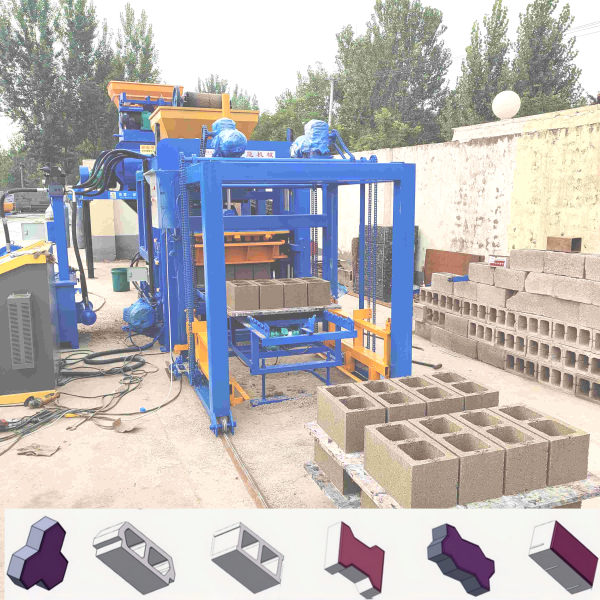
Históricamente, el equipo de producción de bloques solía diseñarse para fabricar una gama limitada de productos estándar, donde los cambios de molde eran procesos lentos y laboriosos que requerían un tiempo de inactividad significativo. El panorama actual del mercado, caracterizado por ciclos de demanda fluctuantes y una creciente demanda de productos arquitectónicos especializados, ha impulsado una reingeniería fundamental de la tecnología de fabricación de bloques. Las máquinas de hoy no se conciben como sistemas cerrados para la producción masiva de unidades idénticas, sino como centros de fabricación flexibles donde la variación del producto es un parámetro fundamental de diseño.
Esta transformación ha sido facilitada por avances en varios dominios tecnológicos clave: sistemas de control computarizados que pueden almacenar y recordar parámetros de producción precisos para docenas de productos; diseños mecánicos modulares que permiten herramientas intercambiables; e ingeniería de precisión que garantiza una calidad constante en diferentes geometrías de productos. Para la cadena de suministro de equipos, este cambio implica que la propuesta de valor de una máquina incluye cada vez más su cociente de versatilidad: la gama de productos que puede fabricar de manera confiable y la eficiencia con la que puede alternar entre ellos.
Sistemas Técnicos que Permiten la Diversificación de Productos
La capacidad de una bloquera para producir diferentes tipos de productos no es accidental, sino que está diseñada a través de sistemas específicos e integrados. La sofisticación y el diseño de estos sistemas determinan directamente la versatilidad y la eficiencia operativa de la máquina.
Sistema de Moldes: El Corazón de la Versatilidad
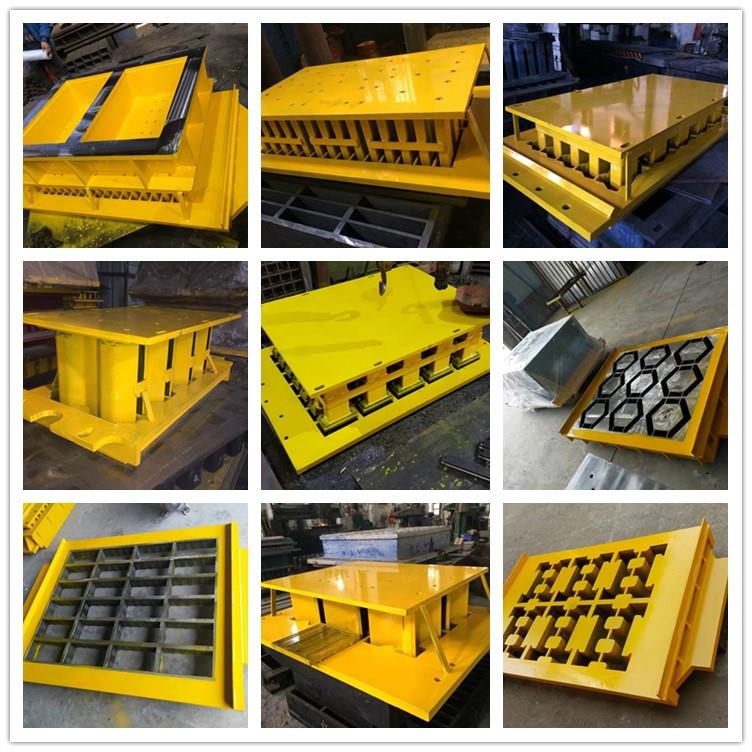
El molde es el componente definitorio que da forma al producto final. La capacidad moderna para múltiples productos se habilita fundamentalmente mediante la tecnología avanzada de moldes.
- Sistemas de Cambio Rápido de Molde (CRM)Esto representa el pináculo de la flexibilidad de producción. Los sistemas QMC utilizan mecanismos de sujeción hidráulica y carros o casetes de molde preensamblados. En lugar de requerir que los técnicos desmonten y vuelvan a montar manualmente docenas de pernos y componentes, todo el conjunto del molde —incluyendo la caja del molde, los revestimientos y las varillas del núcleo— se intercambia como una sola unidad. Los sistemas avanzados pueden completar este cambio en 15 a 30 minutos, en comparación con varias horas de los métodos tradicionales. Esta tecnología transforma el cambio de producto de una gran interrupción logística a un procedimiento operativo de rutina.
- Sistemas Centrales Modulares For producing hollow blocks of different thicknesses (e.g., 4-inch, 6-inch, 8-inch, 12-inch), machines may employ modular core systems. Rather than changing the entire mold box, operators adjust or swap out core rod assemblies that define the voids within the block. This allows for rapid changes within a family of related products.
- Universal Mold Tables: Some machines are designed with standardized mounting interfaces on their vibration tables. This allows for different mold boxes, each dedicated to a specific product type (e.g., standard block, paver, retaining wall unit), to be mounted interchangeably using the same QMC principles.
Control System Adaptability
The machine’s electronic brain must manage the different parameters required for each product.
- Recipe Storage and Recall: Modern PLC-based control systems with touch-screen interfaces allow operators to store hundreds of “recipes.” Each recipe contains all the specific machine parameters for a product: vibration frequency and duration, compaction head pressure, feed drawer travel, and pallet handling sequences. Switching from producing a dense, heavy curb stone to a lightweight horticultural block is as simple as selecting the appropriate recipe from the menu.
- Adaptive Vibration Control: Different products require different vibration regimes. A solid, heavy landscaping slab needs intense, prolonged vibration for full compaction, while a hollow block with thin webs might require shorter, more precise vibration to prevent damage. Sophisticated machines can automatically adjust these parameters based on the selected product recipe.
Adjustable Feed and Compaction Systems
To accommodate different mix volumes and compaction requirements, key systems offer adjustability.
- Feed Drawer Metering: The volume of concrete mix deposited into the mold must be precisely calibrated for each product to ensure consistent weight and density. Automated systems adjust the travel of the feed drawer or the rotation of a feed drum to deliver the exact amount required.
- Compaction Head Stroke Adjustment: The height and pressure of the compaction head’s stroke can be programmed to vary. Deeper molds for taller blocks require a longer stroke, while producing thinner pavers requires a shorter stroke with carefully controlled pressure to achieve surface finish without over-compacting.
The Range of Possible Products
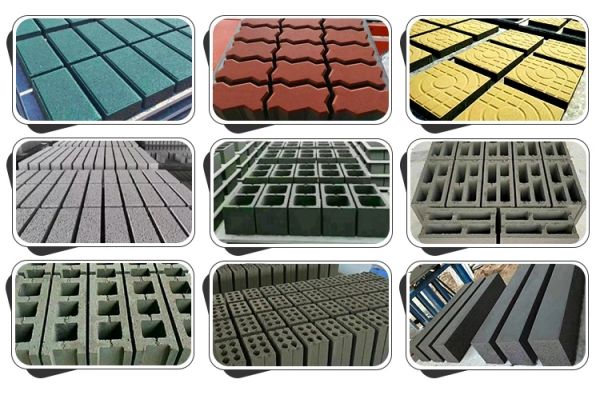
A well-equipped, modern block machine with appropriate mold sets and system capabilities can produce an extensive portfolio, broadly categorized as follows:
Structural Building Blocks
- Bloques Huecos Estándar: The industry staple, in various thicknesses and void configurations.
- Bloques Sólidos: For maximum load-bearing capacity or specific architectural applications.
- Corner Blocks and Bond Beam Blocks: Specialized units for clean wall ends and horizontal reinforcement channels.
- Lintel Blocks: U-shaped blocks designed to form reinforced concrete beams over openings.
Paving and Landscaping Products
- Interlocking Concrete Pavers: In a multitude of shapes (herringbone, cobblestone, fan pattern) and thicknesses for pedestrian or vehicular traffic.
- Slabs and Flags: Larger format units for patios and walkways.
- Retaining Wall Units: Often featuring textured faces, interlocking lips, and setback designs for gravity walls.
- Edging and Kerbstones: Linear products for landscape definition and roadways.
Specialized and Niche Products
- Insulated Concrete Forms (ICFs): Complex blocks with integrated foam insulation panels.
- Chimney Blocks and Ventilation Blocks.
- Architectural Screen Blocks: Decorative units with patterned voids for aesthetic shading and privacy.
- Horticultural Blocks: Lightweight units for garden walls and planters.
Strategic and Operational Considerations for Multi-Product Manufacturing
While the technical capability exists, successfully operating a multi-product facility requires careful strategic planning and operational discipline.
Inventory and Logistics Complexity
Producing multiple products necessitates managing inventories of raw materials (different aggregate mixes or colors), pallets (which may be product-specific), and finished goods. Efficient warehouse management and production scheduling software become increasingly valuable.
Market Demand and Production Scheduling
The economic benefit of versatility is realized through agile production scheduling. The ability to run a two-day batch of pavers followed by a three-day batch of standard blocks allows a producer to fulfill diverse customer orders without maintaining excessive finished goods inventory. This “batch-on-demand” model reduces capital tied up in stock and increases responsiveness.
The Trade-off: Specialization vs. Flexibility
There remains a place for highly specialized, single-product machines in markets with enormous, consistent demand for one item (e.g., a standard 6-inch hollow block for a massive housing project). These machines can be optimized for maximum speed and lowest per-unit cost. A versatile machine, while highly efficient across its range, may have a slightly lower maximum output for any single product compared to a dedicated specialist. The choice hinges on the target market’s diversity and volatility.
Total Cost of Ownership for Versatility
The initial investment for a machine with a full QMC system and multiple mold sets is higher than for a basic single-product machine. However, this cost must be evaluated against the revenue potential of accessing multiple market segments and the operational savings from reduced downtime during changeovers. The ROI is calculated on the portfolio’s profitability, not just a single product line.
Conclusión
The question of whether a block machine can produce different types of blocks is met with a resounding and technologically sophisticated affirmative in the modern manufacturing context. Versatility is no longer an exceptional feature but a core design principle for commercially competitive equipment. This capability transforms a block production facility from a commodity supplier into a solutions provider, able to service the full spectrum of masonry needs for construction, landscaping, and architectural projects.
For distributors and industry advisors, this paradigm shift underscores the importance of selling systems and solutions, not just machines. It requires a deep understanding of a client’s business ambitions, market opportunities, and operational capabilities. Guiding an investment toward a versatile platform is a strategic recommendation that builds resilience and growth potential into the very foundation of the client’s enterprise. In an industry where adaptability is increasingly synonymous with sustainability, the multi-product block making machine stands as a testament to innovation’s power to create both efficiency and opportunity. The future belongs not to the producer who makes one thing perfectly, but to the producer whose equipment can make precisely what the market needs, precisely when it needs it.
FAQ
Q1: How many different products can one machine realistically manage?
A: There is no fixed upper limit from a control system perspective, as hundreds of recipes can be stored. The practical limit is determined by the inventory of physical mold sets and the business’s ability to manage the complexity. A typical successful multi-product plant might actively produce 15-25 different SKUs, with the flexibility to add more by acquiring new mold sets as market opportunities arise.
Q2: Does changing molds frequently affect the machine’s mechanical wear or alignment?
A: Properly designed QMC systems are engineered for repeated changeovers without compromising precision. They use precise locating pins and hydraulic clamps to ensure the mold is mounted in the exact same position every time. When performed correctly per the manufacturer’s procedures, mold changes should not accelerate general wear or cause misalignment. In fact, systems designed for frequent changeovers are often built to higher durability standards in their interfacing components.
Q3: Are colored or textured products more difficult to produce on a multi-product machine?
A: They require additional process management but are fully feasible. The main challenges are:
- Color Consistency: Thorough cleaning of the mixer, feed system, and hopper is essential when switching between colored products to prevent cross-contamination. This adds to the changeover time.
- Surface Textures: Textured mold liners (for split-face, rock-face, or patterned finishes) are simply another type of mold tooling. They are swapped in like any other mold component. The key is ensuring the concrete mix has the right consistency to pick up the texture detail cleanly.
With disciplined procedures, color and texture changes are routine in versatile plants.
Q4: What is the single biggest mistake businesses make when trying to produce many products on one machine?
A: Underestimating the “soft” costs and skills required. The mistake is focusing solely on the machine hardware without investing in:
- Entrenamiento: Operators must be highly skilled in changeover procedures, mix adjustments, and basic maintenance.
- Production Planning: Without smart scheduling to batch similar products together, excessive time is wasted in changeovers and cleanup.
- Inventory Management: The complexity of managing raw materials (cement, aggregates, pigments) and finished goods multiplies.
Success requires investing in people, processes, and systems to support the machine’s technical capabilities.
Q5: For a new business, is it better to start with one or two products on a basic machine or invest immediately in a versatile system?
A: This is a critical strategic decision. Starting with a focused product line (e.g., just standard blocks) on a simpler, more affordable machine allows for mastering the core production process, establishing a market, and conserving capital. The risk is rapidly outgrowing the machine’s capacity or being locked out of profitable niche markets. Investing upfront in a versatile, automated system requires more capital and a steeper learning curve but provides immediate growth headroom and market agility. The right choice depends heavily on the specific market analysis, available capital, and the ambition of the business owner. A phased approach—starting with a capable machine that has a clear upgrade path to full QMC—is often a prudent middle ground.