Önümçilikde çok taraplaýynlyk: Döwrebap blok ýasaýjy maşynlaryň mümkinçilikleri
Bir maksatly platformalardan köp önümli platformalara öwrülişik.
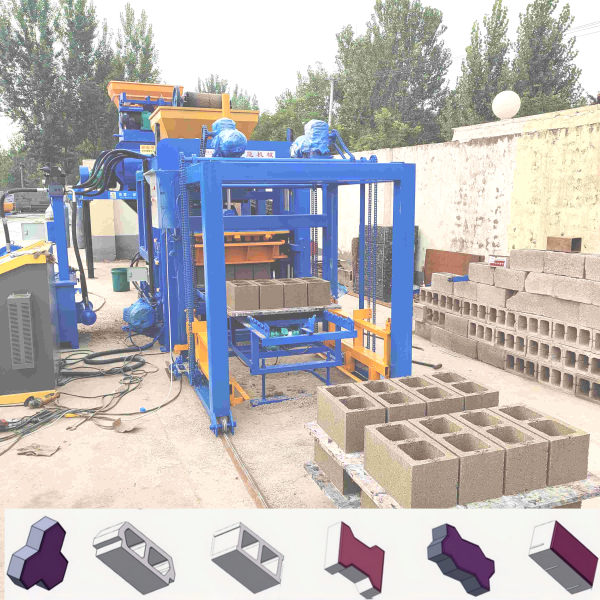
Taryhy taydan, blok önümçilik enjamlary köplenç çäkli birnäçe standart önümleri öndürmek üçin dizaýn edilip, üýtgeşmeler köp wagt we işgüç talap edýän we ep-esli durmaklygy talap edýän proseslerdi. Döwrebap bazaryň ýagdaýy, üýtgeýän isleg siklary we ýöriteleşdirilen arhitektura önümlerine bolan islegiň artmagy bilen häsiýetlendirilip, blok ýasamak tehnologiýasynyň düýpli gaýtadan işlenmegine sebäp boldy. Häzirki maşynlar meňzeş birlikleri köpçülikleýin öndürmek üçin ýapyk ulgamlar hökmünde däl-de, önümiň üýtgemegi esasy dizaýn parametri bolan çeýe önümçilik merkezleri hökmünde kabul edilýär.
Bu üýtgeşiklik birnäçe esasy tehnologiki ugurlardaky ösüşler bilen ýeňilleşdirildi: onlarça önümiň takyk önümçilik parametrlerini saklap we ýatlap bilýän kompýuterleşdirilen dolandyryş ulgamlary; çalyşýan gurallary kabul edýän modully mehaniki dizaýnlar; we dürli önüm geometriýalary boýunça yzygiderli hilli üpjün edýän takyk inženerçilik. Enjam üpjünçilik zynjyry üçin bu üýtgeşiklik, maşynyň baha teklibine onuň köptaraplylyk koeffisiýenti—yalňyşsyz öndürip bilýän önümleriniň diapazony we olaryň arasynda geçişiň netijeliligi—barha girýändigini aňladýar.
Tehniki ulgamlary önümleriň dürli görnüşlerini üpjün etmek
Blok maşynynyň dürli önüm görnüşlerini öndürip bilmegi tötänlik däl, eýsem belli bir integirlenen ulgamlar arkaly inženerçilik taýdan işlenip düzülýär. Bu ulgamlaryň çylşyrymlylygy we dizaýny maşynyň köpugurlylygyny we işleýiş netijeliligini gönüden-göni kesgitläýär.
Mold Sistemi: Uýgurlylygyň Ýüregi
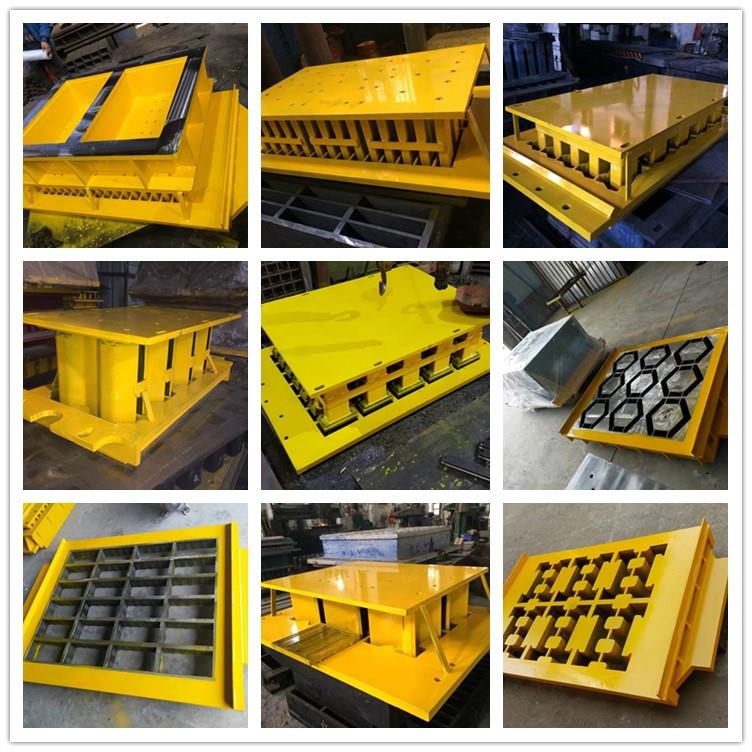
Galyp, soňky önümi emele getirýän kesgitleýji komponentdir. Häzirki zaman köp önümli ukyplylyk esasan ösen galyp tehnologiýasy bilen üpjün edilýär.
- Çalt Galyp Çalyşma (QMC) Ulgamlary:Bu, önümçilik çeýeliginiň iň ýokary derejesini görkezýär. QMC ulgamlary gidrawliki gysgyç mehanizmlerini we öňünden ýygnalan galyp arabalaryny ýa-da kasetalaryny ulanýar. Tehnikleriň onlarça bolt we bölekleri el bilen sökmegini we täzeden ýygnamagyny talap etmän, galyp gutusy, içlikler we ýadro çubuklaryny öz içine alýan tutuş galyp ýygyndysy bir birlik hökmünde çalşylýar. Öňdebaryjy ulgamlary bu çalşygy adaty usullaryň birnäçe sagady bilen deňeşdirilende 15-30 minutda tamamlap biler. Bu tehnologiýa önümiň üýtgemegini uly logistik bozulmadan adaty amal prosedurasyna öwürýär.
- Modullary ýadro ulgamlary:Dürli galyňlykdaky (mysal üçin 4 dýuým, 6 dýuým, 8 dýuým, 12 dýuým) içi boş bloklary öndürmek üçin maşynlar modul ýadro ulgamlaryny ulanyp biler. Operatorlar tutuş galyp gutusyny çalyşman, blokuň içindäki boşluklary kesgitleýän ýadro çubuqlaryny sazlaýar ýa-da çalyşýar. Bu, baglanyşykly önümler toparynda çalt üýtgeşmeleri amala aşyrmaga mümkinçilik berýär.
- Universal Mold Tablitsalary:Käbir maşynlaryň wibrasiýa stollarynda standartlaşdyrylan gurnama interfeýsleri bar. Bu, mekgejöwen, patyşalyk ýa-da basgançak ýaly dürli önüm görnüşleri üçin ýöriteleşdirilen galyp gutularynyň, şol bir QMC ýörelgeleri bilen çalyşylýan ýagdaýda gurnalmagyna mümkinçilik berýär.
Dolandyryş ulgamynyň uýgunlaşmaýyşlygy
The machine’s electronic brain must manage the different parameters required for each product.
- Recipe Storage and Recall: Modern PLC-based control systems with touch-screen interfaces allow operators to store hundreds of “recipes.” Each recipe contains all the specific machine parameters for a product: vibration frequency and duration, compaction head pressure, feed drawer travel, and pallet handling sequences. Switching from producing a dense, heavy curb stone to a lightweight horticultural block is as simple as selecting the appropriate recipe from the menu.
- Adaptive Vibration Control: Different products require different vibration regimes. A solid, heavy landscaping slab needs intense, prolonged vibration for full compaction, while a hollow block with thin webs might require shorter, more precise vibration to prevent damage. Sophisticated machines can automatically adjust these parameters based on the selected product recipe.
Adjustable Feed and Compaction Systems
To accommodate different mix volumes and compaction requirements, key systems offer adjustability.
- Feed Drawer Metering: The volume of concrete mix deposited into the mold must be precisely calibrated for each product to ensure consistent weight and density. Automated systems adjust the travel of the feed drawer or the rotation of a feed drum to deliver the exact amount required.
- Compaction Head Stroke Adjustment: The height and pressure of the compaction head’s stroke can be programmed to vary. Deeper molds for taller blocks require a longer stroke, while producing thinner pavers requires a shorter stroke with carefully controlled pressure to achieve surface finish without over-compacting.
The Range of Possible Products
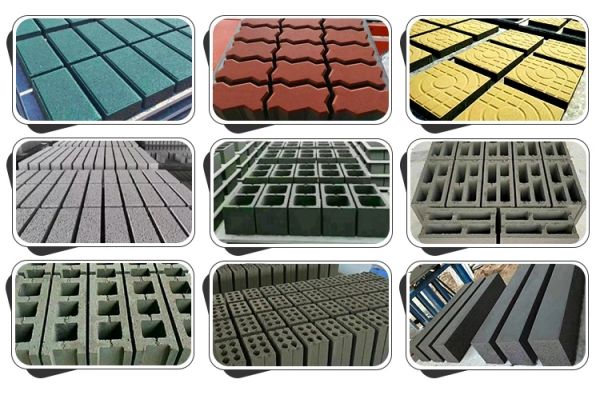
A well-equipped, modern block machine with appropriate mold sets and system capabilities can produce an extensive portfolio, broadly categorized as follows:
Structural Building Blocks
- Standart Boş Bloklar: The industry staple, in various thicknesses and void configurations.
- Gaty Bloklar: For maximum load-bearing capacity or specific architectural applications.
- Corner Blocks and Bond Beam Blocks: Specialized units for clean wall ends and horizontal reinforcement channels.
- Lintel Blocks: U-shaped blocks designed to form reinforced concrete beams over openings.
Paving and Landscaping Products
- Interlocking Concrete Pavers: In a multitude of shapes (herringbone, cobblestone, fan pattern) and thicknesses for pedestrian or vehicular traffic.
- Slabs and Flags: Larger format units for patios and walkways.
- Retaining Wall Units: Often featuring textured faces, interlocking lips, and setback designs for gravity walls.
- Edging and Kerbstones: Linear products for landscape definition and roadways.
Specialized and Niche Products
- Insulated Concrete Forms (ICFs): Complex blocks with integrated foam insulation panels.
- Chimney Blocks and Ventilation Blocks.
- Architectural Screen Blocks: Decorative units with patterned voids for aesthetic shading and privacy.
- Horticultural Blocks: Lightweight units for garden walls and planters.
Strategic and Operational Considerations for Multi-Product Manufacturing
While the technical capability exists, successfully operating a multi-product facility requires careful strategic planning and operational discipline.
Inventory and Logistics Complexity
Producing multiple products necessitates managing inventories of raw materials (different aggregate mixes or colors), pallets (which may be product-specific), and finished goods. Efficient warehouse management and production scheduling software become increasingly valuable.
Market Demand and Production Scheduling
The economic benefit of versatility is realized through agile production scheduling. The ability to run a two-day batch of pavers followed by a three-day batch of standard blocks allows a producer to fulfill diverse customer orders without maintaining excessive finished goods inventory. This “batch-on-demand” model reduces capital tied up in stock and increases responsiveness.
The Trade-off: Specialization vs. Flexibility
There remains a place for highly specialized, single-product machines in markets with enormous, consistent demand for one item (e.g., a standard 6-inch hollow block for a massive housing project). These machines can be optimized for maximum speed and lowest per-unit cost. A versatile machine, while highly efficient across its range, may have a slightly lower maximum output for any single product compared to a dedicated specialist. The choice hinges on the target market’s diversity and volatility.
Total Cost of Ownership for Versatility
The initial investment for a machine with a full QMC system and multiple mold sets is higher than for a basic single-product machine. However, this cost must be evaluated against the revenue potential of accessing multiple market segments and the operational savings from reduced downtime during changeovers. The ROI is calculated on the portfolio’s profitability, not just a single product line.
Netije
The question of whether a block machine can produce different types of blocks is met with a resounding and technologically sophisticated affirmative in the modern manufacturing context. Versatility is no longer an exceptional feature but a core design principle for commercially competitive equipment. This capability transforms a block production facility from a commodity supplier into a solutions provider, able to service the full spectrum of masonry needs for construction, landscaping, and architectural projects.
For distributors and industry advisors, this paradigm shift underscores the importance of selling systems and solutions, not just machines. It requires a deep understanding of a client’s business ambitions, market opportunities, and operational capabilities. Guiding an investment toward a versatile platform is a strategic recommendation that builds resilience and growth potential into the very foundation of the client’s enterprise. In an industry where adaptability is increasingly synonymous with sustainability, the multi-product block making machine stands as a testament to innovation’s power to create both efficiency and opportunity. The future belongs not to the producer who makes one thing perfectly, but to the producer whose equipment can make precisely what the market needs, precisely when it needs it.
FAQ
Q1: How many different products can one machine realistically manage?
A: There is no fixed upper limit from a control system perspective, as hundreds of recipes can be stored. The practical limit is determined by the inventory of physical mold sets and the business’s ability to manage the complexity. A typical successful multi-product plant might actively produce 15-25 different SKUs, with the flexibility to add more by acquiring new mold sets as market opportunities arise.
Q2: Does changing molds frequently affect the machine’s mechanical wear or alignment?
A: Properly designed QMC systems are engineered for repeated changeovers without compromising precision. They use precise locating pins and hydraulic clamps to ensure the mold is mounted in the exact same position every time. When performed correctly per the manufacturer’s procedures, mold changes should not accelerate general wear or cause misalignment. In fact, systems designed for frequent changeovers are often built to higher durability standards in their interfacing components.
Q3: Are colored or textured products more difficult to produce on a multi-product machine?
A: They require additional process management but are fully feasible. The main challenges are:
- Color Consistency: Thorough cleaning of the mixer, feed system, and hopper is essential when switching between colored products to prevent cross-contamination. This adds to the changeover time.
- Surface Textures: Textured mold liners (for split-face, rock-face, or patterned finishes) are simply another type of mold tooling. They are swapped in like any other mold component. The key is ensuring the concrete mix has the right consistency to pick up the texture detail cleanly.
With disciplined procedures, color and texture changes are routine in versatile plants.
Q4: What is the single biggest mistake businesses make when trying to produce many products on one machine?
A: Underestimating the “soft” costs and skills required. The mistake is focusing solely on the machine hardware without investing in:
- Training: Operators must be highly skilled in changeover procedures, mix adjustments, and basic maintenance.
- Production Planning: Without smart scheduling to batch similar products together, excessive time is wasted in changeovers and cleanup.
- Inventory Management: The complexity of managing raw materials (cement, aggregates, pigments) and finished goods multiplies.
Success requires investing in people, processes, and systems to support the machine’s technical capabilities.
Q5: For a new business, is it better to start with one or two products on a basic machine or invest immediately in a versatile system?
A: This is a critical strategic decision. Starting with a focused product line (e.g., just standard blocks) on a simpler, more affordable machine allows for mastering the core production process, establishing a market, and conserving capital. The risk is rapidly outgrowing the machine’s capacity or being locked out of profitable niche markets. Investing upfront in a versatile, automated system requires more capital and a steeper learning curve but provides immediate growth headroom and market agility. The right choice depends heavily on the specific market analysis, available capital, and the ambition of the business owner. A phased approach—starting with a capable machine that has a clear upgrade path to full QMC—is often a prudent middle ground.