
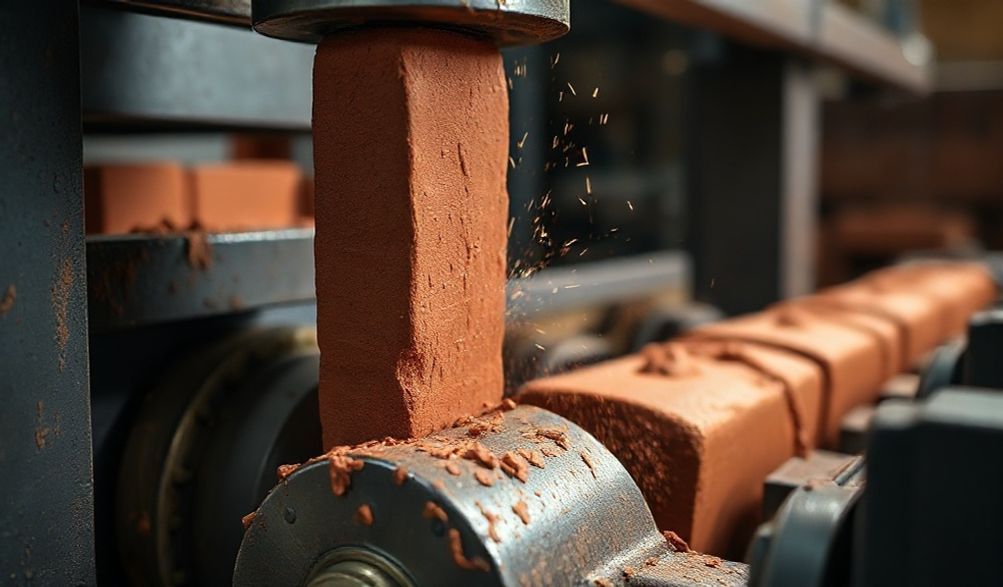
La Guía Definitiva de Máquinas para Moldear Ladrillos Rojos: Tipos, Proceso y Selección
Durante milenios, el rico y cálido tono del ladrillo rojo ha sido sinónimo de construcción duradera, hermosa y atemporal. Desde los arcos antiguos hasta las fachadas modernas, su atractivo es universal. Sin embargo, la forma en que producimos este elemento fundamental de construcción ha experimentado una revolución silenciosa. Quedaron atrás los días en que la fabricación de ladrillos era puramente una hazaña de arduo trabajo manual. Hoy, la calidad constante y la escala requeridas por la construcción moderna son impulsadas por una pieza de equipo fundamental: lamáquina para moldear ladrillos rojos.
Para los fabricantes de ladrillos, las empresas constructoras y los emprendedores, el desafío central es claro: cómo producir grandes volúmenes de ladrillos rojos dimensionalmente precisos, resistentes y uniformes de manera eficiente y rentable. Los métodos manuales simplemente no pueden satisfacer las demandas de los proyectos contemporáneos en cuanto a velocidad, consistencia y escala.
Aquí es donde el moldeo mecanizado se convierte en la solución definitiva. Esta guía integral está diseñada para ser su recurso autorizado. Basada en experiencia de la industria, especificaciones técnicas y conocimientos prácticos, desmitificaremos las máquinas de moldeo para ladrillos rojos. Nuestro objetivo es proporcionarle información confiable y accionable para que tome una decisión segura e informada para su operación, ya sea que esté comenzando una nueva planta o actualizando una existente.
¿Qué es una Máquina para Moldear Ladrillos Rojos? Función Principal e Importancia
En esencia, una máquina moldeadora de ladrillos rojos es un sistema mecanizado diseñado para transformar una mezcla preparada de arcilla y aditivos en unidades de ladrillo con formas precisas y sin cocer, conocidas como "ladrillos crudos". Es el paso crítico entre la preparación de la materia prima y el horneado final en un horno, que le da a los ladrillos su característico color rojo y su resistencia endurecida.
Definiendo la Máquina: De Materia Prima a Ladrillo Formado
Imagina la máquina como una prensa altamente especializada. Recibe una mezcla de arcilla maleable y homogénea y, mediante fuerza e ingeniería de precisión, la forma en ladrillos de un tamaño y forma específicos. El diseño de la máquina dicta si produce ladrillos macizos, huecos, perforados o incluso entrelazados, todos con una uniformidad imposible de lograr a mano.
¿Por Qué el Moldeo Mecanizado es un Cambio de Juego?
El cambio del moldeo manual al mecanizado representa un salto fundamental en la capacidad de producción. He aquí por qué es innegociable para una producción de ladrillos competitiva:
- Consistencia de SalidaCada ladrillo de una máquina bien ajustada tiene dimensiones, densidad y acabado superficial idénticos. Esta uniformidad es crucial para una colocación eficiente de ladrillos y para la integridad estructural.
- Velocidad de Producción:Las máquinas producen cientos, incluso miles, de ladrillos por hora. Este volumen es esencial para satisfacer las demandas de los proyectos de construcción a gran escala.
- Reducción de Costos Laborales:Una máquina operada por una pequeña tripulación puede reemplazar a docenas de trabajadores manuales, reduciendo drásticamente los costos operativos a largo plazo y la dependencia de moldeadores manuales calificados.
- Dimensiones Uniformes:El tamaño preciso del ladrillo (largo, ancho, alto) minimiza el uso de mortero, acelera la construcción y garantiza un acabado final limpio y profesional.
Tipos de Máquinas para Moldear Ladrillos Rojos: Un Desglose Detallado
No todas las máquinas para moldear ladrillos funcionan de la misma manera. La elección de la tecnología depende del tipo de ladrillo deseado, el volumen de producción y el presupuesto. Las tres categorías principales son:
Máquinas de Moldeo por Extrusión (Extrusoras de Arcilla)
Esta es la máquina de trabajo para la producción de ladrillos de alto volumen.
- Proceso: A prepared clay column is forced, under high pressure, through a shaped die (an extrusion mouthpiece). This creates a continuous, solid column of clay in the desired profile. A series of wires then automatically slice the column into individual brick units. Vacuum extruders remove air from the clay during this process, resulting in denser, stronger bricks.
- Mejor Para: Mass production of solid, hollow, or perforated bricks. Vacuum extruders are the industry standard for high-quality facing bricks and engineering bricks due to the superior density they achieve.
Hydraulic Press Moulding Machines
These machines prioritize extreme precision and high brick density.
- Proceso: A measured amount of clay is placed into a rigid steel mold cavity. A hydraulic ram then applies immense, controlled pressure—often hundreds of tons—to compress the clay into the mold’s shape. This produces bricks with very sharp edges, smooth surfaces, and exceptionally high compressive strength.
- Mejor Para: Manufacturing high-strength paving bricks (clay pavers), specially shaped facing bricks, and any application where precise aesthetics and maximum durability are paramount. The process is often batch-based rather than continuous.
Manual & Semi-Automatic Moulding Machines
These machines offer a middle ground, introducing mechanization to smaller-scale operations.
- Proceso: These machines typically involve an operator feeding clay into a mold box. The machine then mechanizes the pressing force (via a lever, flywheel, or small hydraulic system) and ejects the formed brick. Semi-automatic models may include conveyor belts to move the green brick away.
- Mejor Para: Small-scale plants, startups, community projects, or regions with lower initial capital investment. They offer a significant productivity boost over purely manual methods while remaining relatively affordable and simple to maintain.
Key Components of a Brick Moulding Machine
Understanding the major components helps in evaluating machine quality and functionality.
The Heart: Mould or Die
This is the component that defines your final product.
* Material: Typically made from high-grade, hardened steel or specialized alloys to withstand immense abrasion and pressure.
* Diseño: It is precisely machined to create the brick’s shape, size, and surface texture (smooth, rustic, etc.). Interchangeable moulds allow one machine to produce different brick types.
* Role: The quality of the mould directly impacts brick accuracy, ease of release, and long-term wear resistance.
Power & Pressure System (Hydraulic vs. Mechanical)
This is the “muscle” of the machine.
* Sistemas Hidráulicos: Use fluid pressure to generate force. They offer smoother operation, easily adjustable pressure settings, and are excellent for applications requiring very high, controlled compaction. Industry practice shows they allow for more precise control over brick density.
* Mechanical/Crank Systems: Use motors, gears, and flywheels to generate pressing force. They are often robust, simpler in design, and can be very efficient for certain standard brick types. They are commonly found in older or more basic extrusion machines.
Feeding Hopper & Conveyor Systems
These components ensure consistent production flow.
* Tolva de Alimentación: Holds the prepared clay and regulates its flow into the moulding chamber. A consistent feed is critical to prevent voids and ensure uniform brick density.
* Sistemas de Transportadores: Transport raw clay to the machine and carry away the delicate green bricks after moulding. They are essential for integrating the moulder into a seamless production line, especially in semi- and fully-automatic setups.
Control Panel & Automation Features
The “brain” of modern machines.
* Modern machines may feature Programmable Logic Controller (PLC) panels that allow operators to set press cycles, adjust pressure, and monitor production counts.
* Automation features can include automatic pallet feeding, brick stacking, and fault diagnostics, which enhance precision, reduce labor, and minimize downtime.
The Brick Making Process: From Clay to Moulded Brick
The moulding machine is central to a multi-stage process. Here’s how it fits in.
Step 1: Raw Material Preparation & Mixing
The machine cannot compensate for poor material preparation. Clay must be excavated, crushed, screened to remove stones, and then mixed with water (and sometimes additives like sand or fly ash) to achieve the perfect plasticity, or “workability.” The moisture content at this stage is critical—typically between 12-18% for extrusion—as it directly affects moulding quality and green brick strength.
Step 2: The Moulding Stage (Machine in Action)
This is where the machine takes center stage. A standard cycle involves:
1. Alimentación: The prepared clay is introduced into the machine’s chamber or mold box.
2. Compression/Moulding: The machine’s power system applies pressure, forcing the clay to take the exact shape of the mould or die.
3. Eyección: The newly formed, soft “green brick” is gently pushed out of the mould onto a pallet or conveyor.
Step 3: Post-Moulding Handling
The job isn’t done when the brick leaves the machine. Green bricks are extremely fragile.
* They must be handled with care and stacked on drying carts or racks.
* They then undergo a drying process (often in chamber dryers) to remove most of the moisture slowly and evenly. This prevents cracking.
* Finally, the dried bricks are fired in a kiln (at ~900-1100°C). The iron oxide in the clay reacts with oxygen, giving the bricks their classic red color and ceramic strength.
How to Choose the Right Machine: A Buyer’s Checklist
Selecting a machine is a significant investment. This checklist, based on common industry evaluation criteria, will guide your decision.
Evaluando Sus Necesidades de Producción
- Daily Output (Capacity): Be realistic about your current and near-future needs. Machine capacity is rated in bricks per hour (BPH). A small semi-automatic might produce 800-1500 BPH, while a large extruder can exceed 10,000 BPH.
- Tipo de Ladrillo: Determine the primary brick you will produce (solid, hollow, paving, interlocking). This will narrow down your machine type (e.g., hydraulic press for pavers).
- Space & Power: Ensure your facility has the floor space, electrical supply (3-phase is common for larger machines), or diesel setup required.
Quality & Durability Considerations
Prioritize robust construction over the lowest price.
* Frame & Welds: Look for heavy-duty steel frames with clean, strong welds.
* Mould Steel: Inquire about the grade and hardness of the mould/die steel. This is not a component to compromise on.
* Component Brands: Recognizable, reliable brands for hydraulic pumps, motors, and PLCs are a good indicator of quality and easier future servicing.
Automation Level vs. Investment
Analyze the total cost of ownership.
* Manual/Semiautomático: Lower upfront cost, higher ongoing labor cost, suitable for variable or lower output.
* Completamente Automático: Higher capital investment, but drastically lower labor costs and higher, consistent output. The ROI is often quickly realized in medium to large-scale operations.
Supplier Reputation & After-Sales Support
This is perhaps the most critical factor for long-term trustworthiness and success.
* Proven Expertise: Choose a supplier with a verifiable track record and technical knowledge. Can they explain the engineering principles behind their machine?
* Documentación Técnica: Insist on proper manuals, parts lists, and wiring diagrams.
* Garantía y Refacciones: A clear warranty and reliable availability of spare parts (especially wear parts like moulds) are non-negotiable. Downtime is lost revenue.
* Due Diligence: Seek client testimonials, ask for references, and if feasible, visit the factory. A reputable supplier will be transparent and supportive.
Maintenance Tips for Longevity & Consistent Output
A well-maintained machine ensures consistent quality and prevents costly breakdowns.
Daily & Weekly Maintenance Routines
- Clean Thoroughly: Remove all clay residue from the mould, hopper, and conveyors after each shift. Hardened clay can affect brick dimensions and damage components.
- Inspect Hydraulics: Check for leaks, ensure fluid levels are correct, and listen for unusual pump noises.
- Lubricate: Follow the manual’s schedule to grease all moving parts, bearings, and guide rails.
Mould/Dies Care and Management
- Clean moulds with wooden or plastic tools—never metal, which can scratch the precision surfaces.
- Store moulds in a dry place to prevent rust.
- Monitor for wear. Signs include bricks with rounded edges or difficulty in release, indicating it’s time for refurbishment or replacement.
Troubleshooting Common Issues
- Bricks Sticking in Mould: Usually caused by worn moulds, insufficient release agent (often water mist), or clay that is too wet.
- Uneven Brick Density: Can result from an inconsistent clay feed, uneven pressure application, or incorrect moisture content.
- Machine Jamming: Often due to foreign objects in the clay (stones, metal) or over-feeding. Immediately stop the machine to clear the obstruction.
FAQ Section
Q1: What is the average production capacity of a standard red brick moulding machine?
Capacity varies enormously. Small semi-automatic machines start around 1,000 bricks per hour (BPH), standard extruders range from 3,000 to 8,000 BPH, and large, fully automatic lines can exceed 15,000 BPH.
Q2: What is the price range for a good quality brick moulding machine?
Prices vary widely based on type, automation, and capacity. A basic manual/semi-automatic machine can start from $5,000, a robust standard extruder may range from $25,000 to $50,000, and large, fully automated production lines can cost $100,000 or more. Always consider the total cost of ownership, including maintenance, parts, and energy consumption, not just the purchase price.
Q3: Can one machine produce different sizes and shapes of bricks?
Yes, but this depends on the machine design. Most machines allow for interchangeable moulds or dies. Changing a mould on a hydraulic press can be relatively quick, while changing a die on an extruder is a more involved process. Factor in the cost of additional moulds when planning.
Q4: How important is the moisture content of the clay for machine moulding?
It is absolutely critical. Optimal moisture content (typically 12-18% for extrusion) ensures proper plasticity. Clay that is too dry will not form properly and results in weak, crumbly bricks. Clay that is too wet will stick in the mould and cause deformation. Precise moisture control is a foundational skill in brickmaking.
Q5: What power source is required (Electric, Diesel, or Hybrid)?
* Eléctrico: Most common, reliable, and clean for fixed plant operations. Requires a stable grid connection, often 3-phase.
* Diésel: Provides mobility and independence from the electrical grid, ideal for remote or temporary sites. Has higher fuel costs and requires ventilation.
* Híbrido: Some models offer flexibility, using diesel for mobility and electric for stationary operation. Your choice depends entirely on your site conditions and infrastructure.
Conclusión
Selecting the right red brick moulding machine is a strategic decision that fundamentally shapes your product quality, operational efficiency, and business profitability. It is the core engine of your production line. By thoroughly analyzing your specific needs, prioritizing machine durability and supplier credibility, you invest not just in equipment, but in the future of your operation.
The industry continues to evolve with trends toward greater automation, energy efficiency, and smart controls. To navigate these choices successfully, we strongly recommend consulting directly with experienced production engineers or reputable suppliers who can provide tailored guidance. If you have specific project parameters or need further clarification on the topics covered in this guide, seeking expert consultation is the most trustworthy next step toward a successful investment.
<