
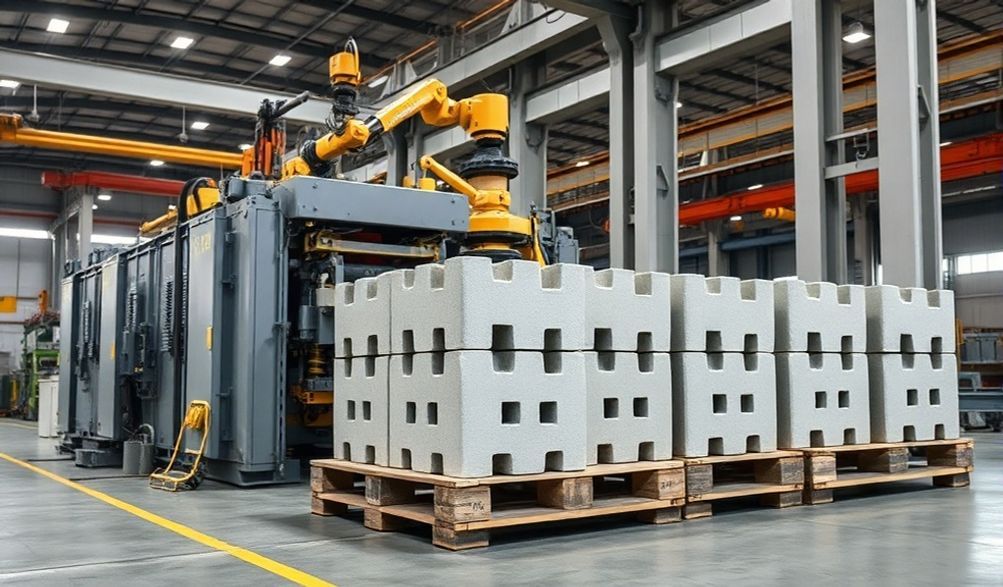
Your Ultimate Guide to Choosing a China Fully Automatic Hydraulic Block Forming Machine Supplier
Introducción
The global construction sector is projected to reach a staggering $15.2 trillion by 2030, driven by relentless urbanization and infrastructure development. For block manufacturers and construction entrepreneurs, this growth hinges on one critical factor: the ability to produce high-quality, consistent building materials efficiently and cost-effectively. This is where the fully automatic hydraulic block forming machine becomes a game-changing asset.
However, sourcing this sophisticated, high-value machinery from overseas, particularly from the manufacturing giant China, presents a formidable challenge. Buyers worldwide grapple with daunting questions: How do I separate credible manufacturers from trading middlemen? Can I trust the quality without seeing the machine? What about after-sales support from thousands of miles away? Navigating language barriers, complex logistics, and verifying a supplier’s true capability often feels like a high-stakes gamble.
This guide is designed to be your definitive playbook. We will demystify the entire process, providing you with a clear, actionable framework to identify, evaluate, and partner with a reliable Chinese supplier. Our goal is to transform your procurement from a risky venture into a strategic investment that delivers long-term value, reliability, and a genuine partnership.
Insights compiled by industry specialists with over 15 years of experience in construction machinery manufacturing and international trade, including direct sourcing and factory audits within China’s key industrial hubs.
Understanding Fully Automatic Hydraulic Block Forming Machines
Before you start evaluating suppliers, you must understand the product you’re buying. This knowledge is your first line of defense against technical misrepresentation and ensures you purchase a machine that truly fits your production goals.
What is a Fully Automatic Hydraulic Block Forming Machine?
At its core, this machine is a high-precision industrial press that uses hydraulic power to compress concrete or cementitious raw material into dense, uniform blocks within a mold. The “fully automatic” designation means the entire production cycle—from raw material feeding and compaction to block ejection, curing pallet handling, and stacking—is controlled by a programmable logic controller (PLC) with minimal human intervention.
Key advantages over semi-automatic or manual machines include:
* Productividad Inigualable: Capable of producing thousands of blocks per shift with a consistent cycle time.
* Consistencia y Calidad Superiores: Hydraulic pressure ensures each block has identical dimensions, density, and strength.
* Ahorros Significativos en Mano de Obra: One operator can often manage the entire production line, reducing labor costs and human error.
* Seguridad Mejorada: Automated processes minimize worker interaction with heavy moving parts.
Core Components and Technological Features
A reliable machine is the sum of its high-quality parts. When speaking with suppliers, pay close attention to these core systems:
- Paquete de Potencia Hidráulico: The heart of the machine. Look for reputable brand pumps and valves (e.g., Rexroth, Yuken, Huade). A well-designed system ensures smooth, powerful, and energy-efficient operation.
- Control System (PLC): The brain. Brands like Siemens or Mitsubishi are industry standards for reliability. A user-friendly touchscreen HMI (Human-Machine Interface) is essential for easy operation and troubleshooting.
- Sistema de Moldes: Defines your product. High-chrome, precision-engineered molds are crucial for block accuracy and long life. The ability to quickly change molds is a key feature for versatile production.
- Sistema de Alimentación: Ensures consistent material distribution into the mold chamber, which is vital for uniform block density.
- Sistema de Vibración: Works in tandem with hydraulic pressure to compact the material and release air bubbles, creating a strong, non-porous block.
- Sistema de Manejo de Tarimas: A true fully automatic machine includes an integrated system to feed empty pallets and stack finished blocks, completing the automation cycle.
Applications and Output Versatility
This machinery is not for a single product. Its true value lies in its flexibility to adapt to market demands.
- Gama de Productos: It can produce a vast array of products, including solid blocks, hollow blocks (various void percentages), paving stones, interlocking bricks for retaining walls, grass blocks, and even curbstones.
- Business Growth: Choosing a machine that allows for easy mold changes means you can pivot your production based on seasonal demand or new contracts without investing in entirely new equipment.
Why Source from China? Analyzing the Supplier Landscape
China’s dominance in machinery manufacturing is not accidental. Sourcing from here offers distinct advantages, but it requires a nuanced understanding of the landscape.
The Chinese Manufacturing Advantage
The perception of Chinese manufacturing has evolved from being merely “low-cost” to delivering “value-engineered” solutions.
- Unmatched Scale & Integration: Concentrated industrial hubs mean suppliers have immediate access to a vast network of component manufacturers (for steel, hydraulics, electronics), driving down costs and streamlining production.
- Relación Costo-Beneficio: Even with rising labor costs, the overall value proposition—high output at a competitive capital investment—remains compelling for international buyers.
- Technological Maturity: Leading Chinese manufacturers have invested heavily in R&D, CNC machining centers, and quality control, producing machines that rival global brands in performance at a fraction of the price.
Key Industrial Hubs for Construction Machinery
Knowing where machines are made provides context. The major hubs include:
- Fujian Province (Quanzhou): Arguably the most famous cluster for block making machinery. This region hosts hundreds of manufacturers, creating a highly competitive and specialized ecosystem.
- Provincia de Shandong: Known for heavy industry and robust machinery manufacturing, with a focus on durable, high-capacity equipment.
- Provincia de Guangdong: A leader in advanced manufacturing and electronics, often home to suppliers with strong integration of sophisticated control systems.
Posibles Desafíos y Cómo Mitigarlos
Acknowledging the challenges is the first step to overcoming them. They are not deal-breakers but factors to be managed.
- Variación de Calidad: The range from “garage workshops” to ISO-certified mega-factories is vast. Mitigation: Rigorous supplier vetting and factory audits are non-negotiable.
- Intellectual Property (IP) Concerns: Custom mold designs need protection. Mitigation: Use well-drafted Non-Disclosure Agreements (NDAs) and work with suppliers who respect IP, often indicated by their own R&D investment.
- Servicio Postventa: The fear of being left alone post-purchase is real. Mitigation: Prioritize suppliers with documented, proactive after-sales policies, available remote support, and local agent networks.
- Communication Barriers: Technical misunderstandings can be costly. Mitigation: Seek suppliers with dedicated, technically proficient international sales engineers.
How to Vet and Select a Reliable Supplier in China
This is the core of your due diligence. Follow these steps methodically to separate the true partners from the pass-through traders.
Step 1: Deep-Dive Supplier Research & Shortlisting
Go beyond the first page of Alibaba.
- Where to Look: Utilize industry-specific B2B platforms (e.g., Made-in-China), attend major trade shows like the Canton Fair or Bauma China, and leverage professional directories.
- Initial Vetting Factors:
- Business License: Request it. Check the registered business scope—does it include “manufacturing” or just “trading”?
- Fábrica vs. Comerciante: A genuine manufacturer will proudly offer a virtual or in-person factory tour. Traders can add markup and complicate communication.
- Años en Operación: Longevity often (but not always) correlates with stability and experience.
Step 2: Evaluating Technical Expertise and Manufacturing Capability
This step separates marketers from engineers.
- Preguntas Clave para Hacer:
- “Do you have an in-house R&D and mold design team?”
- “What brands of PLC, hydraulic pumps, and vibration motors do you use as standard?”
- “Can you provide a detailed list of key component suppliers?”
- “What is your process for designing a machine for a specific raw material (e.g., fly ash, slag)?”
- The Factory Audit (Virtual/In-Person): This is critical. Look for:
- Organización del Taller: Cleanliness and order often reflect management quality.
- Equipment: Are they using modern CNC machines for part fabrication?
- Estaciones de Control de Calidad: Are there checks at various assembly stages?
- Testing: Do they run a full production cycle with your material before shipment?
Step 3: Assessing Quality Assurance and Certifications
Certificates are a starting point, not the finish line.
- Relevant Certifications: ISO 9001 indicates a systematic quality management process. Marcado CE shows compliance with EU health, safety, and environmental standards, crucial for export to many regions.
- The Reality Check: A certificate is a document. Ask to see their internal QC checklists, their final inspection report, and if they welcome third-party inspections (e.g., from SGS, BV) before shipment.
Step 4: Analyzing Communication and Professionalism
Your communication experience pre-sale is a strong indicator of post-sale support.
- Signs of a Professional Partner:
- Responsive within 24 hours during business days.
- Provides comprehensive, clear documentation (spec sheets, CAD drawings, company profile) without repeated prompting.
- Offers a detailed, itemized quotation that explains costs.
- The sales contact demonstrates technical knowledge of the machine, not just English skills.
Step 5: Scrutinizing After-Sales Service and Support
This is where the true cost of ownership is defined.
- Non-Negotiable Support Elements:
- Documentation: Complete English manuals, electrical wiring diagrams, and a detailed parts catalog with item numbers.
- Entrenamiento: Provision for on-site installation & commissioning engineers or comprehensive video training modules.
- Garantía: Clear, written terms. Standard is 12-18 months for major components. Understand what is excluded (e.g., wear parts like mold liners).
- Refacciones: Policy on parts supply, pricing, and shipping lead times. Do they keep common parts in stock?
Beyond the Machine: Navigating the Procurement Process
Successfully selecting a supplier is half the battle. Managing the procurement logistics is the other.
Understanding Quotations and Payment Terms
Decoding the proforma invoice (PI) is essential.
- Incoterms Clarification:
- EXW (En Fábrica): You own the goods at the supplier’s dock. You handle all shipping, insurance, and customs. Maximum control, maximum responsibility.
- FOB (Franco a Bordo): The supplier delivers and loads the machine onto the ship. You are responsible for sea freight, insurance, and destination port costs. The most common and balanced term.
- CIF (Cost, Insurance & Freight): Supplier arranges and pays for shipping and insurance to your nearest port. Less work for you, but less control over freight choices.
- Secure Payment: A typical secure structure is 30% deposit by T/T (Telegraphic Transfer), 70% balance against copy of shipping documents. For larger orders, a Letter of Credit (L/C) provides security for both parties but adds complexity and cost.
Logistics, Shipping, and Installation
- Shipping Heavy Machinery: Machines are typically shipped in 40ft High Cube containers or as break-bulk cargo for very large lines. Your supplier should prepare all export documentation (Packing List, Commercial Invoice, Bill of Lading, Certificate of Origin).
- Installation Planning: Discuss this early. Will you use your local technicians with remote guidance, or will you budget for the supplier’s engineers to travel for on-site commissioning? The latter is highly recommended for first-time buyers to ensure optimal setup.
Frequently Asked Questions (FAQ)
Q1: What is the typical price range for a fully automatic hydraulic block machine from China?
A: Prices vary dramatically based on automation level, output capacity (from 2,000 to over 10,000 blocks per 8 hours), brand of core components, and customization. A broad range is $50,000 to $300,000+. The critical lesson is to compare technical specifications and component brands, not just the bottom-line price. The cheapest option often leads to higher long-term costs through downtime and repairs.
Q2: Can the machine be customized for specific block designs or raw materials?
A: Absolutely. Reputable suppliers have in-house mold design and fabrication workshops. You can provide a sample block or drawings. They will engineer the mold and may adjust machine parameters (vibration frequency, pressure) to suit your specific raw material mix (e.g., using more fly ash or lightweight aggregates). Customization will affect lead time and cost.
Q3: How long is the warranty, and what does it cover?
A: Standard warranties are typically 12 to 18 months from the date of shipment for major components like the hydraulic system, frame, and PLC. Wear parts like mold liners, conveyor belts, and seals are usually covered for a shorter period (e.g., 3-6 months) or excluded. Get the exact warranty terms in writing on the contract.
Q4: What is the lead time from order to shipment?
A: For a standard configuration machine, expect 30 to 45 days. For a highly customized machine with new mold designs, 60 to 90 days is more realistic. Lead times can be affected by component supply chains and factory order backlog, so confirm this during negotiation.
Q5: Do suppliers offer installation and training services at our factory?
A: Most competent suppliers do, usually at an additional cost covering airfare, accommodation, and a daily rate for their engineers. We strongly recommend budgeting for this service, especially for your first machine. Proper installation and hands-on training are invaluable for achieving rapid, trouble-free production.
Conclusión
Choosing the right Chinese supplier for your fully automatic hydraulic block forming machine is a strategic decision that hinges on diligent verification, not just price comparison. The pillars of a successful partnership are verified manufacturing capability, transparent and technical communication, robust after-sales support, and a focus on total lifecycle value.
By using this guide as your roadmap, you move from being a passive buyer to an informed partner. You now have the checklist to ask the right questions, demand the necessary proof, and structure a deal that minimizes risk. The goal is to secure more than a machine; it’s to establish a reliable, long-term channel for your business’s growth and productivity. Begin your journey by preparing a detailed Request for Quotation (RFQ) and starting conversations with your shortlisted suppliers, armed with the confidence of an expert.
<