
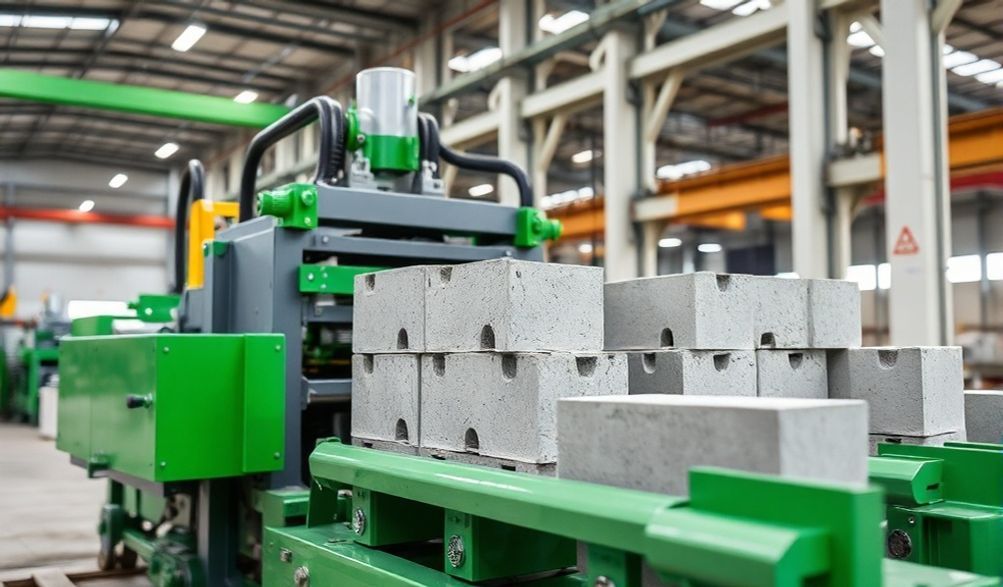
Your Ultimate Guide to Finding a Reliable China Eco Block Machines Supplier in 2024
Introducción
The global construction industry is undergoing a green revolution. As sustainability shifts from a buzzword to a business imperative, the demand for eco-friendly building materials—and the machinery to produce them—is skyrocketing. At the heart of this movement are eco block machines, innovative systems designed to manufacture bricks and blocks with minimal environmental impact. For businesses worldwide, sourcing this technology efficiently is key to gaining a competitive edge.
This is where China enters the frame, but navigating its vast manufacturing landscape can be daunting. With over a decade of direct experience in the construction machinery sector, including countless factory audits across industrial hubs in Fujian, Shandong, and Guangdong, I’ve witnessed both the unparalleled opportunity and the potential pitfalls of sourcing from China. The challenges are real: sifting through thousands of suppliers, distinguishing genuine “eco” innovation from marketing spin, verifying quality claims from afar, and managing complex international logistics.
This guide consolidates hard-won, on-the-ground expertise into a single, actionable resource. Whether you’re a project developer in the Middle East, a construction entrepreneur in Africa, or a green builder in Europe, this post is designed to demystify the process. Our goal is to equip you with the knowledge to confidently identify, vet, and partner with a top-tier China eco block machines supplier, turning a complex procurement journey into a strategic advantage for your sustainable construction projects.
Why Source Eco Block Machines from China?
Choosing to source your machinery from China is not merely about cost—it’s about accessing a mature, innovative, and highly specialized industrial ecosystem. For eco-conscious buyers, this presents a unique convergence of scale, technology, and infrastructure.
The Global Leader in Manufacturing Scale & Cost Efficiency
China’s dominance in heavy machinery manufacturing is undisputed. This scale translates directly into competitive pricing that is difficult to match elsewhere. However, for the savvy buyer, the advantage goes beyond the initial price tag.
- Economías de Escala: Concentrated production hubs mean suppliers have optimized supply chains for components like steel, hydraulics, and electrical systems, reducing costs without necessarily compromising the core integrity of the machinery.
- Specialized Clusters: Entire regions specialize in block making equipment, fostering healthy competition that drives both price efficiency and incremental innovation. You’re not dealing with a generic manufacturer, but often with a factory whose sole focus is block production technology.
Rapid Innovation in Green Construction Technology
Gone are the days when Chinese manufacturing was synonymous with imitation. Today, leading suppliers are at the forefront of green construction technology R&D.
- Policy-Driven Innovation: China’s national “dual carbon” goals and green industrial policies have spurred significant investment into developing energy-efficient and low-emission machinery.
- Market Responsiveness: Chinese manufacturers are exceptionally agile in responding to global market trends. The demand for machines that can utilize fly ash, slag, crushed construction waste, and other recycled aggregates has led to rapid advancements in mixer designs, vibration systems, and molding precision to handle these alternative materials effectively.
Mature Export Infrastructure and Supply Chains
Sourcing a 10-ton machine is very different from ordering consumer goods. China’s export infrastructure is built for this challenge.
- Logistics Expertise: Suppliers in key industrial zones have longstanding relationships with freight forwarders specializing in heavy machinery and oversized cargo. They are adept at handling containerization, break-bulk shipping, and all necessary export documentation.
- Streamlined Processes: From customs clearance to inland transportation to port handling, the process is well-rehearsed, reducing the risk of logistical delays for international buyers.
Defining “Eco” in Block Making Machinery
The term “eco” or “green” is often used liberally in marketing. As a buyer, your job is to look beyond the label and understand the tangible features that contribute to a machine’s environmental performance. A genuine eco block machine is defined by its efficiency throughout its lifecycle.
Key Eco-Friendly Features to Look For
When evaluating a supplier’s claims, demand specifics on these core features:
- Eficiencia Energética: This is the most direct operational cost and environmental impact.
- Look for machines with variable frequency drive (VFD) systems on motors, which significantly reduce electricity consumption during idle and low-load periods.
- Inquire about the efficiency of the hydraulic or vibration system. Modern, well-designed systems deliver more power with less energy input.
- Reducción de Residuos: True sustainability is about doing more with less.
- High-Precision Molding: Tight-tolerance molds and consistent vibration ensure each block is formed correctly the first time, minimizing raw material waste from defective products.
- Recycled Material Compatibility: The machine should be engineered to handle mixes with high percentages of industrial by-products (fly ash, slag) or processed construction and demolition waste. Ask about reinforced mixing arms, wear-resistant liners, and vibration tables calibrated for denser, sometimes less uniform, materials.
- Sustainable Operation & Longevity:
- Noise Reduction: Enclosed cabins, dampened vibration mounts, and optimized gearboxes reduce noise pollution on-site.
- Durabilidad: A machine built with high-grade steel, quality bearings, and robust components has a longer service life, reducing the environmental footprint of manufacturing a replacement. This is where build quality directly correlates with eco-credentials.
Certifications and Standards That Matter
Certificates are a starting point for verification, not a guarantee of quality. Understand what they represent:
- Quality Management: ISO 9001 certification indicates the supplier has a documented quality management system in place. It’s a baseline for operational consistency.
- Safety & Market Access:ElCE Mark (for Europe) and other regional certifications demonstrate the machine meets essential health, safety, and environmental protection requirements for sale in those markets. It is crucial for customs clearance.
- The Real Evidence: Always request material test reports for key components (e.g., steel), electrical compliance certificates, and, most importantly, factory test run videos of the actual machine under load. For “eco” claims, ask for power consumption test data or case studies from projects using recycled aggregates.
How to Vet a China Eco Block Machines Supplier: A Step-by-Step Guide
This is the core of your due diligence. Rushing this process is the single biggest mistake buyers make. Follow this structured, three-stage approach to separate the credible partners from the crowd.
Stage 1: Deep-Dive Research & Shortlisting
Cast a wide net, but use a fine filter.
- Look Beyond the First Page of Alibaba: While B2B platforms are a starting point, cross-reference suppliers found there with industry-specific directories and professional networks like LinkedIn. Check if they are regular exhibitors at major trade shows like the Canton Fair (China Import and Export Fair).
- Analyze Their Digital Footprint: A professional, informative website is a positive sign. Scrutinize it for:
- Technical Depth: Are there detailed PDF specifications, engineering drawings, or explainer videos?
- Project Evidence: Do they showcase real, named client projects with photos/videos of the machine in operation and the blocks produced?
- Content Authority: Do they publish articles or guides about block production, mix designs, or maintenance? This indicates expertise.
Stage 2: Critical Supplier Verification
Now, put their claims to the test.
- Verificar la Legitimidad de un Negocio: Request a copy of their Licencia Comercial. For added assurance, ask for a recent factory audit report from a recognized third-party inspection company like SGS, Bureau Veritas (BV), or Intertek. This report will detail factory size, production capacity, quality control processes, and working conditions.
- Request Evidence of “Eco” Claims: Move past brochures. Send a specific request:
> “Please provide a detailed technical specification sheet highlighting energy consumption (kWh/cycle), noise level data (dB), and a list of recommended mix designs incorporating recycled aggregates. Can you share video of a similar machine producing blocks with a 30% fly ash mix?” - Check References Rigorously: When they provide international client references, don’t just collect emails. Ask specific questions:
- Was the machine delivered as specified?
- How was the after-sales support and spare parts availability?
- What is the actual production output and failure rate?
- Would they purchase from this supplier again?
Stage 3: Communication & Technical Evaluation
This stage tests their capability as a long-term partner.
- Use a Technical Questionnaire: Develop a comprehensive list of questions covering every aspect of the machine, payment, warranty, and support. A serious supplier will provide detailed, patient answers.
- Evaluate Responsiveness and Expertise: Note their response time and the technical depth of their answers. Do they ask clarifying questions about your local materials, climate, or project goals? This is a sign of an engaged partner, not just an order-taker.
- Discuss Customization: If you need specific block dimensions (e.g., interlocking, hollow), discuss mold customization costs and lead times. A good supplier will have in-house mold-making capability.
Navigating the Procurement Process Successfully
Once you’ve selected a supplier, managing the procurement process correctly protects your investment.
Understanding Quotations and Payment Terms
A clear quotation prevents misunderstandings.
- Decode the Proforma Invoice (PI): Understand the incoterms.
- FOB (Franco a Bordo): You pay for the machine loaded on the ship at the Chinese port. You arrange and pay for sea freight and insurance.
- CIF (Costo, Seguro y Flete): Their quoted price includes the machine, insurance, and freight to your nearest port. You handle customs clearance and inland transport.
- Watch for Hidden Costs: Ensure the quote explicitly includes standard accessories, a basic tool kit, and essential spare parts. Clarify costs for wooden crating/packaging, which is essential for heavy machinery.
- Secure Payment Terms: Avoid 100% upfront payments. A standard, secure structure is:
- 30% deposit after signing the contract.
- 60% against copy of shipping documents (Bill of Lading).
- 10% after successful installation and commissioning.
Quality Control: Pre-Shipment Inspection is Non-Negotiable
Never skip this step. It is your last line of defense before shipment.
- The Inspection Process: A proper inspection should include:
- Foundation Run Test: The machine is assembled and run at the factory to produce sample blocks, verifying cycle time, noise, vibration, and output quality.
- Material & Workmanship Check: Verification of component brands (e.g., Siemens PLC, Schneider electrics), welding quality, and paint finish.
- Documentation Check: Ensuring all manuals, electrical diagrams, and certificates are complete.
- Hire a Third-Party: For objectivity, hire a professional inspection company. The cost is minimal compared to the risk of receiving a non-conforming machine.
Logistics, Shipping, and After-Sales Support
Plan for the machine’s entire lifecycle, starting from day one.
- Shipping Heavy Machinery: Your supplier or freight forwarder will advise on containerization (if it fits) or break-bulk shipping for larger models. Ensure you understand who is responsible for each step.
- Evaluating After-Sales Service: This is a critical differentiator. Before signing, confirm:
- Garantía: Duration (typically 12 months) and what it covers (parts, labor?).
- Soporte Técnico: Availability of remote support via WhatsApp/Video call.
- Refacciones: Policy for ordering and shipping spare parts. Is there an online parts catalog?
- Entrenamiento: Do they provide installation drawings and video guides? Is on-site engineer dispatch available, and at what cost?
Common Pitfalls to Avoid When Sourcing from China
Learn from the mistakes of others to safeguard your project.
- The “Too Good to Be True” Price Trap: An abnormally low price almost always means corners have been cut—in materials, components, or engineering. This leads to higher downtime, energy consumption, and repair costs, nullifying any initial savings and contradicting your “eco” goals.
- Overlooking the Importance of a Detailed Contract: A simple PI is not enough. Insist on a formal contract that details technical specifications, payment milestones, warranty terms, inspection rights, and liability clauses. It is your legal safeguard.
- Assuming “Eco” is Standard – Always Specify and Verify: Do not assume the machine is optimized for eco-production because it’s called an “eco block machine.” You must explicitly state your requirements for recycled material compatibility, target energy consumption, and desired certifications. Then, verify them.
Frequently Asked Questions (FAQ)
Q1: What is the typical lead time for an eco block machine from China?
A: For standard models, expect 30-45 days after deposit confirmation. For customized machines or complex configurations, lead time can extend to 60-90 days. Factors include order queue, customization level, and mold fabrication time.
Q2: Can Chinese suppliers provide machines for specific block types (e.g., interlocking, hollow)?
A: Absolutely. Most reputable suppliers specialize in customization. You will need to provide precise block dimensions, drawings, and required compressive strength. They will then engineer the machine and fabricate the corresponding molds.
Q3: How do I ensure the machine meets my country’s safety and electrical standards?
A: This must be addressed upfront. Specify your required voltage (e.g., 415V/50Hz) and plug standards. For safety, insist on relevant certifications like CE. You may need to request specific, internationally recognized brand components (motors, PLCs) that are certified for your market.
Q4: What is the best way to communicate with suppliers given the language barrier?
A: Use clear, simple English. Supplement communication with marked-up diagrams, photos, and videos. Most established suppliers have competent technical sales engineers who are proficient in technical English. Tools like WeChat (widely used in China) are excellent for sharing files and quick video calls.
Q5: Are there reliable eco block machine suppliers outside of major industrial zones?
A: While major zones like Fujian and Shandong are hubs with dense supply chains, a supplier’s reliability is determined by your verification (audits, references, inspections), not their postal code. A well-vetted supplier in a smaller city can be an excellent partner.
Conclusión
Sourcing a high-quality eco block machine from China presents a tremendous opportunity to advance your sustainable construction projects with cutting-edge, cost-effective technology. The journey, however, demands a systematic and vigilant approach. It hinges on moving beyond price alone to evaluate a supplier’s genuine technical capability, verifiable eco-credentials, and commitment to being a long-term support partner.
Remember, you are not just buying a machine; you are investing in the productivity and environmental profile of your operations for years to come. The due diligence process outlined here—deep research, rigorous verification, clear communication, and independent quality control—is your blueprint for success. By choosing a partner, not just a vendor, you secure more than equipment; you gain a strategic advantage in the green building revolution.
Ready to streamline your search with confidence? Leverage expert insights honed from over a decade of direct factory audits and technical evaluations. For more in-depth guides, verified supplier analysis, and personalized sourcing strategies, explore our dedicated resource library or contact our team for a consultation.
<