Análisis Comparativo de Máquinas de Bloques y Máquinas de Ladrillos
1. Salida del Producto Principal y Especificaciones
1.1. Distinciones Dimensionales y Estructurales
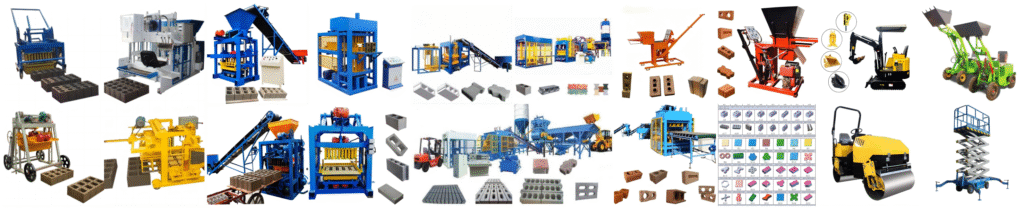
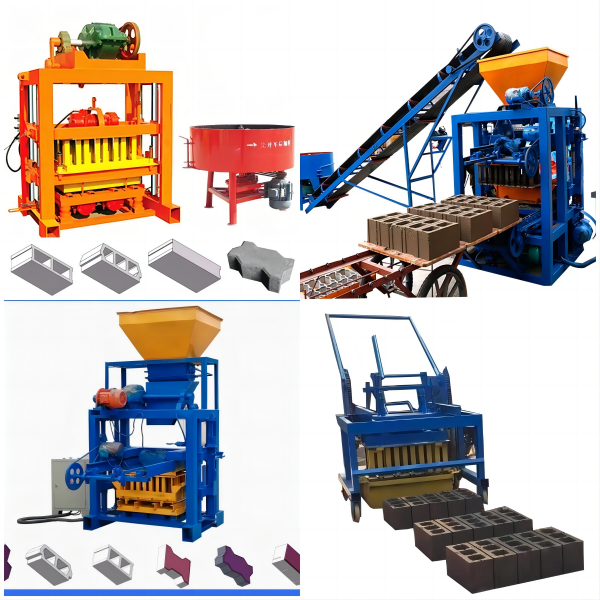
La diferencia más inmediata radica en el producto. UnMáquina de bloquesEsta diseñada para producir unidades de mampostería de concreto (CMU, por sus siglas en inglés), comúnmente llamadas bloques de concreto. Estas son unidades más grandes, huecas o sólidas, que se utilizan típicamente en muros estructurales de carga. Las dimensiones estándar de los bloques (por ejemplo, 8x8x16 pulgadas en el sistema estadounidense) son considerablemente más grandes y pesadas que los ladrillos. Unamáquina de ladrillosLa arcilla, por el contrario, está diseñada para producir ladrillos—unidades más pequeñas, sólidas, de arcilla o concreto utilizadas principalmente para revestimientos, particiones y, en el caso de los ladrillos de arcilla, cocidos en un horno. El enfoque está en unidades más pequeñas y uniformes para aplicaciones no estructurales o semiestructurales.
1.2. Densidad y Composición del Producto
Los bloques se fabrican predominantemente a partir de mezclas de concreto seco de baja fluidez con agregados gruesos (como piedra triturada o grava). El producto resultante es denso y posee una alta resistencia a la compresión. Las máquinas para ladrillos, especialmente para ladrillos de arcilla, procesan una mezcla plástica de arcilla o lutita. Las máquinas para ladrillos de concreto utilizan una mezcla de concreto con agregado fino, más suave que la mezcla para bloques. El proceso de cocción de los ladrillos de arcilla vitrifica el material, otorgándole propiedades únicas que los distinguen de los productos de concreto.
2. Proceso de Fabricación Principal y Tecnología
2.1. El Principio de Compactación: Vibración vs. Extrusión
Esta es una divergencia tecnológica crítica. Una modernaMáquina de bloquesopera principalmente bajo el principio devibración de alta frecuencia y compactación mecánicaLa mezcla de concreto seco se vierte en un molde (paleta) y se somete a una vibración intensa bajo una presión significativa (a menudo hidráulica). Este proceso de "vibro-compactación" consolida la mezcla, elimina bolsas de aire y produce una unidad muy densa que se puede desmoldar de inmediato. Luego, los bloques se curan, a menudo con vapor.
A máquina de ladrillos for clay products primarily uses the extrusión method. The plastic clay mixture is forced through a die to form a continuous column of clay, which is then wire-cut into individual brick units. These “green” bricks are then dried and fired in a kiln. Concrete brick machines may use a similar compaction method to block machines but with much smaller molds and finer raw material.
2.2. Production Speed and Scale
Block machines are built for very high-volume output, commonly producing thousands of units per day in an automated plant setting. The process from raw material to palletized, cured product is continuous and integrated. Brick production, particularly clay brick, can involve slower, batch-oriented processes for drying and firing, which can take days or weeks. While automated concrete brick lines are fast, the overall industrial scale for block production is generally larger, catering to massive construction projects.
3. Market Application and Commercial Implications
3.1. End-Use in Construction
The end-use dictates the machine choice. Blocks are used for structural walls (foundations, load-bearing walls), retaining walls, and large-scale paving. They are the choice for speed and material economy in structural work. Bricks (especially clay) are favored for aesthetic facing, residential veneers, interior partitions, and projects where traditional appearance or specific architectural style is required. Concrete pavers, produced on a block-like machine but with different molds, serve the hardscaping market.
3.2. Investment and Operational Considerations for Clients
For your clients, the capital investment, plant footprint, and operational complexity differ. A full-scale block production plant requires significant space for raw material storage (aggregates, cement), the machine, curing racks or chambers, and a potent power supply for vibrators and hydraulics. It is a major industrial undertaking. A brick-making operation, especially a smaller clay brick unit, might have a smaller initial footprint but adds the complexity of managing a kiln (fuel, firing cycles, emissions). The choice hinges on the target product market’s size and needs.
Conclusion: Making an Informed Machinery Recommendation
The distinction between a block machine and a brick machine is not merely semantic; it is fundamental to the product, process, and business model they enable. For the B2B stakeholder, advising a client requires a clear diagnostic of their business vision: Are they aiming to supply the core structural material for housing developments and commercial infrastructure? If so, the high-output, aggregate-intensive world of block machinery is the appropriate path. Conversely, if the target is architectural finishing, heritage restoration, or a niche hardscape product, then brick-making technology (clay or concrete) must be explored. Understanding these differences—from the vibration of a block mold to the extrusion of a clay column—allows you to guide your clients toward the technology that aligns with their raw material access, capital capacity, and market ambition. This expertise transforms a distributor from a simple equipment seller into a valued strategic consultant in the construction materials value chain.
Frequently Asked Questions (FAQ)
Q1: Can one machine produce both high-quality blocks and bricks?
A1: Generally, no. The core technology is optimized for specific material consistencies and product sizes. A block machine uses a dry, coarse mix and high-pressure vibration unsuitable for plastic clay or fine brick mixes. Some machines can produce smaller “block” units like pavers, but a true, small-format clay or concrete brick requires a machine designed for that specific process and material flow.
Q2: Which type of machine typically has a higher production capacity?
A2: In terms of volume output (number of units per day), modern automated block plants generally have a higher potential capacity due to the larger size of the units and the highly mechanized, continuous curing process. Brick production, especially when involving kiln firing, can have a longer total cycle time, potentially limiting daily output volume despite fast forming.
Q3: From a distributor’s perspective, which business has a higher barrier to entry?
A3: The block production business usually has a higher barrier to entry due to the larger scale of the required machinery, greater power demands, higher raw material consumption (cement, aggregates), and the need for a larger operational site. Brick production, particularly smaller-scale or artisanal clay brick operations, can sometimes be started with a lower initial capital investment, though scaling up with tunnel kilns is also a major undertaking.
Q4: How does the choice of machine affect the client’s supply chain for raw materials?
A4: A block machine client must secure a reliable, bulk supply of coarse aggregates (gravel, crushed rock) and Portland cement. A brick machine client (for clay bricks) must have access to suitable clay deposits or sourced clay, as well as fuel for the kiln. This fundamentally different raw material base often dictates factory location and logistics partnerships.
Q5: Are the skills required to operate and maintain these machines different?
A5: Yes. Block machine operation focuses on concrete mix design, vibration mechanics, hydraulic systems, and often steam curing management. Brick machine operation, particularly for clay, requires expertise in clay preparation, extrusion die management, drying control, and kiln firing thermodynamics. The maintenance skill sets for the respective mechanical systems (heavy-duty vibrators vs. extruder screws) also differ significantly.