Nazarin Kwatancin Na'urorin Block da Na'urorin Bulu
1. Fitar da Kayayyakin Farko da Bayaninsa
1.1. Bambance-Bambance na Girma da Tsari
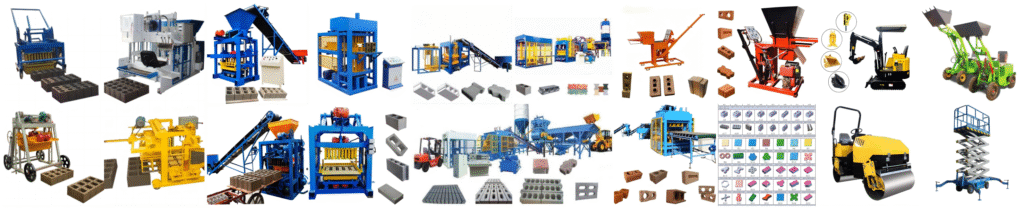
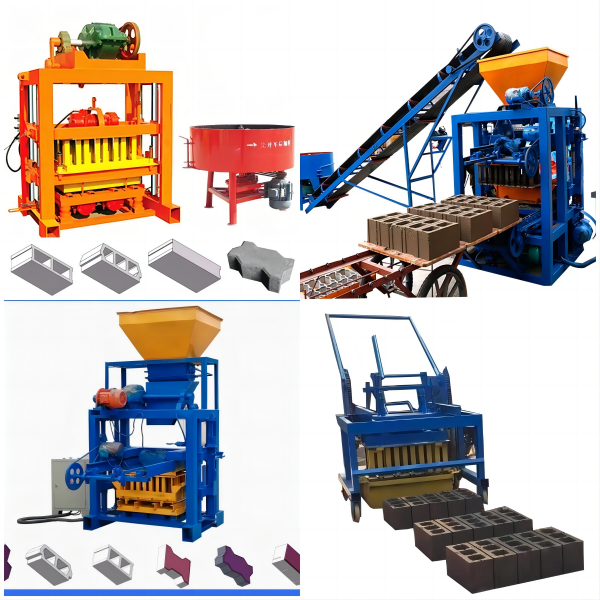
Bambancin da ya fi fitowa fili shi ne a cikin samfurin.na'urar toshewaAna kera shi don samar da Rukunin Dutse na Siminti (CMUs), waɗanda ake fi sani da tubalan siminti. Waɗannan manyan raka'a ne, marasa ƙarfi ko cike, waɗanda galibi ana amfani da su a bangon tsarin ɗaukar nauyi. Girman madaidaicin tubalan (misali, 8x8x16 inci a tsarin Amurka) ya fi na tubalin gini girma da nauyi sosai.kantin buloA gefe guda kuma, an tsara shi don samar da tubalin gini—ƙananan, ƙaƙƙarfan raka'a na laka ko siminti waɗanda aka fi amfani da su don suturar bango, ɓangarori, kuma, idan na tubalin laka ne, ana gasa su a cikin tanda. Manufar ita ce taƙaita a kan ƙanana, raka'a iri ɗaya don ayyukan da ba na tsari ko na tsari kaɗan ba.
1.2. Girma da Haɗin Samfur
Tubali galibi ana yin su ne da cakuɗen kankare mai bushewa da kuma manyan duwatsu (kamar tsakuwa ko dutse da aka niƙa). Sakamakon samfurin yana da nauyi da ƙarfin matsi sosai. Injin bulo, musamman na bulo na yumbu, suna sarrafa cakuɗen yumbu mai ɗanɗano ko kuma shale. Injin bulo na kankare suna amfani da cakuɗen kankare mai ƙanana, mai santsi fiye da cakuɗen tubali. Tsarin ƙona bulo na yumbu yana mai da kayan zuwa gilashi, yana ba shi halaye na musamman waɗanda suka bambanta da samfuran kankare.
2. Core Manufacturing Process da Fasaha
2.1. Ka'idar Tattauwa: Girgiza tare da Fitarwa
Wannan wani mahimmancin bambancin fasaha ne.na'urar toshewayana aiki da farko bisa ka'idargirgizar ƙasa mai sauri da matsa lamba na injiA cakuda kankare mai bushewa ana zuba shi a cikin wani moul (pallet) kuma ana yi masa girgiza mai ƙarfi ƙarƙashin matsin lamba mai yawa (yawanci na hydraulic). Wannan tsari na "vibro-compaction" yana tattara cakuda, yana cire wuraren iska, kuma yana samar da wani nau'i mai nauyi da za a iya cirewa nan take. Sannan ana warkar da tubalin, sau da yawa tare da tururi.
A kantin bulo for clay products primarily uses the extrusion method. The plastic clay mixture is forced through a die to form a continuous column of clay, which is then wire-cut into individual brick units. These “green” bricks are then dried and fired in a kiln. Concrete brick machines may use a similar compaction method to block machines but with much smaller molds and finer raw material.
2.2. Production Speed and Scale
Block machines are built for very high-volume output, commonly producing thousands of units per day in an automated plant setting. The process from raw material to palletized, cured product is continuous and integrated. Brick production, particularly clay brick, can involve slower, batch-oriented processes for drying and firing, which can take days or weeks. While automated concrete brick lines are fast, the overall industrial scale for block production is generally larger, catering to massive construction projects.
3. Market Application and Commercial Implications
3.1. End-Use in Construction
The end-use dictates the machine choice. Blocks are used for structural walls (foundations, load-bearing walls), retaining walls, and large-scale paving. They are the choice for speed and material economy in structural work. Bricks (especially clay) are favored for aesthetic facing, residential veneers, interior partitions, and projects where traditional appearance or specific architectural style is required. Concrete pavers, produced on a block-like machine but with different molds, serve the hardscaping market.
3.2. Investment and Operational Considerations for Clients
For your clients, the capital investment, plant footprint, and operational complexity differ. A full-scale block production plant requires significant space for raw material storage (aggregates, cement), the machine, curing racks or chambers, and a potent power supply for vibrators and hydraulics. It is a major industrial undertaking. A brick-making operation, especially a smaller clay brick unit, might have a smaller initial footprint but adds the complexity of managing a kiln (fuel, firing cycles, emissions). The choice hinges on the target product market’s size and needs.
Conclusion: Making an Informed Machinery Recommendation
The distinction between a block machine and a brick machine is not merely semantic; it is fundamental to the product, process, and business model they enable. For the B2B stakeholder, advising a client requires a clear diagnostic of their business vision: Are they aiming to supply the core structural material for housing developments and commercial infrastructure? If so, the high-output, aggregate-intensive world of block machinery is the appropriate path. Conversely, if the target is architectural finishing, heritage restoration, or a niche hardscape product, then brick-making technology (clay or concrete) must be explored. Understanding these differences—from the vibration of a block mold to the extrusion of a clay column—allows you to guide your clients toward the technology that aligns with their raw material access, capital capacity, and market ambition. This expertise transforms a distributor from a simple equipment seller into a valued strategic consultant in the construction materials value chain.
Tambayoyin da ake yawan yi (FAQ)
Q1: Can one machine produce both high-quality blocks and bricks?
A1: Generally, no. The core technology is optimized for specific material consistencies and product sizes. A block machine uses a dry, coarse mix and high-pressure vibration unsuitable for plastic clay or fine brick mixes. Some machines can produce smaller “block” units like pavers, but a true, small-format clay or concrete brick requires a machine designed for that specific process and material flow.
Q2: Which type of machine typically has a higher production capacity?
A2: In terms of volume output (number of units per day), modern automated block plants generally have a higher potential capacity due to the larger size of the units and the highly mechanized, continuous curing process. Brick production, especially when involving kiln firing, can have a longer total cycle time, potentially limiting daily output volume despite fast forming.
Q3: From a distributor’s perspective, which business has a higher barrier to entry?
A3: The block production business usually has a higher barrier to entry due to the larger scale of the required machinery, greater power demands, higher raw material consumption (cement, aggregates), and the need for a larger operational site. Brick production, particularly smaller-scale or artisanal clay brick operations, can sometimes be started with a lower initial capital investment, though scaling up with tunnel kilns is also a major undertaking.
Q4: How does the choice of machine affect the client’s supply chain for raw materials?
A4: A block machine client must secure a reliable, bulk supply of coarse aggregates (gravel, crushed rock) and Portland cement. A brick machine client (for clay bricks) must have access to suitable clay deposits or sourced clay, as well as fuel for the kiln. This fundamentally different raw material base often dictates factory location and logistics partnerships.
Q5: Are the skills required to operate and maintain these machines different?
A5: Yes. Block machine operation focuses on concrete mix design, vibration mechanics, hydraulic systems, and often steam curing management. Brick machine operation, particularly for clay, requires expertise in clay preparation, extrusion die management, drying control, and kiln firing thermodynamics. The maintenance skill sets for the respective mechanical systems (heavy-duty vibrators vs. extruder screws) also differ significantly.