
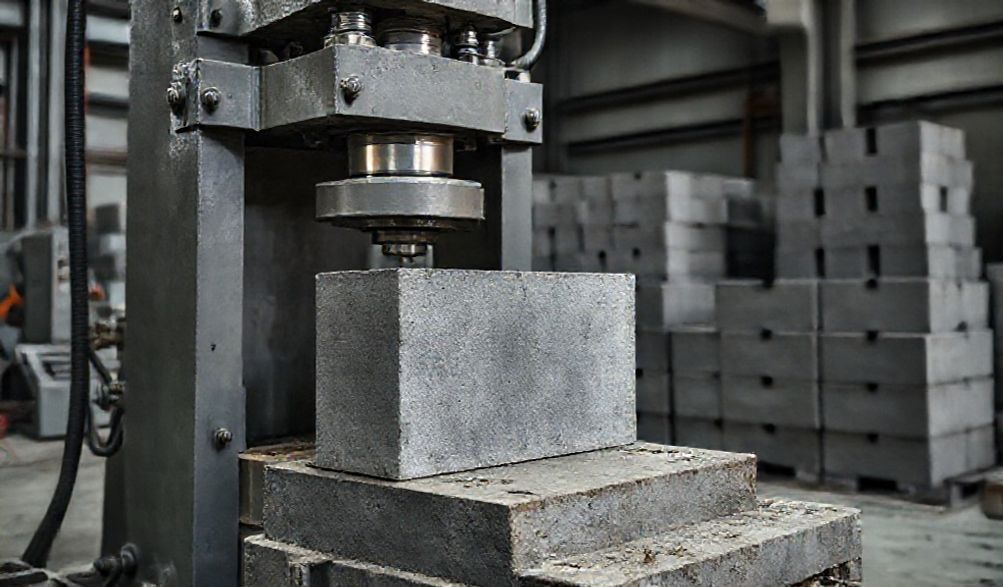
La Guía Definitiva de las Máquinas Prensadoras Hidráulicas de Adoquines para Bordillos: Eficiencia, Diseño y Selección
Introducción
Para los gerentes de construcción, ingenieros civiles y contratistas de pavimentación, pocas cosas son tan frustrantes como los retrasos en los proyectos y los sobrecostos presupuestarios causados por el suministro de materiales. Los métodos tradicionales de abastecimiento de bordillos, ladrillos de pavimentación y bordes de concreto a menudo implican largos plazos de entrega, calidad inconsistente de un lote a otro y costos de transporte significativos para productos pesados y prefabricados. Este dolor de cabeza logístico puede paralizar un proyecto vial, disparar el presupuesto de un paisajismo o comprometer el acabado de un desarrollo comercial de alta gama.
La solución a estos persistentes puntos críticos de la industria no reside en la cadena de suministro, sino en la producción in situ o localizada. He aquí laPrensa hidráulica para adoquines de bordillo.—una pieza de equipo transformadora que capacita a las empresas para tomar el control de su fabricación de productos de concreto. Esta tecnología permite la producción eficiente y de gran volumen de bordillos, adoquines y ladrillos densos, precisos y duraderos, exactamente donde y cuando se necesitan.
Esta guía integral está diseñada para ser su recurso experto. Basándonos en principios de ingeniería y las mejores prácticas de la industria, analizaremos todo lo que necesita saber sobre las prensas hidráulicas para fabricar bloques de concreto. Desde su funcionamiento central y ventajas innegables hasta los factores de compra críticos y las tareas de mantenimiento imprescindibles, esta guía busca proporcionarle el conocimiento para tomar una decisión de inversión sumamente informada que impulse su productividad, calidad y rentabilidad.
¿Qué es una Máquina Prensadora Hidráulica de Adoquines para Bordillos? (Definición y Función Principal)
En esencia, una prensa hidráulica para adoquines de bordillo es un sistema de fabricación de precisión diseñado para comprimir una mezcla de hormigón semiseco en una forma endurecida específica, utilizando una fuerza hidráulica inmensa. A diferencia de los métodos de hormigón vertido in situ o colado en húmedo, produce productos de hormigón "prensados hidráulicamente", conocidos por su excepcional densidad, resistencia y precisión dimensional.
Principio de Funcionamiento Central
El proceso es elegantemente sencillo pero poderoso:
1. Alimentación:Una cantidad medida con precisión de mezcla de concreto semiseco (una combinación de cemento, arena, áridos y agua mínima) se introduce en una cavidad de molde o matriz.
2. Compactación:Un ariete hidráulico, accionado por una unidad de potencia robusta, aplica una presión intensa y controlada—a menudo medida en toneladas—a la mezcla dentro del molde.
3. Formación:Esta presión compacta la mezcla, expulsando los huecos de aire y creando un bloque de alta densidad fuertemente entrelazado.
4. Expulsión:El sistema hidráulico luego se retrae, y el bloque recién formado y estable es expulsado del molde, listo para su curado inmediato.
Este método de compactación mediante presión pura, a diferencia de la vibración, es clave para las características superiores del producto.
Componentes Clave y sus Funciones
Comprender la anatomía de la máquina es crucial:
* Grupo Hidráulico de Potencia y Cilindros:El "corazón" de la máquina. Genera la potencia hidráulica que impulsa el ariete de compresión principal y otros movimientos, determinando la tonelaje y la fuerza de prensado de la máquina.
* Estructura de Acero Robusta y Sistema de Molde/Matriz:El "esqueleto y plano." El marco de acero soldado proporciona estabilidad bajo alta presión. El molde, o troquel, es el componente diseñado a medida que define la forma, el tamaño y la textura del producto final (por ejemplo, un bordillo redondeado, un adoquín de empedrado).
* Panel de Control:El "cerebro". Desde simples palancas manuales hasta sistemas de controlador lógico programable (PLC) para máquinas totalmente automáticas, gobierna el ciclo de prensado, la sincronización y los enclavamientos de seguridad.
* Sistemas de Alimentación y Expulsión: These can be manual, semi-automatic (using a feed hopper and box), or fully automatic (with conveyor belts and robotic arms), directly impacting the machine’s output speed and labor requirements.
Types of Machines
Machines are broadly categorized by their mobility and automation level:
* Plantas Estacionarias: High-output, often fully automatic systems installed in factories for continuous, large-scale production.
* Máquinas Móviles: Mounted on trailers, these are the champions of on-site production. They can be transported directly to road construction or large landscaping projects, eliminating transport costs for finished goods.
* Manual vs. Automatic: Manual presses require an operator to feed mix and remove blocks each cycle. Semi- and fully-automatic machines automate part or all of this process, drastically increasing output and reducing labor.
Key Advantages of Using a Hydraulic Press for Kerb & Brick Production
Investing in this technology delivers a cascade of benefits that address the core challenges of traditional methods.
Calidad y Consistencia Superiores del Producto
- High Density & Strength: Hydraulic pressure produces blocks with extremely low porosity, resulting in compressive strengths often exceeding 40 MPa or more. This translates to exceptional durability, freeze-thaw resistance, and longevity.
- Precise Dimensions: Every block from the same mold is identical. This ensures perfect alignment during installation, reducing labor time and creating a professionally finished appearance.
- Excelente Acabado Superficial: The smooth, dense surface from the polished mold face requires no secondary finishing and is naturally resistant to staining and weathering.
Remarkable Production Efficiency & Output
- High Speed: A medium-sized semi-automatic press can easily produce 300-500 blocks per hour, depending on the block size and cycle time.
- Reducción de la Dependencia Laboral: Automation streamlines the process. One or two operators can manage a semi-automatic machine that outputs thousands of blocks per shift.
- 24/7 Capability: Designed for demanding industrial environments, these machines can operate multiple shifts to meet tight project deadlines.
Significant Cost Savings & ROI
- Raw Material Efficiency: The semi-dry mix and precise filling minimize waste. There is no spillage or slurry as with wet-cast methods.
- Reducción de Costos Laborales: Higher output with fewer personnel directly lowers the cost per produced block.
- Transportation Elimination: On-site production cuts out the enormous cost of transporting heavy pre-cast concrete from a distant factory to the project site.
- Long-Term Asset: A well-maintained hydraulic press is a durable asset that will produce for decades, providing a continuous return on investment.
Unmatched Design Flexibility
This is a game-changer. Changing a mold can take as little as 30 minutes. With a library of molds, one single machine can produce:
* Various kerb profiles (straight, radiused, drainage)
* Different paving bricks (interlocking, cobble, rectangular)
* Garden edging and tree surrounds
* Landscape retaining blocks
* Specialized concrete products for niche markets
Critical Factors to Consider Before Purchasing
A hydraulic press is a significant investment. Careful evaluation ensures you select the right tool for your business.
Evaluando Sus Necesidades de Producción
- Capacidad de salida requerida: Calculate your average and peak daily block requirements. Do you need 2,000 blocks per day or 20,000? This will dictate machine size and automation level.
- Portafolio de Productos: List all the kerb profiles, brick dimensions, and other products you plan to manufacture. Ensure your chosen supplier can provide or custom-make these molds.
- Project Scale & Model: Are you a small landscaping business supplying local projects, or a civil contractor bidding on major infrastructure? Your operational model (fixed factory vs. mobile on-site) is the first decision point.
Inmersión en las Especificaciones de la Máquina
- Capacidad de Presión (Tonelaje): This directly correlates to block density and strength. A 150-ton press will produce a stronger block than a 60-ton press from the same mix. Match the tonnage to your product strength requirements.
- Grado de Automatización: Balance your budget with labor costs and output needs.
- Manual: Lowest cost, highest labor, lowest output.
- Semiautomático: Optimal balance for most businesses. Operator feeds mix, but the press cycle and ejection are automated.
- Totalmente Automático: Highest output, lowest direct labor, highest initial investment. Ideal for large-scale factory production.
- Mold Quality & System: Molds should be made from hardened, precision-machined steel. Investigate the cost, lead time, and process for ordering additional or custom molds.
Supplier Evaluation Checklist
Your relationship with the manufacturer is critical for long-term success.
* Reputation & Experience: Choose a supplier with a proven track record, not just a trader. How long have they been building these machines? Can they provide references or case studies?
* Technical & After-Sales Support: Do they offer installation supervision, comprehensive operator training, and a clear maintenance guide? This is non-negotiable.
* Spare Parts & Warranty: Is there a local stock of critical spare parts (seals, hoses, sensors)? What does the warranty cover, and for how long? A reliable supplier stands behind their product for the long haul.
Operational Best Practices & Maintenance Guidelines
Proper operation and care are the keys to longevity, safety, and consistent product quality.
Optimal Concrete Mix Design
The press requires a specific “semi-dry” mix. A typical starting ratio is 1 part cement : 3 parts sand : 3 parts aggregate (6-8mm). The moisture content is critical—usually between 4-7%. The mix should hold its shape when squeezed in your hand but crumble when poked. Admixtures like pigments or plasticizers can be added as needed.
Safe and Efficient Daily Operation
- Pre-Start Check: Inspect the machine for loose parts, check hydraulic oil levels, and ensure the mold is clean and secure.
- Running Procedure: Follow the trained cycle: feed the mix, initiate the press, allow for pressure hold time, eject the block. Consistently fill the mold with the same volume of mix.
- Shutdown: At the end of the shift, clean the machine thoroughly, especially all mold surfaces, to prevent concrete buildup.
Essential Maintenance Schedule
- Daily/Weekly: Check hydraulic oil level and for leaks; clean the machine and mold; inspect and tighten bolts and fittings.
- Monthly/Quarterly: Check and clean hydraulic oil filters; inspect cylinder rods and seals for wear; lubricate all moving pins and bearings.
- Annually: Consider a full system check by a qualified technician, including oil analysis and replacement, and a comprehensive inspection of the electrical and hydraulic systems.
Applications and End-Use Projects
The versatility of the hydraulic press makes it a cornerstone machine for diverse sectors.
Road Construction & Civil Infrastructure
- Highways & City Roads: Producing standard and custom kerbs, drainage channels (linear drains), and concrete barriers.
- Drainage Systems: Manufacturing swale blocks, ditch liners, and other water management products.
Urban Landscaping & Public Spaces
- Parks & Plazas: Creating decorative paving bricks for pathways, tactile paving for accessibility, and edging stones for flower beds.
- Pedestrian Walkways & Cycle Paths: Supplying durable, attractive pavers and kerbing for municipal projects.
Commercial & Residential Developments
- Housing Estates: Producing driveway pavers, patio stones, and kerbing for roads within the development.
- Commercial Properties: Manufacturing heavy-duty paving for parking lots, loading bays, and pedestrian areas around offices and retail spaces.
Frequently Asked Questions (FAQ)
What is the typical production output of a medium-sized hydraulic kerb press?
A standard semi-automatic machine with a 2-3 operator team can typically produce between 2,500 to 4,000 standard kerbstones in an 8-hour shift, depending on the specific block size and cycle time.
Can one machine produce different shapes and sizes of blocks?
Absolutely. This is one of its greatest advantages. By changing the mold/die (a process that can take 30-90 minutes), the same press can produce an entirely different product. This allows a business to respond flexibly to market demands.
What is the difference between a hydraulic press and a vibration press for concrete blocks?
Vibration tables use high-frequency shaking to settle concrete mix into a mold, often used for hollow blocks. Hydraulic presses apply direct, powerful pressure. The key difference is in the final product: hydraulically pressed blocks are significantly denser, stronger, and have a smoother finish, making them ideal for high-wear, high-visibility applications like kerbs and paving.
What kind of after-sales support should I expect from a reliable supplier?
Expect comprehensive support: detailed installation drawings or supervised installation, thorough on-site training for your operators and maintenance staff, a complete operation and maintenance manual, a clear warranty (at least 12 months on major components), and prompt availability of spare parts and technical advice.
What are the most common operational challenges and how can they be avoided?
- Inconsistent Mix: This causes variable block strength and poor ejection. Solución: Use a consistent, batched semi-dry mix and control moisture content rigorously.
- Mold Sticking or Block Damage: Solución: Apply a recommended mold release agent regularly and keep molds impeccably clean. Ensure the mix is not too wet.
- Hydraulic System Issues (Overheating, Low Pressure): Solución: Follow the preventive maintenance schedule, use the correct grade of hydraulic oil, and keep filters clean.
Conclusión
ElPrensa hidráulica para adoquines de bordillo. represents a paradigm shift in concrete product manufacturing. It moves production from a distant, centralized factory to the point of need, offering unprecedented control over quality, cost, and schedule. By delivering superior product strength, remarkable operational efficiency, and unparalleled design versatility, it is an investment that pays dividends in both the short term of a single project and the long-term growth of a business.
Your path to success lies in a methodical approach: clearly define your production needs, scrutinize machine specifications against those needs, and, most importantly, partner with a reputable, experienced manufacturer who offers robust after-sales support. Invest in proper training for your team and adhere to a strict maintenance regimen.
As the construction industry continues to prioritize efficiency, sustainability, and localized supply chains, the role of on-site manufacturing with technology like the hydraulic press will only grow. It is not just a machine for today’s projects, but a foundational asset for a more resilient and profitable future.
Ready to transform your concrete product supply chain? Contact leading manufacturers today to discuss your specific requirements, request detailed quotations, and—where possible—arrange a factory visit to see a Prensa hidráulica para adoquines de bordillo. in action. A live demonstration is the best way to witness its capabilities firsthand.
<