
La Guía Definitiva de los Sistemas de Bloqueo de Máquinas de Ladrillos: Tipos, Beneficios y Cómo Elegir
Introducción
¿Luchando contra la albañilería tradicional lenta, laboriosa y costosa? No estás solo. En una industria donde el tiempo es dinero y el desperdicio de materiales es una preocupación constante, constructores y empresas de construcción buscan activamente soluciones más inteligentes y eficientes. Entra elMáquina de ladrillos entrelazadossistema—una maravilla tecnológica moderna que está remodelando fundamentalmente cómo pensamos sobre la mampostería y la construcción.
Esta guía integral está diseñada para ser su recurso definitivo. Iremos más allá de los folletos de ventas para ofrecer un análisis detallado y respaldado por expertos de las máquinas de ladrillos entrelazados. Nuestro objetivo es proporcionarle el conocimiento necesario para tomar una decisión segura e informada para sus proyectos, ya sea que sea un entusiasta del bricolaje, un contratista pequeño o un desarrollador a gran escala. Sintetizaremos el conocimiento de la industria, las especificaciones técnicas y las perspectivas prácticas del campo para cubrir todo, desde la tecnología central y los diversos tipos de máquinas hasta los beneficios tangibles y un proceso de selección paso a paso.
Al final de esta guía, tendrás una comprensión clara de:
* Los principios de ingeniería detrás de la tecnología de ladrillos entrelazados.
* Los diferentes tipos de máquinas disponibles y sus aplicaciones ideales.
Los convincentes beneficios de costo, resistencia y sostenibilidad.
* Una lista práctica para elegir la máquina y el proveedor adecuados.
* Consejos esenciales para la operación y el mantenimiento.
¿Qué es una Máquina de Ladrillos Interlock? Desmitificando la Tecnología
En esencia, una máquina de ladrillos entrelazados es una poderosa herramienta de empoderamiento. Te permite producir tus propios bloques de construcción de alta calidad bajo demanda, utilizando materiales disponibles localmente. Pero para apreciar su valor, necesitas comprender el "qué" y el "por qué" detrás de la tecnología.
Definición del Núcleo y Principio de Funcionamiento
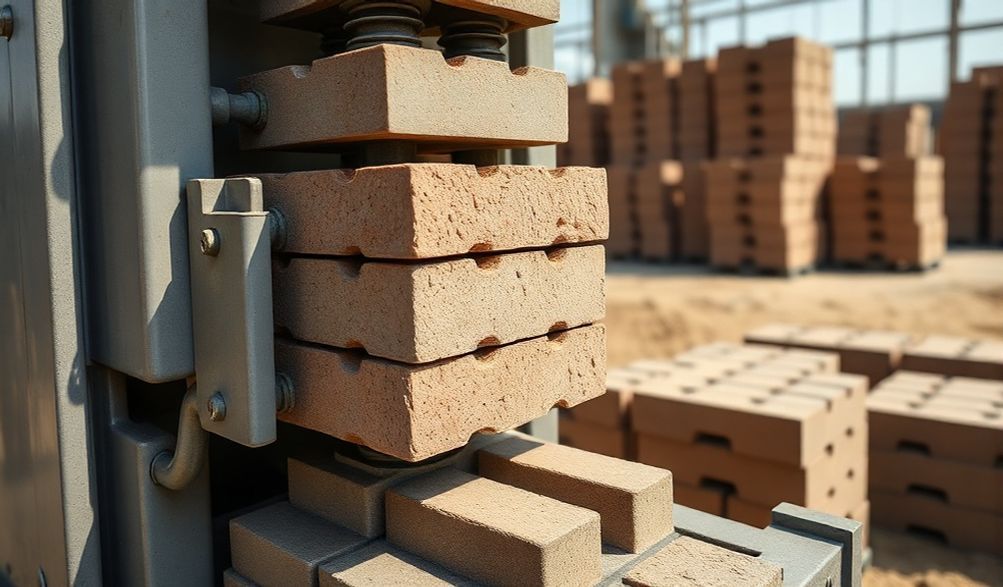
Una máquina de ladrillos entrelazados es un dispositivo, que va desde simples palancas manuales hasta complejos sistemas totalmente automáticos, que comprime una mezcla de materias primas bajo una inmensa presión. Estas materias primas pueden incluir tierra, arena, cemento, cenizas volantes o piedra triturada. La máquina no solo produce un bloque estándar; utiliza un molde especialmente diseñado para fabricar ladrillos con un perfil de entrelazado preciso en su parte superior, inferior y laterales.
Imagínalo como una prensa de alta potencia y precisión que fabrica ladrillos como piezas de rompecabezas. El proceso es sencillo: la mezcla preparada de materia prima se introduce en una cámara de molde, un pistón de alta presión la comprime y un eyector expulsa el ladrillo terminado y perfectamente formado, listo para su curado.
La Ciencia del Entrelazado: Por Qué es Más Fuerte
La magia no está solo en la compresión; está en la forma. La mampostería tradicional depende casi por completo de la fuerza adhesiva del mortero para mantener unidos los ladrillos y transferir cargas. Los ladrillos entrelazados introducen un poderoso enlace mecánico.
- Interbloqueo Mecánico vs. Adhesión del MorteroLas protuberancias salientes y las hendiduras correspondientes en los ladrillos encajan perfectamente, creando una conexión física que resiste el movimiento en múltiples direcciones.
- Aumento de la Resistencia al Corte y EstabilidadEste diseño entrelazado mejora significativamente la resistencia del muro a las fuerzas de cizallamiento (como las del viento o la actividad sísmica). Los ladrillos esencialmente se "agarran" entre sí, distribuyendo las cargas de manera más uniforme en toda la estructura.
- Potencial de Apilado en Seco:Este enlace mecánico es tan efectivo que a menudo permitedry-stack construction—building walls with little to no mortar. Mortar may be used in a thin slurry for surface bonding or only in specific courses, leading to dramatic savings in time, labor, and material costs.
Types of Interlocking Brick Machines: Finding Your Perfect Fit
Not all interlocking brick machines are created equal. The right choice depends entirely on your project scale, budget, and production goals. Here’s a breakdown of the main categories.
Máquinas Manuales para Ladrillos de Interbloqueo
- Descripción: Operated by human force via a lever system, these are the simplest and most affordable entry point into interlocking brick production.
- Casos de Uso Ideales: Perfect for small-scale projects like a single home, garden walls, or community-led building initiatives. They are also excellent for low-budget startups, NGOs working in remote areas, and testing the market.
- Pros:
- Costo de inversión inicial muy bajo.
- Extremely portable and requires no electricity.
- Simple to operate with minimal training.
- Contras:
- Labor-intensive and physically demanding.
- Lower output (typically 100-500 bricks per day).
- Brick consistency can vary more with the operator’s strength and technique.
Hydraulic Interlocking Brick Machines
- Descripción: These machines use a hydraulic power pack to generate consistent, high pressure. They can be electric or diesel-powered and represent a significant step up in automation and output.
- Casos de Uso Ideales: The workhorse for medium-scale commercial projects, block-making yards supplying local builders, and housing developments.
- Pros:
- Higher and more consistent production rate (can range from 300 to 2000+ bricks per hour).
- Excellent, uniform brick quality due to consistent hydraulic pressure.
- Requires far less physical effort from the operator.
- Often come with options for different brick molds.
- Contras:
- Higher capital cost than manual machines.
- Requiere una fuente de energía (electricidad o diésel).
- More complex components require basic maintenance knowledge.
Fully Automatic Interlocking Brick Making Plants
- Descripción: These are complete production lines. They integrate a mixer, conveyor belt, automatic feeder, high-pressure pressing station, and sometimes a brick stacking/palletizing system. Operation is primarily via a programmable logic controller (PLC).
- Casos de Uso Ideales: Designed for large-scale industrial production, major construction companies, and entrepreneurs aiming to establish a high-volume block supply business.
- Pros:
- Maximum possible output with minimal manual labor.
- Unmatched consistency and quality control.
- Highly efficient and optimized material use.
- Contras:
- Inversión de capital muy alta.
- Requires significant space, stable high-power electricity, and skilled technicians.
- Less flexibility for on-site movement.
Máquinas Móviles vs. Estacionarias
This is a crucial secondary consideration, especially for hydraulic models.
* Máquinas Móviles: Mounted on a trailer, these are designed for on-site production. The key benefit is eliminating brick transport costs and allowing you to produce bricks exactly where they are needed, using on-site soil if suitable.
* Máquinas Estacionarias: Set up in a fixed location like a factory or yard. They are ideal for establishing a supply business where customers come to you. They can be more robust and are often easier to connect to permanent power and material supply lines.
Beneficios Clave del Uso de una Máquina de Ladrillos Entrelazados
Investing in this technology isn’t just about buying a machine; it’s about adopting a smarter construction methodology. The advantages are multi-faceted.
Cost Efficiency & Speed of Construction
This is the most immediate and impactful benefit for any business.
* Uso Reducido de Mortero Dry-stacking or using minimal mortar slurry can cut mortar consumption by up to 70-90%.
* Menores costos laborales The interlocking system allows for faster laying. A two-person team can often build a wall significantly faster than a traditional masonry team, as there’s no need to carefully butter and level each brick with mortar.
* Faster Project Timelines: Combined, these factors can reduce overall wall construction time by 30-50%, allowing you to take on more projects per year.
Superior Strength and Durability
Don’t let the simplicity fool you. A well-made interlocking compressed earth block (CEB) is incredibly strong.
* Alta Resistencia a la Compresión: Machines applying high pressure (often 10-30 tons) create dense, robust blocks. Strengths of 5 MPa to over 15 MPa are common, meeting or exceeding many local standards for load-bearing construction.
* Seismic & Lateral Load Resistance: The interlocking pattern provides excellent resistance to the racking forces experienced during earthquakes or high winds, a critical consideration in many regions.
* Longevidad: When properly stabilized (e.g., with a small amount of cement) and protected from direct, sustained moisture (with good roof overhangs and plaster), these buildings are extremely durable and long-lasting.
Sustainability and Eco-Friendly Advantages
In an era of green building, this technology shines.
* Use of Local Materials: It promotes the use of on-site or locally sourced soil, reducing the carbon footprint associated with transporting heavy materials like fired bricks or concrete blocks over long distances.
* Reduced Cement Consumption: As a low-binder technology, it drastically cuts the use of cement, one of the world’s largest producers of CO2.
* Minimal Waste: Production creates virtually no waste, and the bricks themselves are often fully recyclable back into the production process.
Design Versatility and Aesthetic Appeal
This technology enables modern, beautiful architecture.
* Variety of Patterns: Machines offer molds for different interlocking patterns (herringbone, straight, etc.), providing both structural and visual variety.
* Color and Finish: By adding pigments or using different local soils, you can create a rich palette of natural colors. The bricks can be left exposed for a modern, textured finish or plastered over.
* Architectural Freedom: The strength and precision of the blocks allow for creative designs, including curved walls and complex shapes.
How to Choose the Right Interlocking Brick Machine: A Buyer’s Checklist
Making the wrong choice can be a costly mistake. Follow this structured approach to ensure your investment pays off.
Assess Your Project Requirements
Start by looking inward before you look at machines.
* Salida requerida: Calculate your average daily or weekly brick needs. Be realistic about your current projects and growth plans.
* Tipo de Proyecto: Are you building single-family homes, commercial structures, or paving driveways? Different projects may require different brick sizes and strengths.
* Materias Primas Disponibles: Test your local soil. Its composition (clay, silt, sand content) will determine if and how much stabilizer (like cement) you need.
* Presupuesto: Determine your total investment capacity, including the machine, any necessary power setup, and initial raw material stock.
Critical Machine Specifications to Scrutinize
This is where your expertise needs to come to the fore. Don’t just compare prices; compare these specs.
* Capacidad de Producción: Never rely on the “theoretical maximum.” Ask for realistic, verified output in bricks per hour under normal working conditions.
* Tamaño del Ladrillo y Opciones de Molde: What are the standard brick dimensions? Can you easily purchase additional molds for different patterns or block types (e.g., half-blocks, corner blocks)? Mold quality (hardened steel) is critical for longevity.
* Fuerza de Presión (Tonelaje): This is a key indicator of potential brick strength. Higher tonnage (e.g., 20-ton vs. 10-ton) generally produces denser, stronger bricks, all else being equal.
* Power Source & Consumption: Does it match your site’s capabilities (3-phase electricity, single-phase, diesel)? What is the power rating in kW/HP?
* Soporte Postventa: This is non-negotiable. What is the warranty period? How readily available are spare parts (rams, seals, molds)? Does the supplier offer installation guidance or operational training?
Supplier Vetting for Trust and Authority
The machine is only as good as the company behind it.
* Credentials & History: How long has the supplier/manufacturer been in business? Do they have verifiable certifications?
* Client Portfolio & References: Ask for a list of previous buyers, preferably in your region, and contact them. Ask about machine performance and after-sales service.
* Factory Inspection: If feasible, visit the manufacturing facility. It speaks volumes about their scale, quality control processes, and professionalism.
* Transparency: A trustworthy supplier will be happy to discuss both the capabilities y the limitations of their equipment. Be wary of those who make exaggerated claims.
Operating and Maintaining Your Brick Machine: Pro Tips
Your machine’s performance and lifespan depend heavily on how you treat it. Here’s practical advice from the field.
Raw Material Preparation is Key
The machine can only compress what you feed it. Consistent brick quality starts here.
* Soil Sieving: Always sieve your soil to remove stones, roots, and debris. A 5-10mm mesh screen is typically recommended.
* Contenido de Humedad: This is critical. The mixture should be damp, not wet or dry. A simple test: squeeze a handful—it should form a ball that holds its shape but crumbles when poked. In practice, operators find that a moisture content of around 8-12% is often ideal, but this varies by soil type.
* Mix Ratios: For stabilized blocks, ensure precise, consistent ratios of soil, sand, and stabilizer (e.g., 5-10% cement). Use a mechanical mixer for best results.
Routine Maintenance Schedule
A small amount of regular care prevents major downtime.
* Daily: Clean all parts of the machine thoroughly at the end of the shift. Wipe down the mold and ram to prevent material buildup and corrosion.
* Weekly: Check and tighten all bolts and nuts. Lubricate all moving parts (pivots, guide rods) as per the manufacturer’s manual.
* Monthly (for Hydraulic Machines): Check hydraulic oil levels and look for any signs of leaks. Inspect hoses for wear and tear.
Troubleshooting Common Issues
- Bricks Breaking or Crumbling: This is almost always a material preparation issue. Check moisture content (usually too dry) and mixture composition (often not enough stabilizer or poor gradation).
- Bricks Sticking in the Mold: The mold may need cleaning or lubrication. It can also indicate the mixture is too wet. A light spray of oil or diesel on the mold walls can help.
- Inconsistent Brick Density/Height: First, ensure you are filling the mold chamber with a consistent volume of material each time. For hydraulic machines, this could indicate a problem with the pressure setting or a hydraulic system issue.
Frequently Asked Questions (FAQ) About Interlocking Brick Machines
Q1: What is the typical cost range for a brick machine interlock?
A: Prices vary dramatically. A basic manual machine can start from a few hundred dollars. A quality hydraulic machine typically ranges from $5,000 to $25,000+, depending on capacity and features. Fully automatic plants begin around $30,000 and can go well into the hundreds of thousands. The key is to align cost with your required output and business model.
Q2: Can I use ordinary local soil with these machines?
A: In most cases, yes. The ideal soil has a balanced mix of clay (as the binder), silt, and sand. Pure clay or pure sand will not work well. Simple field tests (like the jar test) can determine your soil’s composition. Most machines are versatile and can work with various mixes, including laterite, sand-cement, or crushed stone.
Q3: Do interlocking bricks require any special foundation?
A: They require a standard, well-compacted foundation—typically a concrete strip footing or slab. The critical point is that the foundation must be level and stable to ensure the first course of interlocking bricks is perfectly aligned. Always consult local building codes and a structural engineer for specific project requirements.
Q4: How does the strength compare to traditional fired clay bricks or concrete blocks?
A: Well-made, cement-stabilized interlocking compressed earth blocks (CEBs) often achieve compressive strengths comparable to or greater than many common fired clay bricks. They generally have lower strength than dense concrete hollow blocks but provide more than adequate strength for low to mid-rise load-bearing construction, especially when the interlocking design is considered.
Q5: Is special training needed to operate the machine?
A: Manual machines are intuitive. For hydraulic and automatic machines, while the basic operation is straightforward, proper training is highly beneficial. A reputable supplier should provide comprehensive operational and safety training. Understanding maintenance basics and material preparation is crucial for long-term success and safety.
Conclusión
ElMáquina de ladrillos entrelazados system represents more than just a piece of equipment; it’s a gateway to a more efficient, sustainable, and cost-effective future in construction. From the fundamental science of mechanical interlocking to the practical choice between a manual lever and a fully automated plant, we’ve explored how this technology can transform your building projects.
The journey to a successful investment hinges on the principles outlined here: conducting thorough research, honestly assessing your project needs, and meticulously vetting suppliers based on their expertise and after-sales support. This guide serves as your foundational reference.
Now, it’s time to take control. Use this knowledge to engage with suppliers confidently, ask the right technical questions, and request live demonstrations. By making an informed choice, you’re not just purchasing a machine—you’re investing in the strength, speed, and profitability of your construction endeavors for years to come.
<