
Ultima Ductor ad Laterculorum Machinae Internexus Systemata: Genera, Commoda, et Quomodo Eligere
Introductio
Luctarisne cum lentis, laboriosis, et sumptuosis laterum structuris traditis? Non solus es. In arte ubi tempus pecunia est et materiae iactura perpetua sollicitudo est, aedificatores et negotia constructionis sollertiores et efficaciores solutiones active quaerunt. EcceLateris machina intercludoratio—prodigium technologicum hodiernum quod fundamentaliter refingit quomodo de structura et aedificatione cogitemus.
Hic liber universalis tibi certum praesidium esse destinatur. Ultra libellos venditantes progrediemur ut subtilem, peritorum testimonio confirmatam analysim machinarum laterum inter se cohaerentium praebeamus. Propositum nobis est te scientia instruere, qua fretus certam ac doctam sententiam pro tuis inceptis feras, sive studiosus ipse operum sis, sive conductor parvus, sive auctor magnarum molium. Scientiam industriae, normas technicas, ac perspicientias ex usu petitas coniungemus, ut omnia complectamur a technologia fundamentali variisque machinarum generibus usque ad fructus manifestos et rationem gradatim capiendam.
Hoc duce finito, clare intelleges:
Technicae rationes post laterum intertextorum technologiam.
* Diversa machinarum genera praesto et eorum applicationes ideales.
* Cogentes utilitates pretii, firmitatis, sustentabilitatisque.
* Index practicus ad machinam et suppeditatorem idoneos eligendum.
* Praecepta essentialia ad operationem et sustentationem.
Quid est Machina Lateraria Internexa? Technologiae Elucidatio
In medulla sua, machina laterum intertextorum est potens instrumentum ad potestatem dandam. Permittit te tuos ipsius calces aedificiorum praestantiae in tempore gignere, materiae loco praesto adhibendo. Sed ut eius pretium aestimes, "quid" et "cur" post technologiam comprehendere debes.
Definitio Principalis et Ratio Operandi
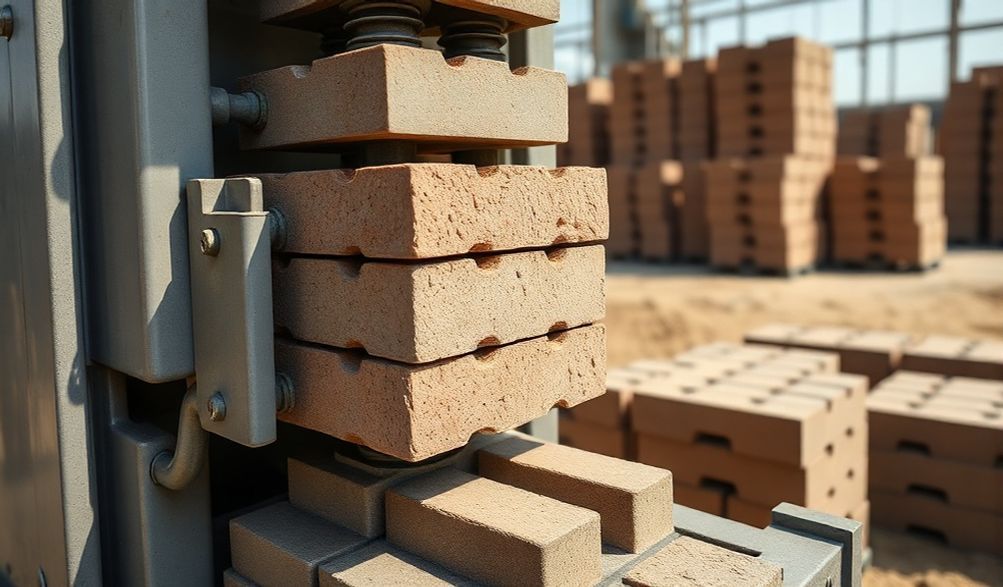
Machina laterum inter se coherentium est instrumentum—a simplicibus vectibus manualibus ad complexas rationes plene automaticas varians—quod materiarum rudium mixturam sub ingenti pressione comprimit. Hae materiae rudiores terram, harenam, caementum, cinerem volatilem, vel lapidem contritum includere possunt. Machina non modo laterem usitatum facit; sed forma peculiari excogitata utitur ad lateres producendos cum exacto inter se coherentis figurae ambitu in summo, imo, et lateribus.
Cogita veluti praestantem vim, subtilem prelum quod crustas coniectaneas efficit. Ratio simplex est: materia cruda parata in formam conclave immittitur, vectis alti pressoris comprimit, et eiector crustam perfecte formatam expellit, ad durandum paratam.
Scientia Interclusionis: Cur Firmior Sit
Ars non in compressione tantum sita est, sed in forma. Structura caementicia tradita fere totam in glutine calcis nititur ut lateres coniungat oneraque transferat. Lateres inter se implicati validum vinculum mechanicum introducunt.
- Mechanicum Interclusio versus Coagmentatio Caementi:Prominentes nodi et correspondentes cavitates in laterculis apte inter se cohaerent, nexum physicum efficientes qui motum in pluribus directionibus resistit.
- Aucta Vis Scindendi et Stabilitas:Hoc opus intertextum vim muri ad vires secantes (ut quae ex vento vel terrae motu oriuntur) insigniter auget. Lateres inter se quasi "complectuntur," onera per structuram aequalius distribuentes.
- Siccae Acervi Potentia:Hoc vinculum mechanicum tam efficax est ut saepe permittatdry-stack construction—building walls with little to no mortar. Mortar may be used in a thin slurry for surface bonding or only in specific courses, leading to dramatic savings in time, labor, and material costs.
Types of Interlocking Brick Machines: Finding Your Perfect Fit
Not all interlocking brick machines are created equal. The right choice depends entirely on your project scale, budget, and production goals. Here’s a breakdown of the main categories.
Machinae Manuales Laterum Intertextorum
- Descriptio: Operated by human force via a lever system, these are the simplest and most affordable entry point into interlocking brick production.
- Casibus Usus Optimis: Perfect for small-scale projects like a single home, garden walls, or community-led building initiatives. They are also excellent for low-budget startups, NGOs working in remote areas, and testing the market.
- Pros:
- Valde humilis sumptus initialis.
- Extremely portable and requires no electricity.
- Simple to operate with minimal training.
- Incommodis:
- Labor-intensive and physically demanding.
- Lower output (typically 100-500 bricks per day).
- Brick consistency can vary more with the operator’s strength and technique.
Hydraulic Interlocking Brick Machines
- Descriptio: These machines use a hydraulic power pack to generate consistent, high pressure. They can be electric or diesel-powered and represent a significant step up in automation and output.
- Casibus Usus Optimis: The workhorse for medium-scale commercial projects, block-making yards supplying local builders, and housing developments.
- Pros:
- Higher and more consistent production rate (can range from 300 to 2000+ bricks per hour).
- Excellent, uniform brick quality due to consistent hydraulic pressure.
- Requires far less physical effort from the operator.
- Often come with options for different brick molds.
- Incommodis:
- Higher capital cost than manual machines.
- Fontem potentiae requirit (electricitatem vel diesel).
- More complex components require basic maintenance knowledge.
Fully Automatic Interlocking Brick Making Plants
- Descriptio: These are complete production lines. They integrate a mixer, conveyor belt, automatic feeder, high-pressure pressing station, and sometimes a brick stacking/palletizing system. Operation is primarily via a programmable logic controller (PLC).
- Casibus Usus Optimis: Designed for large-scale industrial production, major construction companies, and entrepreneurs aiming to establish a high-volume block supply business.
- Pros:
- Maximum possible output with minimal manual labor.
- Unmatched consistency and quality control.
- Highly efficient and optimized material use.
- Incommodis:
- Very high capital investment.
- Requires significant space, stable high-power electricity, and skilled technicians.
- Less flexibility for on-site movement.
Machinae Mobilis vs. Machinae Stantes
This is a crucial secondary consideration, especially for hydraulic models.
* Machinulae Mobilae: Mounted on a trailer, these are designed for on-site production. The key benefit is eliminating brick transport costs and allowing you to produce bricks exactly where they are needed, using on-site soil if suitable.
* Machinae Stantes: Set up in a fixed location like a factory or yard. They are ideal for establishing a supply business where customers come to you. They can be more robust and are often easier to connect to permanent power and material supply lines.
Key Benefits of Using an Interlocking Brick Machine
Investing in this technology isn’t just about buying a machine; it’s about adopting a smarter construction methodology. The advantages are multi-faceted.
Cost Efficiency & Speed of Construction
This is the most immediate and impactful benefit for any business.
* Minutus Tectorii Usus: Dry-stacking or using minimal mortar slurry can cut mortar consumption by up to 70-90%.
* Minores sumptus laboris: The interlocking system allows for faster laying. A two-person team can often build a wall significantly faster than a traditional masonry team, as there’s no need to carefully butter and level each brick with mortar.
* Faster Project Timelines: Combined, these factors can reduce overall wall construction time by 30-50%, allowing you to take on more projects per year.
Superior Strength and Durability
Don’t let the simplicity fool you. A well-made interlocking compressed earth block (CEB) is incredibly strong.
* Alta Resistensia Compressiva: Machines applying high pressure (often 10-30 tons) create dense, robust blocks. Strengths of 5 MPa to over 15 MPa are common, meeting or exceeding many local standards for load-bearing construction.
* Seismic & Lateral Load Resistance: The interlocking pattern provides excellent resistance to the racking forces experienced during earthquakes or high winds, a critical consideration in many regions.
* Longaevitas: When properly stabilized (e.g., with a small amount of cement) and protected from direct, sustained moisture (with good roof overhangs and plaster), these buildings are extremely durable and long-lasting.
Sustainability and Eco-Friendly Advantages
In an era of green building, this technology shines.
* Usus Materiae Localis: It promotes the use of on-site or locally sourced soil, reducing the carbon footprint associated with transporting heavy materials like fired bricks or concrete blocks over long distances.
* Reduced Cement Consumption: As a low-binder technology, it drastically cuts the use of cement, one of the world’s largest producers of CO2.
* Minima Perdita: Production creates virtually no waste, and the bricks themselves are often fully recyclable back into the production process.
Design Versatility and Aesthetic Appeal
This technology enables modern, beautiful architecture.
* Variety of Patterns: Machines offer molds for different interlocking patterns (herringbone, straight, etc.), providing both structural and visual variety.
* Color and Finish: By adding pigments or using different local soils, you can create a rich palette of natural colors. The bricks can be left exposed for a modern, textured finish or plastered over.
* Architectural Freedom: The strength and precision of the blocks allow for creative designs, including curved walls and complex shapes.
How to Choose the Right Interlocking Brick Machine: A Buyer’s Checklist
Making the wrong choice can be a costly mistake. Follow this structured approach to ensure your investment pays off.
Assess Your Project Requirements
Start by looking inward before you look at machines.
* Outputum Requisitum. Calculate your average daily or weekly brick needs. Be realistic about your current projects and growth plans.
* Genus Operis Are you building single-family homes, commercial structures, or paving driveways? Different projects may require different brick sizes and strengths.
* Materiae Rudis Praesto: Test your local soil. Its composition (clay, silt, sand content) will determine if and how much stabilizer (like cement) you need.
* Summa Determine your total investment capacity, including the machine, any necessary power setup, and initial raw material stock.
Critical Machine Specifications to Scrutinize
This is where your expertise needs to come to the fore. Don’t just compare prices; compare these specs.
* Productio Capacitas: Never rely on the “theoretical maximum.” Ask for realistic, verified output in bricks per hour under normal working conditions.
* Lateris Magnitudo ac Formae Optiones: What are the standard brick dimensions? Can you easily purchase additional molds for different patterns or block types (e.g., half-blocks, corner blocks)? Mold quality (hardened steel) is critical for longevity.
* Vis Pressurae (Pondus): This is a key indicator of potential brick strength. Higher tonnage (e.g., 20-ton vs. 10-ton) generally produces denser, stronger bricks, all else being equal.
* Power Source & Consumption: Does it match your site’s capabilities (3-phase electricity, single-phase, diesel)? What is the power rating in kW/HP?
* Post-Venalium Subsidium: This is non-negotiable. What is the warranty period? How readily available are spare parts (rams, seals, molds)? Does the supplier offer installation guidance or operational training?
Supplier Vetting for Trust and Authority
The machine is only as good as the company behind it.
* Credentials & History: How long has the supplier/manufacturer been in business? Do they have verifiable certifications?
* Clientium Portfolium et Testimonia: Ask for a list of previous buyers, preferably in your region, and contact them. Ask about machine performance and after-sales service.
* Factory Inspection: If feasible, visit the manufacturing facility. It speaks volumes about their scale, quality control processes, and professionalism.
* Perspicuitas: A trustworthy supplier will be happy to discuss both the capabilities et the limitations of their equipment. Be wary of those who make exaggerated claims.
Operating and Maintaining Your Brick Machine: Pro Tips
Your machine’s performance and lifespan depend heavily on how you treat it. Here’s practical advice from the field.
Raw Material Preparation is Key
The machine can only compress what you feed it. Consistent brick quality starts here.
* Soil Sieving: Always sieve your soil to remove stones, roots, and debris. A 5-10mm mesh screen is typically recommended.
* Humiditas Contentus: This is critical. The mixture should be damp, not wet or dry. A simple test: squeeze a handful—it should form a ball that holds its shape but crumbles when poked. In practice, operators find that a moisture content of around 8-12% is often ideal, but this varies by soil type.
* Mix Ratios: For stabilized blocks, ensure precise, consistent ratios of soil, sand, and stabilizer (e.g., 5-10% cement). Use a mechanical mixer for best results.
Routine Maintenance Schedule
A small amount of regular care prevents major downtime.
* Daily: Clean all parts of the machine thoroughly at the end of the shift. Wipe down the mold and ram to prevent material buildup and corrosion.
* Weekly: Check and tighten all bolts and nuts. Lubricate all moving parts (pivots, guide rods) as per the manufacturer’s manual.
* Monthly (for Hydraulic Machines): Check hydraulic oil levels and look for any signs of leaks. Inspect hoses for wear and tear.
Troubleshooting Common Issues
- Bricks Breaking or Crumbling: This is almost always a material preparation issue. Check moisture content (usually too dry) and mixture composition (often not enough stabilizer or poor gradation).
- Bricks Sticking in the Mold: The mold may need cleaning or lubrication. It can also indicate the mixture is too wet. A light spray of oil or diesel on the mold walls can help.
- Inconsistent Brick Density/Height: First, ensure you are filling the mold chamber with a consistent volume of material each time. For hydraulic machines, this could indicate a problem with the pressure setting or a hydraulic system issue.
Frequently Asked Questions (FAQ) About Interlocking Brick Machines
Q1: What is the typical cost range for a brick machine interlock?
A: Prices vary dramatically. A basic manual machine can start from a few hundred dollars. A quality hydraulic machine typically ranges from $5,000 to $25,000+, depending on capacity and features. Fully automatic plants begin around $30,000 and can go well into the hundreds of thousands. The key is to align cost with your required output and business model.
Q2: Can I use ordinary local soil with these machines?
A: In most cases, yes. The ideal soil has a balanced mix of clay (as the binder), silt, and sand. Pure clay or pure sand will not work well. Simple field tests (like the jar test) can determine your soil’s composition. Most machines are versatile and can work with various mixes, including laterite, sand-cement, or crushed stone.
Q3: Do interlocking bricks require any special foundation?
A: They require a standard, well-compacted foundation—typically a concrete strip footing or slab. The critical point is that the foundation must be level and stable to ensure the first course of interlocking bricks is perfectly aligned. Always consult local building codes and a structural engineer for specific project requirements.
Q4: How does the strength compare to traditional fired clay bricks or concrete blocks?
A: Well-made, cement-stabilized interlocking compressed earth blocks (CEBs) often achieve compressive strengths comparable to or greater than many common fired clay bricks. They generally have lower strength than dense concrete hollow blocks but provide more than adequate strength for low to mid-rise load-bearing construction, especially when the interlocking design is considered.
Q5: Is special training needed to operate the machine?
A: Manual machines are intuitive. For hydraulic and automatic machines, while the basic operation is straightforward, proper training is highly beneficial. A reputable supplier should provide comprehensive operational and safety training. Understanding maintenance basics and material preparation is crucial for long-term success and safety.
Conclusio.
TheLateris machina intercludo system represents more than just a piece of equipment; it’s a gateway to a more efficient, sustainable, and cost-effective future in construction. From the fundamental science of mechanical interlocking to the practical choice between a manual lever and a fully automated plant, we’ve explored how this technology can transform your building projects.
The journey to a successful investment hinges on the principles outlined here: conducting thorough research, honestly assessing your project needs, and meticulously vetting suppliers based on their expertise and after-sales support. This guide serves as your foundational reference.
Now, it’s time to take control. Use this knowledge to engage with suppliers confidently, ask the right technical questions, and request live demonstrations. By making an informed choice, you’re not just purchasing a machine—you’re investing in the strength, speed, and profitability of your construction endeavors for years to come.
<