
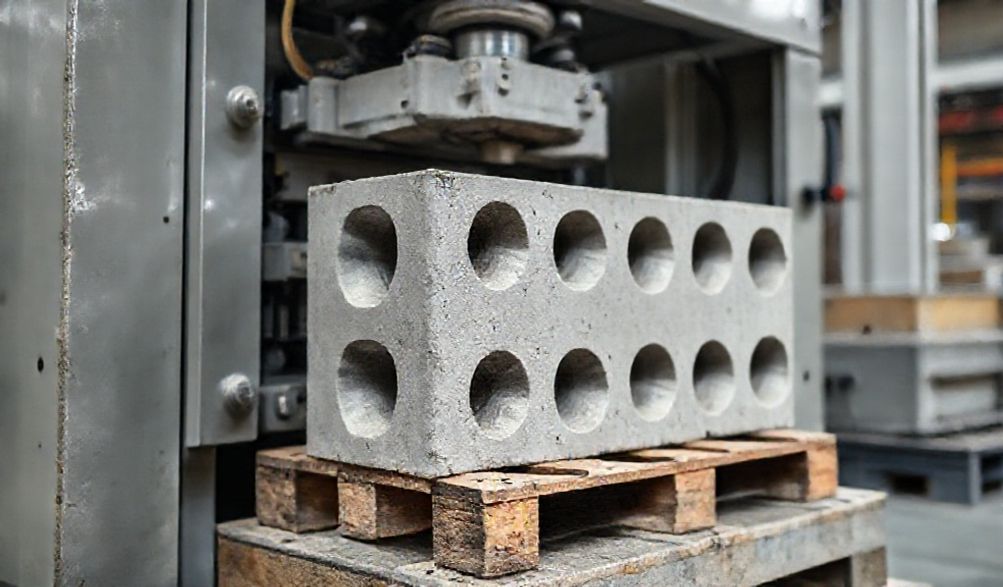
La Guía Definitiva sobre Máquinas de Bloques Huecos: Tipos, Precios y Cómo Elegir
Introducción
Desde imponentes rascacielos hasta humildes viviendas residenciales, el entorno construido moderno depende de un componente fundamental: el bloque de hormigón hueco. Valorado por su resistencia, propiedades aislantes y rentabilidad, este material de construcción omnipresente es la columna vertebral de la construcción en todo el mundo. Pero detrás de cada pared duradera se encuentra el motor de su creación: la máquina de bloques huecos. Para emprendedores, empresas constructoras e inversores, seleccionar la máquina adecuada es una decisión crítica que depende del conocimiento técnico, una planificación financiera clara y una visión práctica.
Esta guía sirve como un recurso integral e imparcial, compilado a partir de especificaciones de la industria, datos de fabricantes y experiencia operativa. Está diseñada para desmitificar el mundo de la producción de bloques huecos. En ella, encontrará una exploración detallada de cómo funcionan estas máquinas, un análisis comparativo de los tipos disponibles, una mirada transparente a los costos y la inversión, y consejos prácticos sobre operación y selección de proveedores. Ya sea que esté lanzando un negocio de fabricación de bloques o adquiriendo equipos para un proyecto importante, esta guía proporciona el conocimiento fundamental necesario para tomar una decisión informada y segura.
¿Qué es una Máquina de Bloques Huecos y Cómo Funciona?
Una máquina de bloques huecos es una pieza especializada de equipo industrial diseñada para fabricar bloques huecos de hormigón mediante la compactación de una mezcla de cemento, áridos y agua en una forma moldeada bajo presión y vibración significativas.
Función Principal y Salida: Definición de Bloques Huecos
Los bloques huecos de concreto son unidades de mampostería con uno o más agujeros o cavidades grandes. Estas cavidades reducen el peso total del bloque, mejoran sus propiedades de aislamiento térmico y acústico, y lo hacen más económico al utilizar menos materia prima. La función principal de una máquina de bloques huecos es producir estos bloques de manera consistente, eficiente y según un estándar estructural requerido. La producción de la máquina influye directamente en los plazos del proyecto y la rentabilidad del negocio.
El Principio Operativo Básico
El proceso de producción, aunque varía según el nivel de automatización, sigue una secuencia consistente de etapas:
- Mezcla:Las materias primas (típicamente cemento, arena, grava y agua) se combinan en proporciones precisas para formar una mezcla de hormigón semiseco. La consistencia aquí es crucial para la resistencia final del bloque.
- Alimentación:El hormigón mezclado se alimenta en la tolva de la máquina, que actúa como una cámara de retención y embudo.
- Compactación y Vibración:Este es el corazón del proceso. La mezcla se transfiere a un molde (o "caja de molde"). Una combinación de vibración de alta frecuencia y presión hidráulica compacta el concreto, eliminando las bolsas de aire y asegurando una forma de bloque densa y sólida alrededor de las cavidades huecas.
- Moldeo y Expulsión:Una vez compactado, el molde se levanta o retrae, y el nuevo bloque "verde" recién formado se expulsa sobre una paleta o el suelo de la fábrica.
- Curado:Los bloques expulsados aún no han alcanzado su máxima resistencia. Deben someterse a un proceso de curado, que a menudo implica humedad y temperatura controladas durante 24 a 48 horas, antes de poder apilarse, transportarse y utilizarse en la construcción.
Componentes Clave de una Máquina Estándar
Comprender las partes principales aclara la capacidad de la máquina y las necesidades de mantenimiento:
- Hopper:El recipiente que contiene y alimenta la mezcla de concreto crudo al sistema de moldeo.
- Mezcladora:Una unidad integrada o separada que asegura una mezcla homogénea de todas las materias primas.
- Molde / Caja de MoldeoEl componente definitorio. Esta caja de acero intercambiable le da al bloque su forma, tamaño y diseño de cavidad. Diferentes moldes permiten que una máquina produzca varios tipos de bloques.
- Sistema de Vibración:Generalmente compuestos por potentes vibradores eléctricos montados en la mesa o cámara del molde. La vibración de alta frecuencia es esencial para una compactación adecuada y un acabado liso del bloque.
- Sistema Hidráulico: The powerhouse. It consists of a pump, cylinders, and valves that generate the immense pressure (measured in tons) needed to compress the concrete.
- Panel de Control: Houses the electrical systems and interfaces (from simple levers to programmable logic controllers) for operating the machine.
Types of Hollow Block Machines: A Detailed Comparison
Choosing the correct type of machine is the most significant decision you will make. The spectrum ranges from purely human-powered to fully automated systems.
Máquinas Manuales para Bloques Huecos
- Operación y Salida: These are purely mechanical machines. Operators manually fill the mold with concrete, engage a lever to apply pressure, and then remove the finished block. Production is slow, heavily reliant on labor, with an output typically ranging from 500 to 1,500 blocks per 8-hour shift.
- Pros y Contras:
- Pros: Very low initial investment, simple design with minimal maintenance, no need for electrical power in basic models.
- Contras: Extremely labor-intensive, low and inconsistent output, highly dependent on operator skill, produces blocks of variable quality.
- Mejor Para: Micro-enterprises, very small-scale personal projects, or remote locations with no reliable power supply and abundant cheap labor.
Máquinas Semiautomáticas para Bloques Huecos
- Operación y Salida: This category strikes a balance. Key processes like vibration, compression, and block ejection are powered (electrically or hydraulically), but tasks like feeding raw material and removing finished blocks are often manual. Output can range from 1,500 to 5,000 blocks per shift, depending on model and crew size.
- Pros y Contras:
- Pros: Significant increase in production and consistency over manual machines. More efficient use of labor, better block quality due to controlled vibration/pressure. Moderate capital cost.
- Contras: Still requires a steady crew, not as fast as fully automatic lines, output can be bottlenecked by manual handling stages.
- Mejor Para: Small to medium-sized block manufacturing businesses, construction companies producing for their own projects, and entrepreneurs making a serious entry into the market.
Máquinas de Bloques Huecos Completamente Automáticas
- Operación y Salida: These are integrated production lines. They often include automatic batching and mixing systems, conveyor belts for material feeding, robotic pallet handling, and stackers. Human intervention is primarily for monitoring, maintenance, and quality checks. Output can easily exceed 10,000 blocks per shift and can reach up to 30,000 or more for large systems.
- Pros y Contras:
- Pros: Maximum production capacity and consistent, high-quality output. Drastically reduced direct labor costs. Highly efficient and scalable for large-volume contracts.
- Contras: Very high initial capital investment. Requires significant space, stable three-phase power, and skilled technicians for maintenance and troubleshooting. Complex setup.
- Mejor Para: Large-scale commercial block yards supplying regional markets, major infrastructure projects with on-site production plants, and established manufacturers expanding capacity.
Stationary vs. Mobile Block Making Machines
This is another key distinction based on application:
* Máquinas Estacionarias: These are fixed installations, typically found in a factory or dedicated production shed. They are the foundation for semi- and fully-automatic systems, designed for high-volume, long-term production.
* Máquinas Móviles: Mounted on a trailer or truck bed, these are designed for on-site production. They eliminate transport costs for blocks and are ideal for large, remote projects like dams, highways, or rural housing developments. They are almost always semi-automatic in function.
Critical Factors to Consider Before Buying a Hollow Block Machine
Moving beyond type, a deep dive into specifications and context is necessary for a sound investment.
Evaluando Sus Requisitos de Producción
Begin by asking fundamental questions:
* What is my target output in blocks per hour or per day?
* What specific block sizes, types (e.g., 4″, 6″, 8″ hollow blocks, solid blocks, pavers), and strengths do my customers or projects demand?
* Is this for a fixed factory location or does it need to be mobile for on-site work?
* What is the scale of my business or project? A startup’s needs differ from an expanding enterprise’s.
Especificaciones y Características de la Máquina
Scrutinize the technical details:
* Capacidad de Presión (Tonelaje): This directly affects block density and strength. A 150-ton machine produces stronger blocks than a 50-ton machine, all else being equal.
* Sistema de Vibración: Look for adjustable frequency and amplitude. Multiple vibrators (often 2-4) ensure even compaction.
* Potencia del Motor: Must be adequate to drive the hydraulic pump and vibrators without strain. Underpowered motors will fail prematurely.
* Nivel de Automatización: Be clear on what is automated. Is it just vibration, or does it include feeding, pallet rotation, and stacking?
* Versatilidad del Molde: Check how easily molds can be changed and what range of mold designs the machine’s frame and system can accommodate.
Quality of Construction and Durability
The machine’s build determines its lifespan. Prioritize:
* Steel Grade: Main frames and mold boxes should be made from high-grade, wear-resistant steel plate.
* Welding Quality: Inspect for clean, continuous, and robust welds, especially at stress points.
* Component Brands: Reputable machines use known brands for critical parts like hydraulic pumps (e.g., Rexroth, Parker), electrical components (Siemens, Schneider), and bearings.
Supplier Reputation and After-Sales Service
This factor can outweigh a slightly lower price. A common pitfall is choosing a cheap machine with no local support.
* History & Reviews: Research the supplier’s track record. How long have they been in business? Seek out independent client testimonials.
* Garantía: Understand exactly what is covered (parts, labor) and for how long.
* Repuestos: Are spare parts readily available locally or must they be shipped from overseas, causing costly downtime?
* Soporte Técnico: Does the supplier offer installation supervision, operator training, and prompt troubleshooting assistance?
Hollow Block Machine Price Range and Investment Analysis
Costs vary dramatically based on type, capacity, brand, and region. The figures below are approximate global ranges for the machine unit only.
Price Breakdown by Machine Type
- Máquinas Manuales para Bloques Huecos: $1,000 – $5,000 USD. The price depends on build quality and included features.
- Máquinas Semiautomáticas para Bloques Huecos: $10,000 – $50,000+ USD. This wide range covers small stationary models to large, high-output mobile units.
- Fully Automatic Hollow Block Machines: $50,000 – $300,000+ USD. The price escalates with the level of integration (batching plant, conveyors, robotic stackers).
Crucially, always request detailed quotations from multiple suppliers, as final prices are highly configurable.
Beyond the Machine: Calculating Total Investment
The machine cost is only part of the capital outlay. Budget for:
* Materias Primas: Initial stockpile of cement, aggregates (sand, gravel).
* Land & Infrastructure: Cost of land or shed rental, concrete flooring, and a reliable power connection (often three-phase).
* Ancillary Equipment: Forklift or pallet jack, curing racks or chambers, mixing equipment if not integrated.
* Labor & Operating Costs: Wages, electricity, water, and maintenance supplies.
* Maintenance Fund: A reserve for unexpected repairs and spare parts.
Understanding ROI (Return on Investment)
A basic ROI framework involves:
1. Calculate Revenue: (Number of blocks produced per month) x (Selling price per block in your market).
2. Calculate Monthly Operating Costs: Sum of raw material costs, labor, utilities, maintenance, and overheads.
3. Calculate Gross Monthly Profit: Revenue – Operating Costs.
4. Consider Initial Investment: Total cost of machine + setup + other capital expenses.
5. Estimate Payback Period: Initial Investment / Gross Monthly Profit. This gives the number of months to recover your investment.
Note: Market demand, operational efficiency, and cost control are the true drivers of profitability. Never rely on a supplier’s generic “guaranteed profit” claims.
Operation, Maintenance, and Safety Best Practices
Proper operation extends machine life and ensures consistent product quality.
Essential Daily and Periodic Maintenance
- Daily: Clean all concrete residue from the mold, hopper, and table. Check hydraulic oil levels and for leaks. Inspect electrical connections for tightness.
- Weekly: Lubricate all moving parts (pivots, guide rods) as per the manual. Tighten any loose bolts or nuts.
- Monthly: Change hydraulic oil and filters as recommended. Inspect mold liners for wear and vibrator mounts for cracks.
A common oversight is neglecting to clean the mold thoroughly, leading to built-up concrete that affects block dimensions and causes sticking.
Common Operational Issues and Troubleshooting
- Poor Block Strength: Usually caused by an incorrect water-cement ratio, insufficient vibration time, or low compaction pressure.
- Surface Cracks: Can result from too much water in the mix, improper curing (drying too fast), or excessive vibration.
- Blocks Sticking in Mold: Often due to a worn or damaged mold liner, insufficient mold release agent, or a wet concrete mix.
- Uneven Block Height: Typically indicates an unlevel machine, uneven feeding of the mold, or worn-out vibration mounts causing uneven compaction.
Non-Negotiable Safety Protocols
- Lockout/Tagout (LOTO): Always disconnect and lock the power source before performing any maintenance or clearing a jam.
- Equipo de Protección Personal (EPP): Operators must wear safety glasses, hearing protection (due to loud vibrators), heavy-duty gloves, and steel-toe boots.
- Safe Material Handling: Use proper lifting techniques or mechanical aids when handling heavy molds or bags of cement to prevent injury.
Frequently Asked Questions (FAQ) About Hollow Block Machines
What is the average production capacity of a standard hollow block machine?
Capacity is not standard; it’s defined by type. A manual machine may produce 600-800 blocks per day. A semi-automatic machine can produce 2,000-4,000 blocks in an 8-hour shift. A fully automatic line can produce 8,000-15,000 blocks or more in the same period.
Can one machine produce different block sizes and types?
Yes, most machines are designed to work with interchangeable molds. By changing the mold box, the same machine can typically produce different sizes of hollow blocks, solid blocks, paving stones, and curb stones, provided the machine’s pressure and feed system are compatible.
What is the typical lead time for delivery and installation?
For standard models from local stock, delivery can be within weeks. For custom-configured or imported machines, lead times can range from 60 to 120 days. Installation and commissioning by a technician may add additional time.
How much profit can I make from a hollow block business?
Profitability is highly variable and depends on your local market price for blocks, your operational efficiency, raw material costs, and overheads. Focus on controlling your production costs and understanding your local demand. Use the ROI framework provided earlier to model different scenarios based on your specific numbers.
What are the most trusted brands or how do I verify a supplier’s credibility?
Rather than recommending specific brands, which vary by region, focus on verification methods:
1. Request and actually contact client references.
2. Ask to visit an existing installation to see the machine running and speak to the owner.
3. Check for membership in relevant industry associations or possession of quality management certifications (like ISO).
4. Search for independent reviews or complaints about the supplier online.
5. Assess the professionalism and technical depth of their sales and support team.
Conclusión
Selecting a hollow block machine is a strategic investment that requires aligning technology with ambition. The journey begins by honestly assessing your production needs, financial capacity, and market context. From the labor-dependent manual press to the humming fully automatic plant, each machine type serves a distinct purpose.
Remember, the lowest purchase price can often lead to the highest long-term cost through downtime and poor support. Prioritize suppliers who demonstrate proven expertise, offer robust warranties, and have a tangible commitment to after-sales service. The most prudent path forward involves diligent research: visit industry trade shows, consult with established block manufacturers, and obtain multiple detailed quotations. By applying the insights in this guide, you are equipped to make a decision that lays a solid foundation for a profitable, efficient, and sustainable venture in the essential business of building.
<