
Остаточний посібник з машин для виробництва пустотілих блоків: типи, ціни та як вибрати
Вступ
Від високих хмарочосів до скромних житлових будинків, сучасне середовище, створене людиною, спирається на фундаментальний компонент: пустотілий бетонний блок. Цей універсальний будівельний матеріал, що цінується за свою міцність, теплоізоляційні властивості та економічну ефективність, є основою будівництва по всьому світу. Але за кожною міцною стіною стоїть двигун її створення — верстат для виробництва пустотілих блоків. Для підприємців, будівельних компаній та інвесторів вибір правильного верстата є критично важливим рішенням, яке залежить від технічних знань, чіткого фінансового планування та практичного розуміння.
Цей посібник є всебічним, неупередженим ресурсом, складеним на основі галузевих специфікацій, даних виробників та експертного досвіду. Він створений, щоб розвіяти таємниці виробництва пустотілих блоків. Тут ви знайдете детальний огляд принципів роботи таких машин, порівняльний аналіз доступних типів, прозорий погляд на витрати та інвестиції, а також практичні поради щодо експлуатації та вибору постачальника. Незалежно від того, чи ви запускаєте бізнес з виробництва блоків, чи закуповуєте обладнання для великого проекту, цей посібник надає базові знання, необхідні для прийняття обґрунтованого та впевненого рішення.
Що таке верстат для виготовлення пустотілих блоків і як він працює?
Машина для виготовлення пустотілих блоків — це спеціалізоване промислове обладнання, призначене для виробництва бетонних пустотілих блоків шляхом ущільнення суміші цементу, заповнювачів та води в задану форму під високим тиском та вібрацією.
Основна функція та вихідні дані: Визначення порожнистих блоків
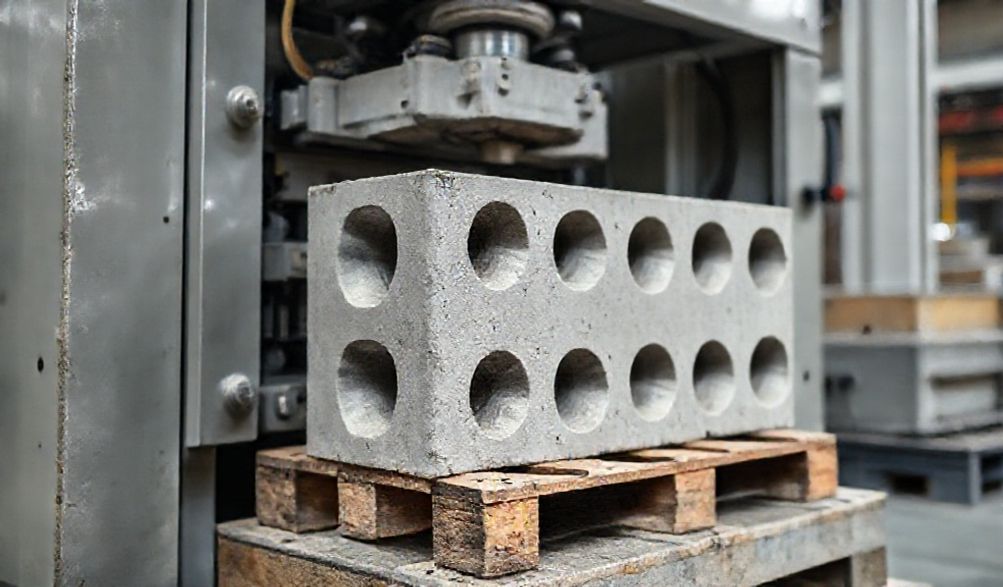
Бетонні пустотілі блоки — це кладочні одиниці з однією або кількома великими отворами або порожнинами. Ці порожнини зменшують загальну вагу блоку, покращують його тепло- та звукоізоляційні властивості та роблять його економічнішим за рахунок використання меншої кількості сировини. Основна роль верстата для виробництва пустотілих блоків полягає у виготовленні цих блоків стабільно, ефективно та відповідно до необхідних структурних стандартів. Продуктивність верстата безпосередньо впливає на терміни реалізації проектів та прибутковість бізнесу.
Основний принцип роботи
Процес виробництва, хоча й відрізняється за рівнем автоматизації, дотримується послідовності етапів:
- Змішування:Сировинні матеріали (зазвичай цемент, пісок, гравій і вода) змішуються у точних пропорціях для отримання напівсухої бетонної суміші. Консистенція тут має вирішальне значення для міцності готових блоків.
- Годування:Змішаний бетон подається у завантажувальний бункер машини, який виконує функцію камери утримання та направлення.
- Ущільнення та вібрація:Це серце процесу. Суміш переміщують у форму (або "формову коробку"). Комбінація високочастотної вібрації та гідравлічного тиску ущільнює бетон, видаляючи повітряні порожнини та забезпечуючи щільну, суцільну блокову форму навколо порожнистих порожнин.
- Лиття та виштовхування:Після ущільнення форму піднімають або відводять, і новоутворений "сирий" блок виштовхується на піддон або заводську підлогу.
- Лікування:Вибиті блоки ще не набрали повної міцності. Вони повинні пройти процес тверднення, який часто включає контрольовану вологість і температуру протягом 24-48 годин, перш ніж їх можна буде складати, транспортувати та використовувати в будівництві.
Ключові компоненти стандартної машини
Розуміння основних частин пояснює можливості машини та потреби в технічному обслуговуванні:
- Хоппер:Резервуар, який утримує та подає сиру бетонну суміш у формувальну систему.
- Мікшер:Інтегрований або окремий блок, який забезпечує однорідне змішування всіх сировинних матеріалів.
- Форма / Литникова коробка:Визначальний компонент. Ця змінна сталева форма надає блоку його форму, розмір та конструкцію порожнини. Різні форми дозволяють одній машині виробляти різні типи блоків.
- Вібраційна система:Зазвичай складаються з потужних електричних вібраторів, встановлених на стіл або камеру форми. Високочастотна вібрація є необхідною для належного ущільнення та отримання гладкого завершення блоку.
- Гідравлічна система: The powerhouse. It consists of a pump, cylinders, and valves that generate the immense pressure (measured in tons) needed to compress the concrete.
- Панель керування: Houses the electrical systems and interfaces (from simple levers to programmable logic controllers) for operating the machine.
Types of Hollow Block Machines: A Detailed Comparison
Choosing the correct type of machine is the most significant decision you will make. The spectrum ranges from purely human-powered to fully automated systems.
Ручні верстати для виготовлення порожнистих блоків
- Операція та вихідні дані: These are purely mechanical machines. Operators manually fill the mold with concrete, engage a lever to apply pressure, and then remove the finished block. Production is slow, heavily reliant on labor, with an output typically ranging from 500 to 1,500 blocks per 8-hour shift.
- Переваги та недоліки:
- Переваги: Very low initial investment, simple design with minimal maintenance, no need for electrical power in basic models.
- Недоліки: Extremely labor-intensive, low and inconsistent output, highly dependent on operator skill, produces blocks of variable quality.
- Найкраще для: Micro-enterprises, very small-scale personal projects, or remote locations with no reliable power supply and abundant cheap labor.
Напівавтоматичні верстати для порожнистих блоків
- Операція та вихідні дані: This category strikes a balance. Key processes like vibration, compression, and block ejection are powered (electrically or hydraulically), but tasks like feeding raw material and removing finished blocks are often manual. Output can range from 1,500 to 5,000 blocks per shift, depending on model and crew size.
- Переваги та недоліки:
- Переваги: Significant increase in production and consistency over manual machines. More efficient use of labor, better block quality due to controlled vibration/pressure. Moderate capital cost.
- Недоліки: Still requires a steady crew, not as fast as fully automatic lines, output can be bottlenecked by manual handling stages.
- Найкраще для: Small to medium-sized block manufacturing businesses, construction companies producing for their own projects, and entrepreneurs making a serious entry into the market.
Fully Automatic Hollow Block Machines
- Операція та вихідні дані: These are integrated production lines. They often include automatic batching and mixing systems, conveyor belts for material feeding, robotic pallet handling, and stackers. Human intervention is primarily for monitoring, maintenance, and quality checks. Output can easily exceed 10,000 blocks per shift and can reach up to 30,000 or more for large systems.
- Переваги та недоліки:
- Переваги: Maximum production capacity and consistent, high-quality output. Drastically reduced direct labor costs. Highly efficient and scalable for large-volume contracts.
- Недоліки: Very high initial capital investment. Requires significant space, stable three-phase power, and skilled technicians for maintenance and troubleshooting. Complex setup.
- Найкраще для: Large-scale commercial block yards supplying regional markets, major infrastructure projects with on-site production plants, and established manufacturers expanding capacity.
Stationary vs. Mobile Block Making Machines
This is another key distinction based on application:
* Стаціонарні верстати: These are fixed installations, typically found in a factory or dedicated production shed. They are the foundation for semi- and fully-automatic systems, designed for high-volume, long-term production.
* Мобільні машини: Mounted on a trailer or truck bed, these are designed for on-site production. They eliminate transport costs for blocks and are ideal for large, remote projects like dams, highways, or rural housing developments. They are almost always semi-automatic in function.
Critical Factors to Consider Before Buying a Hollow Block Machine
Moving beyond type, a deep dive into specifications and context is necessary for a sound investment.
Оцінка ваших виробничих потреб
Begin by asking fundamental questions:
* What is my target output in blocks per hour or per day?
* What specific block sizes, types (e.g., 4″, 6″, 8″ hollow blocks, solid blocks, pavers), and strengths do my customers or projects demand?
* Is this for a fixed factory location or does it need to be mobile for on-site work?
* What is the scale of my business or project? A startup’s needs differ from an expanding enterprise’s.
Специфікації та особливості машини
Scrutinize the technical details:
* Pressure Capacity (Tonnage): This directly affects block density and strength. A 150-ton machine produces stronger blocks than a 50-ton machine, all else being equal.
* Вібраційна система: Look for adjustable frequency and amplitude. Multiple vibrators (often 2-4) ensure even compaction.
* Потужність двигуна: Must be adequate to drive the hydraulic pump and vibrators without strain. Underpowered motors will fail prematurely.
* Рівень автоматизації: Be clear on what is automated. Is it just vibration, or does it include feeding, pallet rotation, and stacking?
* Універсальність форми: Check how easily molds can be changed and what range of mold designs the machine’s frame and system can accommodate.
Quality of Construction and Durability
The machine’s build determines its lifespan. Prioritize:
* Марка сталі: Main frames and mold boxes should be made from high-grade, wear-resistant steel plate.
* Welding Quality: Inspect for clean, continuous, and robust welds, especially at stress points.
* Component Brands: Reputable machines use known brands for critical parts like hydraulic pumps (e.g., Rexroth, Parker), electrical components (Siemens, Schneider), and bearings.
Supplier Reputation and After-Sales Service
This factor can outweigh a slightly lower price. A common pitfall is choosing a cheap machine with no local support.
* History & Reviews: Research the supplier’s track record. How long have they been in business? Seek out independent client testimonials.
* Warranty: Understand exactly what is covered (parts, labor) and for how long.
* Запчастини: Are spare parts readily available locally or must they be shipped from overseas, causing costly downtime?
* Технічна підтримка: Does the supplier offer installation supervision, operator training, and prompt troubleshooting assistance?
Hollow Block Machine Price Range and Investment Analysis
Costs vary dramatically based on type, capacity, brand, and region. The figures below are approximate global ranges for the machine unit only.
Price Breakdown by Machine Type
- Ручні верстати для виготовлення пустотілих блоків: $1,000 – $5,000 USD. The price depends on build quality and included features.
- Semi-Automatic Hollow Block Machines: $10,000 – $50,000+ USD. This wide range covers small stationary models to large, high-output mobile units.
- Fully Automatic Hollow Block Machines: $50,000 – $300,000+ USD. The price escalates with the level of integration (batching plant, conveyors, robotic stackers).
Crucially, always request detailed quotations from multiple suppliers, as final prices are highly configurable.
Beyond the Machine: Calculating Total Investment
The machine cost is only part of the capital outlay. Budget for:
* Сировина: Initial stockpile of cement, aggregates (sand, gravel).
* Land & Infrastructure: Cost of land or shed rental, concrete flooring, and a reliable power connection (often three-phase).
* Ancillary Equipment: Forklift or pallet jack, curing racks or chambers, mixing equipment if not integrated.
* Labor & Operating Costs: Wages, electricity, water, and maintenance supplies.
* Maintenance Fund: A reserve for unexpected repairs and spare parts.
Understanding ROI (Return on Investment)
A basic ROI framework involves:
1. Calculate Revenue: (Number of blocks produced per month) x (Selling price per block in your market).
2. Calculate Monthly Operating Costs: Sum of raw material costs, labor, utilities, maintenance, and overheads.
3. Calculate Gross Monthly Profit: Revenue – Operating Costs.
4. Consider Initial Investment: Total cost of machine + setup + other capital expenses.
5. Estimate Payback Period: Initial Investment / Gross Monthly Profit. This gives the number of months to recover your investment.
Note: Market demand, operational efficiency, and cost control are the true drivers of profitability. Never rely on a supplier’s generic “guaranteed profit” claims.
Operation, Maintenance, and Safety Best Practices
Proper operation extends machine life and ensures consistent product quality.
Essential Daily and Periodic Maintenance
- Daily: Clean all concrete residue from the mold, hopper, and table. Check hydraulic oil levels and for leaks. Inspect electrical connections for tightness.
- Weekly: Lubricate all moving parts (pivots, guide rods) as per the manual. Tighten any loose bolts or nuts.
- Monthly: Change hydraulic oil and filters as recommended. Inspect mold liners for wear and vibrator mounts for cracks.
A common oversight is neglecting to clean the mold thoroughly, leading to built-up concrete that affects block dimensions and causes sticking.
Common Operational Issues and Troubleshooting
- Poor Block Strength: Usually caused by an incorrect water-cement ratio, insufficient vibration time, or low compaction pressure.
- Surface Cracks: Can result from too much water in the mix, improper curing (drying too fast), or excessive vibration.
- Blocks Sticking in Mold: Often due to a worn or damaged mold liner, insufficient mold release agent, or a wet concrete mix.
- Uneven Block Height: Typically indicates an unlevel machine, uneven feeding of the mold, or worn-out vibration mounts causing uneven compaction.
Non-Negotiable Safety Protocols
- Lockout/Tagout (LOTO): Always disconnect and lock the power source before performing any maintenance or clearing a jam.
- Засоби індивідуального захисту (ЗІЗ): Operators must wear safety glasses, hearing protection (due to loud vibrators), heavy-duty gloves, and steel-toe boots.
- Safe Material Handling: Use proper lifting techniques or mechanical aids when handling heavy molds or bags of cement to prevent injury.
Frequently Asked Questions (FAQ) About Hollow Block Machines
What is the average production capacity of a standard hollow block machine?
Capacity is not standard; it’s defined by type. A manual machine may produce 600-800 blocks per day. A semi-automatic machine can produce 2,000-4,000 blocks in an 8-hour shift. A fully automatic line can produce 8,000-15,000 blocks or more in the same period.
Can one machine produce different block sizes and types?
Yes, most machines are designed to work with interchangeable molds. By changing the mold box, the same machine can typically produce different sizes of hollow blocks, solid blocks, paving stones, and curb stones, provided the machine’s pressure and feed system are compatible.
What is the typical lead time for delivery and installation?
For standard models from local stock, delivery can be within weeks. For custom-configured or imported machines, lead times can range from 60 to 120 days. Installation and commissioning by a technician may add additional time.
How much profit can I make from a hollow block business?
Profitability is highly variable and depends on your local market price for blocks, your operational efficiency, raw material costs, and overheads. Focus on controlling your production costs and understanding your local demand. Use the ROI framework provided earlier to model different scenarios based on your specific numbers.
What are the most trusted brands or how do I verify a supplier’s credibility?
Rather than recommending specific brands, which vary by region, focus on verification methods:
1. Request and actually contact client references.
2. Ask to visit an existing installation to see the machine running and speak to the owner.
3. Check for membership in relevant industry associations or possession of quality management certifications (like ISO).
4. Search for independent reviews or complaints about the supplier online.
5. Assess the professionalism and technical depth of their sales and support team.
Висновок
Selecting a hollow block machine is a strategic investment that requires aligning technology with ambition. The journey begins by honestly assessing your production needs, financial capacity, and market context. From the labor-dependent manual press to the humming fully automatic plant, each machine type serves a distinct purpose.
Remember, the lowest purchase price can often lead to the highest long-term cost through downtime and poor support. Prioritize suppliers who demonstrate proven expertise, offer robust warranties, and have a tangible commitment to after-sales service. The most prudent path forward involves diligent research: visit industry trade shows, consult with established block manufacturers, and obtain multiple detailed quotations. By applying the insights in this guide, you are equipped to make a decision that lays a solid foundation for a profitable, efficient, and sustainable venture in the essential business of building.
<