
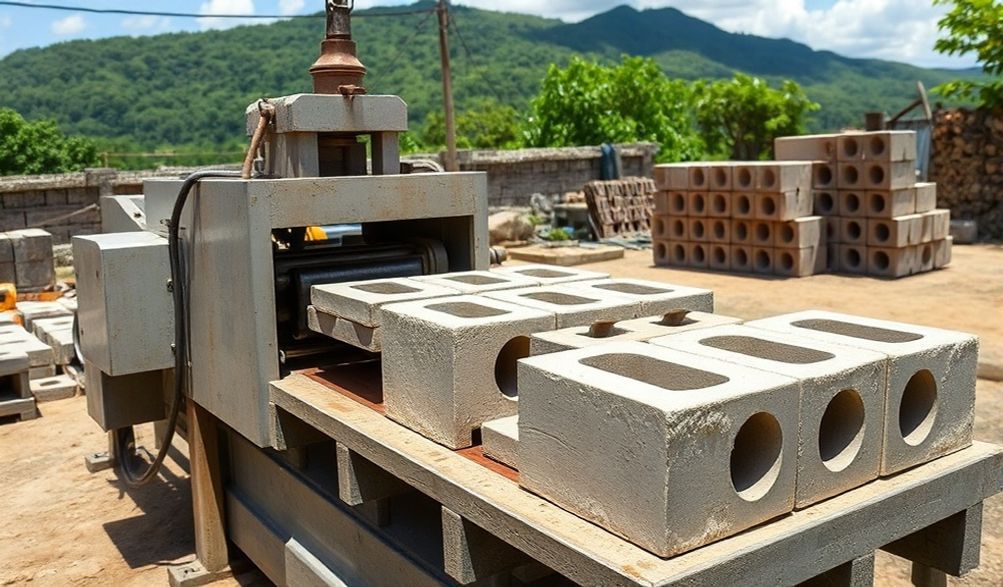
Tu Guía Definitiva para Comprar una Máquina de Bloques de Concreto en Jamaica (2024)
Introducción
El horizonte de Jamaica está en transformación. Desde desarrollos residenciales en Portmore y Spanish Town hasta importantes proyectos turísticos y de infraestructura, la isla experimenta un auge sostenido de la construcción. Este crecimiento impulsa una demanda crítica de materiales de construcción asequibles y confiables. Para contratistas, desarrolladores y emprendedores, esto presenta una oportunidad significativa: la posibilidad de tomar el control de su cadena de suministro y construir un negocio rentable produciendo sus propios bloques de concreto.
¿El desafío? Obtener bloques consistentes y rentables puede ser un cuello de botella, sujeto a fluctuaciones en los precios del mercado y retrasos en la entrega. ¿La solución? Invertir en tu propioMáquina de bloques de concreto en Jamaica en venta.Esto no es solo una pieza de equipo; es una inversión estratégica en independencia, control de calidad y rentabilidad a largo plazo para su empresa de construcción o manufactura.
Esta guía está diseñada pensando en su éxito. Basada en una exhaustiva investigación de la industria y en la comprensión del panorama económico, regulatorio y de materiales único de Jamaica, nuestro objetivo es ser su recurso más confiable. Iremos más allá de los argumentos de venta genéricos para brindarle el conocimiento práctico y localizado que necesita. Desmitificaremos el proceso, desde comprender los tipos de máquinas y las especificaciones clave hasta navegar por la logística de importación en Jamaica y calcular su retorno real de la inversión. Comencemos el viaje para realizar una compra segura e informada que impulse sus proyectos y su negocio hacia adelante.
Comprensión de las Máquinas de Bloques de Concreto: Tipos y Capacidades
Elegir la máquina adecuada comienza por entender tus opciones. La tecnología abarca desde unidades simples y manuales hasta líneas de producción completamente automatizadas. Tu elección impactará directamente en tu producción, costos laborales y desembolso de capital inicial.
Máquinas de Bloques Manuales vs. Semiautomáticas vs. Automáticas
La distinción fundamental radica en el nivel de intervención humana y mecanización.
-
Máquinas de Bloque Manuales:Estos son el punto de entrada más básico y asequible. Dependen completamente de un mecanismo operado por palanca para compactar la mezcla de concreto en un molde.
- Mejor Para:Proyectos a muy pequeña escala, iniciativas de autoconstrucción comunitaria o producción de bloques para uso personal (por ejemplo, una ampliación de vivienda). Ideal donde el costo de la mano de obra es bajo y el suministro eléctrico es poco fiable.
- Salida:Bajo (generalmente de 100 a 400 bloques por día de 8 horas).
-
Máquinas de Bloques Semiautomáticas:Esta es la categoría más popular para pequeñas y medianas empresas en Jamaica. Utilizan un motor eléctrico para accionar un sistema de vibración que compacta el concreto, mejorando significativamente la densidad y resistencia de los bloques. Los operadores alimentan el material manualmente y retiran los bloques terminados.
- Mejor Para:Nuevas empresas, patios de fabricación de bloques de pequeño a mediano tamaño, y contratistas que buscan abastecer sus propios proyectos y vender localmente. Ofrece un excelente equilibrio entre producción, calidad y costo.
- Salida:Medio (normalmente de 500 a 2.500 bloques por turno de 8 horas, según el modelo).
-
Máquinas de Bloque Completamente Automáticas:Estos son sistemas de producción completos con alimentación automática de materiales, mezcla, moldeo, curado y apilado. Requieren mano de obra manual mínima, pero una inversión de capital mucho mayor y energía eléctrica trifásica estable.
- Mejor Para:Plantas de fabricación de bloques comerciales a gran escala que tienen como objetivo abastecer a grandes empresas constructoras, proyectos de vivienda gubernamentales o distribución a nivel insular.
- Salida:Alto (puede superar los 5,000+ bloques por hora).
Tabla de Comparación:
| Característica | Máquina Manual | Máquina Semiautomática | Máquina Completamente Automática |
| :— | :— | :— | :— |
| Output Per Hour | 15-50 BPH | 60-300+ BPH | 3,000+ BPH |
| Labor Needed | High (2-3 people) | Moderate (2-3 people) | Low (1-2 for supervision) |
| Rango de Precios | Most Affordable | Moderate Investment | Significant Capital |
| Best For in Jamaica | Personal use, micro-business | Startups, SME block makers | Large-scale manufacturing |
Key Machine Specifications to Understand
When comparing models, these technical terms are crucial:
- Block Output Per Hour (BPH): The theoretical maximum production under ideal conditions. Real-world output will be lower.
- Tiempo de Ciclo: The time to complete one molding cycle (filling, compacting, ejecting). A shorter cycle means higher potential output.
- Tipos de Moldes e Intercambiabilidad: The heart of the machine. Ensure the seller offers molds for the specific concrete blocks used in Jamaica. The ability to quickly change molds to produce bloques huecos, bloques sólidosypaving slabs adds tremendous versatility to your business.
- Fuente de alimentación: Most semi-automatic machines run on standard 220V single-phase electricity. Larger units may require 3-phase industrial power. Diesel options exist but are less common.
- Pressure/Compaction Force: Measured in tons or kilonewtons (kN). Higher vibration force and pressure generally produce denser, stronger blocks—a key factor in meeting building codes.
Popular Block Types You Can Produce in Jamaica
Your machine’s versatility determines your market opportunities. Here are the most in-demand products:
- Standard Hollow Blocks (4″, 6″, 8″): The backbone of Jamaican masonry for load-bearing and partition walls.
- Bloques Sólidos: Used for foundations, pillars, and areas requiring extreme strength and moisture resistance.
- Paving Slabs & Interlocking Stones: Crucial for hard landscaping in driveways, patios, commercial plazas, and tourist resort developments.
- Kerb Stones: Essential for road construction, drainage projects, and property boundary definition.
- Decorative Blocks: For aesthetic walls and fencing, popular in residential and commercial designs.
Key Considerations Before Buying in Jamaica
A successful purchase goes beyond the machine specs. It requires honest business planning and an understanding of the local operating environment.
Assessing Your Business Needs and Budget
Start with a clear plan:
* Escala: Are you supplying your own construction company, selling to a local community, or aiming for large commercial contracts?
* Presupuesto: Factor in the Costo Total de Propiedad:
* Machine Price (FOB or CIF)
* Shipping & Insurance to Jamaica
* Import Duties, Customs Administrative Fee (CAF), and General Consumption Tax (GCT)
* Local transportation from the port (Kingston or Montego Bay) to your site
* Installation & foundation preparation
* Initial raw material stock (cement, aggregate)
* A contingency fund (at least 10-15%)
Sourcing Raw Materials: Cement, Aggregate, and More
Your block quality is only as good as your mix. Fortunately, Jamaica has excellent local resources:
* Cemento: Source reliably from local manufacturers like Caribbean Cement Company.
* Agregado: Jamaican quarry dust (a by-product of limestone crushing) is a fantastic, cost-effective component. Combine with sharp sand (e.g., from the Yallahs River) in the right proportions.
* Diseño de Mezcla: A typical mix for a standard hollow block might be 1 part cement to 6-8 parts aggregate (a blend of quarry dust and sand). Water content is critical—too much weakens the block. You may need to adjust mixes based on the moisture content of your local sand and dust.
Local Challenge Tip: Aggregate consistency can vary. Establish a relationship with a reputable quarry and periodically test your raw materials to ensure consistent block strength.
Navigating Import Regulations and Logistics
This is a critical step where professional advice is non-negotiable. Here is a simplified overview:
- Import License: Ensure you or your importing agent have the necessary business registration and import rights.
- Engage a Licensed Customs Broker: This is our strongest recommendation. A local broker will handle the complex clearance process with the Jamaica Customs Agency, ensuring correct classification and duty payment.
- Understand the Costs: Your machine will likely fall under a specific heading in the Common External Tariff (CET). You will be liable for:
- Customs Duty (rate varies)
- Additional stamp duties or fees
- General Consumption Tax (GCT) on the cumulative value (CIF + duties).
- Shipping Logistics: Clarify Incoterms with your supplier. “CIF Kingston” means they handle sea freight and insurance to the port. You handle everything from the port onward. “FOB China Port” means you arrange and pay for the entire shipping journey.
Where to Find Concrete Block Machines for Sale in Jamaica
You have three primary avenues, each with pros and cons.
Local Jamaican Equipment Suppliers and Dealers
Purchasing from a local dealer based in Kingston or Montego Bay offers significant advantages:
* Soporte Postventa: Immediate access to technical help, spare parts, and service.
* Warranty Fulfillment: Hassle-free warranty claims.
* No Import Hassles: The price is usually all-inclusive (landed cost).
* Vetting Tip: Check their business history. Ask for references from other block manufacturers on the island. Visit their showroom or workshop if possible.
International Manufacturers and Exporters
Sourcing directly from manufacturers in China, India, or Turkey can offer a wider selection and lower upfront machine costs.
* Ventajas Clave: Potentially lower prices, access to the latest technology, custom configuration.
* Critical Factors:
* Supplier Reputation: Verify business licenses, visit their factory via video call, and demand customer references, especially from other Caribbean buyers.
* Export Experience: Choose a supplier familiar with exporting to the Caribbean. They should provide proper export packaging (weatherproof, crate-mounted) and all necessary documentation (Commercial Invoice, Packing List, Bill of Lading, Certificate of Origin).
* Post-Sale Support: Clarify how they will provide remote technical support (WhatsApp, video call) and the availability of English-language manuals and wiring diagrams.
Online Marketplaces and Direct Sales
Platforms like Alibaba or industry-specific B2B sites connect you with thousands of suppliers.
* Exercise Extreme Due Diligence:
* Use Alibaba’s “Trade Assurance” for payment protection.
* Never rely solely on the platform’s ratings. Conduct your own verification.
* Request a Video Sample: Ask the supplier to produce a batch of blocks using your specified mix and send you a video of the process and the final products.
* Consider a Pre-Shipment Inspection: Hire a third-party inspection company to verify the machine’s build quality and operation before it leaves the factory.
Ensuring a Smart Purchase and Successful Operation
The final steps secure your investment and pave the way for profitability.
Essential Questions to Ask Any Seller
Have this checklist ready:
1. What is the exact warranty period and what does it cover? Is there a local service agent in Jamaica?
2. Do you include molds for standard Jamaican block sizes (4″, 6″, 8″ hollow blocks)? What is the cost of additional molds?
3. Will you provide comprehensive operation and maintenance manuals in English?
4. Can you provide a list of critical spare parts (like vibration motors, control panels, springs) I should source locally or keep in stock?
5. Do you offer any basic installation guidance or operator training (remotely or via video)?
Installation, Training, and Basic Maintenance
- Installation: You will need a level, solid concrete foundation. The machine must be bolted down securely to operate safely and effectively.
- Entrenamiento: Do not skip this. Proper training on mix consistency, machine operation, and safety protocols is essential for block quality and preventing injuries.
- Basic Maintenance Checklist:
- Daily: Clean the machine thoroughly after use, check for loose bolts/nuts, lubricate moving parts as per manual.
- Weekly: Inspect mold liners for wear, check electrical connections, inspect vibration springs/motors.
- Monthly: Perform a more thorough inspection of all major components.
Calculating Your ROI and Profit Potential
Let’s build a simplified model for a semi-automatic machine:
- Investment Cost (Example): Machine Landed Cost: JMD $2.5M
- Operating Costs per 100 Blocks (Estimate):
- Cement, Aggregate, Water: JMD $3,500
- Labor (2 persons): JMD $2,000
- Power & Miscellaneous: JMD $500
- Total Cost per 100: ~JMD $6,000
- Revenue:
- Selling Price per 6″ Hollow Block: JMD $110 – $130
- Revenue per 100 Blocks: JMD $11,000 – $13,000
- Gross Profit per 100 Blocks: JMD $5,000 – $7,000
- Break-Even Analysis: To cover the JMD $2.5M machine cost, you’d need to produce and sell approximately 35,000 – 50,000 blocks, depending on your exact margin. A dedicated small operation can achieve this within 12-18 months.
Variables: Your actual profit depends on your operational efficiency, scale, material sourcing costs, and local market prices.
Frequently Asked Questions (FAQ)
Q1: What is the average price range for a concrete block machine suitable for a small startup in Jamaica?
A: For a new semi-automatic machine capable of producing 800-1500 blocks per day, landed costs can range from approximately JMD $1.8 million to JMD $4 million. This wide range depends on specifications, brand, shipping method, and the prevailing import charges at the time of clearance.
Q2: Can I get a machine that uses hydraulic pressure for stronger blocks?
A: Absolutely. Many mid-range and high-end machines combine vibration with hydraulic pressure systems. This is excellent for producing high-compressive-strength blocks, interlocking pavers, and kerbstones that need to meet stringent specifications, such as those from the Jamaican Bureau of Standards (BSJ).
Q3: Are there any government incentives for importing manufacturing equipment to Jamaica?
A: Potential incentives may exist for businesses that qualify under specific industry development programs. It is essential to consult directly with Jamaica Promotions Corporation (JAMPRO)y elMinistry of Industry, Investment, and Commerce (MIIC). They can provide the most current and accurate information on concessionary arrangements for productive investments.
Q4: How do I ensure the blocks I produce meet Jamaican building codes?
A: First, use a proven mix design with quality local materials. Second, implement proper curing (keeping the blocks moist for at least 7 days). Most importantly, have random samples of your production batch tested for compressive strength at a recognized laboratory, such as the Bureau of Standards Jamaica (BSJ) or an approved private facility. This certification builds trust with contractors and engineers.
Q5: What is the most common challenge new block machine owners face in Jamaica?
A: Beyond initial mechanical familiarization, the most frequent challenge is maintaining consistent raw material quality—especially the moisture content of sand and quarry dust. A variation here changes the water-cement ratio, leading to weaker or inconsistent blocks. Establishing reliable supplier relationships and simple on-site moisture checks are key to overcoming this.
Conclusión
Investing in a Máquina de bloques de concreto en Jamaica en venta. is a decisive step toward business growth and industry leadership. The journey requires careful planning: defining your scale, understanding the machinery, conducting meticulous due diligence on suppliers, and meticulously planning for the realities of import logistics and local operation.
Use this guide as your foundational workbook. Start by solidifying your business case. Then, approach multiple vetted suppliers—both local and international—with the detailed questions we’ve outlined. Most importantly, build your network of local experts: engage a reputable customs broker, consult with successful block manufacturers, and connect with the relevant Jamaican agencies for official guidance.
By making an informed investment, you’re not just buying a machine; you’re building capacity, contributing to Jamaica’s infrastructure development, and laying a solid foundation for your own entrepreneurial success. The market is ready. Now is the time to build.
<