
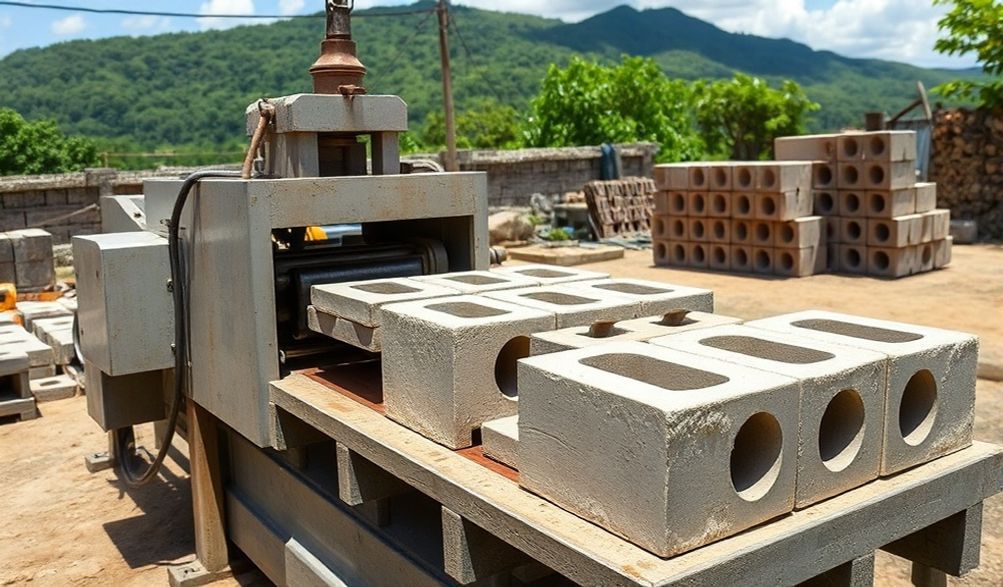
Panduan Utama Anda untuk Membeli Mesin Blok Beton di Jamaika (2024)
Pengantar
Langit-langit Jamaika sedang berubah. Dari pengembangan perumahan di Portmore dan Spanish Town hingga proyek-proyek pariwisata dan infrastruktur besar, pulau ini mengalami ledakan konstruksi yang berkelanjutan. Pertumbuhan ini memicu permintaan kritis akan bahan bangunan yang terjangkau dan andal. Bagi kontraktor, pengembang, dan pengusaha, ini merupakan peluang besar: kesempatan untuk mengendalikan rantai pasokan Anda dan membangun bisnis yang menguntungkan dengan memproduksi balok beton Anda sendiri.
Tantangannya? Mendapatkan balok yang konsisten dan hemat biaya bisa menjadi hambatan, karena rentan terhadap fluktuasi harga pasar dan keterlambatan pengiriman. Solusinya? Berinvestasi dalam balok Anda sendiri.mesin blok beton di Jamaika untuk dijualIni bukan sekadar peralatan; ini adalah investasi strategis untuk kemandirian, kendali mutu, dan profitabilitas jangka panjang bagi usaha konstruksi atau manufaktur Anda.
Panduan ini dirancang dengan kesuksesan Anda dalam pikiran. Dibangun berdasarkan penelitian industri yang mendalam dan pemahaman tentang lanskap ekonomi, regulasi, dan material yang unik di Jamaika, tujuan kami adalah menjadi sumber daya paling tepercaya Anda. Kami akan melampaui penawaran penjualan umum untuk memberikan pengetahuan praktis dan terlokalisasi yang Anda butuhkan. Kami akan mengungkap prosesnya, mulai dari memahami jenis mesin dan spesifikasi kunci hingga menavigasi logistik impor Jamaika dan menghitung pengembalian investasi nyata Anda. Mari kita mulai perjalanan untuk membuat pembelian yang percaya diri dan terinformasi, yang mendukung proyek dan bisnis Anda maju ke depan.
Memahami Mesin Blok Beton: Jenis dan Kemampuan
Memilih mesin yang tepat dimulai dengan memahami pilihan Anda. Teknologinya berkisar dari unit sederhana yang dioperasikan manual hingga lini produksi yang sepenuhnya otomatis. Pilihan Anda akan berdampak langsung pada output, biaya tenaga kerja, dan pengeluaran modal awal.
Mesin Blok Manual vs. Semi-Otomatis vs. Otomatis Penuh
Perbedaan intinya terletak pada tingkat intervensi manusia dan mekanisasi.
-
Mesin Blok Manual:Ini adalah titik masuk paling dasar dan terjangkau. Mereka sepenuhnya bergantung pada mekanisme yang dioperasikan dengan tuas untuk memadatkan campuran beton ke dalam cetakan.
- Terbaik Untuk:Proyek skala sangat kecil, inisiatif pembangunan mandiri komunitas, atau produksi blok untuk penggunaan pribadi (misalnya, perluasan rumah). Ideal di mana biaya tenaga kerja rendah dan pasokan listrik tidak andal.
- Keluaran:Rendah (biasanya 100-400 blok per hari 8 jam).
-
Mesin Blok Semi-Otomatis:Ini adalah kategori paling populer untuk bisnis kecil hingga menengah di Jamaika. Mereka menggunakan motor listrik untuk menggerakkan sistem getaran yang memadatkan beton, secara signifikan meningkatkan kepadatan dan kekuatan blok. Operator secara manual memasukkan bahan dan mengeluarkan blok jadi.
- Terbaik Untuk:Startup, bengkel pembuatan blok kecil hingga menengah, dan kontraktor yang ingin memasok proyek mereka sendiri dan menjual secara lokal. Menawarkan keseimbangan yang sangat baik antara output, kualitas, dan biaya.
- Keluaran:Sedang (biasanya 500 – 2.500 blok per shift 8 jam, tergantung model).
-
Mesin Blok Sepenuhnya Otomatis: These are complete production systems with automated material feeding, mixing, molding, curing, and stacking. They require minimal manual labor but a much higher capital investment and stable, three-phase electrical power.
- Terbaik Untuk: Large-scale commercial block manufacturing plants aiming to supply major construction companies, government housing projects, or island-wide distribution.
- Keluaran: High (can exceed 5,000+ blocks per hour).
Comparison Table:
| Fitur | Mesin Manual | Mesin Semi-Otomatis | Mesin Otomatis Penuh |
| :— | :— | :— | :— |
| Output Per Hour | 15-50 BPH | 60-300+ BPH | 3,000+ BPH |
| Labor Needed | High (2-3 people) | Moderate (2-3 people) | Low (1-2 for supervision) |
| Price Range | Most Affordable | Moderate Investment | Significant Capital |
| Best For in Jamaica | Personal use, micro-business | Startups, SME block makers | Large-scale manufacturing |
Spesifikasi Utama Mesin yang Perlu Dipahami
When comparing models, these technical terms are crucial:
- Block Output Per Hour (BPH): The theoretical maximum production under ideal conditions. Real-world output will be lower.
- Waktu Siklus: The time to complete one molding cycle (filling, compacting, ejecting). A shorter cycle means higher potential output.
- Jenis Cetakan & Kemampuan Pertukaran: The heart of the machine. Ensure the seller offers molds for the specific concrete blocks used in Jamaica. The ability to quickly change molds to produce blok beton berongga, balok padatdanpaving slabs adds tremendous versatility to your business.
- Sumber Daya: Most semi-automatic machines run on standard 220V single-phase electricity. Larger units may require 3-phase industrial power. Diesel options exist but are less common.
- Pressure/Compaction Force: Measured in tons or kilonewtons (kN). Higher vibration force and pressure generally produce denser, stronger blocks—a key factor in meeting building codes.
Popular Block Types You Can Produce in Jamaica
Your machine’s versatility determines your market opportunities. Here are the most in-demand products:
- Standard Hollow Blocks (4″, 6″, 8″): The backbone of Jamaican masonry for load-bearing and partition walls.
- Balok Padat: Used for foundations, pillars, and areas requiring extreme strength and moisture resistance.
- Paving Slabs & Interlocking Stones: Crucial for hard landscaping in driveways, patios, commercial plazas, and tourist resort developments.
- Kerb Stones: Essential for road construction, drainage projects, and property boundary definition.
- Decorative Blocks: For aesthetic walls and fencing, popular in residential and commercial designs.
Key Considerations Before Buying in Jamaica
A successful purchase goes beyond the machine specs. It requires honest business planning and an understanding of the local operating environment.
Assessing Your Business Needs and Budget
Start with a clear plan:
* Skala: Are you supplying your own construction company, selling to a local community, or aiming for large commercial contracts?
* Anggaran: Factor in the Total Biaya Kepemilikan:
* Machine Price (FOB or CIF)
* Shipping & Insurance to Jamaica
* Import Duties, Customs Administrative Fee (CAF), and General Consumption Tax (GCT)
* Local transportation from the port (Kingston or Montego Bay) to your site
* Installation & foundation preparation
* Initial raw material stock (cement, aggregate)
* A contingency fund (at least 10-15%)
Sourcing Raw Materials: Cement, Aggregate, and More
Your block quality is only as good as your mix. Fortunately, Jamaica has excellent local resources:
* Semen: Source reliably from local manufacturers like Caribbean Cement Company.
* Aggregate: Jamaican quarry dust (a by-product of limestone crushing) is a fantastic, cost-effective component. Combine with sharp sand (e.g., from the Yallahs River) in the right proportions.
* Desain Campuran: A typical mix for a standard hollow block might be 1 part cement to 6-8 parts aggregate (a blend of quarry dust and sand). Water content is critical—too much weakens the block. You may need to adjust mixes based on the moisture content of your local sand and dust.
Local Challenge Tip: Aggregate consistency can vary. Establish a relationship with a reputable quarry and periodically test your raw materials to ensure consistent block strength.
Navigating Import Regulations and Logistics
This is a critical step where professional advice is non-negotiable. Here is a simplified overview:
- Import License: Ensure you or your importing agent have the necessary business registration and import rights.
- Engage a Licensed Customs Broker: This is our strongest recommendation. A local broker will handle the complex clearance process with the Jamaica Customs Agency, ensuring correct classification and duty payment.
- Understand the Costs: Your machine will likely fall under a specific heading in the Common External Tariff (CET). You will be liable for:
- Customs Duty (rate varies)
- Additional stamp duties or fees
- General Consumption Tax (GCT) on the cumulative value (CIF + duties).
- Shipping Logistics: Clarify Incoterms with your supplier. “CIF Kingston” means they handle sea freight and insurance to the port. You handle everything from the port onward. “FOB China Port” means you arrange and pay for the entire shipping journey.
Where to Find Concrete Block Machines for Sale in Jamaica
You have three primary avenues, each with pros and cons.
Local Jamaican Equipment Suppliers and Dealers
Purchasing from a local dealer based in Kingston or Montego Bay offers significant advantages:
* Dukungan Purna Jual: Immediate access to technical help, spare parts, and service.
* Warranty Fulfillment: Hassle-free warranty claims.
* No Import Hassles: The price is usually all-inclusive (landed cost).
* Vetting Tip: Check their business history. Ask for references from other block manufacturers on the island. Visit their showroom or workshop if possible.
International Manufacturers and Exporters
Sourcing directly from manufacturers in China, India, or Turkey can offer a wider selection and lower upfront machine costs.
* Kelebihan Utama: Potentially lower prices, access to the latest technology, custom configuration.
* Critical Factors:
* Supplier Reputation: Verify business licenses, visit their factory via video call, and demand customer references, especially from other Caribbean buyers.
* Export Experience: Choose a supplier familiar with exporting to the Caribbean. They should provide proper export packaging (weatherproof, crate-mounted) and all necessary documentation (Commercial Invoice, Packing List, Bill of Lading, Certificate of Origin).
* Post-Sale Support: Clarify how they will provide remote technical support (WhatsApp, video call) and the availability of English-language manuals and wiring diagrams.
Online Marketplaces and Direct Sales
Platforms like Alibaba or industry-specific B2B sites connect you with thousands of suppliers.
* Exercise Extreme Due Diligence:
* Use Alibaba’s “Trade Assurance” for payment protection.
* Never rely solely on the platform’s ratings. Conduct your own verification.
* Request a Video Sample: Ask the supplier to produce a batch of blocks using your specified mix and send you a video of the process and the final products.
* Consider a Pre-Shipment Inspection: Hire a third-party inspection company to verify the machine’s build quality and operation before it leaves the factory.
Ensuring a Smart Purchase and Successful Operation
The final steps secure your investment and pave the way for profitability.
Essential Questions to Ask Any Seller
Have this checklist ready:
1. What is the exact warranty period and what does it cover? Is there a local service agent in Jamaica?
2. Do you include molds for standard Jamaican block sizes (4″, 6″, 8″ hollow blocks)? What is the cost of additional molds?
3. Will you provide comprehensive operation and maintenance manuals in English?
4. Can you provide a list of critical spare parts (like vibration motors, control panels, springs) I should source locally or keep in stock?
5. Do you offer any basic installation guidance or operator training (remotely or via video)?
Installation, Training, and Basic Maintenance
- Installation: You will need a level, solid concrete foundation. The machine must be bolted down securely to operate safely and effectively.
- Pelatihan: Do not skip this. Proper training on mix consistency, machine operation, and safety protocols is essential for block quality and preventing injuries.
- Basic Maintenance Checklist:
- Harian: Clean the machine thoroughly after use, check for loose bolts/nuts, lubricate moving parts as per manual.
- Mingguan: Inspect mold liners for wear, check electrical connections, inspect vibration springs/motors.
- Bulanan: Perform a more thorough inspection of all major components.
Calculating Your ROI and Profit Potential
Let’s build a simplified model for a semi-automatic machine:
- Investment Cost (Example): Machine Landed Cost: JMD $2.5M
- Operating Costs per 100 Blocks (Estimate):
- Cement, Aggregate, Water: JMD $3,500
- Labor (2 persons): JMD $2,000
- Power & Miscellaneous: JMD $500
- Total Cost per 100: ~JMD $6,000
- Revenue:
- Selling Price per 6″ Hollow Block: JMD $110 – $130
- Revenue per 100 Blocks: JMD $11,000 – $13,000
- Gross Profit per 100 Blocks: JMD $5,000 – $7,000
- Break-Even Analysis: To cover the JMD $2.5M machine cost, you’d need to produce and sell approximately 35,000 – 50,000 blocks, depending on your exact margin. A dedicated small operation can achieve this within 12-18 months.
Variables: Your actual profit depends on your operational efficiency, scale, material sourcing costs, and local market prices.
Pertanyaan yang Sering Diajukan (FAQ)
Q1: What is the average price range for a concrete block machine suitable for a small startup in Jamaica?
A: For a new semi-automatic machine capable of producing 800-1500 blocks per day, landed costs can range from approximately JMD $1.8 million to JMD $4 million. This wide range depends on specifications, brand, shipping method, and the prevailing import charges at the time of clearance.
Q2: Can I get a machine that uses hydraulic pressure for stronger blocks?
A: Absolutely. Many mid-range and high-end machines combine vibration with hydraulic pressure systems. This is excellent for producing high-compressive-strength blocks, interlocking pavers, and kerbstones that need to meet stringent specifications, such as those from the Jamaican Bureau of Standards (BSJ).
Q3: Are there any government incentives for importing manufacturing equipment to Jamaica?
A: Potential incentives may exist for businesses that qualify under specific industry development programs. It is essential to consult directly with Jamaica Promotions Corporation (JAMPRO)danMinistry of Industry, Investment, and Commerce (MIIC). They can provide the most current and accurate information on concessionary arrangements for productive investments.
Q4: How do I ensure the blocks I produce meet Jamaican building codes?
A: First, use a proven mix design with quality local materials. Second, implement proper curing (keeping the blocks moist for at least 7 days). Most importantly, have random samples of your production batch tested for compressive strength at a recognized laboratory, such as the Bureau of Standards Jamaica (BSJ) or an approved private facility. This certification builds trust with contractors and engineers.
Q5: What is the most common challenge new block machine owners face in Jamaica?
A: Beyond initial mechanical familiarization, the most frequent challenge is maintaining consistent raw material quality—especially the moisture content of sand and quarry dust. A variation here changes the water-cement ratio, leading to weaker or inconsistent blocks. Establishing reliable supplier relationships and simple on-site moisture checks are key to overcoming this.
Kesimpulan
Investing in a mesin blok beton di Jamaika untuk dijual is a decisive step toward business growth and industry leadership. The journey requires careful planning: defining your scale, understanding the machinery, conducting meticulous due diligence on suppliers, and meticulously planning for the realities of import logistics and local operation.
Use this guide as your foundational workbook. Start by solidifying your business case. Then, approach multiple vetted suppliers—both local and international—with the detailed questions we’ve outlined. Most importantly, build your network of local experts: engage a reputable customs broker, consult with successful block manufacturers, and connect with the relevant Jamaican agencies for official guidance.
By making an informed investment, you’re not just buying a machine; you’re building capacity, contributing to Jamaica’s infrastructure development, and laying a solid foundation for your own entrepreneurial success. The market is ready. Now is the time to build.
<