
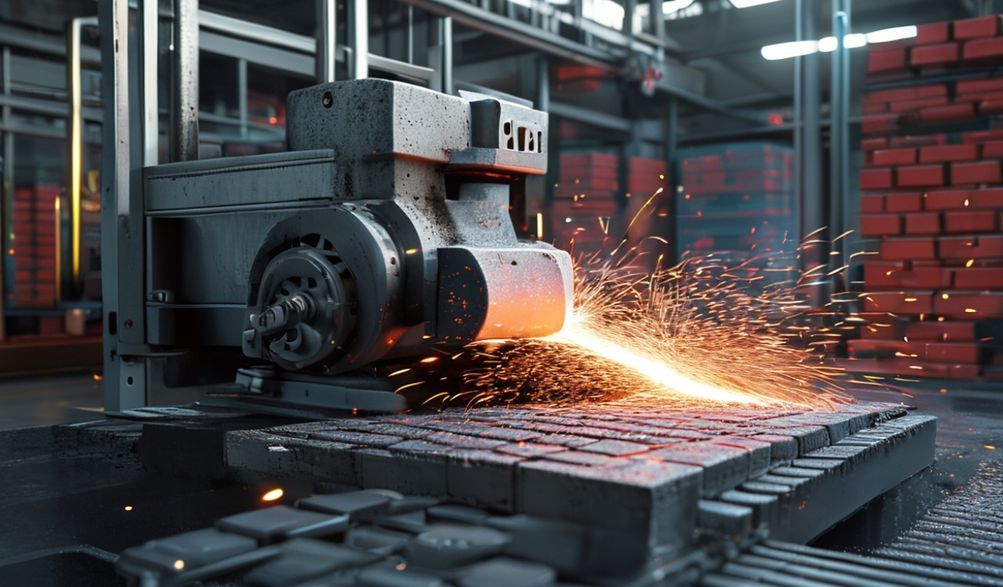
Votre guide ultime pour choisir une usine de fabrication de machines à blocs de béton imbriqués
Introduction
Le paysage mondial de la construction est en pleine évolution. Des projets d'infrastructures urbaines aux initiatives de logements durables, la demande de matériaux de construction durables, rentables et écologiques est à un niveau sans précédent. À l'avant-garde de cette transformation se trouvent les blocs de béton à emboîtement—polyvalents, résistants et idéaux pour le pavage, les murs de soutènement, et même les structures résistantes aux catastrophes. Mais derrière chaque cour de production de blocs performante se cache une décision unique et cruciale : le choix de votre usine de machines à fabriquer des blocs de béton à emboîtement.
C'est à cette étape que de nombreuses entreprises et entrepreneurs trébuchent. Le marché est saturé de fournisseurs qui promettent monts et merveilles au prix le plus bas. La réalité ? Choisir la mauvaise usine peut entraîner des temps d'arrêt catastrophiques, une qualité de blocs inégale, des coûts de réparation exorbitants et, en fin de compte, un investissement raté. La machine est le cœur de votre exploitation ; sa provenance doit être irréprochable.
Avec plus de trois décennies d'expérience dans la fabrication et l'ingénierie de machines de construction, j'ai été témoin des triomphes d'achats bien informés et des leçons douloureuses de décisions précipitées. Ce guide est fondé sur cette expertise pratique. Il est conçu non pas pour vous vendre une marque spécifique, mais pour vous armer des connaissances essentielles pour évaluer n'importe quelle usine comme un professionnel chevronné.
Que vous soyez une entreprise de construction en pleine expansion, un entrepreneur lançant une cour à blocs, ou un agent gouvernemental supervisant un processus d'approvisionnement, voici votre feuille de route. Nous allons analyser comment identifier une usine fiable, comprendre les spécifications non négociables des machines, naviguer le processus d'acquisition, et forger un partenariat qui garantira votre rentabilité pour les années à venir.
Pourquoi votre choix d'usine est la décision la plus cruciale
L'achat d'une machine à blocs de verrouillage n'est pas une simple transaction; c'est la formation d'une alliance stratégique. L'usine que vous choisissez devient une extension de votre entreprise, influençant directement vos opérations quotidiennes et votre viabilité à long terme. Examinons pourquoi ce choix a un poids si considérable.
L'impact direct sur votre rentabilité d'entreprise
La performance de votre machine se traduit directement par votre rentabilité.
* Fiabilité = Temps de disponibilité :Une machine qui tombe souvent en panne arrête toute la production. Les jours de production perdus signifient des commandes manquées, des pénalités contractuelles et des coûts de main-d'œuvre inactifs.
* Cohérence de la qualité des blocsUne machine mal calibrée ou de construction fragile produit des blocs avec des inexactitudes dimensionnelles ou une faible résistance à la compression. Cela entraîne des lots rejetés, des matières premières gaspillées et des dommages à votre réputation.
* Vitesse et efficacité de production :La production prévue (blocs par heure) doit être réalisable dans des conditions réelles. Une machine surdimensionnée que vous ne pouvez pas entretenir ou une machine sous-alimentée qui ne peut pas répondre à la demande étranglent toutes deux votre croissance et votre retour sur investissement.
Au-delà de la machine : La valeur du soutien technique et de la formation
La meilleure machine n'est bonne que si elle est bien soutenue. Une usine qui disparaît après le paiement est une responsabilité.
* Installation et mise en service appropriées :Une configuration incorrecte peut causer des dommages immédiats et des problèmes de performance chroniques. L'expertise d'un guide est non négociable.
* Formation complète des opérateurs :Les opérateurs bien formés maximisent la production, minimisent les déchets et effectuent l'entretien préventif essentiel, prolongeant ainsi la durée de vie de la machine.
* Conseils d'entretien accessibles :Lorsqu'un tuyau hydraulique éclate ou qu'un capteur tombe en panne, vous avez besoin de manuels clairs, de guides de dépannage et de conseils techniques réactifs pour reprendre rapidement le travail.
Naviguer sur le marché mondial : défis et opportunités
Factories are spread worldwide—from industrial hubs in China, India, and Turkey to specialized manufacturers in Europe and North America. This variety presents both opportunity and risk.
* The Price Spectrum: Prices can vary wildly. Understanding what justifies a higher price (superior components, engineering, service) is key.
* Quality Disparity: Two machines may look identical in a photo, but the quality of steel, welding, and internal components can be worlds apart.
* Cultural & Communication Barriers: Clear, consistent, and transparent communication is essential for specifying needs, resolving issues, and ensuring smooth logistics.
Key Indicators of a Trustworthy and Expert Factory
Separating market leaders from mere assemblers requires a disciplined evaluation. Use these concrete indicators to assess any potential supplier.
Manufacturing Experience and Proven Track Record
Longevity and a proven portfolio are your first filters.
* Years in Business: Look for a minimum of 10-15 years of dedicated machinery manufacturing. This indicates resilience and accumulated knowledge.
* Client Portfolio & Case Studies: A reputable factory will proudly share examples of successful installations, often with photos, videos, and testimonials. Look for projects in environments similar to yours.
* Industry Presence: Do they participate in major international construction or machinery trade fairs? This shows investment in their brand and industry engagement.
In-House Engineering and R&D Capability
This is what separates a true manufacturer from a parts assembler.
* Capacité de personnalisation Can they modify a standard design to fit your unique raw materials, block design, or space constraints? This flexibility is invaluable.
* Problem-Solving Partnership: When you encounter a production challenge, an in-house engineering team can diagnose and offer solutions, not just sell you a spare part.
* Amélioration continue : Factories invested in R&D release updated models with better efficiency, user interfaces, and energy savings, protecting your investment from rapid obsolescence.
Quality Control Processes from Raw Material to Shipment
Quality isn’t an accident; it’s a documented process. Ask for theirs.
* Approvisionnement en matériaux What grade of steel is used for the frame and mold? ISO-certified suppliers for major components (hydraulics, PLCs) are a positive sign.
* Production Standards: Inquire about welding procedures (e.g., submerged arc welding for critical joints), stress-relieving treatments, and anti-corrosion painting processes (like sandblasting and epoxy coating).
* Tests avant l'expédition : A rigorous factory will run a FAT (Factory Acceptance Test) with you (or via video), producing sample blocks with your specified mix to prove machine functionality before it leaves their floor.
Transparency and Communication
Trust is built on clarity. Gauge this from your very first interaction.
* Documentation: They should readily provide detailed technical specifications, foundation drawings, electrical schematics, and parts manuals.
* Responsiveness: Consistent, clear, and timely replies to technical questions are a strong indicator of future support quality.
* Open-Door Policy: Will they arrange a live video tour of their workshop? Can they provide a third-party factory audit report? Transparency dispels doubt.
Essential Machine Specifications to Discuss with Any Factory
Armed with an understanding of factory credibility, you must now drill into the machine itself. These are the technical parameters that will define your production reality.
Core Production Specifications: Capacity, Pressure, and Automation
- Production de sortie : Never rely on theoretical maximums. Discuss sustainable 8-hour or 24-hour output for the specific block type you need (e.g., 10,000 pavers/day). Factor in mold change and maintenance time.
- Pression du système hydraulique : Measured in tons (e.g., 150-ton, 300-ton). Higher pressure generally means higher block density and strength. Ensure it’s matched to your target block quality and size.
- Niveau d'automatisation :
- Manuel : Labor-intensive, low output, suitable for very small-scale startups.
- Semi-Automatique : Operator loads mix, machine cycles automatically. Best balance of cost and output for many businesses.
- Fully Automatic (with PLC): Automated material feeding, mixing, molding, and stacking. Requires higher investment but offers maximum output, consistency, and labor savings.
Block Mold Versatility and Customization
Your ability to adapt to market demands hinges on your molds.
* Standard Mold Library: A good factory offers dozens of proven designs: grass pavers, hollow blocks, retaining wall systems, and interlocking bricks.
* Custom Mold Service: They should have CAD/CAM capability to design and manufacture molds based on your unique drawing or sample. Ask for their design lead time and cost structure.
* Mold Changing Mechanism: How long does it take to change molds? Quick-change systems (within 30 minutes) significantly increase operational flexibility and profitability.
Machine Durability and Ease of Maintenance
This is where build quality becomes operational reality.
* Marques de composants clés : While reputable factories may use high-quality local components, recognized international brands (e.g., Siemens or Mitsubishi PLCs, Schneider electrics, Rexroth or Yuken hydraulics) often signal a commitment to reliability and easier global parts sourcing.
* Construction de l'ossature The frame should be made from heavy-duty, reinforced steel plates, not lightweight sections. Welds should be clean, even, and certified.
* Service Accessibility: Panels should open easily, and key components like hydraulic valves and sensors should be reachable without major disassembly. This reduces maintenance time and costs.
The Step-by-Step Process of Working with a Factory
A smooth procurement process is a precursor to a successful partnership. Here’s the ideal journey from inquiry to production.
1. Initial Inquiry and Needs Assessment
Provide a clear brief: desired block types and dimensions, target daily output, available factory space/power, and budget range. The more detailed you are, the more accurate the proposal.
2. Quotation Analysis: Reading Between the Lines
Don’t just look at the bottom line. Scrutinize:
* Itemization: Is the quote detailed (machine, molds, spare parts, training cost)?
* Warranty Terms: Exactly what is covered and for how long?
* Delivery Time: From deposit to shipment.
* INCOTERMS: Understand responsibilities (FOB, CIF, etc.). FOB (Franco à bord) is common, where you own the goods and assume risk/cost once loaded on the ship.
3. Factory Visit and Machine Inspection (Virtual or On-Site)
If possible, visit. If not, insist on a live video inspection.
* Checklist: Observe workshop organization, quality of work-in-progress machines, and testing areas. Request to see the FAT for a machine similar to yours.
4. Negotiation, Contract, and Payment Terms
- Contract: Ensure it includes all agreed specifications, warranty, delivery timeline, and payment schedule.
- Payment: A standard, protective schedule is 30% deposit, 40% upon pre-shipment inspection, 30% before shipment. Never pay 100% upfront.
5. Shipping, Installation, and Commissioning
The factory should assist with shipping arrangements. Upon arrival, they should provide (or send a technician for) installation supervision, calibration, and on-site training to produce your first commercial-quality blocks.
Common Pitfalls to Avoid When Sourcing Your Machine
Learning from others’ mistakes is the cheapest form of due diligence.
Choosing Based on Price Alone
The cheapest machine has the highest lifetime cost. Savings on the purchase price will be consumed many times over by repair costs, low output, and poor block quality that loses clients.
Overlooking Local Agent or After-Sales Service Network
Is there a service contact in your region or timezone? How quickly can you get critical spare parts? A factory with no local support network leaves you stranded.
Ignoring Electrical and Power Requirements
A 380V/50Hz machine is useless in a 440V/60Hz region without a transformer. Confirm voltage, phase, and total power consumption (KVA) to prepare your site.
Underestimating Foundation and Site Preparation Needs
These machines are heavy and require a perfectly level, reinforced concrete foundation. The factory doit provide detailed foundation drawings. Ignoring this causes vibration, misalignment, and premature failure.
Foire aux questions (FAQ)
Q1: What is the average lead time from order to delivery for a standard machine?
A : This varies significantly. For a standard semi-automatic machine, expect 30-45 days after deposit confirmation. For a fully automatic production line with customization, lead times can extend to 60-90 days. Always get the confirmed timeline in your sales contract.
Q2: What is a standard warranty period, and what does it typically cover?
A : A reputable factory typically offers 12-18 months for the main frame and critical structures, and 6-12 months for electrical and hydraulic components. Crucially, the warranty covers manufacturing and material defects, not wear parts or damage from improper operation, maintenance, or force majeure. Clarify exclusions explicitly.
Q3: Can the factory help with raw material mix design for the blocks?
A : An expert factory should. They will provide a basic, proven mix design (ratios of cement, sand, aggregates, and water) as a starting point. This should be adaptable based on the quality and properties of your locally available materials.
Q4: How do I ensure I get genuine spare parts in the future?
A : Choose a factory that maintains a comprehensive spare parts inventory. Ensure they provide a detailed parts manual with codes and diagrams. Establish a direct channel for ordering parts and confirm their policy on parts availability for older machine models.
Q5: What training is typically provided for our operators?
A : Standard packages include 3-5 days of on-site training after installation. This should cover safe operation, daily maintenance routines, basic troubleshooting for common alarms, and mold changing procedures. Verify that this training is explicitly included in your quotation and contract.
Conclusion
Selecting the right concrete interlocking block making machine factory is a strategic investment that will echo through the life of your business. It is a decision that hinges not on a glossy brochure or the lowest price, but on demonstrable expertise, unwavering commitment to quality, and a genuine partnership ethos.
As an industry veteran, my final recommendation is this: be thorough, be skeptical, and be demanding. Use the criteria in this guide as your due diligence checklist. Ask the hard questions about engineering, quality control, and long-term support. Prioritize factories that welcome your scrutiny and demonstrate a transparent commitment to your success.
Let this guide empower you to move forward with confidence. Before you sign any contract, review your shortlisted factories one last time against the key indicators we’ve outlined. Your future productivity, profitability, and peace of mind depend on the foundation you lay today with this critical choice.
<