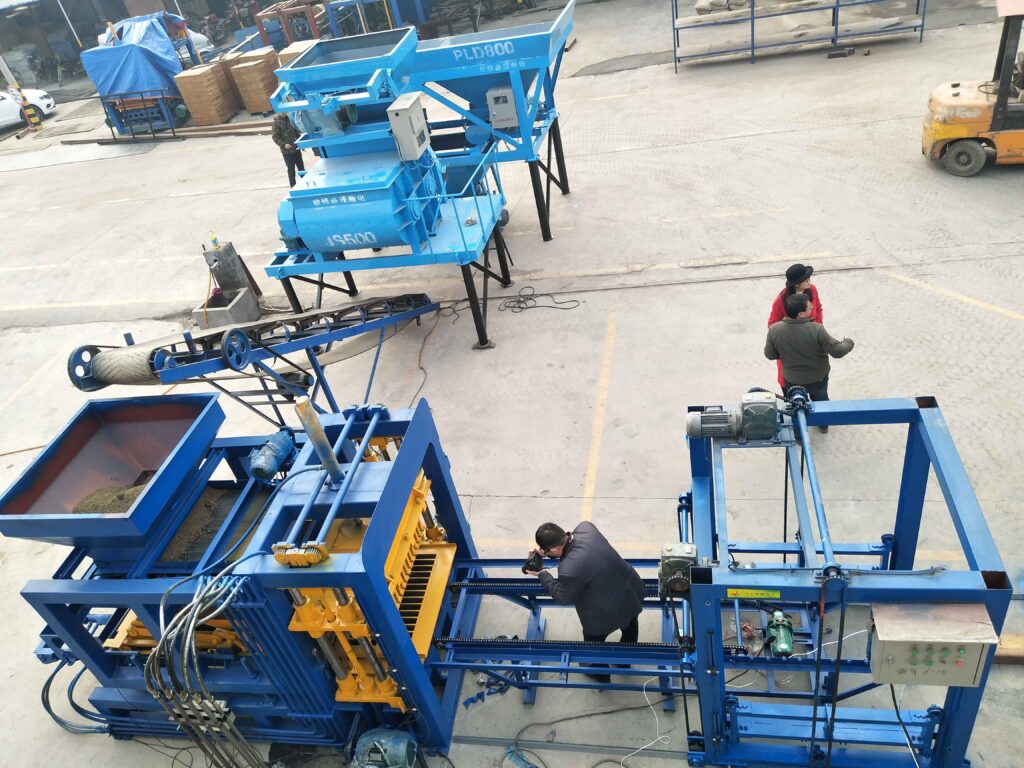
Introduction : La science de l'intégrité structurelle dans la maçonnerie moderne
À une époque où la sécurité des bâtiments, l'efficacité des matériaux et la conformité réglementaire dominent les normes de construction, la propriété fondamentale définissant la qualité d'un élément de maçonnerie est sa résistance à la compression. La presse à compression pour blocs de maçonnerie constitue le lien critique où les matières premières sont transformées en composants structurels capables de supporter d'immenses charges. Pour les distributeurs, les concessionnaires et les spécialistes en approvisionnement, cette technologie ne se limite pas à donner une forme ; elle consiste à concevoir l'épine dorsale même de structures sûres et durables. Cet équipement incarne le principe que la valeur ultime d'une brique ou d'un bloc ne réside pas dans son apparence, mais dans sa capacité certifiée à performer sous contrainte, une qualité qui est méticuleusement conçue durant la phase de compression.
Cette catégorie de machinerie est spécialisée et se concentre sur l'application d'une pression mécanique extrême pour consolider des matériaux particulaires en unités de construction denses et cohérentes. Le processus est une science précise, équilibrant la composition des matières premières, la teneur en humidité et la force appliquée pour atteindre une performance structurelle prédéterminée et constante.
Le noyau de l'ingénierie : Principes de la consolidation à haute pression
1.1 La physique de la compression : au-delà du simple façonnage
L'action d'une machine de compression est fondamentalement différente des méthodes simples de moulage ou basées sur les vibrations. Elle repose sur l'application d'une force immense et soutenue pour réaliser un réarrangement des particules et un enchevêtrement au niveau microscopique.
- Réarrangement et verrouillage des particules :Le processus débute lorsque le mélange semi-sec, composé d'agrégats, de liant (comme le ciment ou la chaux) et d'autres additifs, est introduit dans la cavité du moule. L'application initiale de la force amène les particules à glisser les unes contre les autres, comblant les vides et atteignant un arrangement d'empilement plus dense. À mesure que la pression augmente, les contacts ponctuels entre les particules deviennent des zones de contrainte significative, entraînant une déformation localisée et un enchevêtrement mécanique. Cela réduit considérablement la porosité et crée une structure cohésive et monolithique.
- Le rôle du liant dans la compression :Dans un système à base de ciment, le liant et l'eau forment une pâte qui enrobe les particules granulaires. Sous haute pression, cette pâte est forcée dans les plus petits espaces interstitiels. L'énergie de compactage semble également améliorer les réactions initiales d'hydratation, conduisant au développement d'une « résistance à vert » plus élevée immédiatement après l'éjection. Cela permet de manipuler le bloc sans l'endommager, un facteur crucial pour les lignes de production automatisées. La résistance finale est ensuite pleinement atteinte par le durcissement ultérieur.
1.2 Sous-systèmes clés d'une machine de compression à haute pression
La capacité à fournir une force à haute pression de manière constante et répétée résulte d'un système synergique de composants robustes.
- L'Unité de Puissance Hydraulique (UPH) :Voici le cœur de la machine. Il se compose d'un moteur électrique, de pompes hydrauliques, de réservoirs, de valves et d'actionneurs. Les unités hydrauliques modernes sont conçues pour l'efficacité, incorporant souvent des pompes à cylindrée variable et des systèmes d'accumulateurs qui stockent l'énergie, fournissant des débits élevés pour les mouvements rapides des vérins et une haute pression pour la phase de compactage, tout en minimisant la consommation d'énergie globale. La fiabilité de l'unité hydraulique détermine directement le temps de fonctionnement et la performance de la machine.
- Le Cadre et l'Assemblage du Moule de PresseLe châssis doit être une structure extrêmement rigide, généralement fabriquée à partir de plaques d'acier à haute résistance et de renforts. Son but est de résister à la force de compactage complète sans fléchir, car toute déflexion entraînerait des variations dans l'épaisseur et la densité des blocs. L'ensemble du moule, y compris la boîte de moulage elle-même et la tête de compression, est fabriqué à partir d'alliages spécialement durcis et résistants à l'usure pour tolérer la nature abrasive du mélange brut et maintenir la précision dimensionnelle sur des millions de cycles.
- The Control and Feedback System: At the core of a modern compression machine is a Programmable Logic Controller (PLC). This system does more than just initiate the press cycle; it precisely controls the pressure ramp-up, the dwell time at maximum pressure, and the decompression phase. Integrated pressure transducers provide real-time feedback to the PLC, ensuring that every block is compressed with the exact same force, batch after batch. This closed-loop control is the key to unparalleled product consistency.
The Critical Determinants of Final Product Strength
Achieving the target compressive strength is not solely a function of the machine’s power. It is the result of a carefully balanced equation involving several factors.
2.1 The Raw Material Matrix: A Precise Recipe
The quality of the input materials is paramount. The aggregate must be well-graded, meaning a mix of particle sizes that pack together efficiently, minimizing voids. The binder content must be sufficient to coat all aggregate particles and form a strong matrix. The moisture content is arguably the most sensitive variable; too little hinders binder activation and leads to lamination, while too much causes sticking and reduces green strength.
2.2 The Pressure Profile: Force, Dwell, and Release
The machine’s pressure application is not a simple impulse. The “dwell time”—the duration for which maximum pressure is maintained—is critical. It allows for stress relaxation within the material, ensuring the compaction is thorough and not just superficial. The rate of pressure release can also affect the block’s integrity, with a controlled release being preferable to a sudden one.
2.3 Curing and Its Synergy with Compression
While compression gives the block its initial form and density, proper curing is what allows it to achieve its potential strength. The dense, low-porosity structure created by high-pressure compression actually slows down the ingress of water needed for curing. Therefore, steam curing in a controlled chamber is highly synergistic with this production method, as the heat and humidity drive the hydration reaction more effectively, allowing the block to achieve its specified strength much faster.
Strategic Advantages for the Distribution Channel
3.1 Delivering Certified Quality and Market Confidence
For your clients, investing in a compression-focused machine is an investment in market credibility and risk mitigation.
- Guaranteed Compliance with International Standards: Compression machines are engineered to produce blocks that consistently meet or exceed ASTM, ISO, and other national standards for compressive strength (e.g., 15-20 MPa for standard blocks, and much higher for paving units). This provides architects, engineers, and contractors with the confidence that the materials are fit for purpose, facilitating easier approval for large-scale projects.
- Superior Product Performance Characteristics: The high density achieved through compression results in blocks with lower water absorption, higher abrasion resistance, and improved frost durability. This makes them ideal for harsh climates, paving applications, and below-grade construction, opening up premium market segments.
- Enhanced Brand Reputation and Value: A manufacturer known for producing high-strength, certified blocks can command a higher price point and build a reputation for reliability. This brand equity is a powerful business asset, protecting against competition based solely on low cost.
3.2 Technical Evaluation for Procurement Excellence
Guiding clients to the right machine requires a deep dive into specifications that truly matter.
- Evaluating Compaction Force and Consistency: The nominal pressure in tons is a starting point, but the consistency of that pressure is more important. Inquire about the control system’s ability to maintain pressure setpoints and the presence of pressure sensors for feedback. A machine that claims 200 tons but has a variance of ±10 tons is inferior to one rated at 190 tons with a variance of ±1 ton.
- Assessing Structural Rigidity and Durability: Examine the design of the press frame. Look for features like box-type construction, thick steel cross-sections, and finite element analysis (FEA) in the design process. The quality of the hydraulic hoses, fittings, and seals are indicators of the machine’s long-term reliability and resistance to leaks and downtime.
- Analyzing the Total Cost of Ownership (TCO): Beyond the purchase price, consider energy consumption (look for machines with energy-efficient HPUs), the expected lifespan of wear parts like mold liners, and the availability and cost of spare parts. A machine with a slightly higher initial cost but lower operating and maintenance expenses often provides a better TCO.
Conclusion: Engineering the Foundation of Trust
The block brick compression machine is the definitive technology for manufacturers who prioritize structural performance and quality assurance above all else. It represents a commitment to scientific manufacturing principles, where every unit produced is a testament to precision engineering and controlled force. In a market increasingly defined by safety standards and performance specifications, this machinery provides the ultimate tool for compliance and competitive advantage.
For the distribution and procurement network, mastery of this technology segment signifies a move into a high-value, consultancy-led sales approach. By understanding and communicating the intricate relationship between compression force, material science, and final product performance, you empower your clients to build not just structures, but legacies of safety and durability. The future of masonry is being forged under pressure, and it is a future built on a foundation of certified strength.
Foire aux questions (FAQ)
Q1: How does a compression machine differ from a vibration-based machine?
A: The primary difference is the dominant force used for consolidation. Vibration-based machines use high-frequency shaking to fluidize the concrete mix, allowing it to settle in the mold. They are often faster but may struggle with very stiff, semi-dry mixes. Compression machines use static, high mechanical pressure to force the particles together, resulting in a denser, less porous, and typically stronger product with higher immediate green strength. Many high-end machines combine both vibration and compression for optimal results.
Q2: What is the “green strength” of a block, and why is it important?
A: Green strength refers to the mechanical strength of a block immediately after it is ejected from the machine, before it has undergone any curing. High green strength is critical for automated production because it allows the block to be handled by robotic arms, stacked on pallets, and transported to the curing area without cracking, deforming, or having its edges break. Compression machines are specifically designed to impart very high green strength.
Q3: Can compression machines produce all types of concrete blocks and bricks?
A: They are exceptionally versatile and can produce a wide range of products, including solid and hollow blocks, paving stones, and interlocking bricks. However, the machine must be specifically configured with the appropriate pressure and mold for each product type. For instance, producing a thick, solid block requires more force and potentially a different pressure profile than producing a thin, hollow block.
Q4: What are the most common maintenance requirements for these machines?
A: Maintenance is focused on the high-wear components and the hydraulic system. Key tasks include:
- Daily: Visual inspection for hydraulic leaks, checking oil levels, and cleaning the mold and press head.
- Weekly: Greasing all bearings and guide columns, checking for loose bolts, and inspecting hydraulic hoses for wear.
- Monthly: Checking and calibrating pressure sensors, inspecting electrical connections, and replacing hydraulic oil filters as needed.
- As Needed: Replacing wear parts like mold liners, seal kits in hydraulic cylinders, and the compression head itself.
Q5: How do we determine the optimal moisture content for the raw material mix?
A: The optimal moisture content is determined through a series of laboratory Proctor tests or, more practically, through factory trials. It is the moisture level at which the mix achieves maximum density under a given compaction effort. A simple field test is the “hand-squeeze” test: a handful of the mix should form a ball that holds its shape without crumbling or leaving excessive moisture on the hand. Precise control is achieved using automated water dosing systems integrated with the mixer.
Q6: What kind of foundation is required for a large compression machine?
A: A massive, reinforced concrete foundation is absolutely mandatory. The foundation must be designed to absorb the dynamic shock loads and vibrations generated during the compression cycle, preventing any movement that could misalign the machine or cause it to settle unevenly. The machine supplier should always provide a detailed foundation drawing specifying the concrete grade, reinforcement, and anchor bolt placements. Improper foundation is a leading cause of machine performance issues and premature failure.