Intégration stratégique des sous-produits industriels dans la fabrication moderne de briques
Cadre commercial et technique pour l'utilisation des cendres volantes
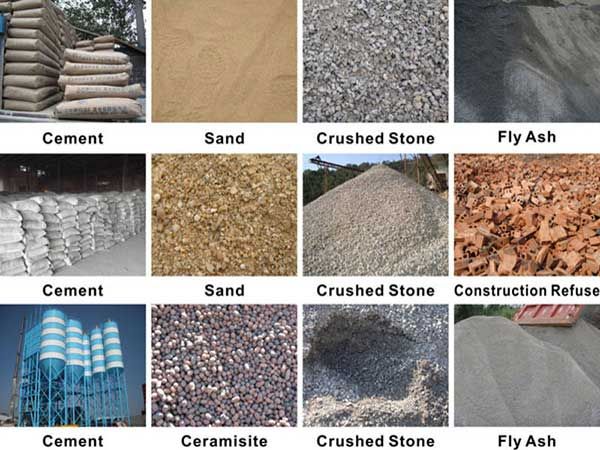
Les cendres volantes, une poudre fine récupérée des gaz de combustion des centrales au charbon, sont un matériau pouzzolanique. Cela signifie qu'elles contiennent des composés siliceux et alumineux qui, en présence d'eau et d'une source de calcium (comme la chaux ou le ciment), réagissent pour former des composés cimentaires. Leur utilisation dans la fabrication de briques est une application sophistiquée de la science des matériaux qui nécessite une intégration précise dans le processus de production automatisée.
1. La Proposition de Valeur Convaincante des Cendres Volantes
L'incorporation de cendres volantes est une décision stratégique motivée par de multiples avantages simultanés qui répondent aux besoins des fabricants, des distributeurs et des utilisateurs finaux.
1.1. Avantages économiques et de la chaîne d'approvisionnement
- Réduction des coûts :Les cendres volantes sont généralement un matériau à faible coût ou à prix négatif (en tenant compte des coûts d'élimination pour les producteurs). Elles peuvent remplacer une part importante de matériaux traditionnels plus coûteux, comme le ciment Portland dans les briques de béton ou une partie de l'argile dans les briques cuites, réduisant directement les dépenses en matières premières.
- Diversification de la chaîne d'approvisionnement :Il offre une source alternative et abondante de matières premières, réduisant la dépendance à l’argile extraite ou au ciment seul et protégeant la production de la volatilité des prix de ces produits.
- Incitatifs à la valorisation des déchets :Dans de nombreuses régions, les politiques gouvernementales ou les programmes de certification des bâtiments écologiques (comme LEED) créent des incitatifs financiers ou de marché pour l’utilisation de contenu recyclé, ouvrant la voie à des achats préférentiels dans les projets publics et privés.
1.2. Performance et qualité améliorées du produit
- Amélioration de l'ouvrabilité et de la finitionDans les mélanges de briques en béton, la forme sphérique des particules de cendres volantes agit comme un lubrifiant, améliorant la plasticité et les caractéristiques d'écoulement du mélange. Cela permet un moulage plus facile, une finition de surface plus lisse et une réduction de la demande en eau pour une maniabilité équivalente.
- Résistance et durabilité accrues à long terme The pozzolanic reaction is a slower, secondary reaction that continues over time. This leads to a denser, less permeable microstructure, resulting in higher ultimate compressive strength, improved resistance to sulfate attack, and reduced efflorescence potential. For fired clay bricks, fly ash can act as a flux, potentially lowering the vitrification temperature and improving fired strength in some formulations.
- Reduced Shrinkage and Cracking: The reduced water demand and the fine particles of fly ash help minimize plastic and drying shrinkage in concrete bricks, leading to fewer micro-cracks and improved dimensional stability.
1.3. Environmental and Market Positioning Benefits
- Empreinte carbone réduite : Using fly ash directly reduces the volume of cement required, which is a major source of CO2 emissions. It also diverts industrial waste from landfills. This significantly improves the Environmental Product Declaration (EPD) of the bricks.
- Market Differentiation: Bricks manufactured with high recycled content appeal to architects, engineers, and developers focused on sustainable construction. This allows distributors to access a growing, specification-driven market segment and command a potential premium.
2. Technical Integration into Machine-Based Production
Successfully using fly ash requires adjustments across the production workflow, from material handling to curing.
2.1. Material Selection and Pre-Processing
- Fly Ash Classification: Not all fly ash is equal. It is critical to source consistent, quality-controlled material, typically Class F or Class C (ASTM C618). The chemical composition, loss on ignition (LOI), and fineness must be tested and monitored batch-to-batch.
- Storage and Handling: Fly ash is a very fine, dusty material that requires enclosed, silo-based storage with pneumatic or screw-conveyor systems for dust-free transfer to the batching plant. Proper storage prevents moisture absorption, which can cause clumping.
2.2. Mix Design and Batching Optimization
- Concrete (Non-Fired) Bricks: This is the most common and straightforward application. Fly ash is used as a partial replacement for Portland cement, typically ranging from 15% to 30% by weight of the total cementitious content. The exact ratio is determined through rigorous mix design testing to achieve target strengths and setting times. The batching system must be precisely calibrated to meter the fly ash accurately alongside cement, aggregates, and water.
- Fired (Clay) Bricks: Here, fly ash is used as a partial replacement for clay in the body mix, often between 5% and 20%. It can alter the firing characteristics, so extensive testing is required to determine the optimal percentage, drying schedule, and firing curve. It may necessitate adjustments to the extruder’s parameters due to changes in the mix’s plasticity.
2.3. Process Adjustments for Machine Operation
- Mélange : Extended mixing times may be necessary to ensure the ultra-fine fly ash is uniformly distributed throughout the batch, creating a homogeneous color and consistent strength. High-shear mixers are highly effective.
- Formation : For concrete brick presses, the improved workability from fly ash can lead to better compaction at similar pressure settings. However, mix designs must be optimized to ensure the “green strength” (strength immediately after molding) is sufficient for handling and palletizing. Retardation of early strength due to fly ash may require adjustments to accelerator admixtures.
- Guérison : This is the most critical phase for fly ash concrete bricks. The pozzolanic reaction requires moisture and time. Standard ambient curing is insufficient. Controlled, moist curing is mandatory—steam curing chambers or fog rooms are essential to maintain high humidity and temperature, activating the fly ash and ensuring the bricks develop their full design strength within a commercially viable timeframe (e.g., 18-24 hours for demolding).
3. Quality Assurance and Market Communication
The integration of fly ash elevates the importance of a robust quality control (QC) regime.
- Enhanced Testing Protocol: Beyond standard compressive strength and absorption tests, QC must monitor the consistency of the fly ash source and the long-term strength development of the bricks (e.g., 7-day, 28-day, and 56-day strengths).
- Certification and Transparency: Seek independent certifications verifying the recycled content percentage. Provide clear technical data sheets to distributors and specifiers that highlight the performance and sustainability benefits, backed by test data.
Conclusion: Fly Ash as a Catalyst for Innovation and Value Creation
For the forward-thinking professional in the brick supply chain, the question of using fly ash is not a technical curiosity but a strategic business consideration. Successfully integrating it into a machine production line transforms an industrial by-product into a powerful tool for value creation.
The journey requires partnership with a manufacturer who demonstrates:
- Maîtrise technique : A deep understanding of material science, evidenced by a dedicated R&D process for mix design and a history of successful fly ash utilization.
- Process Rigor: Investment in the necessary material handling, mixing, and—most critically—controlled curing infrastructure.
- Quality Commitment: A transparent, data-driven QC program that guarantees batch-to-batch consistency and performance.
For distributors, aligning with such a manufacturer provides access to a superior product category: bricks that are not only cost-competitive and high-performing but also carry the powerful market message of sustainability and innovation. This enables you to meet the stringent requirements of green building projects, respond to regulatory trends favoring circular economies, and build a brand synonymous with progressive, high-value construction solutions. In an increasingly eco-conscious market, the ability to supply and specify fly ash-incorporated bricks is a definitive competitive advantage.
FAQ
Q1: Does using fly ash make bricks weaker?
A: On the contrary, when used correctly, fly ash increases the long-term strength and durability of concrete bricks. While early strength (1-3 days) may develop slightly slower due to the slower pozzolanic reaction, the ultimate compressive strength at 28 and 56 days typically exceeds that of a pure cement mix. The key is proper curing to activate the fly ash.
Q2: Are bricks made with fly ash safe? Are there leaching concerns?
A: High-quality, properly processed fly ash used in a correctly formulated brick mix is entirely safe. During the brick manufacturing process (especially in firing or the pozzolanic reaction), heavy metals are effectively encapsulated within the cementitious or vitrified matrix, preventing leaching. Reputable manufacturers conduct Toxicity Characteristic Leaching Procedure (TCLP) tests to verify environmental safety and compliance with relevant standards.
Q3: What is the main operational challenge for a manufacturer starting to use fly ash?
A: The single largest challenge is establishing a reliable, high-quality supply of consistent fly ash and implementing the necessary controlled curing infrastructure. Moving from ambient to steam or mist curing represents a significant capital and process adjustment but is non-negotiable for achieving performance benefits.
Q4: Can fly ash be used in all types of brick-making machines?
A: It is most seamlessly integrated into concrete brick press machines due to the well-understood chemistry of cementitious systems. Integration into clay brick extrusion lines is possible but more complex, as it alters the plasticity and drying/firing behavior of the clay body, requiring more extensive process re-engineering and testing.
Q5: How should I, as a distributor, market bricks containing fly ash?
A: Market them based on verified performance and benefits, not just as a “green” product. Your message should be: “These bricks offer superior long-term durability and lower permeability, et they contain significant recycled content, reducing the environmental impact of your project.” Provide the technical data (strength, absorption) alongside the sustainability metrics (recycled content percentage, potential carbon savings). This appeals to both the pragmatic engineer and the sustainability-focused specifier.