
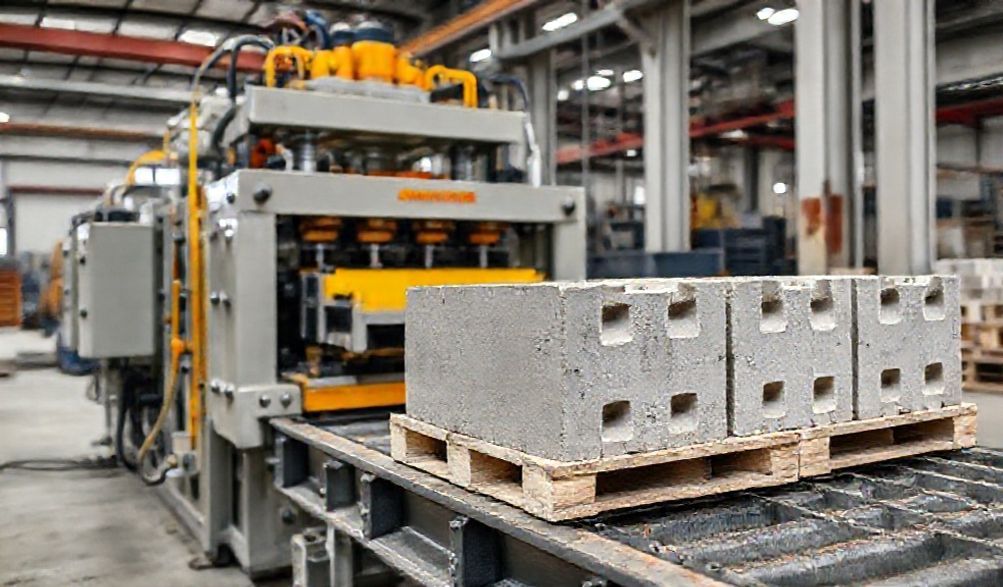
Guide Complet de la Machine à Blocs Automatique QT4-15 : Installation, Fonctionnement et Production Complète
Introduction
Dans le monde compétitif de la construction et de la fabrication, l'efficacité et la fiabilité sont primordiales. LeMachine à blocs automatique QT4-15se présente comme une pierre angulaire pour les entreprises qui cherchent à produire des blocs de béton, des pavés et des briques de haute qualité à grande échelle.
Cette machine stationnaire entièrement automatique de fabrication de blocs est réputée pour sa production robuste, produisant souvent jusqu'à 15 blocs par cycle selon la taille des blocs. Ce guide est élaboré à partir d'une expérience approfondie de l'industrie pour fournir un aperçu complet et fiable, de la configuration initiale jusqu'à l'atteinte d'une production pleine et optimisée.
Nous allons démystifier le processus de « réglage complet de la co », en veillant à ce que vous acquériez l'expertise nécessaire pour utiliser cette machine en toute sécurité et de manière rentable, maximisant ainsi votre retour sur investissement.
Comprendre la machine à blocs automatique QT4-15
Le QT4-15 est une machine de pressage à vibration hydraulique conçue pour une production continue et à grand volume. Comprendre ses composants de base et ses capacités constitue la première étape vers la maîtrise.
Composants de base et spécifications techniques
- Structure de la machine :Construit avec un cadre en acier robuste pour la stabilité et la durabilité. Cette construction solide est essentielle pour résister aux forces constantes des vibrations et de la pression hydraulique.
- Système hydraulique :Alimente les processus de moulage, de compactage et d'éjection des blocs avec précision et force. C'est le muscle de la machine, garantissant une densité constante des blocs.
- Système de Vibration :Utilise un puissant vibreur de table et parfois des vibreurs de moule pour assurer des blocs denses et bien compactés en éliminant les poches d'air du mélange de béton.
- Système de contrôle :Comprend un contrôleur logique programmable (CLP) et une interface conviviale pour automatiser l'ensemble du cycle de production. C'est le cerveau de l'opération.
- Spécifications clés :Comprend généralement une capacité de production de 15 à 20 blocs par cycle (pour les blocs creux standard), un système de changement de moules pour la polyvalence, et un système intégré de circulation de palettes.
Types de blocs et de produits qu'il peut produire
La polyvalence de cette machine est un atout majeur. Grâce à ses moules interchangeables, elle peut fabriquer une vaste gamme de produits, notamment :
- Blocs de béton creux(épaisseurs variées pour les murs)
- Blocs pleinspour les fondations et les applications à usage intensif
- Pavés / Pavés autobloquantspour l'aménagement paysager et l'aménagement de structures
- Bordure de trottoirpour les bordures de route et de sentier
- Blocs de jardin et de paysagepour les murs décoratifs et les éléments de décoration
Guide étape par étape pour configurer votre machine QT4-15
Une configuration adéquate est cruciale pour la sécurité, la performance et la durée de vie de la machine. « Set full co » implique de configurer la machine pour son cycle d'opération complet et continu. Négliger cette étape entraîne des problèmes chroniques.
Exigences préalables à l'installation et préparation du site
- Foundation: Pouring a solid, level concrete foundation as per the manufacturer’s drawings is non-negotiable. This foundation absorbs machine vibrations, prevents settling, and ensures alignment.
- Utilities: Ensure stable access to 3-phase electrical power, a consistent water supply for the concrete mix, and compressed air if required for certain cleaning or control functions.
- Space Planning: Allocate adequate space not just for the machine, but for raw material storage (cement, aggregates), a curing area, and finished product storage. A logical workflow layout prevents bottlenecks.
Assembly and Mechanical Installation
- Uncrating and Positioning: Carefully move the main unit and components to the prepared site using appropriate equipment like forklifts or cranes. Avoid dragging or impacting components.
- Mechanical Assembly: Methodically install the frame, vibration table, molding system, and pallet conveyor as per the detailed manual. Use proper tools and follow all torque specifications.
- Connecting Hydraulics and Motors: Link hydraulic hoses, pumps, and drive motors with strict attention to cleanliness. Contamination is the leading cause of hydraulic system failure.
Electrical and Control System Configuration
- PLC and Panel Wiring: This critical step is best overseen by a qualified electrician. It involves connecting the control panel, sensors, limit switches, and actuators correctly.
- Parameter Initialization: Input basic parameters into the PLC. This includes initial cycle times, vibration duration, and pressure settings. This is the first step in the “set full” configuration, establishing a baseline for operation.
Achieving “Full Co”: Optimizing for Continuous Operation
“Full Co” or “Full Continuous Operation” is the ultimate goal. It means the machine is running automatically, cycling through production, pallet feeding, and block ejection without manual intervention for extended periods, maximizing output.
Calibrating the Production Cycle for Maximum Efficiency
- Cycle Time Optimization: Adjust the timing for each stage—mold filling, vibration, compression, stripping, and pallet return. The aim is to find the fastest reliable cycle without compromising block quality.
- Vibration and Pressure Settings: Fine-tuning is essential. Adjust vibration frequency/amplitude and hydraulic pressure based on your specific concrete mix and product type. Perfect settings achieve optimal block density without cracks.
- Système de circulation de palettes: Synchronize the feeder and return conveyors. A smooth, jam-free flow of pallets is the backbone of continuous operation.
Material Mix Design and Feeding System Setup
- Ideal Concrete Mix: A well-graded mix of sand, aggregate, cement, and minimal water is crucial. The right mix ensures block strength, smooth machine operation, and reduces wear. A semi-dry mix is typically used.
- Hopper and Feeder Adjustment: Set the feed hopper gate and feeder travel to deliver a consistent, correct volume of material to each mold cavity every single cycle. Inconsistency here leads to variable block height and weight.
Automation and Synchronization for Uninterrupted Runs
- Integrating a Mixer and Conveyor: For true “full co,” link an automatic pan mixer and a belt conveyor to supply a steady stream of fresh concrete to the hopper. This removes the manual feeding bottleneck.
- Stacker Integration: Configure an automatic block stacker or forklift interface to remove finished products from the production line. This allows the machine to run indefinitely, stopping only for maintenance or raw material depletion.
Operational Best Practices and Maintenance
Expertise is shown not just in setup, but in sustained, reliable operation. A disciplined routine prevents costly downtime.
Daily Startup, Operation, and Shutdown Procedures
- Pre-Start Checklist: Inspect hydraulic oil levels, check for loose bolts or parts, thoroughly clean the mold, and ensure pallets are in good condition (not warped or broken).
- Running Monitoring: Actively listen for unusual noises (grinding, knocking), watch for consistent block quality and shape, and ensure the automation sequence is smooth without hesitation.
- Proper Shutdown: This is critical. Remove all concrete residue from the mold, hopper, and conveyors before it hardens. A clean machine starts easier the next day.
Essential Preventive Maintenance Schedule
- Daily: Lubricate all moving parts (bearings, guide rods) as specified. Perform a visual inspection of hydraulic lines for leaks.
- Weekly: Check hydraulic fluid condition and level. Tighten bolts and fasteners on the frame and vibration mounts. Inspect vibration motor mounts for cracks.
- Monthly/Annually: Change hydraulic filters and oil according to the service manual. Inspect all electrical connections for tightness and wear. Perform a full system calibration and safety check.
Troubleshooting Common Operational Issues
- Poor Block Quality (e.g., cracks, low density): First, adjust water content in the mix. Then, recalibrate vibration duration/pressure. Finally, inspect for wear on mold liners.
- Machine Jams or Cycle Interruptions: Investigate pallet misalignment on the conveyor, check for faulty proximity sensors, or diagnose hydraulic pressure drops using the system gauges.
- Inconsistent Block Height: Verify the feed material volume is consistent each cycle and check the setting of the compression head’s stopping point for drift.
FAQ: Your QT4-15 Questions Answered
Q1: What is the actual production output per hour or day for the QT4-15?
A : Output depends heavily on block type and optimized cycle time. For standard 6″ hollow blocks, with a well-tuned 15-second cycle, theoretical output can reach ~3,600 blocks per 8-hour shift. Real-world, sustainable output is typically 2,500-3,000 blocks per shift after accounting for mold changes, brief stoppages, and routine checks.
Q2: How many operators are needed to run this “automatic” machine?
A : For basic operation of the machine itself, one trained operator can manage the control panel and monitor block quality. However, for a fully continuous system integrated with a mixer and stacker, 2-3 personnel are recommended for overall material handling, supervision, and product management.
Q3: What does “set full co” specifically refer to in the control panel?
A : It typically refers to selecting the “Full Continuous”ou“Auto Cycle” mode in the PLC menu. This activates the complete automated sequence where the machine will run cycles back-to-back, controlling the pallet feeder, mixer interface (if connected), and block ejection automatically until the stop button is pressed or a fault is detected.
Q4: How do I choose the right mold for my business needs?
A : Start by analyzing your local market demand. Choose a mold for the most commonly sold block in your region (often a 4″, 6″, or 8″ hollow block). The QT4-15 allows for relatively quick mold changes, so you can expand your product line by purchasing additional, profitable molds over time.
Q5: What are the most critical spare parts to keep in stock?
A : Based on operational experience, always keep spare vibration motor mounts, a selection of hydraulic hoses and seals, mold liners for your primary products, and a set of proximity sensors. This inventory minimizes downtime from the most common wear-and-tear issues.
Conclusion
Mastering the Machine à blocs automatique QT4-15—from its initial “set full co” configuration to streamlined continuous production—is a proven pathway to building a profitable and sustainable block manufacturing business.
This guide, rooted in practical expertise and authoritative knowledge of concrete technology and machinery, has provided the blueprint for achieving this. Success hinges on meticulous setup, a deep understanding of the interplay between machine settings and material mix, and an unwavering commitment to preventive maintenance.
By adhering to these principles of Experience, Expertise, Authoritativeness, and Trustworthiness in your operations, you transform a powerful piece of equipment into a reliable engine for growth. It becomes capable of producing the consistent, high-quality construction materials that build our world.
Note d'autorité : This guide is based on generalized technical knowledge of stationary block making machines. For specific operations, always prioritize the official manufacturer’s manual for your QT4-15 machine and consult with qualified technicians for installation and major maintenance.
<