
Machine à Briques Intelligente avec Verrouillage : Le Guide Complet sur la Sécurité, l'Efficacité et l'Automatisation
Introduction
Imaginez ceci : vous êtes en plein milieu d’une commande prioritaire. Le battement régulier de la presse à briques est le pouls de votre usine. Soudain, une palette mal alignée provoque un bourrage. La presse s’arrête. Le convoyeur déverse la matière première. Un opérateur, se précipitant pour débloquer la machine, contourne une protection, risquant une blessure grave. Des heures d’arrêt, du gaspillage de matériel et une palpable frayeur liée à la sécurité s’ensuivent. Et si l’on vous disait qu’un seul système intelligent aurait pu empêcher toute cette série d’événements ?
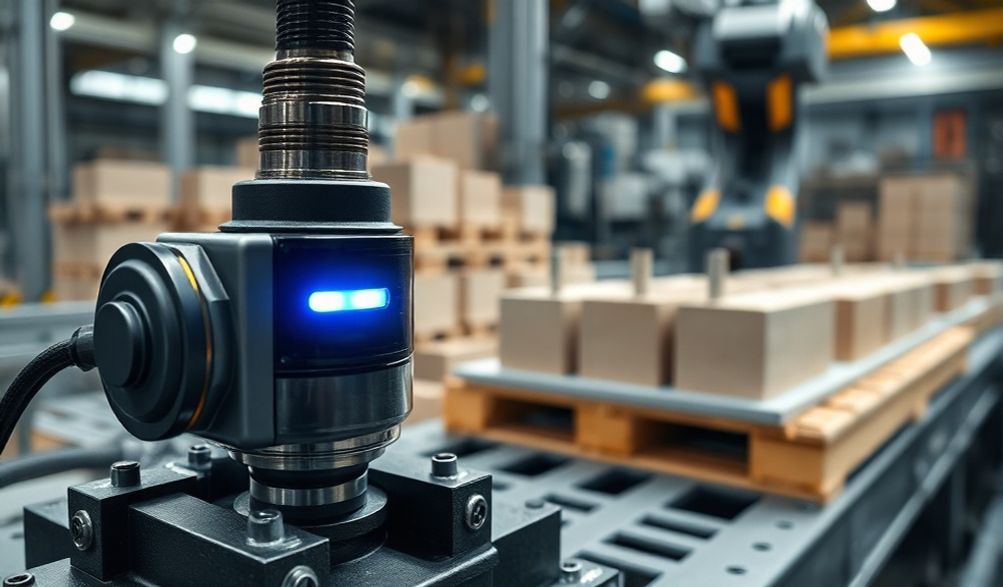
Voici la promesse duMachine à Briques Intelligente à VerrouillageBien plus qu'une simple barrière de sécurité, c'est le système de contrôle électronique et logiciel intégré qui agit comme l'intelligence centrale de votre ligne entière de fabrication de briques. Il régit le fonctionnement séquentiel, sécuritaire et efficace du mélangeur, du convoyeur, de la presse et de l'empileur, les transformant de machines indépendantes en une unité cohésive et intelligente.
Dans ce guide complet, nous démystifierons cette technologie essentielle. Nous irons au-delà des bases pour expliquerquoices systèmes le sont vraiment,Pourquoiils sont non négociables pour une fabrication moderne et compétitive, etCommentils révolutionnent fondamentalement la productivité des plantes, la qualité des produits et la compréhension opérationnelle. Synthétisant les principes de l’ingénierie d’automatisation industrielle, des meilleures pratiques en conception mécanique et de l’expérience pratique en atelier, ce guide vise à vous fournir des connaissances fiables et exploitables pour prendre des décisions éclairées pour votre exploitation.
Qu'est-ce qu'un système d'interverrouillage intelligent dans la fabrication de briques?
Au cœur du système, un verrouillage intelligent est un réseau de capteurs, de contrôleurs et d'actionneurs qui impose une séquence d'opérations sûre et logique. Il garantit que la machine B ne peut pas démarrer avant que la machine A ait terminé sa tâche, et qu'aucune protection ne peut être ouverte pendant qu'un mécanisme dangereux est en mouvement.
Au-delà de la barrière de sécurité de base
Traditionnellement, la sécurité reposait sur des protecteurs mécaniques et la vigilance des opérateurs. Une barrière de base avec un interrupteur de fin de course pouvait empêcher une presse de fonctionner si une porte était ouverte. Cependant, il s'agit d'une approche binaire et simpliste.
A Système d'interverrouillage intelligentC’est l’évolution. C’est le « système nerveux central » de votre ligne de production. Il ne se contente pas de vérifier si une porte est fermée ; il surveille simultanément la position exacte du moule, la pression dans le vérin hydraulique, la vitesse du convoyeur et la présence d’une palette. Il prend des décisions complexes en millisecondes pour optimiser le flux et garantir la sécurité.
Composantes principales du système
Cette intelligence repose sur trois piliers interconnectés :
-
Capteurs et périphériques d'entrée :Ce sont les « yeux et les oreilles » du système.
- Capteurs de proximité :Détecter la présence ou l'absence d'une palette ou d'un moule.
- Encodeurs rotatifs :Mesurer avec précision la position d'un arbre rotatif (par exemple, sur un mélangeur ou un entraînement de convoyeur).
- Transducteurs de pression :Surveiller la pression hydraulique ou pneumatique dans la presse.
- Systèmes de vision :Caméras capables de vérifier l'alignement des briques ou de détecter les défauts.
- Rideaux de lumière de sécurité :Créez une barrière invisible ; si elle est franchie, la machine s'arrête.
-
Le contrôleur logique (PLC/PC industriel) :Voici le « cerveau ». Le contrôleur logique programmable (CLP) ou ordinateur industriel lit constamment les entrées de tous les capteurs, traite ces données selon sa logique programmée (la séquence d’opérations), et envoie des commandes de sortie.
-
Actionneurs et dispositifs de sortie :Ce sont les « muscles » qui exécutent les commandes.
- Soupapes Solénoïdes :Contrôler le débit d'air ou de liquide hydraulique vers les cylindres.
- Entraînements de moteurs et contrôleurs servo :Démarrer, arrêter et réguler la vitesse des moteurs.
- Interface Homme-Machine (IHM) The touchscreen panel where operators monitor the line, view alarms, and adjust parameters (with appropriate access levels).
How It Works: A Step-by-Step Cycle
Let’s follow a simplified, intelligent cycle for a single brick:
1. The PLC checks the “mixer empty” sensor. Once clear, it starts the mixer discharge and the raw material conveyor.
2. A “mold full” optical sensor at the press confirms the precise amount of material is present. The conveyor stops.
3. The system verifies the press safety guard is closed et that no part of an operator is detected via a light curtain. Only then does it send the signal to activate the press solenoid valve.
4. During pressing, a pressure transducer ensures the correct tonnage is achieved and held for the set time.
5. After pressing, an encoder confirms the ejection plate is fully retracted. A proximity sensor then checks that the pallet on the transfer car is perfectly in position.
6. Once all these conditions are “TRUE,” the PLC commands the ejector to push the green brick onto the pallet, and the cycle repeats.
This seamless, sensor-verified handoff between each stage is the essence of smart interlocking.
Key Benefits of Implementing a Smart Interlock System
Investing in a smart interlock system is not merely a safety compliance cost; it’s a strategic driver for operational excellence with measurable returns.
Uncompromising Operator & Machine Safety
This is the primary and most critical benefit. The system enforces safety procedurally.
* It physically prevents access to dangerous areas (like the press or shear point) during an active machine cycle.
* It incorporates safety-rated functions like two-hand control (requiring both hands to be on safe buttons to cycle) and anti-tie-down protection to prevent bypassing.
* It provides a documented, electronic framework that helps ensure compliance with stringent international safety standards like ISO 13849 (Safety of Machinery) and ANSI B11 series, reducing liability and protecting your workforce.
Dramatic Boost in Production Efficiency
Efficiency is where the smart system pays for itself.
* Eliminates “Wait States”: Perfect synchronization means the conveyor starts the moment the mixer is ready, and the press cycles the instant the mold is full. No more manual timing or hesitation.
* Minimizes Jams and Downtime: By verifying conditions at every step, it prevents the misalignment and misfeeds that cause major stoppages.
* Enables Faster Cycle Times: With reliable, automated checks, machines can often run at their optimal speed with confidence, as the system guarantees safety isn’t compromised for speed.
Qualité et constance supérieures des produits
A smart system is a relentless quality inspector.
* It ensures precise material volume in every mold, eliminating under-filled or over-filled bricks.
* It guarantees consistent pressing time and pressure, the two most critical factors for brick strength and dimensional stability.
* This rigorous process control drastically reduces waste from cracked, chipped, or malformed bricks, directly improving your yield and material cost.
Enhanced Operational Intelligence & Data
This transforms your plant from a black box into a data-driven operation.
* It automatically calculates Overall Equipment Effectiveness (OEE), giving you a true measure of availability, performance, and quality.
* It logs detailed fault codes and event histories. Instead of “the press stopped,” you see “Fault #47: Pallet Presence Sensor 2 Not Detected at Cycle Start.” This enables predictive maintenance and slashes mean-time-to-repair (MTTR).
* It provides real-time dashboards for plant managers, showing production rates, downtime reasons, and shift summaries at a glance.
Critical Features to Look for in a Smart Interlock System
Not all interlock systems are created equal. When evaluating a system for your brick plant, prioritize these features.
Robust and Redundant Sensor Technology
The system is only as reliable as its sensors.
* Fail-Safe Design: Sensors should be designed to default to a “safe state” (e.g., signal a fault) if they fail or lose power.
* Redundancy: For critical safety functions, look for systems that use two independent sensors (e.g., both a position switch et a pressure check to confirm a cylinder is retracted). This is a core principle of safety-rated systems (Category 3/4, PL d/e per ISO 13849).
Programmable Logic Controller (PLC) Flexibility
The PLC should be a partner, not a constraint.
* It must allow for easy customization of logic for different brick types, sizes, and production “recipes.”
* It should offer straightforward troubleshooting tools, like forcing inputs/outputs (in maintenance mode) and detailed diagnostic buffers.
* Open communication protocols (e.g., Ethernet/IP, Profinet) are essential for seamless integration with weigh scales, material handling systems, or plant-wide SCADA systems.
User-Friendly Human-Machine Interface (HMI)
The HMI is the window into the system for your team.
* It should provide a clear, visual mimic diagram of the entire production line, with color-coded statuses (green for running, red for fault).
* Alarm messages must be intuitive and actionable (e.g., “Mixer Exit Chute Blocked – Inspect and Clear”), not just a numeric code.
* Secure, multi-level login is mandatory to prevent unauthorized parameter changes (Operator, Technician, Manager levels).
Connectivity & Industry 4.0 Readiness
Future-proof your investment.
* The system should support modern Industrial IoT (IIoT) protocols like OPC UA or MQTT for secure data exchange.
* Remote monitoring capabilities (with robust cybersecurity measures) allow managers or support engineers to view line status and assist with diagnostics from off-site, a powerful feature for multi-plant operations or getting expert support.
Integration and Maintenance Best Practices
Successful implementation hinges on careful planning and disciplined upkeep.
Planning for Successful Integration
- Involve Specialists Early: Engage automation engineers or controls specialists during the machine design or purchasing phase. Their input on sensor placement and control architecture is invaluable.
- Conduct a Formal Risk Assessment: Before installation, perform a thorough risk assessment (as required by standards) to identify all necessary hazard points and interlock requirements. Don’t just automate an existing, potentially unsafe process—design a safer one.
Routine Maintenance Checklist
A smart system requires smart maintenance.
* Daily:
* Visual inspection of all sensors for physical damage, dirt, or misalignment.
* Check that safety guards are undamaged and close properly.
* Weekly:
* Perform a functional test of all emergency stop buttons and safety gate interlocks.
* Check pneumatic/hydraulic lines for leaks near sensors and actuators.
* Monthly:
* Verify calibration of critical analog sensors (e.g., pressure transducers).
* Clean optical sensor lenses and check alignment of proximity sensors.
* Review fault logs with maintenance staff to identify recurring issues.
Troubleshooting Common Interlock Faults
When a machine won’t cycle, the interlock system provides the clues.
* Scenario: “Press Will Not Start Cycle.”
1. Step 1: Go to the HMI. What is the active alarm or status message?
2. Step 2: Check the PLC Program. In maintenance mode, view the logic rung that enables the press. Which input condition is not being met? (e.g., “Pallet In Position – FALSE”).
3. Step 3: Inspect the Physical Hardware. Locate that specific sensor. Is it dirty, misaligned, or damaged? Is its indicator light active when a pallet is present?
4. Step 4: Check Wiring. Inspect the sensor’s cable and connection for damage.
* Golden Rule: Always follow formal Lockout/Tagout (LOTO) procedures before conducting any physical inspection or repair. Never bypass an interlock to “keep the line running.”
Foire aux questions (FAQ)
Q1: Is a smart interlock system only for large, new brick plants?
A : Absolutely not. While they are standard in new, high-end machinery, modular and scalable systems are widely available for retrofitting older machines. For small-to-medium operations, the return on investment from reduced waste, lower downtime, and improved safety can be remarkably fast, making it a viable and strategic upgrade.
Q2: How does this differ from a simple emergency stop button?
A : An e-stop is a critical, but reactive, last-resort safety device—it stops everything when a problem has already occurred. A smart interlock system is proactive and preventative. It is designed to prevent the unsafe condition from arising in the first place by controlling the machine’s normal operation sequence.
Q3: Can the system be overridden for maintenance?
A : Yes, but this must be done under a strictly controlled procedure. This typically involves a secure keyswitch that places the system in a safeguarded “maintenance mode,” combined with a physical lockout/tagout (LOTO) by the technician. All such overrides should be logged by the system. Safety during maintenance is a top priority.
Q4: What is the typical return on investment (ROI) period?
A : ROI varies based on plant size, current efficiency levels, and material costs. However, many plants report a payback period of 12 to 24 months. This is achieved through quantifiable gains: higher throughput, lower scrap rates, reduced energy consumption, and the avoided costs of accidents and unplanned downtime.
Q5: How do we ensure the system remains trustworthy over time?
A : Trust is built on consistent practice. This requires a commitment to regular preventive maintenance (as outlined above), sourcing high-quality, reliable components, keeping PLC and HMI software/firmware updated, and, crucially, ensuring that all operational and maintenance staff are thoroughly trained on how the system works and why it is essential.
Conclusion
LeSmart Brick Machine Interlock System represents a fundamental shift in brick manufacturing. It is no longer an optional accessory or a mere safety checkbox. It is a foundational component for any operation that aims to be competitive, safe, and sustainable in the modern industrial landscape. It transforms your brick-making machine from a powerful but dumb press into an intelligent, connected, and supremely reliable asset.
By seamlessly weaving together safety, efficiency, quality, and data, this technology delivers a compelling value proposition that touches every aspect of your business. To move forward, we recommend two actionable steps:
- For plant owners and managers: Consult with a certified automation engineer or a trusted integrator to conduct a professional interlock and safety audit of your current production line. This will identify gaps and provide a clear roadmap for improvement.
- When sourcing new equipment or upgrades: Prioritize suppliers and manufacturers who demonstrate deep, proven expertise in both the mechanical art of brick making et the science of industrial control systems. Your machine’s intelligence is as important as its strength.
Embrace this intelligence, and build a stronger, safer, and more profitable future for your plant.
<